Haplogroup R1b1a1b1a1a2c1a4b2c1a1

– 5 min read


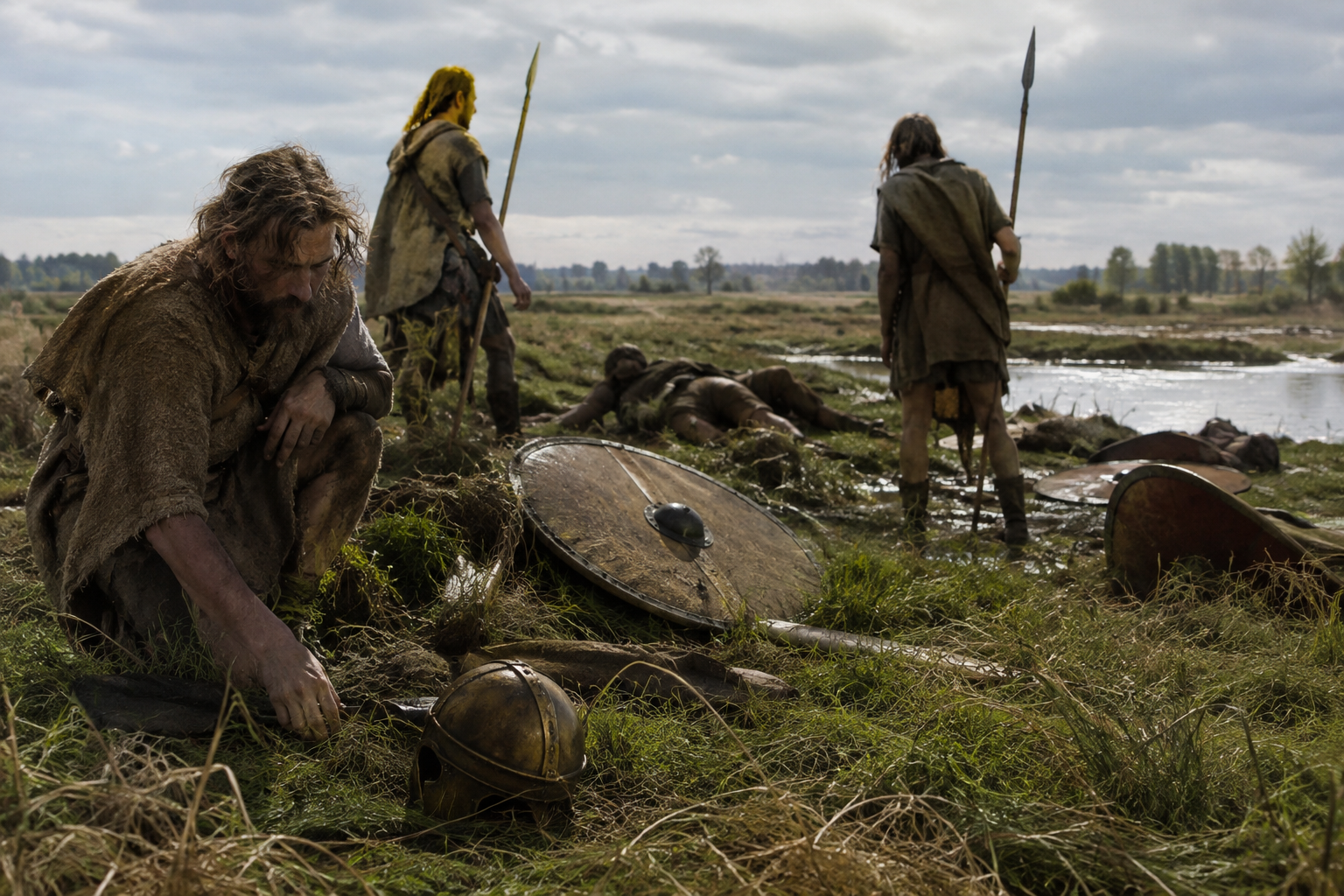
At Tollense in northeastern Germany, the Bronze Age refuses to stay tidy. Around 1250 BC, violence on a remarkable scale unfolded in the valley, leaving behind scattered human remains that have transformed the site into one of prehistoric Europe's most discussed battlefields. Among the men identified there is sample WEZ59, linked here to the Y-DNA haplogroup R1b1a1b1a1a2c1a4b2c1a1, a very specific paternal branch nested deep within the wider R1b family.
That matters because Tollense is not just any burial context. It is evidence for organized conflict in Late Bronze Age northern Europe, and for the movement of people through a landscape tied into larger worlds of trade, metalworking, and shifting alliances. A Y-chromosome lineage traces only one direct male line, not a person's whole ancestry, but in a place like Tollense even one paternal line can anchor a striking historical question: who were the men caught up in this catastrophe, and what kinds of communities did they come from?
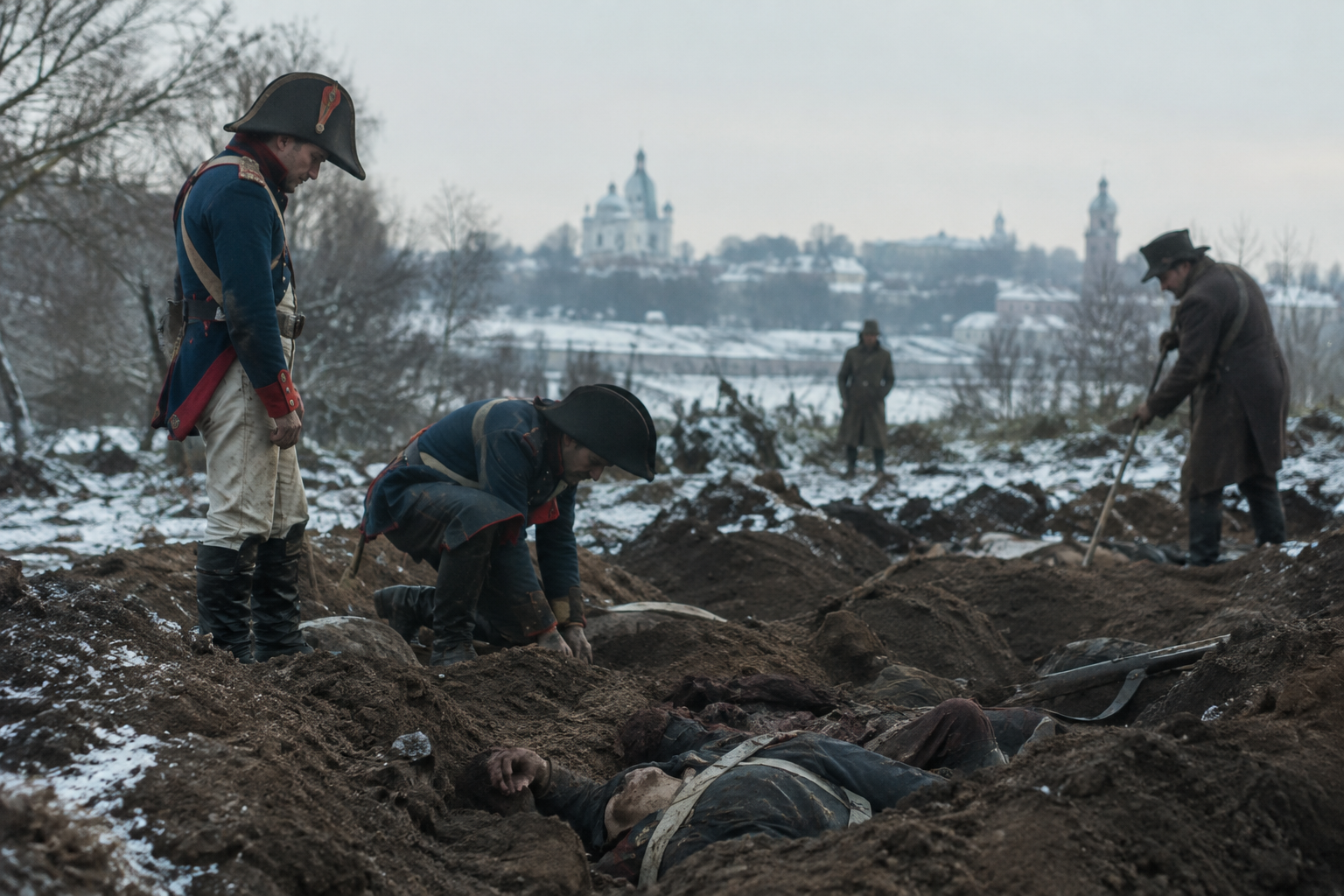
The Tollense Valley site in Mecklenburg-Vorpommern has become famous because it looks less like an ordinary cemetery and more like the aftermath of combat. Human remains were found across a riverine landscape rather than in formal graves, suggesting a violent event or sequence of events rather than routine burial. For the Late Bronze Age, that is an extraordinary sort of evidence.
Sample WEZ59, dated here to about 1250 BC, belongs within that setting. The value of this individual is not that he lets us build an entire biography from a chromosome, because he does not. The value is that he places this paternal line in a documented world of conflict in northern Germany during a period when societies across Central and Northern Europe were increasingly connected, increasingly armed, and sometimes brutally unstable.
A major ancient DNA study of the battlefield helped bring these remains into sharper focus, showing that Tollense was not simply a local curiosity but part of a broader prehistoric European story of mobility and interaction. The research linked to the site can be found here in an ancient DNA study of the Tollense battlefield.
R1b1a1b1a1a2c1a4b2c1a1 is a highly granular label. In plain terms, it is a narrow twig on a very large paternal tree. The broader R1b lineage is widespread in Europe today and appears in many ancient settings, but it would be careless to project the whole history of R1b onto this exact sub-branch without direct evidence for each step.
That point is especially important with deep subclades. A terminal or near-terminal name may reflect fine-resolution modern phylogeny, while the ancient evidence itself can sometimes be firmer only at a broader level. So the safest reading here is that WEZ59 is associated with this branch in the MyTrueAncestry framework, while the archaeological significance lies first in the Tollense context: a Late Bronze Age male from a major conflict zone in northern Europe.
Put differently, the haplogroup gives us a paternal thread; the site gives us the historical weight. Together they suggest that this line was present among men involved in the militarized world of the European Bronze Age, but they do not by themselves prove tribe, language, rank, or personal origin.
It is easy to imagine Bronze Age Mecklenburg-Vorpommern as peripheral, somewhere at the misty edge of the big stories. Tollense has done a great deal to upset that old habit. The valley sat within routes that connected the Baltic and north European plain to wider exchange systems reaching deep into Central Europe.
By the thirteenth century BC, communities in this wider region were living in a world shaped by bronze production, long-distance contacts, and sharp competition. Weapons, raw materials, and prestige goods moved over impressive distances. So did people. A man carrying the paternal line represented here by R1b1a1b1a1a2c1a4b2c1a1 need not have been a "local type" in any simplistic sense; he belonged to a human landscape where local identities and larger networks overlapped.
This is one reason Tollense has attracted such attention from archaeologists. The battlefield speaks to scale: not just a quarrel between neighboring hamlets, but a conflict involving substantial numbers of combatants. When a lineage like this appears there, it becomes part of a broader argument that Late Bronze Age Europe was socially and politically more complex than older textbooks once allowed.
Central Europe in the Late Bronze Age
There is a temptation, when dealing with Y-DNA, to rush straight toward famous surnames, noble houses, and grand ancestral fantasies. But this case is more interesting precisely because it resists that move. No documented noble-family material accompanies this lineage here, and that is no loss. Tollense offers something better: an anchor in real archaeology.
Battlefield DNA has a particular force because it preserves moments of crisis rather than curated family memory. Medieval pedigrees often tell us who wanted to be remembered. Sites like Tollense show us who was actually there when violence broke out. Sample WEZ59 is valuable not as an honorary prince, but as one of the men whose remains help reveal the human cost of Late Bronze Age warfare.
That also makes this lineage useful for thinking about the spread of peoples and languages with caution rather than swagger. Northern Europe in the Bronze Age was not genetically static, and later historical identities cannot simply be read backward from one male line. Still, evidence from ancient genomes has become central to debates about how language communities and regional populations formed over time.
Germanic Languages and Genomics
One ancient sample never stands for an entire people. But one sample can show that a lineage was present in a particular place at a particular historical moment, and that is exactly the sort of evidence that slowly turns prehistory from guesswork into mapwork. WEZ59 places this paternal branch in northern Germany during the Late Bronze Age, in a context of warfare that was anything but ordinary.
That broader pattern matters for anyone exploring paternal ancestry in northwestern or central Europe. Deep branches of R1b appear again and again in later European history, but ancient cases like Tollense remind us that these lines were already embedded in complicated societies long before Romans, Germans, Celts, or medieval kingdoms appear in written sources. The men of Tollense were not waiting around to become history. They were already in it.
For readers interested in how ancient DNA is changing our picture of old populations more generally, MyTrueAncestry has also explored the field itself in a broader overview of ancient DNA and the rise of archaeogenetics.
The most distinctive thing about R1b1a1b1a1a2c1a4b2c1a1 in this case is not a royal badge or a neat ethnic label, but its appearance in one of Bronze Age Europe's most important conflict sites. Through WEZ59, this paternal line is tied to the world of Tollense: mobile, connected, and capable of violence on a surprisingly large scale. If this is your branch, the strongest evidence-based takeaway is that your direct paternal line belongs within a very old European story whose archaeology is now coming into view one excavated individual at a time.
Comments