Haplogroup G2a2b2a1b

– 5 min read


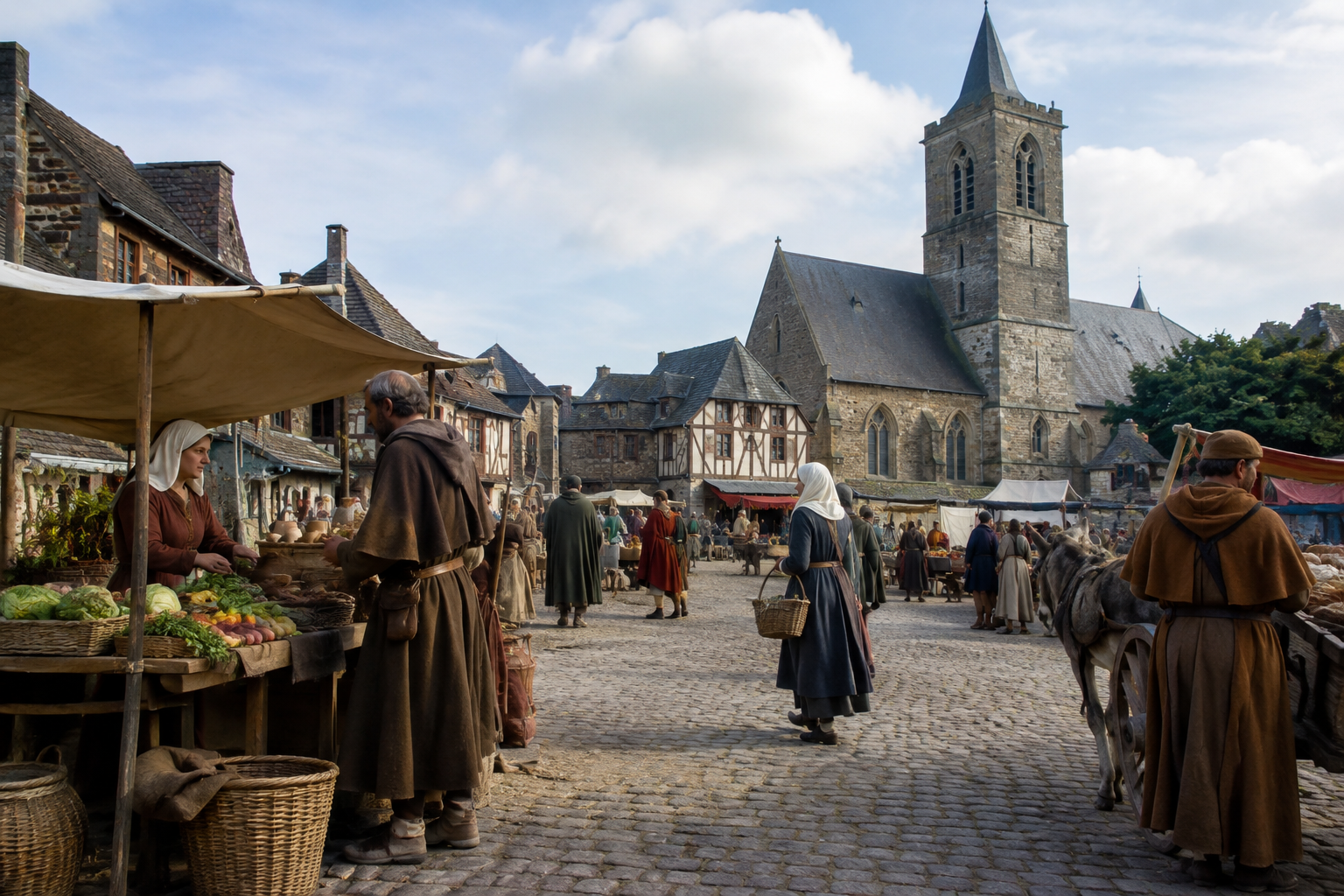
At Sint-Truiden in medieval Belgium, one excavated individual offers a neat reminder that even a single Y-chromosome result can open a much larger historical window. The man identified as ST2428, dated to around AD 900 at Groenmarkt in Sint-Truiden, has been associated here with the Y-DNA haplogroup G2a2b2a1b. That is an unusually interesting signal in an early medieval town, because G lineages are often discussed in connection with much deeper European prehistory, yet here we meet one in a busy Christian community of the High Middle Ages rather than in a Neolithic cemetery.
The attraction of ST2428 is not that he can somehow stand for all of Belgium, or all men with G2a2b2a1b. He cannot. The value lies in the setting: an urbanizing settlement in the Low Countries, at a time when post-Roman populations, local continuity, and regional movement were all shaping the people who lived around churches, markets, and growing towns. A recent ancient DNA study on medieval Sint-Truiden explored exactly that wider context of population structure and urban development in the town's cemetery record through genomic analysis of the Sint-Truiden burials.
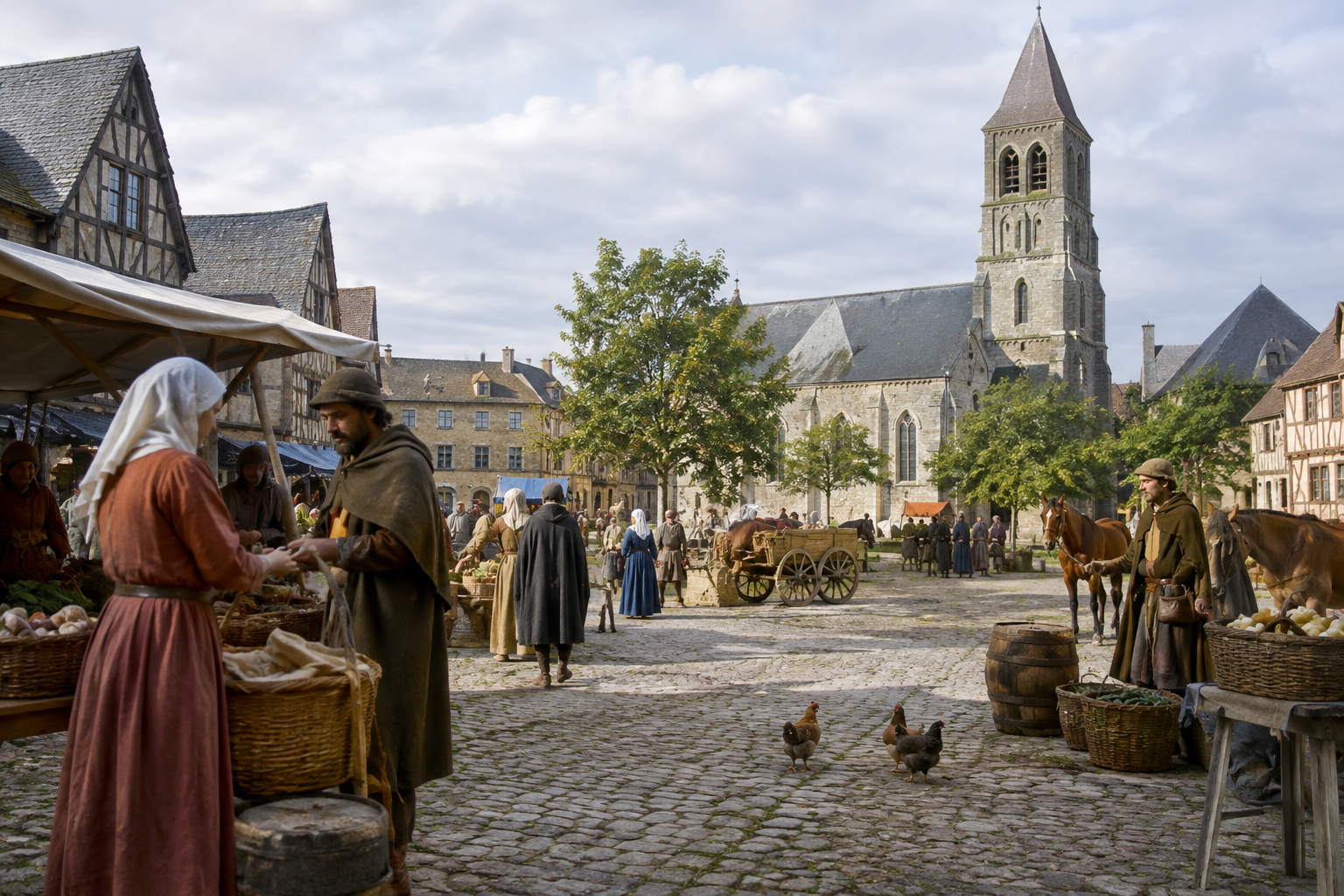
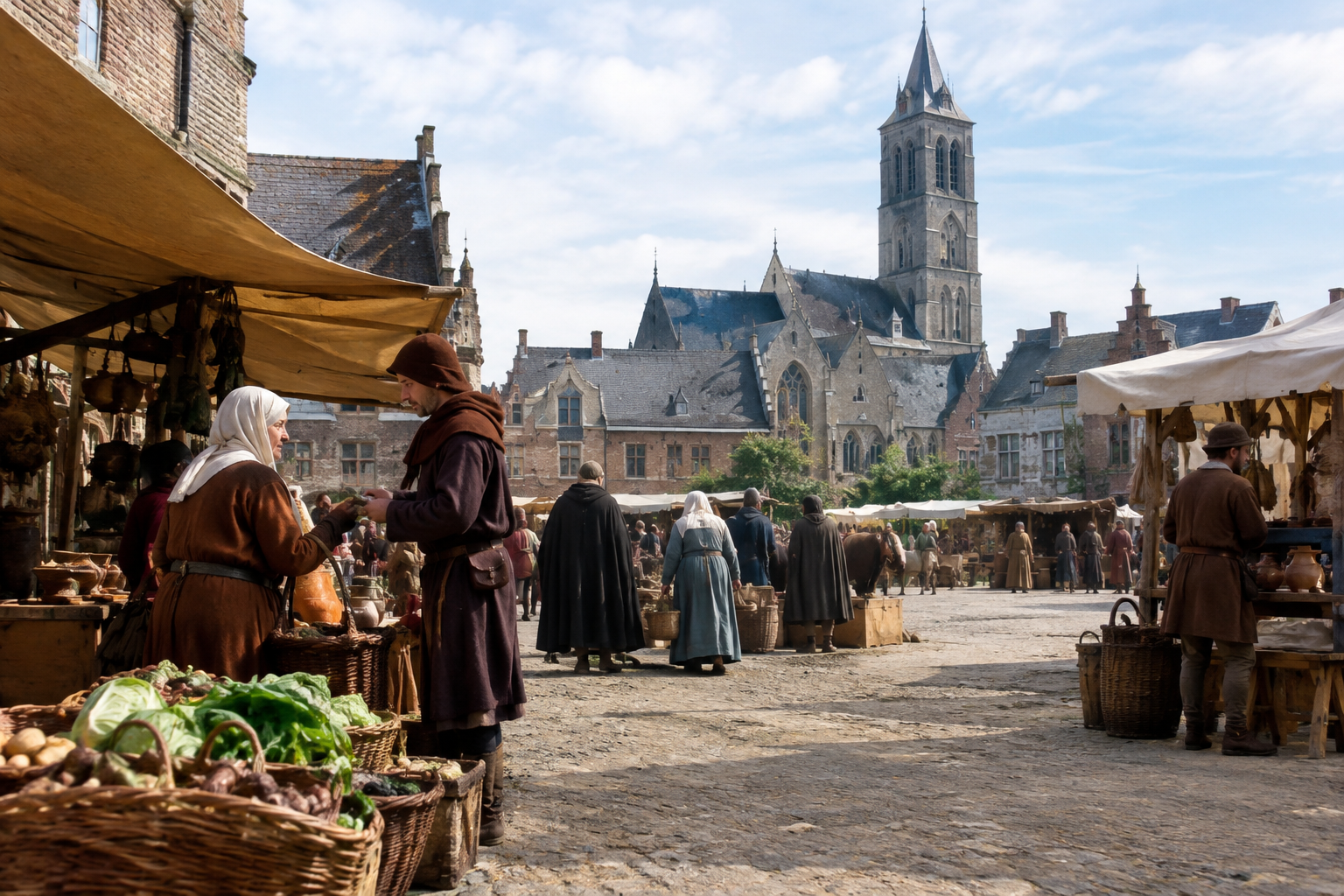
Sint-Truiden was no isolated hamlet. In the early medieval centuries it stood within a densely connected part of northwest Europe, shaped by abbeys, trade, lordship, and the slow consolidation of towns. By about AD 900, burial grounds in places like Groenmarkt were receiving people who belonged to an already complicated local history, one that had passed through Roman rule, Frankish expansion, Christianization, and the growth of market centres.
That makes ST2428 more revealing than he might first appear. A Y-DNA assignment such as G2a2b2a1b traces one direct paternal line only: father to son to son. It does not describe the whole ancestry, language, or identity of the man. But placed in a documented medieval cemetery, it shows that this paternal branch was part of the social world of early medieval Brabant-Limburg, living not at the margins of history but squarely inside a developing European town.
G2a2b2a1b is a downstream branch within the broader haplogroup G family. Broadly speaking, haplogroup G is one of the lineages long associated with the spread of early farming into Europe during the Neolithic, although its branches have had very different later histories. That broader prehistoric association is useful background, but it should not be lazily pasted onto this exact medieval branch as if nothing changed over the intervening millennia.
What ST2428 shows is continuity of presence, not a simple frozen survival from the first farmers. Between the Neolithic and AD 900 lie thousands of years of admixture, shifting political worlds, changing languages, and repeated local population turnovers or absorptions. If a man in medieval Belgium belonged to G2a2b2a1b, that tells us this paternal line endured through all that change and became part of a later medieval population whose culture was Christian and whose daily world was shaped by the institutions of the early Middle Ages.
That is often the most useful way to think about Y-DNA in archaeology. It is less a badge of ethnicity than a thread of descent surviving through very different historical settings.
The Low Countries are especially good terrain for this kind of question. Roman frontiers, post-Roman realignments, Frankish power, and the rise of medieval towns all left their mark here. Ancient DNA from nearby regions has repeatedly shown that populations in northwest Europe were neither static nor endlessly replaced; rather, they were built through mixtures of local persistence and fresh arrivals.
For that reason, a lineage like G2a2b2a1b appearing in Sint-Truiden should not be forced into a single grand migration tale. It might represent very old regional persistence, movement within the Carolingian and post-Carolingian world, or the ordinary reshuffling of families across neighboring territories over many generations. In other words, the interesting point is not that ST2428 was "from" one dramatic origin, but that early medieval towns could gather lineages with much deeper and more varied backgrounds than later national stories suggest.
There is a temptation, when readers encounter haplogroup G, to jump straight back to the first Neolithic farmers of Europe. That deep prehistory is relevant, but archaeology becomes more interesting when we resist the shortcut. ST2428 did not live in a Neolithic longhouse or an early farming village. He lived in a medieval townscape, in a world of churches, markets, regional lordship, and written institutions.
So the real significance of this result is chronological as much as genetic. It shows that a paternal lineage often treated as "ancient" in popular discussion was still thoroughly at home in medieval northwestern Europe. That is precisely the sort of finding that helps dissolve the tidy but misleading habit of assigning one haplogroup to one people, one language, or one era.
It also sharpens the historical picture of Sint-Truiden itself. Medieval cemeteries are not just repositories of disease, diet, and demography; they are records of how towns formed from families with different backgrounds. A G2a2b2a1b assignment in this context contributes to that bigger urban story, even when the evidence does not justify any claim about rank, kinship network, or long-distance migration for this particular man.
Around AD 900, Sint-Truiden belonged to a frontierless sort of Europe: politically divided, certainly, but tied together by monasteries, exchange networks, and overlapping local powers. Men buried in its cemeteries may have been locally rooted for generations, or descended from families that had moved across only modest distances within the broader Frankish sphere. In either case, their burial place captures a society that was becoming more urban without losing the genetic complexity accumulated over centuries.
This is one reason medieval genomics can be so illuminating. It shifts attention away from the old search for "pure" peoples and toward the much more realistic picture of communities assembled over time. For a paternal lineage like G2a2b2a1b, the medieval evidence is valuable precisely because it shows survival and incorporation within later historical populations, not merely distant prehistoric origins.
Origins of Medieval Townspeople
If your paternal line falls under G2a2b2a1b, ST2428 offers a grounded historical clue rather than a fantasy pedigree. It suggests that this branch was present in the population world of early medieval Belgium, inside a real town community at roughly AD 900. That does not make every modern carrier "Belgian" in origin, but it does show that the lineage belonged to the lived human landscape of medieval northwestern Europe.
For family historians, that is often the most useful lesson: a Y-line can be both very old and historically ordinary, carried not only by famous dynasties or migrating war bands, but by people buried in the cemeteries of working towns. ST2428 gives G2a2b2a1b exactly that kind of history - specific, modest, and real.
Comments