Haplogroup R1b11

– 5 min read


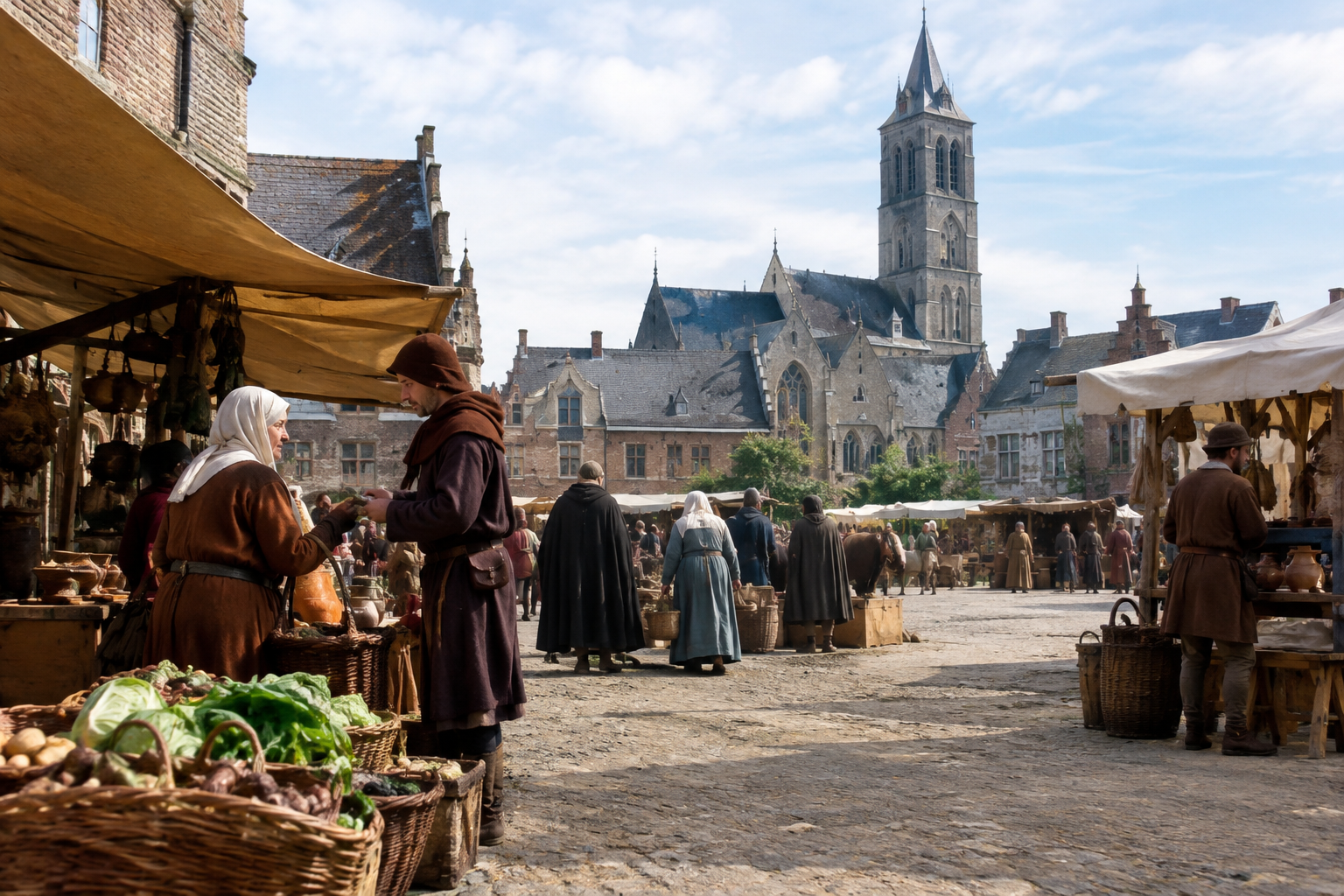
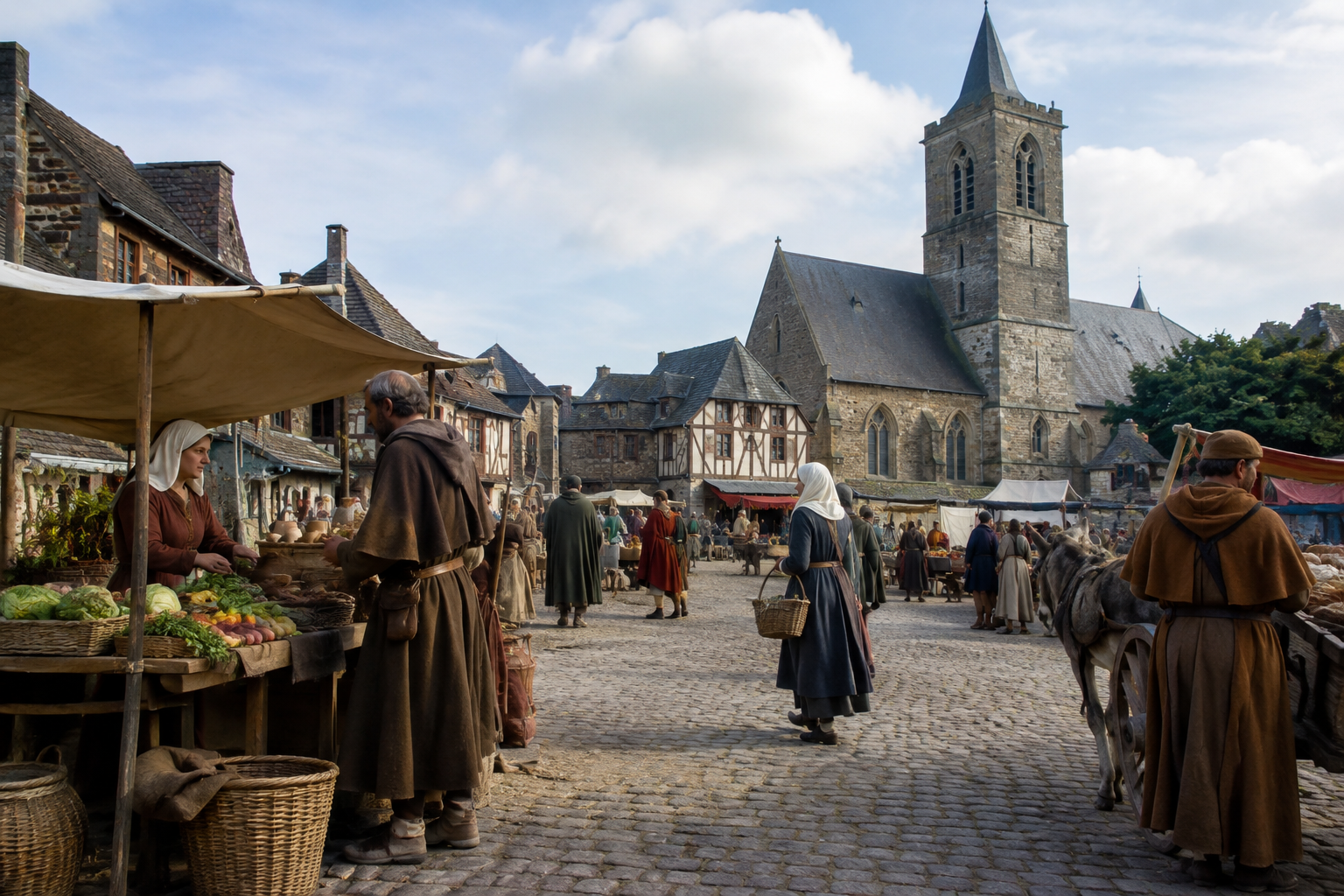
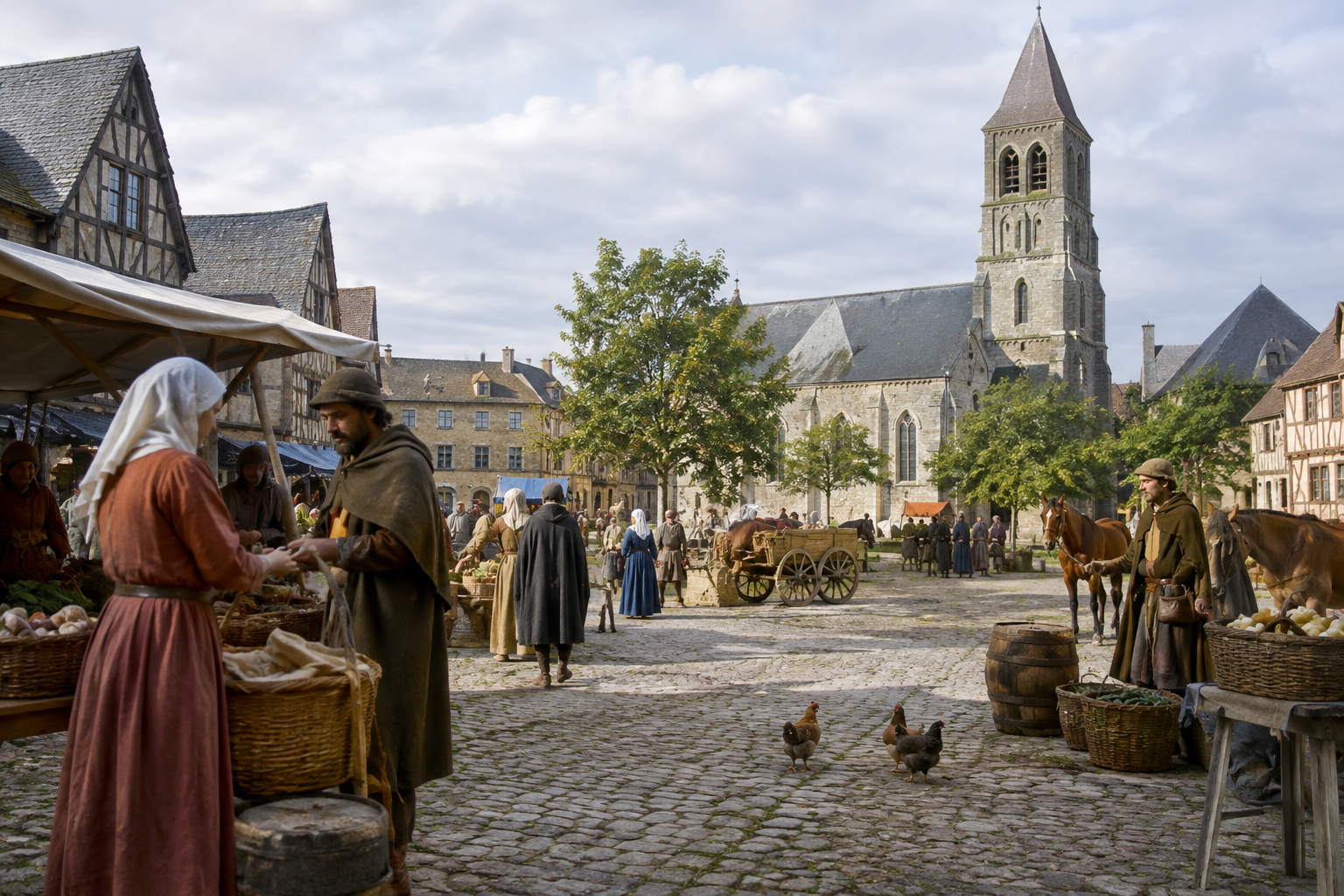
In medieval Sint-Truiden, in present-day Belgium, one man labeled ST2213 offers a small but unusually telling glimpse of haplogroup R1b11. He lived around AD 1100 and was recovered from the Groenmarkt area, a town setting that belonged to a busy and changing world of markets, churches, craft activity, and growing urban life. That matters because lineages do not move through history as abstract labels. They turn up in particular places, among real communities, at moments when towns were pulling people, families, and identities into new forms.
For R1b11, the evidence here is modest but concrete. We are not looking at a great royal mausoleum or a famous warrior burial. We are looking at a medieval individual from a Low Countries town, and that is precisely what makes the find useful. Y-DNA tracks one direct paternal line only, not a person's whole ancestry, but even a single securely placed man can help anchor a lineage in a specific historical landscape.
By the early 12th century, Sint-Truiden was no backwater. It had deep monastic roots and sat within one of the most densely networked parts of medieval northwestern Europe. Towns in this region were shaped by trade, religious institutions, lordship, and the slow but profound consolidation of urban society. A paternal lineage found here belongs, at the very least, to that world of settled medieval community rather than to some vague and timeless "European" past.
The importance of ST2213 lies in context. He comes from a period when the Low Countries were becoming more urbanized and more socially interconnected, yet many communities still preserved strong local continuity. That tension between movement and rootedness is one of the most interesting things ancient DNA can illuminate. Research on medieval Sint-Truiden has explored exactly that problem, asking how urban growth affected the genetic makeup of the town's inhabitants and whether a place like this drew heavily from afar or remained largely regional in character.
A useful companion to that wider question is MyTrueAncestry's discussion of Sint-Truiden itself:
R1b11 is a paternal designation within the broad and sprawling R1b family, one of the major Y-chromosome groupings found across much of western Eurasia and especially well represented in later European populations. But that large-scale background should not be confused with the narrower branch named here. Without a fuller run of securely published ancient comparanda tied specifically to R1b11, it would be careless to assign this branch its own grand migration story or to claim a single ethnic identity for it.
What we can say is more interesting than it may first appear. In a medieval town such as Sint-Truiden, a branch like R1b11 shows up not as an isolated relic but as part of a lived population. This is the period when documentary history becomes thicker, surnames start stabilizing in many regions, parishes and markets shape daily life, and paternal lines begin to enter the sort of social world that later genealogists can sometimes trace. Ancient DNA does not hand us a family tree for ST2213, but it places one paternal line securely inside that medieval transformation.
Sint-Truiden belongs to the wider Lower Rhine-Meuse world, a region with a long and complicated population history stretching from prehistory through the Roman and post-Roman eras into the Middle Ages. That is important background for any discussion of R1b-related lineages. The area saw repeated episodes of continuity, migration, cultural change, and local mixture, so a medieval Y-chromosome result there sits at the end of many earlier processes rather than neatly representing just one of them.
Ancient DNA work in the broader Rhine-Meuse zone has shown how dramatic some of those earlier shifts could be, especially around later prehistory. That does not prove a direct line from any prehistoric male to ST2213, but it helps explain why medieval paternal diversity in the Low Countries is historically plausible and archaeologically unsurprising. The region was not a sealed container. It was one of Europe's long-term contact zones.
For readers interested in that deeper setting, this related post is especially relevant:
One of the best ways to understand a medieval Belgian sample is to remember that this landscape had already lived many previous lives. Before the world of abbots, charters, and market squares, the wider region was shaped by the Roman frontier. Roads, military installations, trade routes, and cross-border movement all helped create a population history that was never purely local in a narrow sense.
Later, the post-Roman centuries added another layer. Political authority fragmented and re-formed; new ruling groups appeared; old settlements changed function; Christianity expanded its institutional reach. Yet ancient DNA increasingly shows that "Roman" and "Germanic," or "local" and "incoming," were rarely clean biological boxes. That wider lesson matters for R1b11. A medieval paternal lineage in Belgium need not belong to a single simple origin story. It belongs to a region where several historical strata had already accumulated.
That frontier background is explored from another angle here:
There is a temptation, when only one ancient carrier is listed, to think the evidence is too thin to be meaningful. In fact, single finds are often the beginning of a better question. ST2213 shows that R1b11 was present in a documented medieval urban community in the Low Countries by around AD 1100. That is not a trivial datapoint. It gives the lineage a place, a period, and a human setting.
It also reminds us that ordinary townspeople are often more informative than famous elites. Dynasties can dominate written history, but they are rarely typical of the broader population. Medieval urban burials, by contrast, can reveal how lineages were actually distributed among the people who made a town function day by day. If more R1b11 results emerge from neighboring sites or earlier cemeteries, ST2213 may eventually become part of a wider regional pattern rather than a solitary marker.
A genetic study examining these medieval Sint-Truiden burials was published in Genome Biology, and the key value of that kind of research is precisely this: it lets archaeology move beyond labels on a map and ask who lived in these towns, how related or diverse they were, and how urban life reshaped older population structures.
For someone researching R1b11 today, the clearest insight from the ancient evidence is not a dramatic claim of tribe or dynasty. It is something steadier and, in many ways, more useful: this paternal branch is attested in the living fabric of medieval northwestern Europe, in a town whose history was shaped by continuity, commerce, and regional interaction. ST2213 does not stand for all bearers of R1b11, but he does place the lineage in a recognizably historical world.
If your own paternal line falls under R1b11, that makes medieval urban Europe one plausible part of its story. Not the whole story, certainly, but a real one: a line carried through market towns, parish communities, and the dense human networks of the High Middle Ages.
Comments