Haplogroup I1d59

– 5 min read


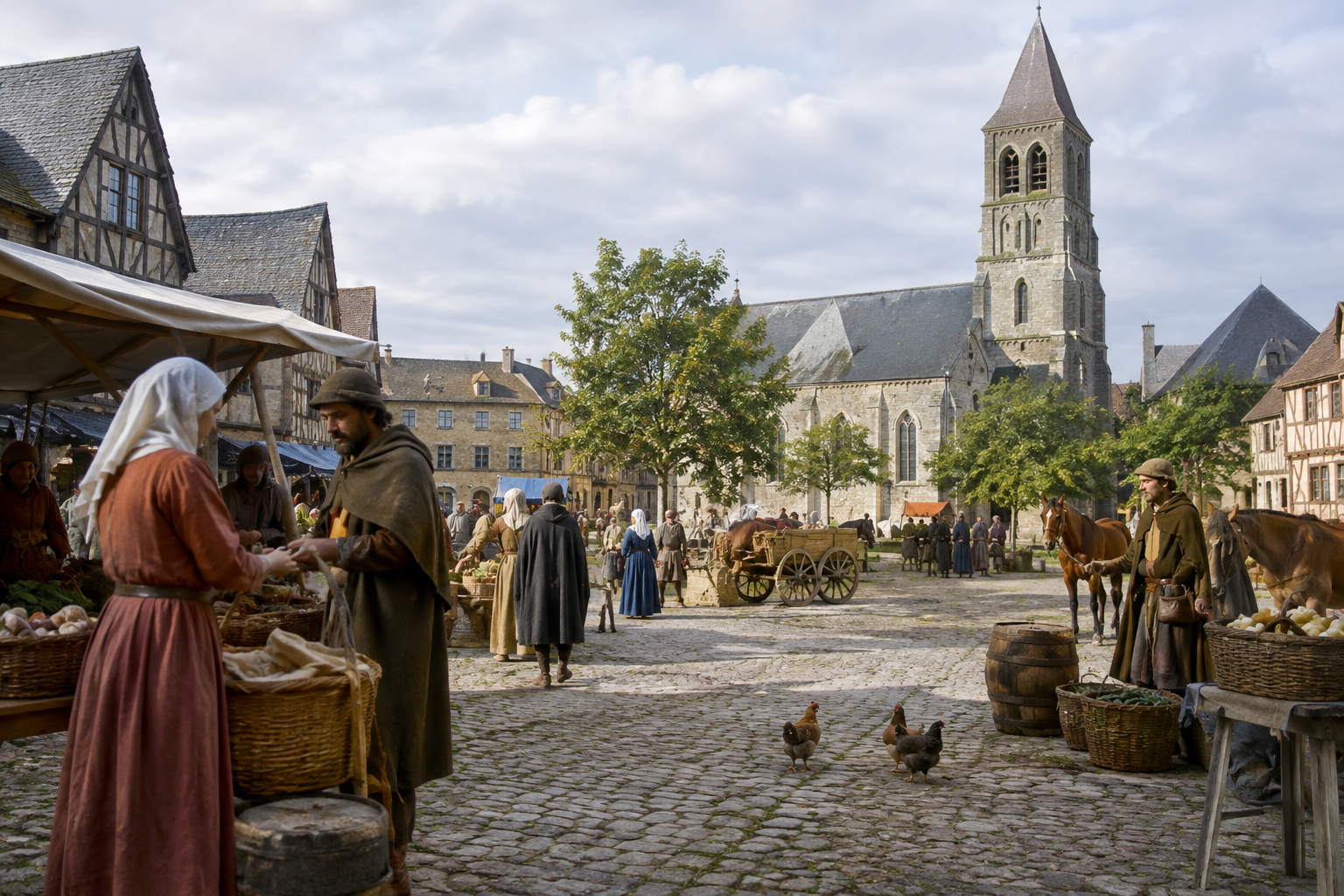
At Sint-Truiden in medieval Belgium, one male burial identified as ST2420 offers a neat, sharply dated glimpse of a paternal line that otherwise tends to hide inside broader population history. Dated around AD 900 and recovered from the Groenmarkt area, he is associated here with the Y-DNA haplogroup I1d59, a very specific branch within the much wider I1 lineage that is often discussed in connection with northern Europe and Germanic-speaking populations.
That matters because a narrow Y-chromosome branch is not the same thing as an entire people. Y-DNA follows one direct paternal line only, yet even a single securely placed medieval individual can show where that line had arrived, and where it had become ordinary enough to appear in an urban burial ground rather than in some exceptional or exotic setting. In the case of ST2420, the interest lies not in royal glamour or battlefield drama, but in the fact that he turns up in a thriving early medieval town in the Low Countries.
Sint-Truiden was not a frontier outpost in the romantic sense. It was an important settlement in the region that is now Belgian Limburg, shaped by the political and religious worlds of the Carolingian and post-Carolingian centuries. By about AD 900, this was a landscape of churches, markets, estates, and local power, tied into wider networks stretching across the former Frankish world.
The Groenmarkt burials belong to that world of maturing medieval urban life. A finding like ST2420 is valuable precisely because it anchors a paternal lineage in a real place with a real date: not a mythic homeland, not a guessed migration arrow on a map, but a man buried in a community of the early Middle Ages.
A recent ancient-DNA study on medieval Sint-Truiden explored how urbanization and local population structure were taking shape in the town; that broader research context is the best setting for understanding ST2420, even when the most cautious reading sticks to the basic facts of site, period, and paternal assignment. The associated publication can be found here: https://genomebiology.biomedcentral.com/articles/10.1186/s13059-025-03580-z.
The most sensible way to describe I1d59 is as a fine-grained descendant branch of haplogroup I1. The parent haplogroup I1 is widely associated with northern Europe, especially Scandinavia and regions influenced by early Germanic expansions, but that does not automatically tell us the full history of every much smaller downstream branch. A lineage such as I1d59 may have spread, split, and settled in ways that are more local and more recent than sweeping textbook summaries suggest.
So ST2420 should not be turned into a mascot for all I1, still less for all medieval Flemings or all Germanic speakers. What he does show is that by the early medieval period, a paternal line placed in I1d59 was present in the Low Countries, in a Christianizing and urbanizing society that had already absorbed centuries of movement, intermarriage, and political change.
That is often how ancient DNA works at its best. It does not give us a cartoon tribe with a single chromosome. It gives us a very particular man, in a very particular burial landscape, and asks us to think about how paternal lines persisted within much larger, mixed communities.
If one wants to understand why a branch like I1d59 might matter in Belgium, the wider regional setting is crucial. The Low Countries were never sealed off. Roman rule, post-Roman reorganization, the rise of Frankish power, the spread of Christianity, and the movement of peoples around the North Sea all shaped the human landscape long before ST2420 was buried.
By AD 900, the region had already lived through the collapse of Roman administration, the consolidation of Frankish kingdoms, and repeated contacts linking the Rhine, Meuse, Scheldt, and North Sea coasts. In that kind of setting, a paternal lineage associated with the broader I1 family is not surprising. What is useful is seeing it appear in a documented medieval context rather than assuming its presence from later modern distributions alone.
Readers interested in the longer genetic background to Germanic-speaking expansions may find this broader piece useful:
That wider framework helps, but it should be used carefully. Language spread, political identity, and Y-DNA are related only loosely. A man with I1d59 in medieval Sint-Truiden may belong to the historical world of the Franks and their successors without that chromosome somehow speaking a language on its own.
One of the most interesting things about medieval genetic evidence is how often it comes not from legendary founders but from ordinary town populations. Urban cemeteries are awkward, messy, and historically rich. They preserve the people who made a place function: households, laborers, clerics, traders, dependants, and families whose names are mostly gone.
That is the real force of ST2420. He is not important because he can be linked to a castle or a noble pedigree; no such connection is needed here. He matters because he belongs to the social fabric of an early medieval town, and because his paternal line shows how one branch of I1 had become part of everyday life in the region.
This is also where ancient DNA can correct instinctive habits of thought. We are often tempted to imagine paternal lineages arriving in dramatic bursts, attached to invaders, kings, or heroic migrants. Yet many lineages become historically visible only when they appear among settled communities, where generations of marriage and mobility have already done their quiet work.
Roman-barbarian frontier mixing
The great temptation with an I1 branch is to leap straight to Vikings, Saxons, or some other ready-made label. Sometimes that is justified by context; often it is not. In Sint-Truiden, the more persuasive story is one of continuity and integration in a region long shaped by movement from the north, east, and south.
The Low Countries sat close to major corridors of exchange and settlement. Roman military zones on the Rhine, post-Roman communities on former imperial ground, and early medieval polities all contributed to a population history in which lineages from different backgrounds could become thoroughly local. ST2420 belongs to that local history.
Seen this way, I1d59 is less a badge of a single migration event than a signpost within a layered North Sea and Rhineland past. It may well connect, in some deeper paternal sense, to the same broad northern worlds that ancient genomics has illuminated elsewhere. But the sample itself is most powerful when kept in its proper frame: early medieval Belgium, one burial, one paternal line, one town in transition.
For someone researching a modern paternal line, I1d59 points toward a branch of the wider I1 family that was present in the early medieval Low Countries by about AD 900. The sample ST2420 from Sint-Truiden does not tell us that every bearer of this branch descends from one medieval Belgian family, nor does it confer a tidy ethnic label. What it does offer is something better grounded: evidence that this paternal lineage was part of the human landscape of a growing medieval town in northwestern Europe.
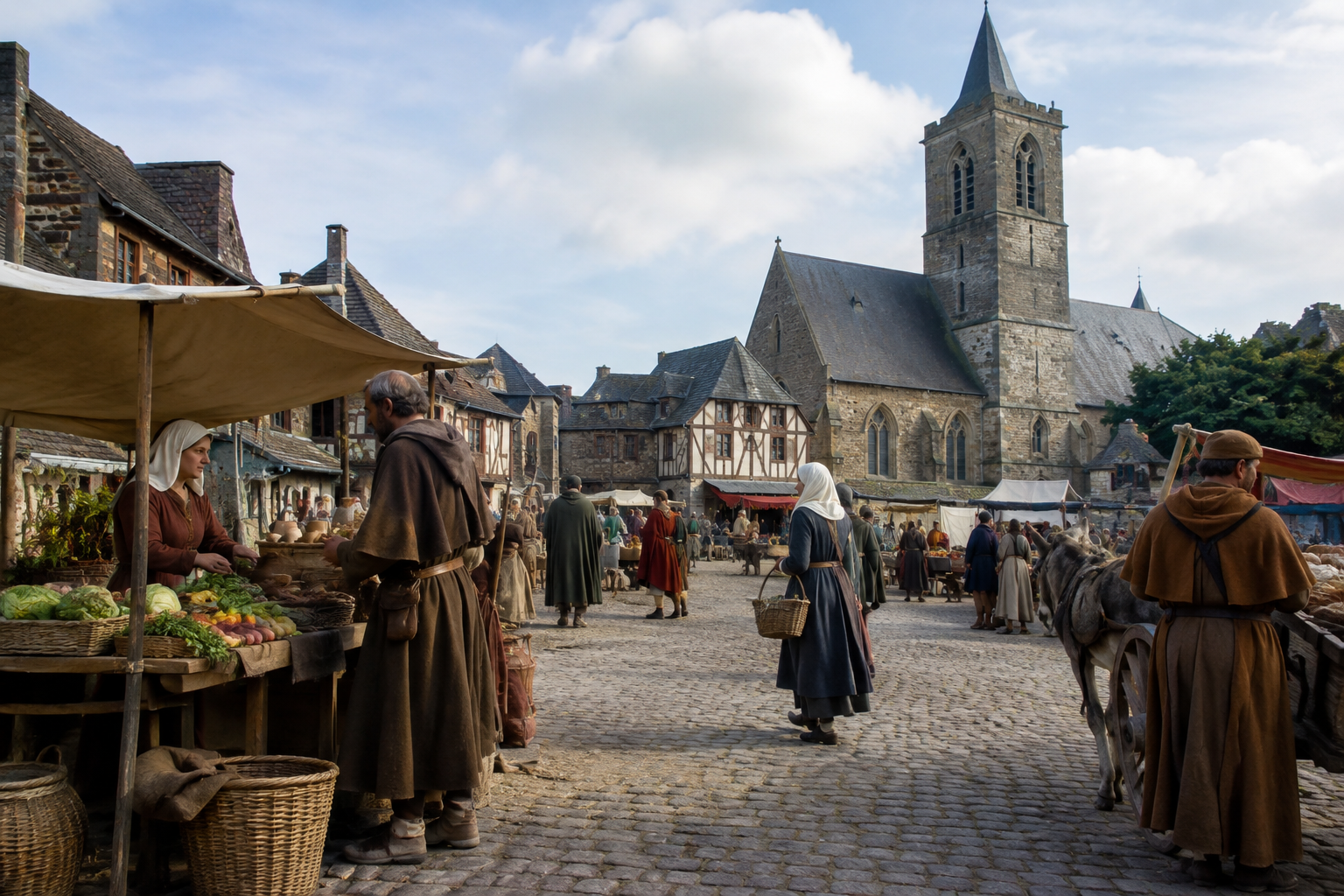
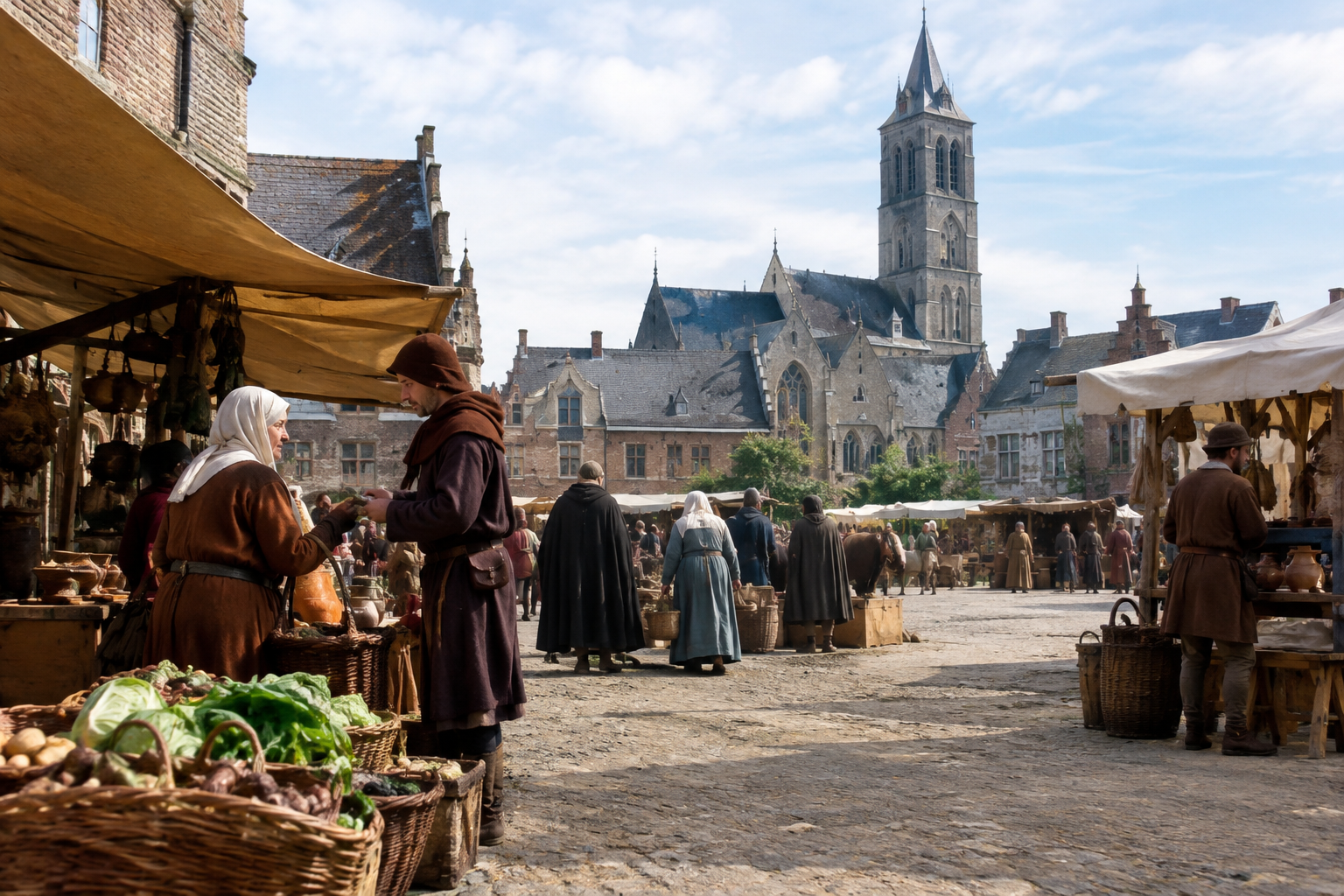
That is a modest conclusion, but a useful one. Ancient DNA is often strongest when it replaces grand myth with place, date, and context. In ST2420, I1d59 is not floating in abstraction. It is standing, as it were, on the streets of medieval Sint-Truiden.
Comments