Haplogroup R1b1a1b1a1a2c1a1a

– 6 min read


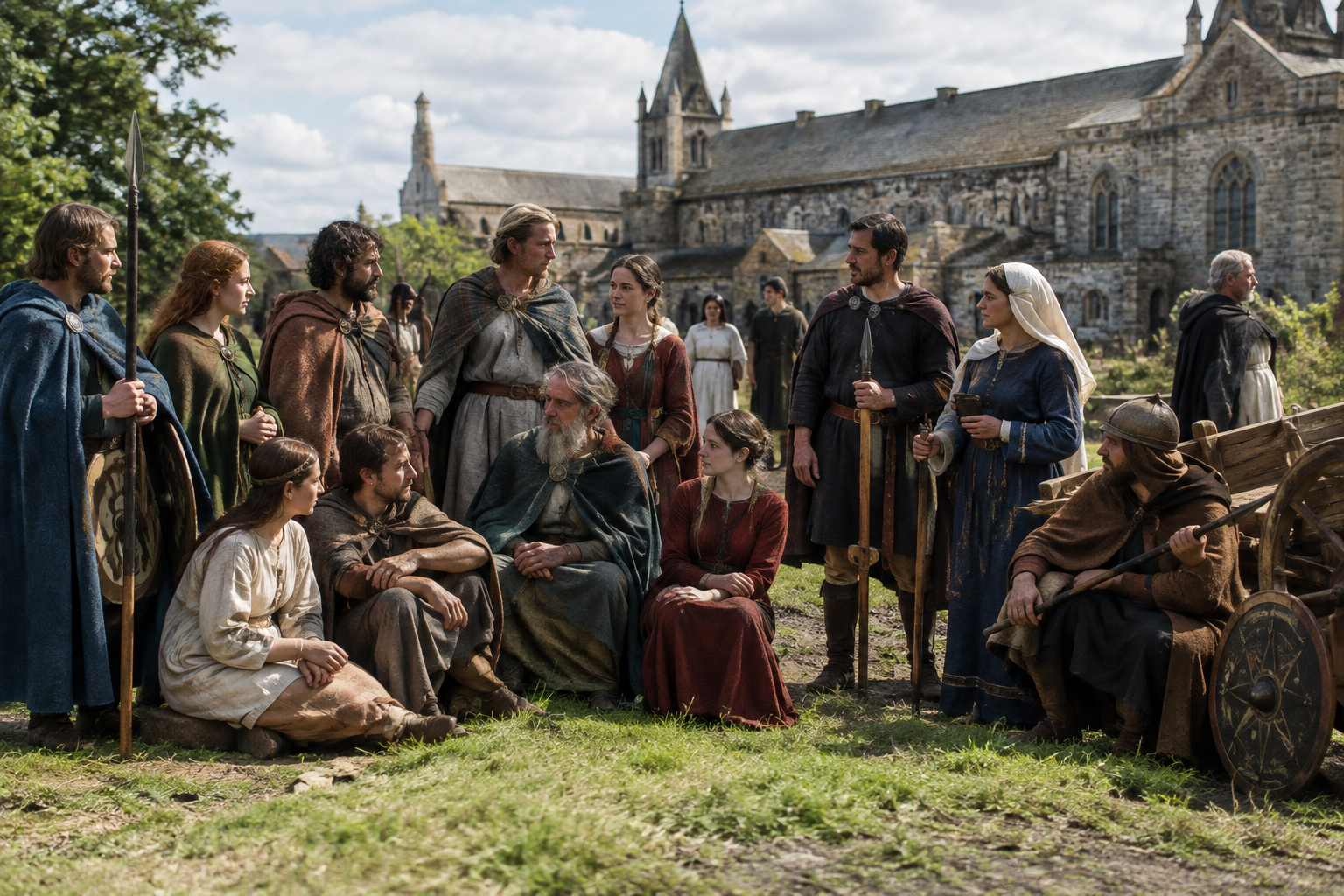
Some Y-DNA haplogroups announce themselves with a fanfare across half a continent. Others are more intriguing precisely because they seem to gather around particular places, periods, and archaeological stories. Haplogroup R1b1a1b1a1a2c1a1a belongs to that second category. On the face of it, the name is forbiddingly technical, a string of letters and numbers that looks more like a shelf mark in an archive than a human story. But behind it lies a striking pattern: a cluster of ancient male-line evidence in Iron Age Britain, especially in eastern Yorkshire, with later appearances in medieval England and wider Britain.
It is worth pausing over what a Y-DNA haplogroup can and cannot tell us. Y-DNA traces a direct paternal line only: father to son to son across the generations. It does not describe a person's whole ancestry, identity, language, or culture. Still, as ancient DNA has transformed archaeology, Y-DNA has become one of the most revealing ways to follow male-line continuity and movement over very long spans of time. In the case of R1b1a1b1a1a2c1a1a, the evidence supplied here makes Britain, and especially Iron Age Britain, the proper stage on which to tell its story.
This branch sits within the wider haplogroup R1b, one of the major Y-chromosome lineages in western Europe. That broad parent lineage has a deep and complicated prehistory, and many of its branches became widespread in later prehistoric Europe. But one must be careful here: the long history of R1b as a whole should not simply be pasted onto a much narrower subclade. What we can say with more confidence is that this particular branch appears, from the evidence provided, in a distinctly British context and especially among Iron Age communities.
That matters because Iron Age Britain was not some timeless tribal backwater. It was a world of regional elites, local identities, long-distance contacts, and communities that buried their dead in ways that could be highly expressive of status and belonging. The paternal line represented by R1b1a1b1a1a2c1a1a seems to have been one thread in that world, not necessarily dominant everywhere, but clearly present across a surprisingly broad swathe of Britain.
Explore Celtic Origins in Ancient DNA
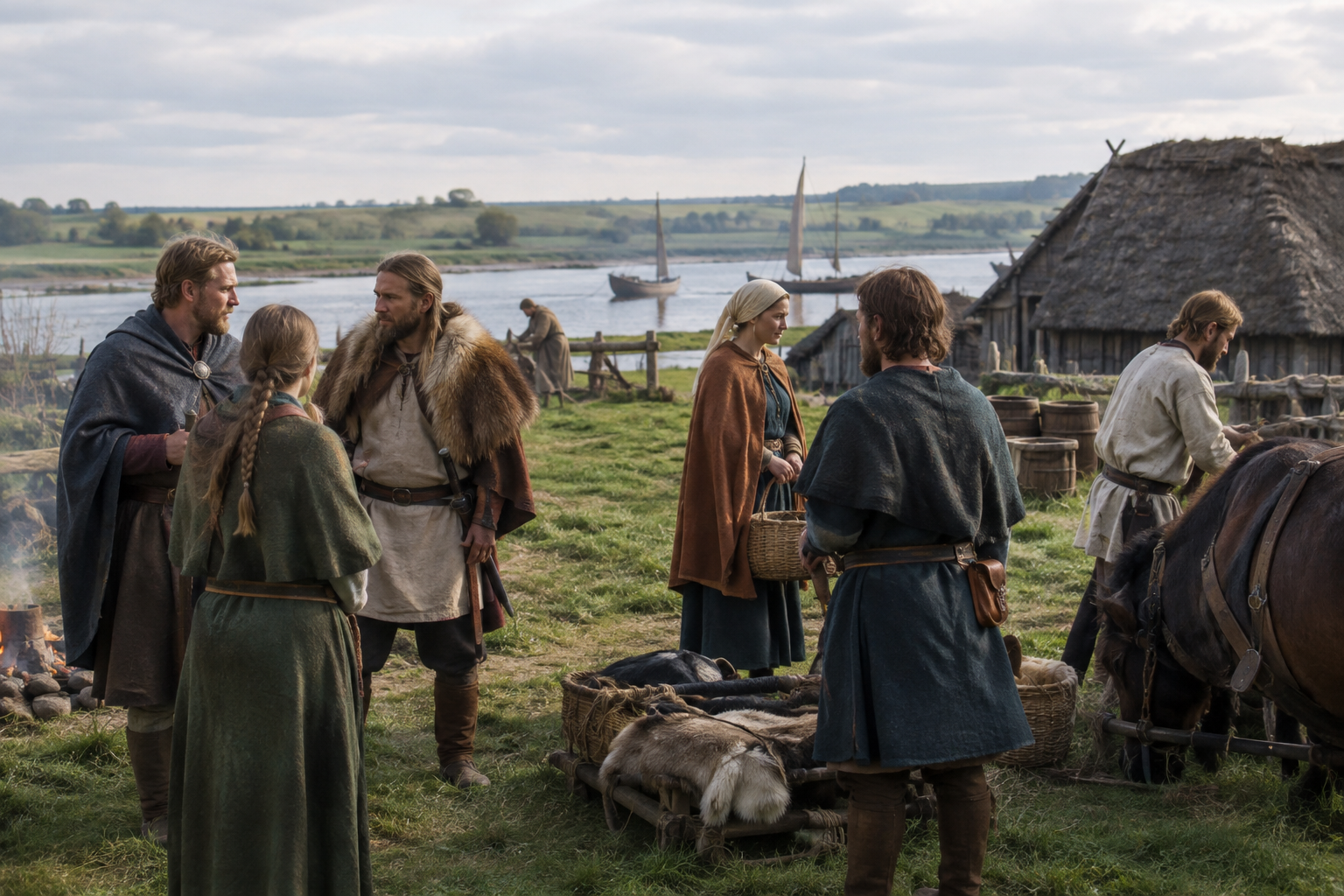
The most arresting evidence comes from East Yorkshire, in the territory associated with the ancient Parisi. Here the archaeological record has already made the region famous: square barrows, chariot burials, and cemeteries that have long fascinated historians of Iron Age Britain. Ancient DNA now adds another layer.
At Wetwang Slack, dated to around 225 BC, multiple individuals in the supplied dataset belong to this haplogroup context: I37337, I36824, I36784, I31513, I30983, I30978, I36909, I36800, I37136, and I37137. That is not an isolated curiosity. It is a concentration. And concentrations like this are often what make archaeogenetics so exciting, because they hint at local male-line persistence, kin-structured burial grounds, or simply a region where one paternal branch was especially well established.
Among them, I36892, described as an Elite Celtic Parisi Chariot Burial Iron Age England East Yorkshire Wetwang Slack Year:225 BC, is particularly evocative. The chariot burial has become almost emblematic of East Yorkshire's Iron Age elite. Yet the genetic point is not that this man was "the founder" of anything, nor that everyone of this haplogroup descends from him. Rather, his burial shows that this paternal line was present not only among ordinary cemetery burials but also in at least one high-status funerary setting.
Nearby Pocklington adds to the picture. The samples I21955 and I21263, both dated to 225 BC, and I21863, dated to 88 BC, show that the same paternal signature was not confined to a single site. It extended across the East Yorkshire landscape over generations. That makes the region one of the clearest archaeological windows onto this lineage.
Read More on Iron Age Britain and Kinship
If East Yorkshire gives us a dense cluster, the other samples show that this was not a purely local curiosity. The lineage also appears in Thame, Oxfordshire in I14807 dated to 290 BC, at Broom Quarry, Bedfordshire in I16597 dated to 307 BC, and at Harlyn Bay, Cornwall in I16380 dated to 200 BC. There is a northern reach too: I16499 from East Lothian, North Berwick, Scotland dated to 190 BC, and I2799 from Iron Age Orkney Scotland dated to 25 BC.
That geographical spread is remarkable. It suggests that this paternal branch, or closely related branches within the same immediate lineage, was part of Iron Age Britain from the south coast to northern Scotland and the islands. One should not turn that into a claim that all these men belonged to one tribe, one ethnicity, or one political network. Britain in this period was diverse. But taken together, the evidence points to a male-line ancestry embedded in Britain well before the Roman conquest and visible in several regional populations.
This is where ancient DNA is particularly useful. Written sources for pre-Roman Britain are scanty, late, and often external. DNA does not replace archaeology, but it can show that beneath changing artefacts and local burial customs there may be longer-term paternal continuity linking communities across centuries.
The story does not stop in prehistory. A later sample, ATP_PSN_68, comes from Medieval England Cambridge St Johns Hospital Year:1250 AD. That matters because it shows this paternal line still present in England roughly 1,400 years after many of the East Yorkshire burials.
Of course, continuity of haplogroup is not the same thing as tracing one documented family tree all the way from the Iron Age to medieval Cambridge. That would be far too strong a claim. But the broader point is important: Y-DNA branches can persist in a region across enormous stretches of time, surviving conquests, language shifts, dynastic changes, and social reorganization. The man buried at St John's Hospital lived in a Christian, urban, medieval world utterly unlike that of the Parisi cemeteries, yet part of his direct paternal ancestry reached back into much older British landscapes.
Readers interested in how genetics illuminates later English populations may also enjoy work on medieval and post-Roman Britain, where ancient DNA repeatedly shows that continuity and mobility existed side by side.
Discover DNA in Post-Roman Britain
The supplied noble-family field is empty here, and that is actually a useful reminder of how responsible historical genetics should work. It is tempting, when one sees a lineage appearing in Iron Age Britain and medieval England, to leap straight to castles, barons, and surnames. But without specific family data, that would be guesswork dressed up as certainty.
What can be said is that many later English, Scottish, and British noble houses occupied landscapes where lineages like this had been present for centuries, perhaps millennia. Castles, manor houses, and ancestral estates often stand in regions whose human history runs far deeper than the masonry now visible. A medieval fortress in Yorkshire or a lordly seat in Scotland may preserve the memory of landholding and power, but it does not by itself prove continuity of one paternal line from Iron Age burial mound to feudal pedigree.
That distinction matters. Genetics, archaeology, and genealogy each answer different questions. Ancient DNA can show that certain paternal lines were present in a region long before heraldry and written pedigrees. Historical records can show which families later ruled, fought, married, endowed monasteries, and built strongholds there. Sometimes the two kinds of evidence meet neatly; often they simply sit alongside one another, offering context rather than proof.
For readers interested in how MyTrueAncestry approaches later aristocratic history, noble house profiles can be especially rewarding when read with that caution in mind.
Explore a Medieval Noble House
What makes R1b1a1b1a1a2c1a1a so interesting is not a grand imperial migration story, at least not from the evidence provided here. It is the opposite: the visibility of a paternal line in real communities across Iron Age and medieval Britain. From Wetwang Slack and Pocklington in East Yorkshire to Oxfordshire, Bedfordshire, Cornwall, East Lothian, Orkney, and later Cambridge, this is a lineage that appears rooted in the British past.
The East Yorkshire cluster is especially valuable because it gives us not just one man but a whole local pattern. Archaeologically, those Parisi burials belong to one of the most distinctive Iron Age regions in Britain. Genetically, they suggest that this branch was woven into that society at several levels, including elite burial practice. The later medieval appearance reminds us that paternal lines can endure through vast historical changes without preserving a written trail.
And that, in the end, is why ancient DNA is so compelling. It gives us access to lineages that ordinary documents never recorded. Not kings only, not nobles only, but men buried in cemeteries, in barrows, in hospitals, and on the edges of settlements. Their Y-chromosomes do not tell us everything about them. But they do tell us that some male lines were astonishingly durable, and that the map of Britain's past is fuller and stranger than older histories allowed.
If you want to see whether your own DNA shows connections to ancient Britons, Iron Age communities, or later historical populations, MyTrueAncestry offers a fascinating way into that evidence. These matches do not prove direct descent from a particular ancient individual or membership in a noble family, but they can open a remarkable window onto the deep past behind your family story.
Comments