Haplogroup R1b1a1b1a1a2c1

– 6 min read


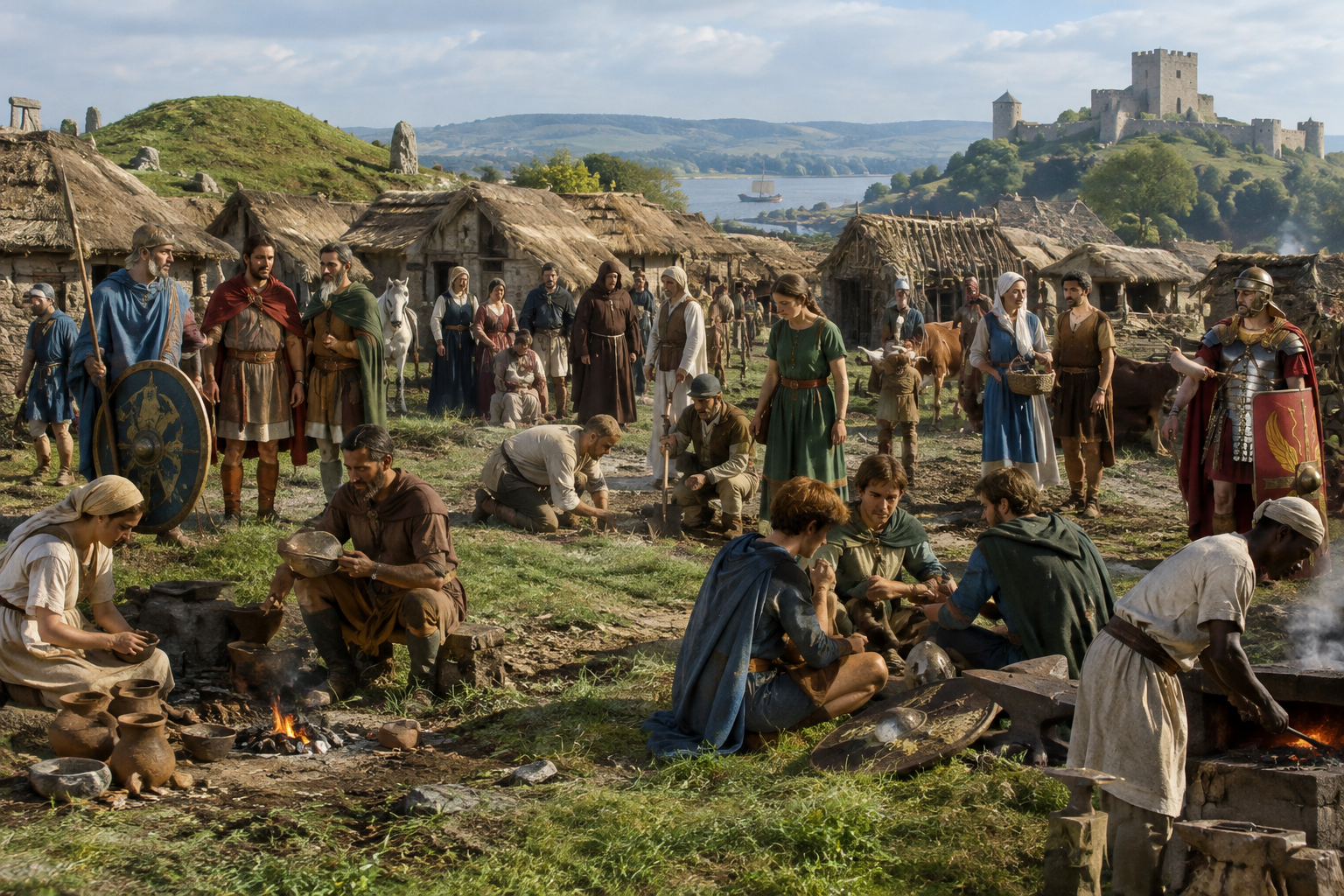
Some Y-chromosome lineages announce themselves with a bang: royal tombs, famous skeletons, neat historical labels. R1b1a1b1a1a2c1 is more interesting than that. It turns up across a startling spread of ancient contexts, from an Early Bronze Age burial in Hungary to Iron Age Britain, Roman Iberia, medieval Ireland, northern Spain, and even the Viking world. What makes it so compelling is not a single dramatic moment, but its persistence across centuries of movement, conquest, settlement, and local continuity.
As always with Y-DNA, a note of caution is essential. A Y-haplogroup traces one direct paternal line only: father to father to father. It does not represent a person's whole ancestry, culture, language, or identity. Still, paternal lines can be historically revealing. In the case of R1b1a1b1a1a2c1, the ancient evidence suggests a branch embedded in the long story of western Eurasia, especially the worlds shaped by Bronze Age mobility, Iron Age societies, and the later reshaping of Europe under Roman, post-Roman, and medieval conditions.
This subclade sits deep within the wider R1b tree, a major paternal lineage long associated in broad terms with later prehistoric expansions across parts of Europe. But one must be careful here: the vast history of R1b as a whole cannot simply be pasted onto a narrow branch like R1b1a1b1a1a2c1. What the sample evidence does allow us to say is that this lineage appears in contexts linked to the great demographic changes of the Bronze Age and then remains visible in western and central Europe for a very long time afterwards.
A key early anchor is I3525, from Early Bronze Age Hungary Yamnaya Sarretudvari-Orhalom, dated to 2450 BC. This is exactly the sort of find that reminds us how much of later European paternal history was shaped by steppe-connected movements in the third millennium BC. One sample does not prove a neat migration route for this precise subclade, but it places the lineage in a world where mobility across the Carpathian Basin mattered enormously.
From there, the picture broadens westward. Britain in particular is full of evidence for this lineage or closely associated paternal continuity within the same branching neighborhood. We see it in Early Bronze Age and Bronze Age contexts such as I2565 from Bronze Age Amesbury Down Wiltshire England dated 2287 BC, I27380 from Early Bronze Age West Sussex England dated 2300 BC, and I18606 from Early Bronze Age Thornholme Yorkshire England dated 1892 BC. These are not all the same community, nor do they tell one simple story, but together they show this paternal strand firmly present in Bronze Age Britain.
Explore Celtic Origins in Ancient DNA
If the Bronze Age gives us the opening act, the Iron Age gives us density. This haplogroup appears repeatedly in Britain, and not as a one-off curiosity. The East Yorkshire burials are especially striking. At Wetwang Slack, associated with the Arras culture and the Celtic Parisi, we find a cluster of individuals dated around 225 BC: I36873, I36847, I36840, I36757, I36763, I36770, I36908, and I30967. A concentration like that suggests not random arrival but a lineage established within a local population.
And it is not just Yorkshire. The same broader paternal presence appears across Iron Age England and beyond: I5505 from Celtic Briton Pocklington Yorkshire England dated 295 BC; I19909 from the Iron Age Cantii Tribe United Kingdom East Kent Ramsgate dated 289 BC; I12926 from Celtic Briton Saxon Way Fairford Gloucestershire England dated 100 BC; I17261 from Celtic Briton Suddern Farm Hampshire England dated 200 BC; and I19656 from Celtic Durotriges Ham Hill Fort Somerset England dated 250 BC.
This is the sort of evidence that makes archaeogenetics so useful. Written sources tell us tribal names, political tensions, and Roman impressions of "Britons." DNA shows that beneath those labels were paternal lineages with long local histories, sometimes persisting across regions and centuries.
The continental picture fits that pattern too. In Gaul there is CGG022427 from the Belgic Suessiones Tribe France Bucy-le-Long, dated 390 BC. In northern Italy there are 3214 and 3214s from the Gallic Cenomani Tribe Italy Verona Seminario Vescovile, dated 300 BC. These samples do not prove that one tribe "owned" the lineage, but they do place it within Iron Age Celtic-speaking or Celtic-associated zones stretching from Gaul into Britain and northern Italy.
Read About Iron Age Britain and Kinship
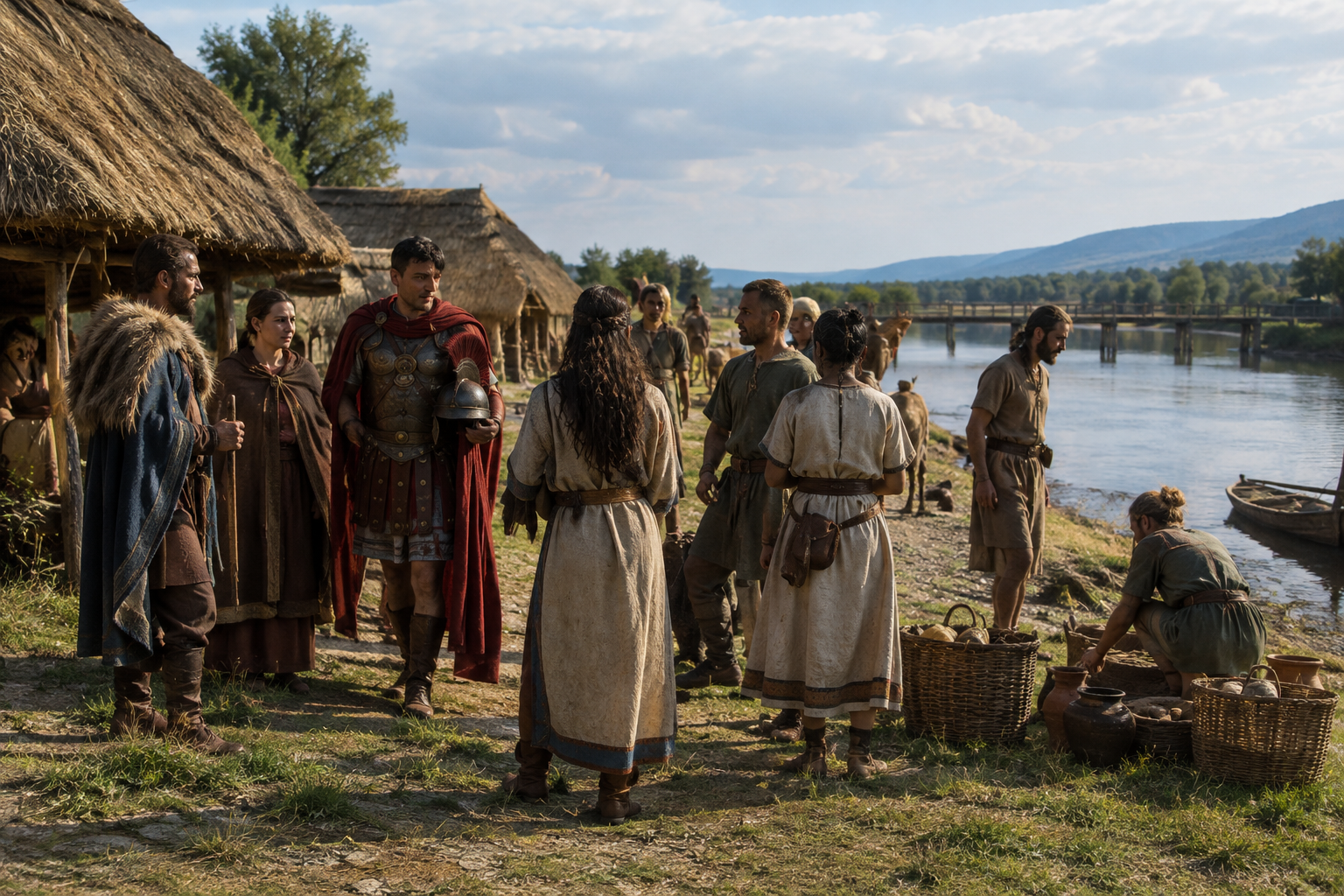
Then comes the Roman and post-Roman world, when roads, armies, trade, and migration scrambled old boundaries without erasing local people. In Iberia, I23763 from Roman Iberia Merida Necropolis Blanes dated 450 AD and I6492 from Roman Villa Tarragona dated 350 AD show this branch in a thoroughly Romanized landscape. That matters because it demonstrates continuity and mobility after conquest, not simply replacement.
Northern Spain adds another intriguing sequence. At Las Gobas we have ldo039 from the Dark Ages Northern Spain Las Gobas dated 650 AD, and later ldo052 and ldo242 from Medieval Northern Spain Las Gobas dated 1000 AD. This is exactly the kind of multi-period site that lets us think about local continuity across the collapse of Roman rule and the making of medieval Christian Spain.
The same broad lineage also appears in early medieval Britain and Ireland: BUK055 from Early Anglo Saxon Period Buckland Dover England dated 400 AD; HAD018 from Early Anglo Saxon Period Hatherdene Close Cambridgeshire England dated 500 AD; LAK010 from Early Medieval Suffolk England Lakenheath dated 650 AD; and in Ireland, KIL012, KIL015, and KIL025 from Medieval Ireland Kilteasheen Roscommon Bishops Seat dated 650 AD. Again, this does not mean one medieval people can be reduced to one Y-lineage. It does show that this paternal branch remained part of the population fabric on both sides of the Irish Sea.
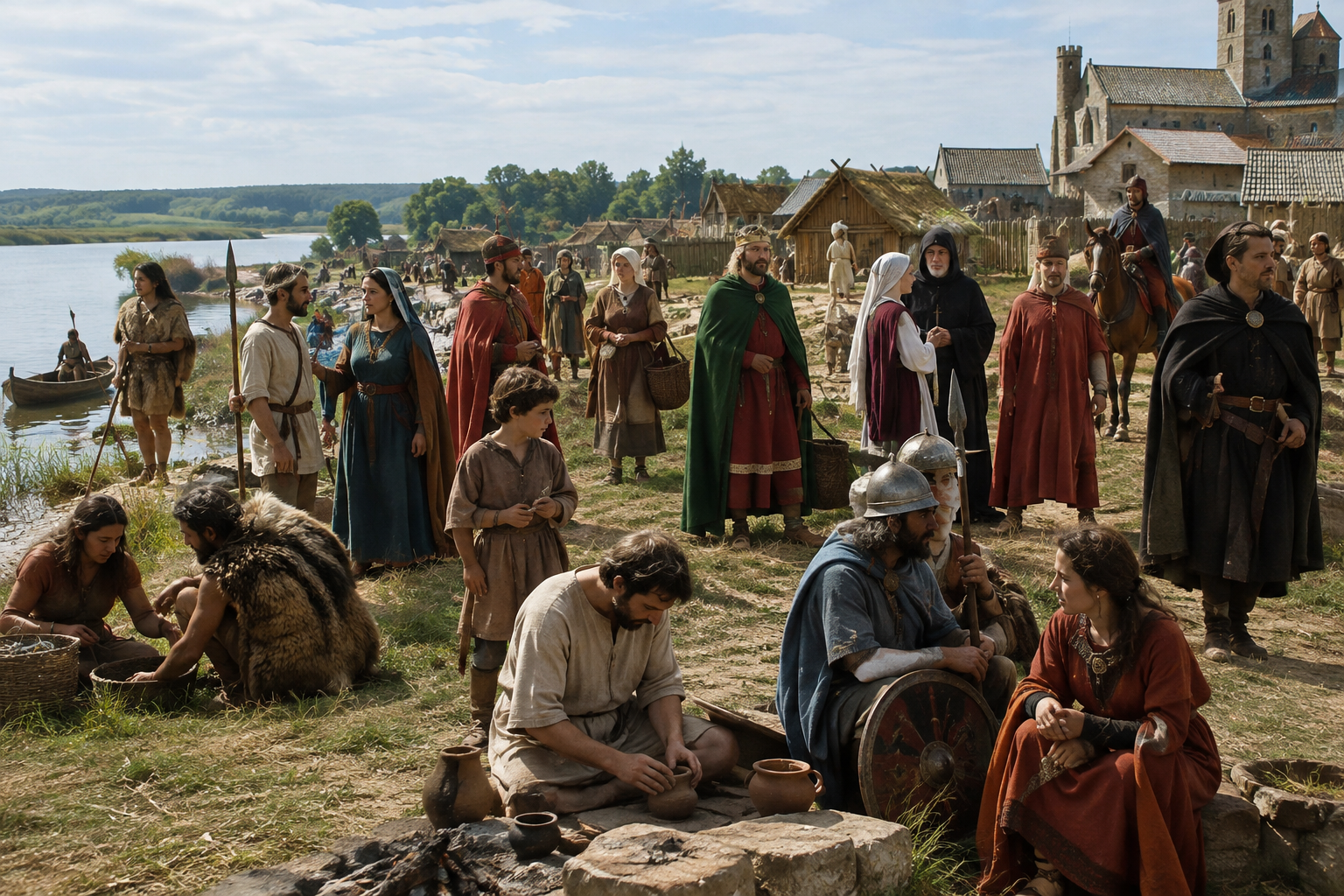
Further north and east, the line does not disappear. We see CGG018915 and CGG018915x from Pict Era Scotland Orkney Mine Howe dated 115 AD, VK31 from Viking Age Skara Varnhem Sweden dated 1050 AD, SWG003 from Post Viking Age Hedeby Schleswig Rathausmarkt Southern Jutland dated 1140 AD, and KNS-A1 from Viking Norse Iceland dated 935 AD. That is not a tidy national story. It is a North Sea story.
Discover Roman Hispania's Genetic Legacy
The supplied noble-family field is blank, and that is worth saying plainly rather than pretending otherwise. We are not given a documented medieval dynasty, clan, or castle specifically tied to R1b1a1b1a1a2c1 in this case. So the honest story here is not one of a named house with a neat pedigree, but of the kind of paternal lineage that would have flowed through the same regions later dominated by castles, bishoprics, manors, and noble families.
That is, in fact, rather Mary Beard-ish in spirit: history is not only kings in stone keeps. It is also the anonymous men buried in cemeteries, caves, barrows, and churchyards whose descendants, neighbors, or unrelated successors later built the medieval world. The Kilteasheen burials in Roscommon, the Las Gobas sequence in northern Spain, the Pict-era men at Mine Howe, and the Anglo-Saxon burials in Kent and Cambridgeshire all belong to landscapes that would eventually be mapped by lordship and fortification.
Genetics and genealogy do different jobs here. A castle can preserve the memory of a family; a Y-haplogroup can preserve the memory of a paternal line. But one does not automatically prove the other. Without specific documentary and genetic evidence, it would be irresponsible to claim direct descent from any noble house merely because a lineage is present in the same region centuries earlier.
Explore Iberian Genetic History
The best way to understand R1b1a1b1a1a2c1 is not as the badge of one tribe or one dynasty, but as evidence of long-term paternal persistence across changing worlds. It appears in an Early Bronze Age steppe-connected setting in Hungary, in Bronze Age Britain, in Iron Age Celtic and Brittonic contexts, in Roman Iberia, in post-Roman and medieval Spain, in early medieval Ireland and England, and in later Scandinavian and North Atlantic settings.
That is a remarkable spread. Not because it proves one gigantic family tree stretching neatly from Yamnaya burials to Viking towns, but because it shows how a paternal branch can remain historically visible while languages, kingdoms, burial customs, and political identities all change around it. Ancient DNA gives us access to that deeper continuity in a way chronicles never can.
If this haplogroup appears in your own Y-DNA results, MyTrueAncestry can help place it beside real archaeological individuals such as I3525, I2565, I5505, I23763, or ldo039. Those matches do not prove you descend directly from a particular ancient man, still less from a named noble family. But they can show you that your paternal line belongs to a story that runs through Bronze Age migration, Iron Age settlement, Roman mobility, and medieval community life.
Upload your DNA to explore how your ancestry may connect with ancient populations, archaeological discoveries, and the deep paternal history behind the written record.
Comments