Haplogroup R1b1a1b1a1a2b2b

– 5 min read


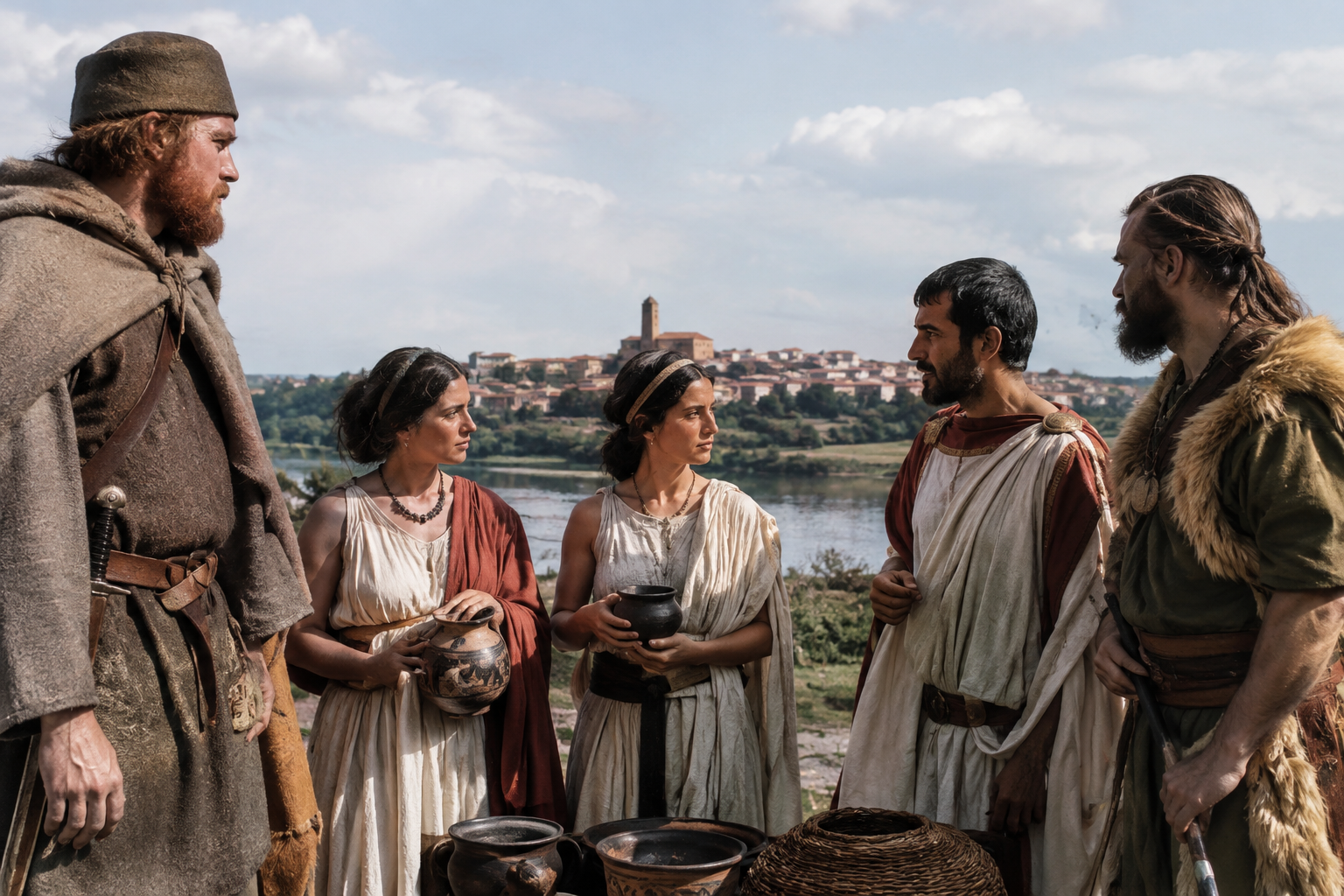
At Cherry Hinton in late medieval England, one excavated individual dated to about AD 1300, sample ATP_PSN_1155, carries the Y-DNA haplogroup R1b1a1b1a1a2b2b. That may sound forbiddingly technical, but the interesting point is not the string of letters and numbers by itself. It is that this paternal line turns up not in one neatly bounded people or kingdom, but across a series of very different archaeological worlds: medieval England, Roman Portugal, Iron Age Bohemia, and Etruscan Bologna.
In other words, this is a lineage that appears in Europe through time rather than in a single dramatic episode. Y-DNA follows one direct male line only, so it does not define a whole person's ancestry or identity. But when the same branch appears in several well-separated contexts, it gives us something solid to think with: continuity, movement, and the stubborn untidiness of real human history.
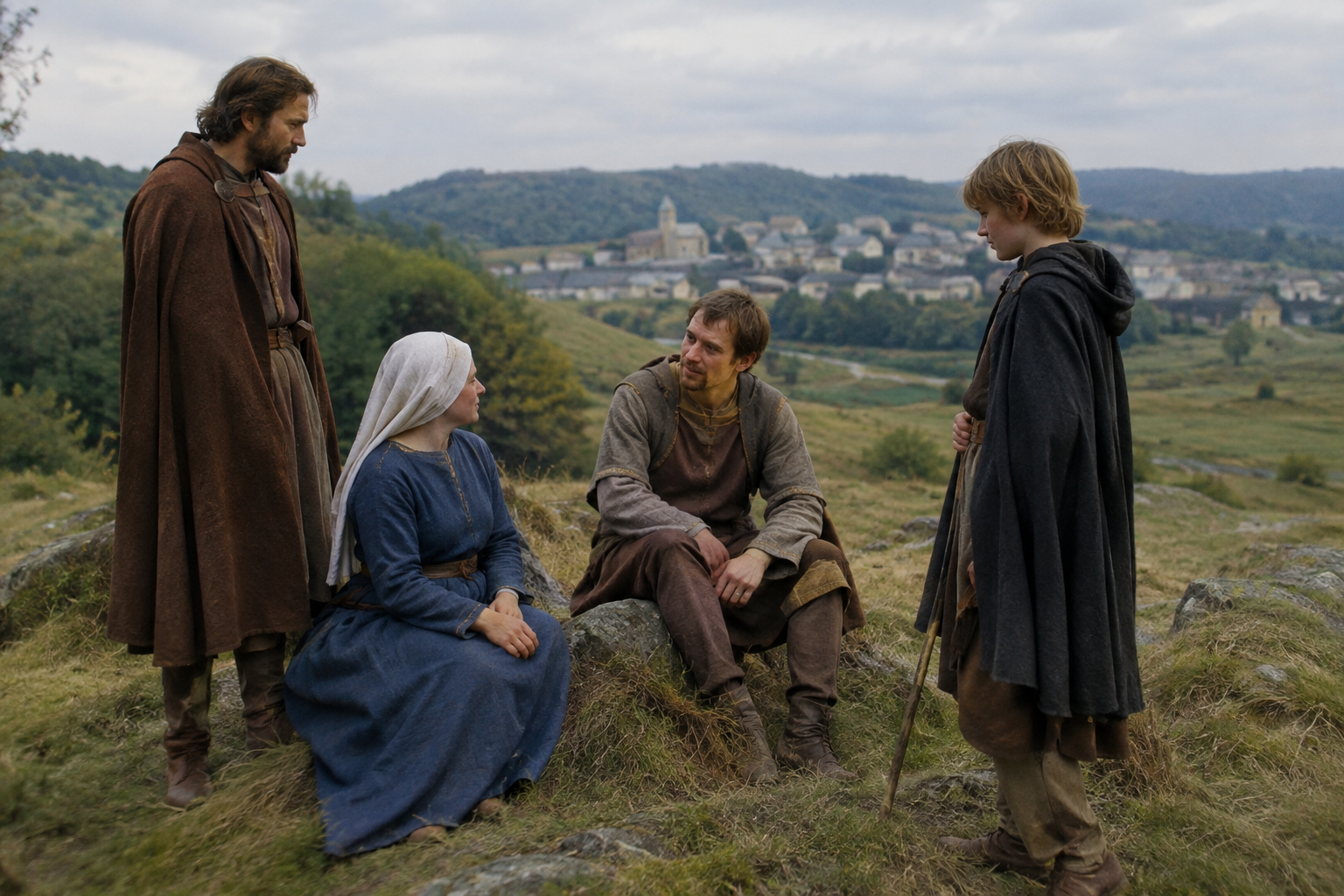
The clearest starting point is that Cherry Hinton individual, ATP_PSN_1155, dated to around AD 1300. By that date England was not an isolated genetic island, nor a simple survival of "Anglo-Saxon" or "Norman" ancestry. It was a society shaped by many earlier layers: prehistoric settlement, Roman rule, migrations around the North Sea, Scandinavian contact, and post-Conquest mobility.
So a paternal line like R1b1a1b1a1a2b2b appearing in medieval Cambridgeshire is not surprising in itself; what makes it useful is the broader pattern. The branch belongs within the very large western Eurasian Y-DNA family commonly called R1b, but the article's subclade is much narrower than that broad umbrella. We should not lazily project the whole history of R1b onto this one descendant twig. What we can say is that this medieval English man fits a lineage already visible in earlier continental settings.
Cherry Hinton matters for another reason too. It reminds us that by the later Middle Ages, paternal lines with deep prehistoric or Iron Age roots had long since been absorbed into local communities, parishes, and families whose identities were shaped more by village life, lordship, and churchyard burial than by anything a haplogroup label can capture.
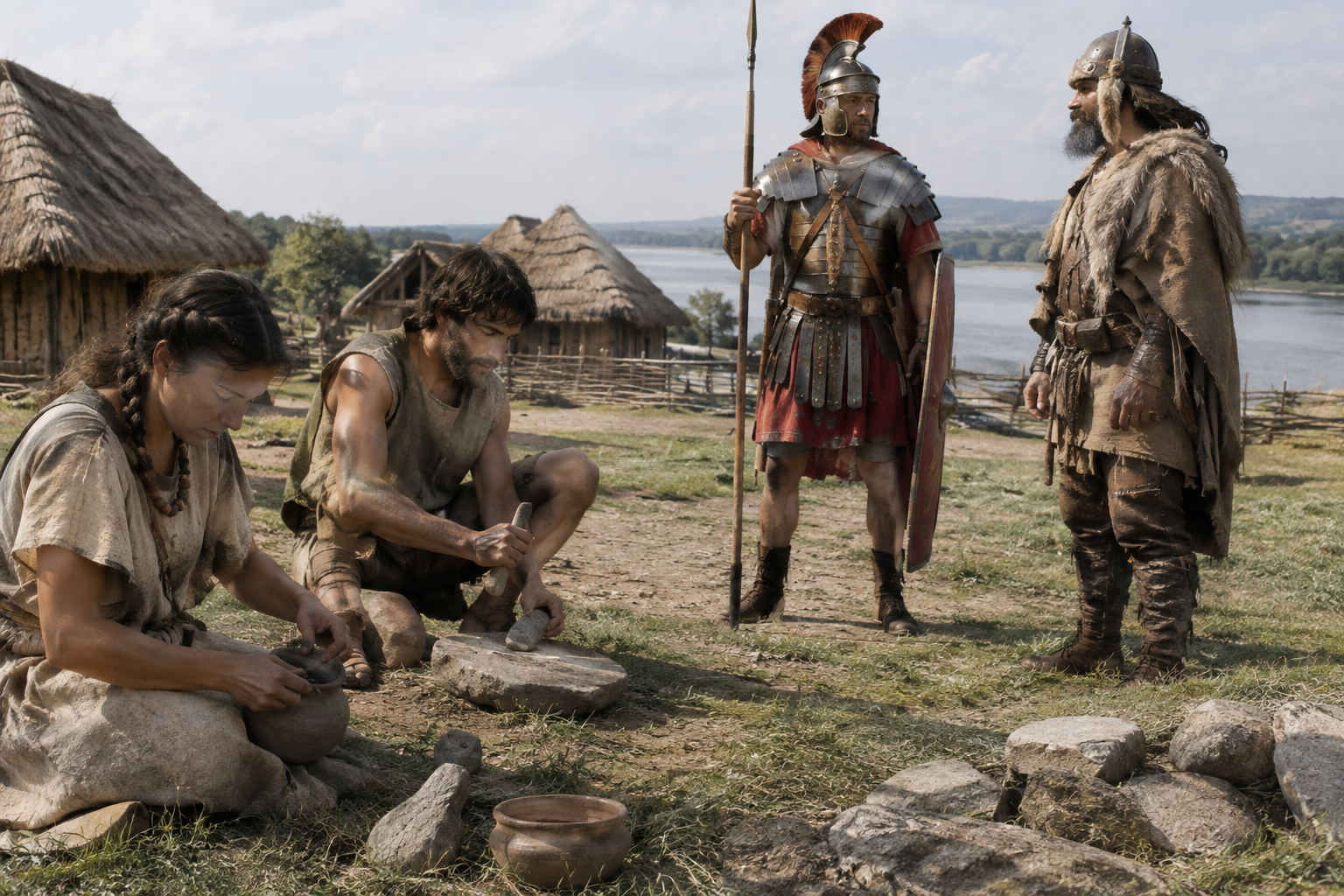
An older appearance comes from central Bohemia: I16273, dated to about 300 BC from Prague-Jinonice. This is a valuable waypoint because Iron Age Bohemia sat in a region of intense cultural change and long-distance contact. Central Europe in this period was no backwater. Goods, styles, technologies, and people moved through it constantly.
Finding this paternal branch there suggests that the line was already present in continental Europe centuries before the medieval English example. That does not mean the man from Jinonice was an ancestor of the Cherry Hinton individual in any traceable genealogical sense. It means the broader paternal lineage had a foothold in Iron Age central Europe, within the sort of population background from which many later European communities emerged.
This is also where archaeological labels need careful handling. A man buried in Iron Age Bohemia is not automatically to be assigned a language, tribe, or historical name from classical texts just because of geography. Ancient DNA is most useful when it anchors us to the excavated person first and the grand narrative second.
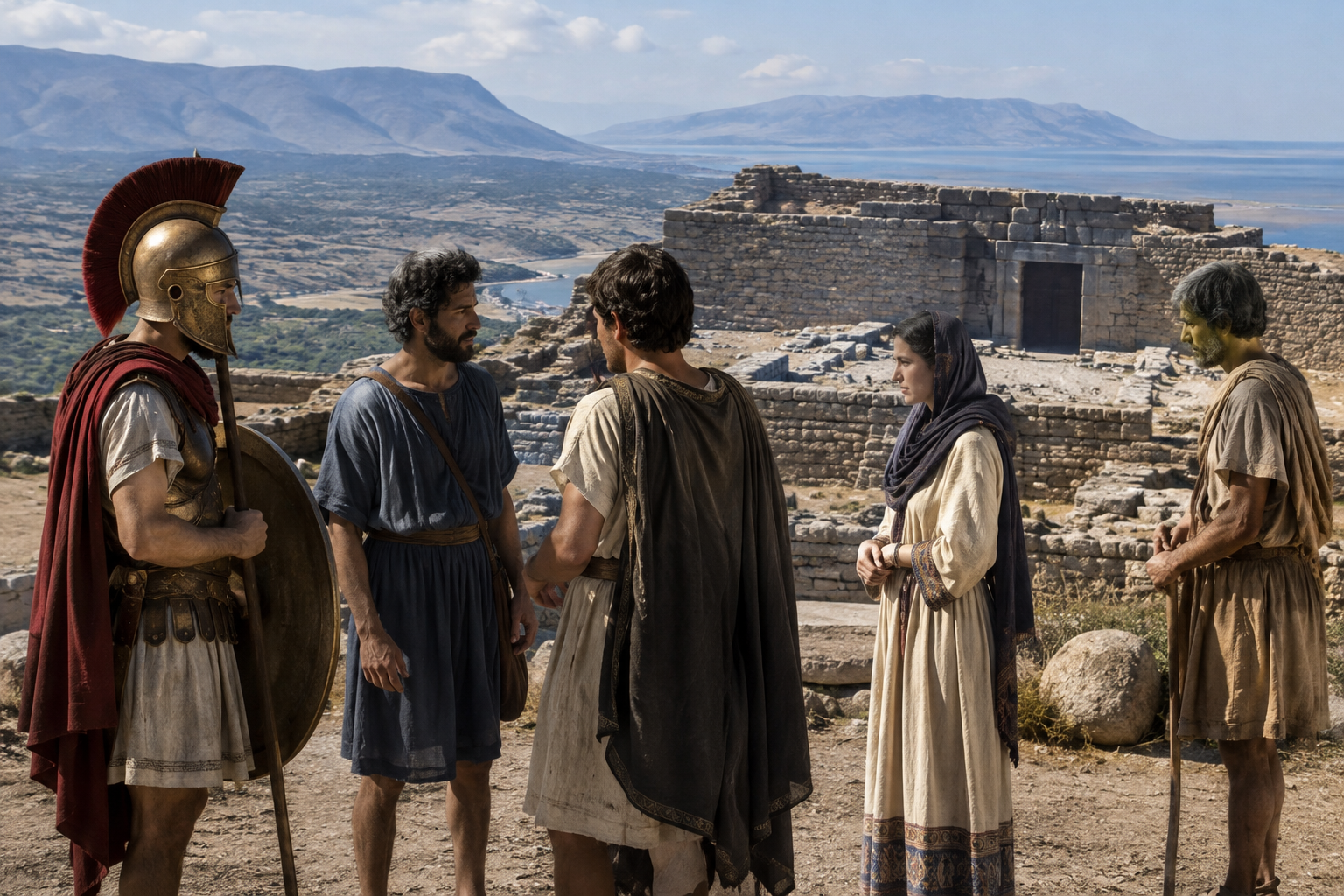
Perhaps the most striking cluster in this set comes from Felsina, ancient Bologna in the Po Valley, where two Archaic Etruscan individuals dated to about 650 BC, I38924 and I35799, are associated with this same haplogroup. Now that is archaeologically interesting. One sample can be a curiosity; two from the same place and period begin to look like a local male-line presence.
Felsina was one of the major Etruscan centers in northern Italy, positioned between the Italian peninsula and transalpine Europe. That geographical position matters. Bologna was not merely "Etruscan" in a sealed-box sense. It was a connected urban community in a busy corridor of exchange, and its people need not fit older caricatures of neatly bounded ancient populations.
Research on ancient individuals from Bologna has helped sharpen that picture, including work connected to genetic study of the area's Etruscan-period population. For this haplogroup, the lesson is not that R1b1a1b1a1a2b2b was somehow "the Etruscan lineage" - that would be absurdly overblown. The point is narrower and more valuable: this paternal branch was part of the male-line diversity present in an important Etruscan city of the 7th century BC.
Those two Bologna men also complicate a habit that still lingers in popular history: the urge to treat ancient Italy as a mosaic of timeless, biologically fixed peoples. The archaeology of the Po Valley shows interaction, adaptation, and regional variation. The Y-chromosome evidence sits perfectly comfortably inside that messier, more realistic picture.
Another important appearance comes from R10499, dated to about AD 325 at Miroico in Portugal, in the Late Roman period. Here the haplogroup turns up in the far west of the Roman world, in a setting shaped by imperial administration, military movement, trade, and local continuity all at once.
This sample matters because Roman Iberia was not simply a case of outsiders replacing locals, nor of locals remaining untouched beneath a thin Roman varnish. Ancient DNA from Iberia increasingly shows that Roman and post-Roman centuries could preserve older regional lineages while also introducing new ancestry from elsewhere in the empire. A paternal branch like R1b1a1b1a1a2b2b fits that kind of layered history rather well.
A broader ancient DNA study of population change in Iberia across historical periods has underlined just how dynamic that landscape was. Yet one should resist over-reading a single Y-line. R10499 does not prove a specific migration route from Italy or Bohemia into Lusitania. What it does show is that this paternal branch belonged to the mix of men living in the western provinces during the final centuries of Roman rule.
Put these cases together and the shape of the evidence becomes clearer. Around 650 BC, the branch appears twice in Etruscan Bologna. Around 300 BC, it is present in Iron Age Bohemia. By about AD 325 it is attested in Roman Portugal, and by about AD 1300 in England.
That is not a tidy dynastic chain. It is something better: a glimpse of a paternal lineage moving through, or persisting within, several major European historical zones over well more than a millennium. Northern Italy, central Europe, Iberia, and England are not random dots on the map. They are places repeatedly connected by exchange, empire, warfare, migration, and marriage.
For someone researching R1b1a1b1a1a2b2b today, the responsible takeaway is that this branch has credible ancient footholds in multiple parts of Europe and in very different social settings. It was not confined to one famous kingdom, one "tribe," or one prestige ancestry story. If anything, its ancient appearances argue for a lineage at home in the ordinary complexity of European history.
What stands out about R1b1a1b1a1a2b2b is not royal glamour or a single spectacular burial. It is the breadth of its archaeological company: Etruscan urban Italy, Iron Age Bohemia, the Late Roman west, and medieval England. That combination makes it a particularly good reminder that paternal lines can survive vast cultural change while the people carrying them live very different lives under very different names.
If this is your haplogroup, the ancient evidence points toward a deep European story with roots visible in several regions rather than one simple origin myth. The most honest reading is also the most interesting one: your direct paternal line belongs to the long, entangled history of Europe itself.
Comments