Haplogroup R1b1a1b1a1a1c2b2a1b1c

– 5 min read


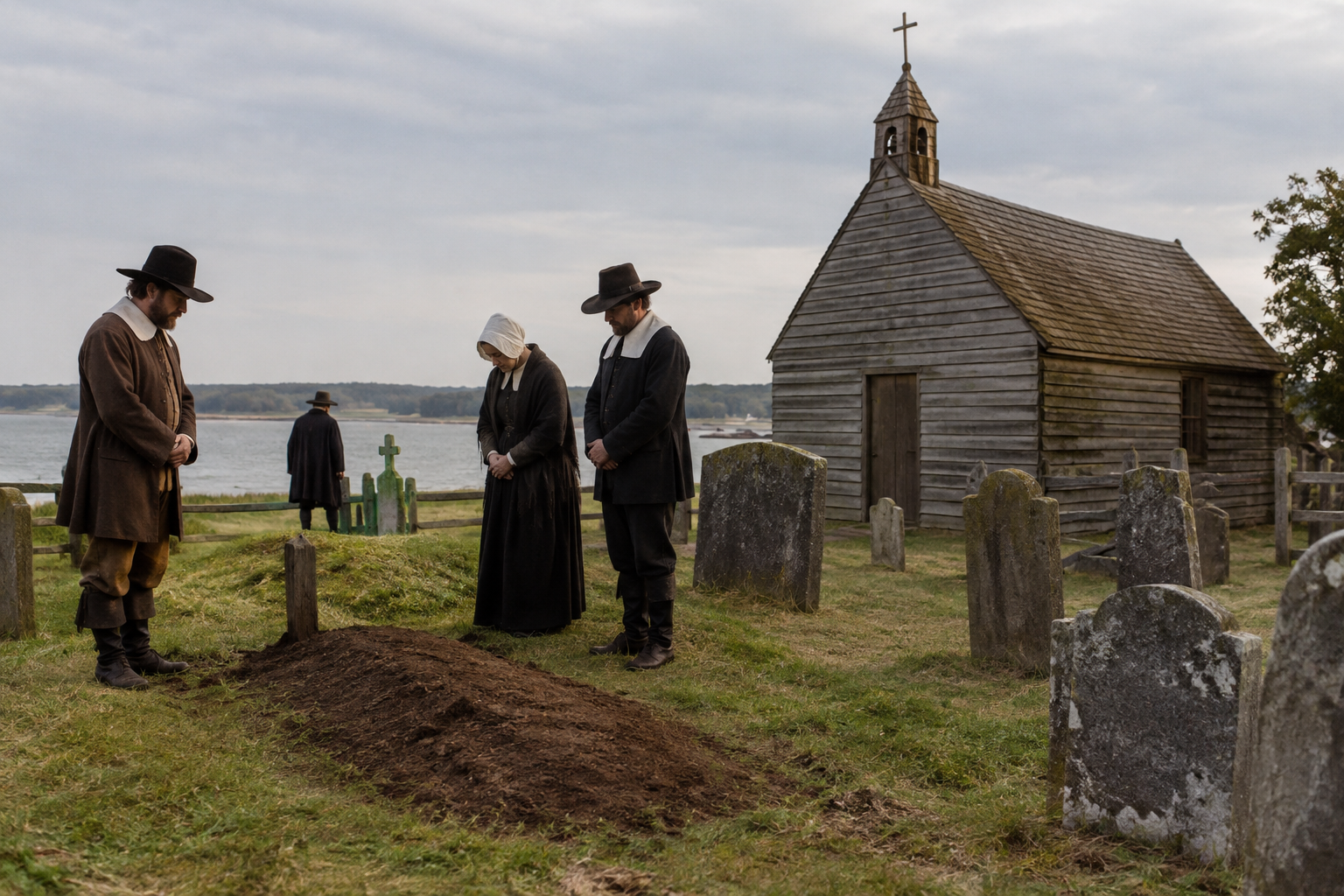
In the chapel field cemetery at Historic St. Mary's City in Maryland, one excavated man, sample I35266, offers a very precise glimpse of paternal ancestry in early colonial North America. He belongs to the Y-DNA haplogroup R1b1a1b1a1a1c2b2a1b1c, a very narrow branch within the much broader R1b family that is common across western Europe. That matters because this is not a story about "European ancestry" in the abstract. It is about one direct paternal line carried into a fragile 17th-century colony at the edge of the Atlantic world.
St. Mary's City was founded in 1634 as the first colonial capital of Maryland. By then, men bearing many different paternal lineages were moving through imperial networks linking Britain, Ireland, continental Europe, Africa, and the Americas. A subclade as specific as R1b1a1b1a1a1c2b2a1b1c does not define a whole people or an ethnicity, but it does give us a sharply focused thread: one father-to-son line present in a documented colonial burial ground in the first generation of English Maryland.
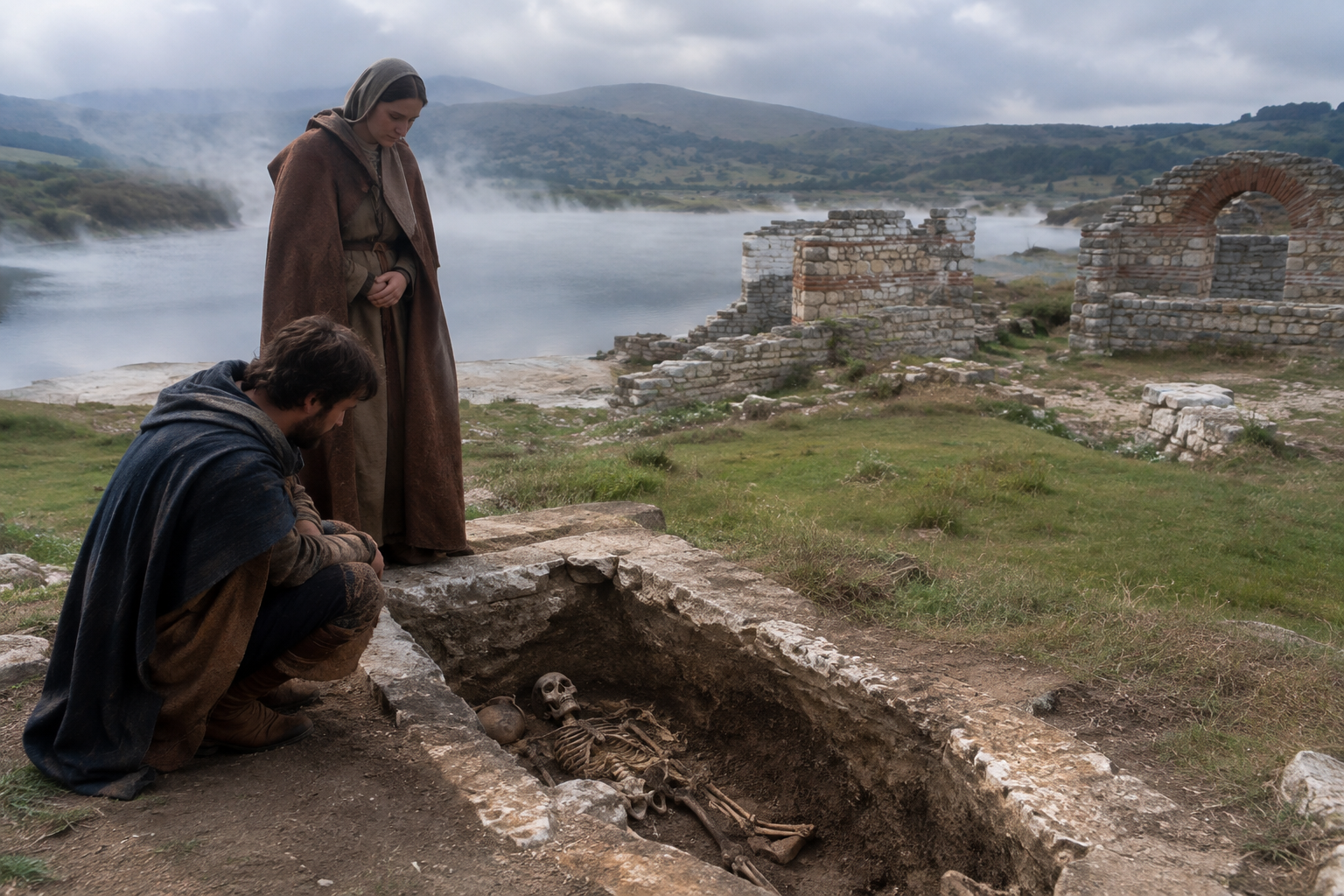
The chapel field cemetery belongs to the earliest phase of the colony. These were burials laid down in a settlement that was still improvising its institutions, its labor systems, and even its physical shape on the landscape. Archaeologically, that makes the cemetery unusually valuable. It captures a community before the later colonial world had fully hardened into the better-known patterns of plantation society.
Sample I35266 is therefore interesting not because he was necessarily famous, wealthy, or socially prominent, but because he was there at the beginning. The site preserves the dead from a place that was at once provincial and global: a small town in tidewater Maryland tied to shipping, religion, imperial ambition, and constant movement across the sea. Research on the colonial population of St. Mary's City has begun to show just how revealing these burials can be for ancestry, kinship, and mobility, as discussed in a genetic study of the colony's early inhabitants.
R1b1a1b1a1a1c2b2a1b1c sits deep inside the branching structure of R1b, one of the major Y-chromosome lineages in Europe. The important point is scale. A broad haplogroup such as R1b can be spread over huge regions and long periods, while a terminal branch like this one marks a much narrower paternal history.
That means the evidence here should be handled carefully. We can say that I35266 carried this direct male-line signature and that this signature was present in early Maryland. We should not pretend that one man's Y-DNA identifies the entire cemetery, the whole colony, or a named national background without additional evidence.
Still, narrow branches are exactly what make archaeogenetics so useful for family historians. They let us move beyond vague continental labels and toward historically situated male-line ancestry. In this case, the setting is not a Bronze Age mound or an Iron Age cemetery, but a colonial Christian burial ground established in the first decades of English settlement in the Chesapeake.
People sometimes imagine ancient DNA as belonging chiefly to prehistory, to stone tombs and warrior graves. But a 17th-century cemetery can be every bit as illuminating. Colonial North America was a meeting place of lineages that had been shaped by millennia of movement in Europe and beyond, then abruptly relocated into a new and often deadly environment.
The St. Mary's burials matter because they stand at that transition point. They are close enough to the documentary era that archaeology can be compared with written history, yet distant enough that DNA adds something the documents often do not: biological relationships, hidden ancestry, and the direct paternal and maternal lines that surnames and records can obscure or lose altogether.
That is one reason the cemetery has broader significance for anyone interested in how identities formed in the English Atlantic world. A paternal lineage like R1b1a1b1a1a1c2b2a1b1c may have deeper roots in Britain or nearby parts of Europe, but by 1634 its historical importance lies in its presence within a transplanted colonial population, not in any simplistic claim of timeless ethnic ownership.
Early Maryland was not an isolated outpost. It was a frontier in the old Roman sense of the word: not just an edge, but a zone of contact. Settlers, servants, clergy, sailors, and laborers arrived with different family histories already behind them. Some came from England; some from Ireland or the wider British Isles; some from other parts of Europe; others, forcibly transported, came from Africa. A burial ground in such a place is never merely local.
For that reason, even a single paternal assignment can help anchor larger questions. Was a particular male line already common in the source population? Did it arrive through one family, or through several unrelated men carrying the same deeper branch? Was its colonial presence a fleeting episode, or did it leave many descendants in later America? Those questions cannot be settled by I35266 alone, but they are exactly the kinds of questions that become possible once archaeologists recover secure burials and ancient DNA researchers can place them in a historical population framework.
The wider pattern is familiar from other studies of mobility, admixture, and identity in post-medieval communities. MyTrueAncestry readers interested in how genetics can illuminate mixed and changing populations may enjoy the parallel case of Roman Hispania's Lasting Genetic Legacy, where long-term population history is similarly richer and more entangled than neat labels suggest.
There is a temptation, when confronted with a long technical label like R1b1a1b1a1a1c2b2a1b1c, to flatten it into something easier and grander: "Celtic," "Anglo-Saxon," "Norman," or simply "British." History is full of those shortcuts, and they are almost always too blunt. A Y-chromosome branch is a lineage, not a language, not a culture, and not a complete identity.
Yet the narrowness of this branch is precisely what gives it value. It tells us that one man in the chapel field cemetery can be placed on a specific twig of the human paternal tree. When combined with archaeology and colonial history, that transforms a bare burial into a traceable historical presence: a male line carried across the ocean into one of England's earliest mainland American settlements.
Norman-era ancestry in England
If your own paternal line falls under R1b1a1b1a1a1c2b2a1b1c, the most responsible takeaway is not a promise of famous ancestors, but something more solid. This branch is now documented in a real burial from early colonial Maryland, sample I35266, at Historic St. Mary's City around the colony's founding generation. That places the lineage within a specific archaeological and historical setting: the transplanted male lines of the 17th-century Chesapeake.
For family historians, that is a useful kind of anchor. It suggests that this paternal line was part of the population stream feeding the early English Atlantic colonies, and it invites comparison with paper records, surname studies, and deeper Y-DNA matches. In other words, the value of this haplogroup is not that it solves everything, but that it ties one modern paternal signature to one excavated human life in a place where archaeology and history meet.

Comments