Haplogroup R1b1a1b1a1a1c

– 6 min read


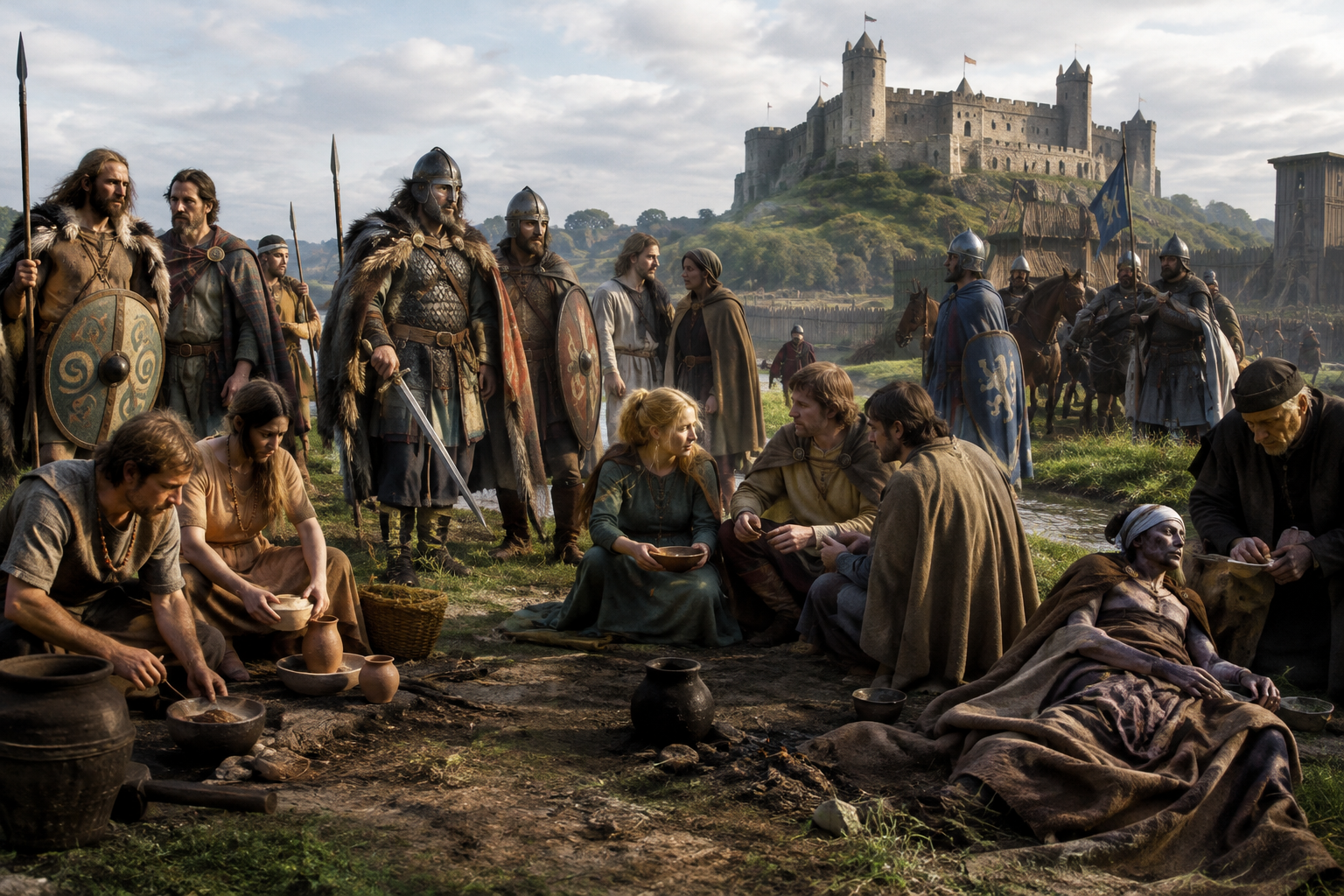
Some Y-chromosome lineages announce themselves with a grand royal label. Others turn up in a more interesting way: in cemeteries, in warrior burials, in plague graves, and at castles where the written record begins to overlap with genetics. Haplogroup R1b1a1b1a1a1c belongs to that second category. It sits inside the wider R1b family, one of the best-known paternal lineages in western Eurasia, but this narrower branch is most illuminating when we follow it carefully through ancient individuals rather than making sweeping claims.
That caution matters. A Y-DNA haplogroup traces one direct paternal line only: father to father to father across time. It does not describe a person's full ancestry, still less their culture, language, or identity. But when the same paternal branch appears in Bell Beaker North Holland, Iron Age northern France, Lombard-period Italy, Anglo-Saxon Yorkshire, and medieval Lincoln, it gives us a remarkable way of watching male-line continuity and movement across northwestern Europe over more than two millennia.
The broad R1b tree is deeply important in the story of later prehistoric and historic Europe, especially in many western regions. But one of the easiest mistakes in genetic history is to take the full biography of a very large haplogroup and paste it onto a much narrower twig. With R1b1a1b1a1a1c, it is safer to say that this branch appears in contexts strongly tied to northwestern and central-western Europe, and that its known ancient samples place it in settings associated with Bell Beaker communities, Iron Age groups in Gaul, early medieval Germanic-speaking populations, and later medieval Britain.
That distribution is historically suggestive. It hints at a paternal line that was already established in the North Sea and lower Rhine world by the Bronze Age, and that later shows up in regions connected by trade, migration, warfare, and elite mobility. The line does not "belong" to any single people in a timeless sense. Rather, it appears among different communities who inhabited overlapping landscapes over centuries.
Explore Bell Beaker ancestry in the Low Countries
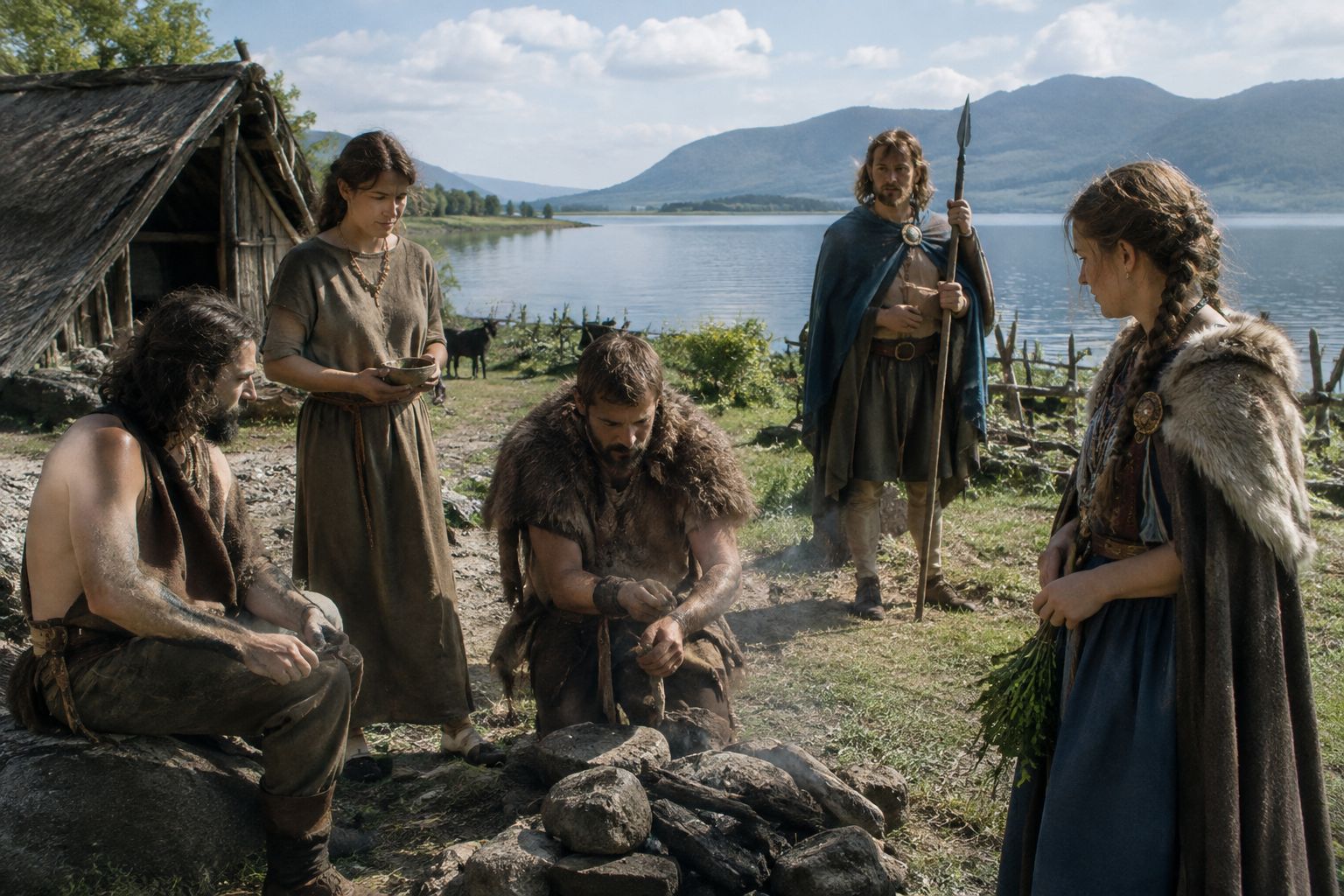
The earliest supplied anchor points come from what is now the Netherlands. The Bell Beaker sample I4070, from De Tuithoorn in North Holland and dated to 2080 BC, places this paternal branch in one of the most transformative cultural horizons of later prehistoric Europe. Bell Beaker was not a single empire or ethnicity; it was a broad archaeological phenomenon involving new burial customs, prestige goods, and far-reaching networks. But in many parts of western Europe it also coincided with major shifts in ancestry and paternal line composition.
Then there is I11972, from Westwoud-Binnenwijzend in the Netherlands, dated to the Middle Bronze Age, 1410 BC. Taken together, these Dutch finds suggest more than a fleeting appearance. They point to a paternal lineage present across multiple phases of later prehistory in the North Sea zone. That does not prove unbroken local descent from one named man to another, of course. What it does show is that this branch was part of the male-line landscape of the Low Countries long before Romans, Franks, Normans, or medieval nobles entered the scene.
And this is where archaeology saves us from fantasy. The Beaker grave and the Bronze Age burial are not mere abstractions on a phylogenetic tree. They were real men, buried in real communities, in a region that would remain one of Europe's great crossroads.
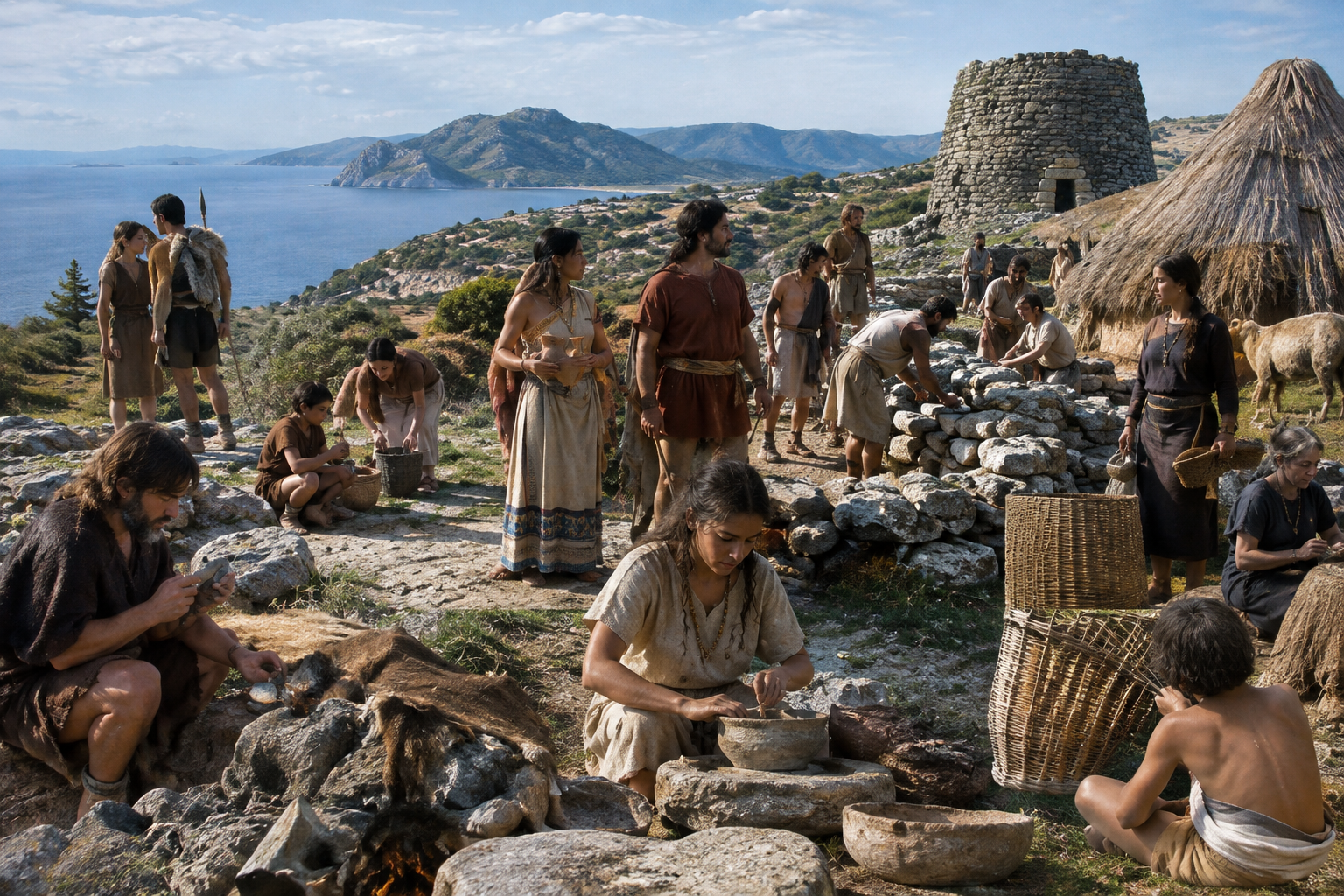
By the Iron Age, the trail runs into northern France. Three supplied samples from Bucy-le-Long are particularly revealing: CGG022456, identified as Belgic Suessiones Iron Age France, dated to 365 BC; CGG022425, identified as Belgic Suessiones Tribe France, dated to 500 BC; and CGG022419, identified simply as Gallic France, dated to 457 BC.
These are the sort of finds that make simplistic labels collapse. "Gallic" and "Belgic" are useful historical terms, but the populations of Iron Age northern France were hardly sealed boxes. They were entangled in regional alliances, rivalry, trade, and movement across the Channel and along the river systems of Gaul. The presence of this haplogroup branch in the Suessiones sphere fits neatly with a northwestern European pattern, but it should not be turned into a claim that the lineage was exclusively Celtic, Belgic, or anything similarly tidy.
Still, the pattern matters. It places R1b1a1b1a1a1c in the heart of the Iron Age societies that classical authors would later encounter, and in the same broad zone that linked the lower Rhine, northern Gaul, and southern Britain.
Read about ancient DNA and Celtic expansion
The early medieval samples widen the picture further. Three individuals from the Early Anglo Saxon Cemetery West Heslerton Yorkshire, all dated to 550 AD - I20644, I20671, and I20677 - show the lineage in eastern England during the centuries after Roman rule. That is exactly the sort of context where paternal lines can illuminate migration and settlement, though never in a one-to-one way. A shared haplogroup does not prove all these men were close kin, nor that they arrived in Britain in the same generation. But it does place this branch among the male lines present in early Anglo-Saxon England.
The same broad historical world appears on the continent. HVN005, from Longobard Haeven Mecklenburg-Vorpommern and dated to 250 AD, is especially intriguing because it touches the northern European background often discussed for later Lombard groups. Then come the Collegno burials in northern Italy: COL_069, COL_069b, and COL_069x, all dated to 580 AD, including individuals described as Lombard Warrior Elite Collegno Northern Italy and Lombard Era Collegno Northern Italy.
Here one can almost see the historian's eyebrow rising. The Lombards were not a biologically uniform tribe marching intact from one homeland to another. Like other migration-period confederations, they were mixed, politically assembled, and mobile. Yet the presence of this paternal branch in both the north and in Lombard-period Italy does fit the broader story of connections between the Baltic-North Sea world and post-Roman Italy.
Explore early medieval DNA from Italy
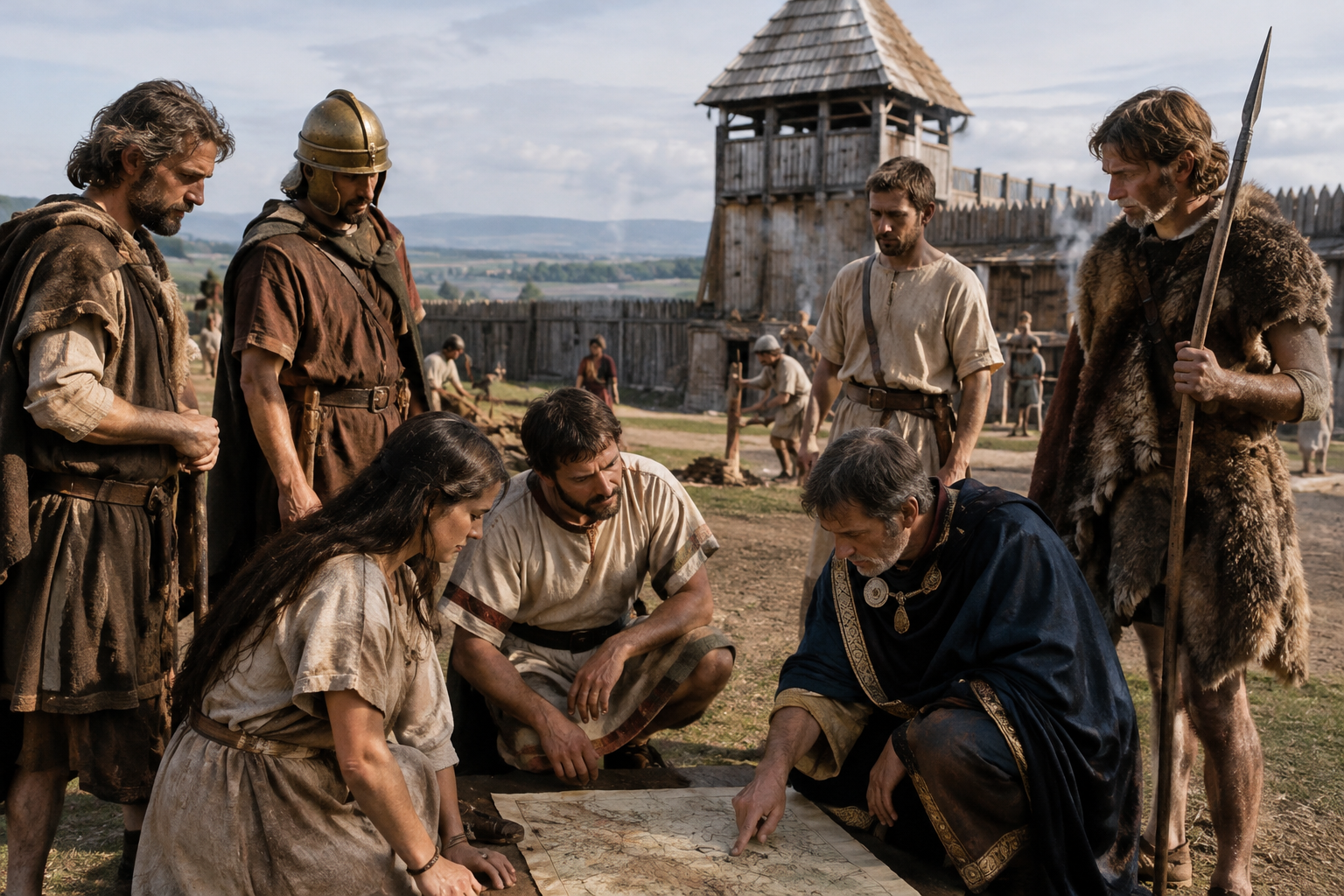
One of the most satisfying supplied samples is S3044, from Norman Invasion Medieval Lincolnshire Lincoln Castle, dated to 1100 AD. The castle setting matters, not because stone walls can prove genetics, but because castles fix a lineage into a recognisable medieval landscape. By 1100, this paternal branch appears in a world of conquest, fortification, lordship, and record-keeping. The same sort of male line that once appears in Bronze Age North Holland and Iron Age Gaul is now present in a medieval fortress at Lincoln, one of the great strategic strongholds of Norman England.
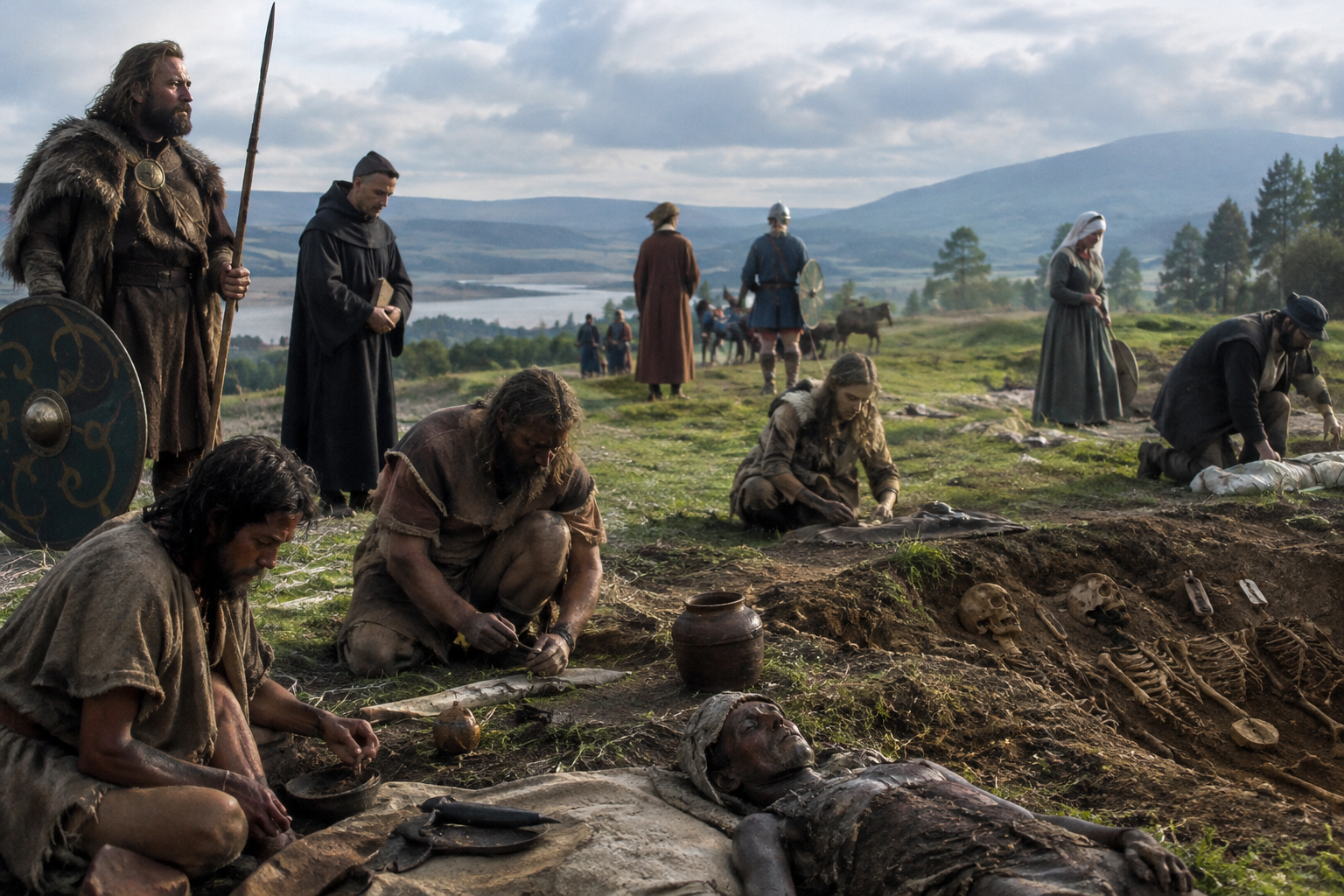
Even later, ELW003, a Post Medieval Plague Victim Ellwangen Germany dated to 1550 AD, reminds us that haplogroups do not belong only to celebrated warriors and castle elites. They also belong to ordinary men caught in epidemic catastrophe. That is one of the sobering virtues of ancient DNA: it democratizes the past. The Y chromosome survives in grand burials and in mass mortality alike.
Unfortunately, the supplied field for associated noble families and castles contains no specific family data to develop here. So it would be wrong to invent a dynasty, surname tradition, or ancestral seat and drape this haplogroup over it. What we can say is that samples like S3044 place the lineage in the same medieval world from which many later noble genealogies emerge. Genetics and genealogy overlap geographically and chronologically, but that is not the same as proof of descent.
Discover Norman Conquest era DNA
If we step back, R1b1a1b1a1a1c looks less like a badge of one people and more like a durable paternal thread running through the North Sea, Low Countries, northern France, Britain, and parts of central and northern Italy across very different historical settings. Bell Beaker-associated communities, Iron Age groups in Gaul, Anglo-Saxon cemeteries, Lombard-era burials, Norman-period Lincoln, and early modern Germany are not the same thing. But this lineage's presence in all these contexts helps show how male lines can persist while identities, languages, and political worlds change around them.
That is the real fascination of Y-DNA. Written genealogy usually reaches back only so far, and often only for the wealthy. Ancient DNA reaches much deeper, but it speaks a different language. It can reveal patterns of continuity, mobility, and connection. It can tell us that a paternal branch was present in a region centuries before a family first appears in documents. It cannot, by itself, prove that a modern tester descends from a Lombard warrior at Collegno, a man at Lincoln Castle, or a Belgic burial at Bucy-le-Long.
For readers interested in the bigger interpretive picture, it is also worth looking at how ancient DNA has changed the way historians read movement, identity, and population mixture across Europe.
See how archaeogenetics decodes the past
If your paternal line falls within the wider R1b world, or near a branch like R1b1a1b1a1a1c, ancient DNA can add a striking new dimension to family history. It may reveal similarities to men from Bronze Age Dutch burials, Iron Age France, Anglo-Saxon England, Lombard Italy, or medieval castle communities. Those matches do not automatically prove direct descent or noble status, but they can place your ancestry inside the real human landscapes discussed here.
Upload your DNA to MyTrueAncestry and explore how your results compare with ancient individuals, archaeological cultures, and the paternal lines that helped shape European history.
Comments