Haplogroup R1b1a1a2a2

– 4 min read


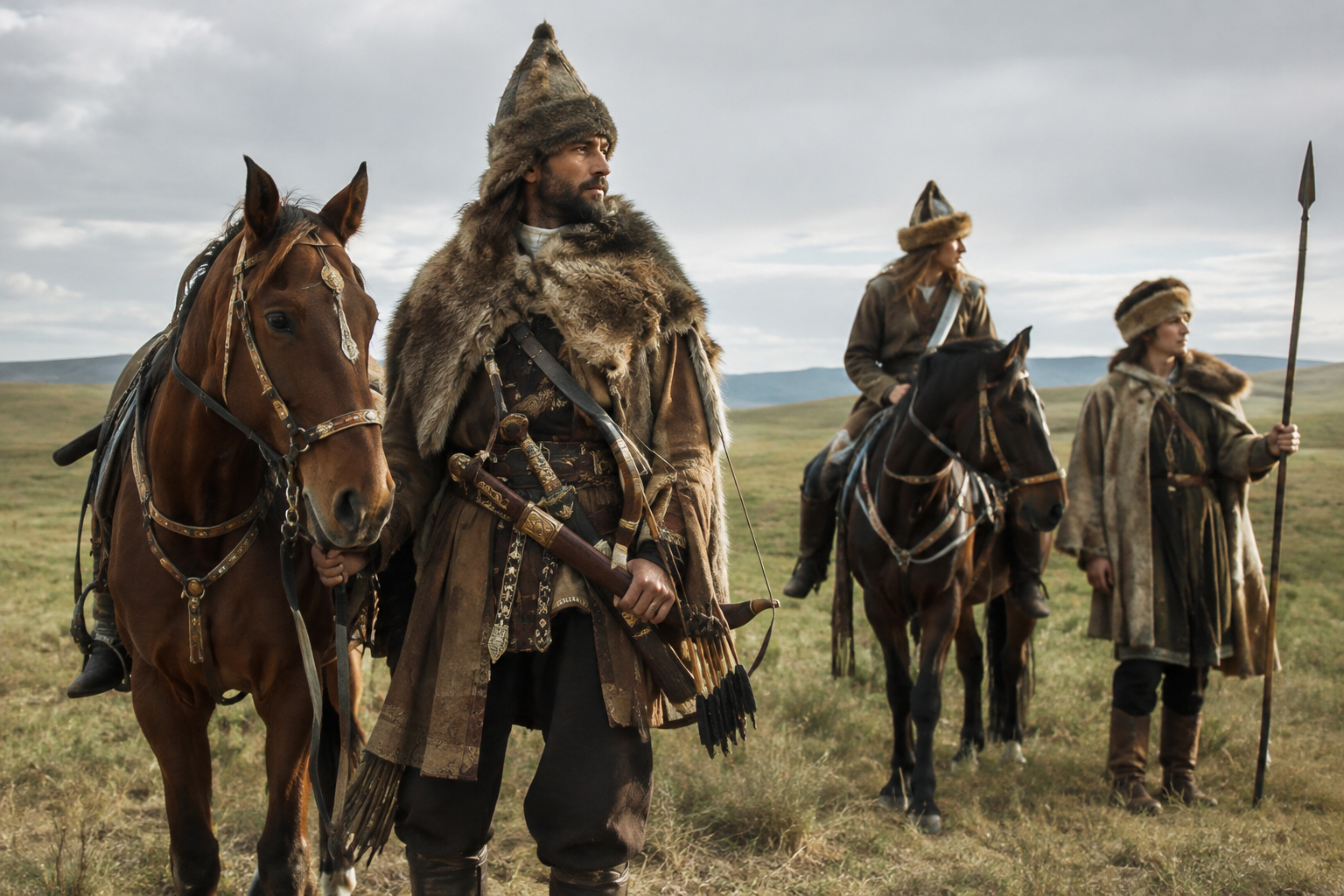
One of the more intriguing appearances of Y-DNA haplogroup R1b1a1a2a2 in the ancient record comes from an Iron Age individual labelled I20747x, dated to around 250 BC and associated with Scythian culture in Hungary. That is already enough to make an archaeologist pause. "Scythian" often conjures the great steppe world far to the east, yet here the evidence sits in the Carpathian Basin, reminding us that Iron Age identities were mobile, entangled, and much less tidy than old textbook maps once suggested.
This is also a useful case for thinking carefully about what a Y-chromosome result can and cannot tell us. Y-DNA tracks one direct paternal line only, not the whole ancestry of a person or population. Even so, when a lineage like R1b1a1a2a2 turns up in an Iron Age context tied to steppe-connected material culture in Hungary, it gives us a sharp little glimpse into the male-line diversity moving through that world.
The sample I20747x is the anchor for this story. The date, about 250 BC, places him in the later Iron Age, when the Carpathian Basin was a meeting ground rather than a cultural border. Communities there were linked in different ways to local traditions, to La Tene Celtic expansions, and to eastern steppe influences that classical writers often bundled under labels such as Scythian or Sarmatian. Archaeology has long shown that these worlds overlapped; ancient DNA now helps put actual people into that picture.
What makes this find interesting is not that it proves a simple migration from one point to another. Quite the reverse. A Scythian-associated burial in Hungary underlines how widely steppe cultural forms could travel, and how local populations could participate in them. A paternal lineage assignment to R1b1a1a2a2 adds one more layer: whatever the exact family history of this man, his father's father's line belonged to a branch of R1b that was already deeply woven into wider Eurasian prehistory long before the Iron Age.
R1b1a1a2a2 is a narrow label inside the much broader R1b family. That broader family is famous in European archaeogenetics, but it would be a mistake to pour the entire history of R1b into this one smaller branch without direct evidence. The important point here is a modest one: the paternal line carried by I20747x belongs to a branch that fits within wider West Eurasian and steppe-linked male-line histories, yet the single sample does not by itself define the origin of all Scythians, all Iron Age Hungarians, or everyone with this haplogroup today.
This caution matters because Iron Age labels are slippery. "Scythian culture" in an archaeological sense refers to patterns in burial practice and material culture, not a single biological people marching across the map in lockstep. Ancient DNA studies across the steppe have repeatedly shown mixed ancestries, local variation, and shifting male-line patterns. In other words, culture, language, politics, and Y-DNA are related only indirectly.
For readers following broader steppe population history, MyTrueAncestry has also explored this in Genetic Origins of Scythians: An Archaeogenetic Odyssey, which gives a wider backdrop to finds like I20747x.
Hungary in the Iron Age was one of those maddeningly interesting regions where archaeologists must constantly resist neat ethnic equations. The Carpathian Basin connected central Europe, the Balkans, and the Eurasian steppe. Goods, styles, and people moved through it over centuries. So when an individual associated with Scythian culture carries R1b1a1a2a2, the real historical value lies in that setting of contact.
Seen in that light, I20747x is not just "a Scythian in Hungary." He belongs to a broader pattern in which steppe traditions became part of local Iron Age life west of the Black Sea zone. Research on mobility and identity across Iron Age Europe increasingly points in the same direction: communities were often more mixed, more connected, and more regionally specific than older grand narratives allowed.
A wider ancient DNA context for these movements can be found in research archived through Harvard Dataverse, which has supported comparative work on ancient Eurasian populations. For a public-facing overview of nearby regional complexity, the MyTrueAncestry post on Ancient DNA and Migrations in the Northern Black Sea Region is especially relevant.
There is a larger reason this sample catches the eye. Branches within R1b are often discussed in connection with Bronze Age and later population expansions across Europe and the steppe zone. By the Iron Age, however, these lineages were no longer markers of one recent event. They had already been circulating, branching, and settling into many different populations for a very long time.
So the presence of R1b1a1a2a2 in a Scythian-context burial in Hungary should not be read as a simple badge of ethnic identity. It is better understood as part of a long paternal history that could be carried by men living in quite different cultural worlds. That is one of the central lessons of ancient DNA: a lineage may endure while political systems, languages, and archaeological styles change dramatically around it.
This becomes especially striking in Iron Age Europe, where material cultures once treated as sharply separate now often look, genetically, like interacting neighborhoods rather than sealed boxes. The best way to think about I20747x is therefore not as a lone exotic intruder, but as evidence from a connected frontier zone.
If your paternal line falls under R1b1a1a2a2, this Iron Age Hungarian sample does not mean you descend from a named Scythian tribe, nor does it pin your family story to one grave in one century. What it does offer is a documented ancient appearance of your branch in a historically rich contact zone where steppe and European worlds overlapped.
That is a valuable kind of evidence. It places your direct paternal line, at least in one known case, within the human reality of Iron Age mobility in the Carpathian Basin. And that is often how archaeogenetics is most illuminating: not by handing us a mythic founder, but by returning one real man, one real date, and one real place to the story.
Celtic origins in Central Europe
The most distinctive thing about haplogroup R1b1a1a2a2 here is not grandeur but placement. In sample I20747x, around 250 BC, it appears in an Iron Age Scythian-associated context in Hungary, right in one of Europe's great historical crossroads. For anyone researching this paternal branch, that is a sober but exciting clue: your line belongs to a world where steppe connections, local communities, and long-established Eurasian ancestry met on the ground.
Comments