Haplogroup R1b1a1a2a1a2b1

– 5 min read


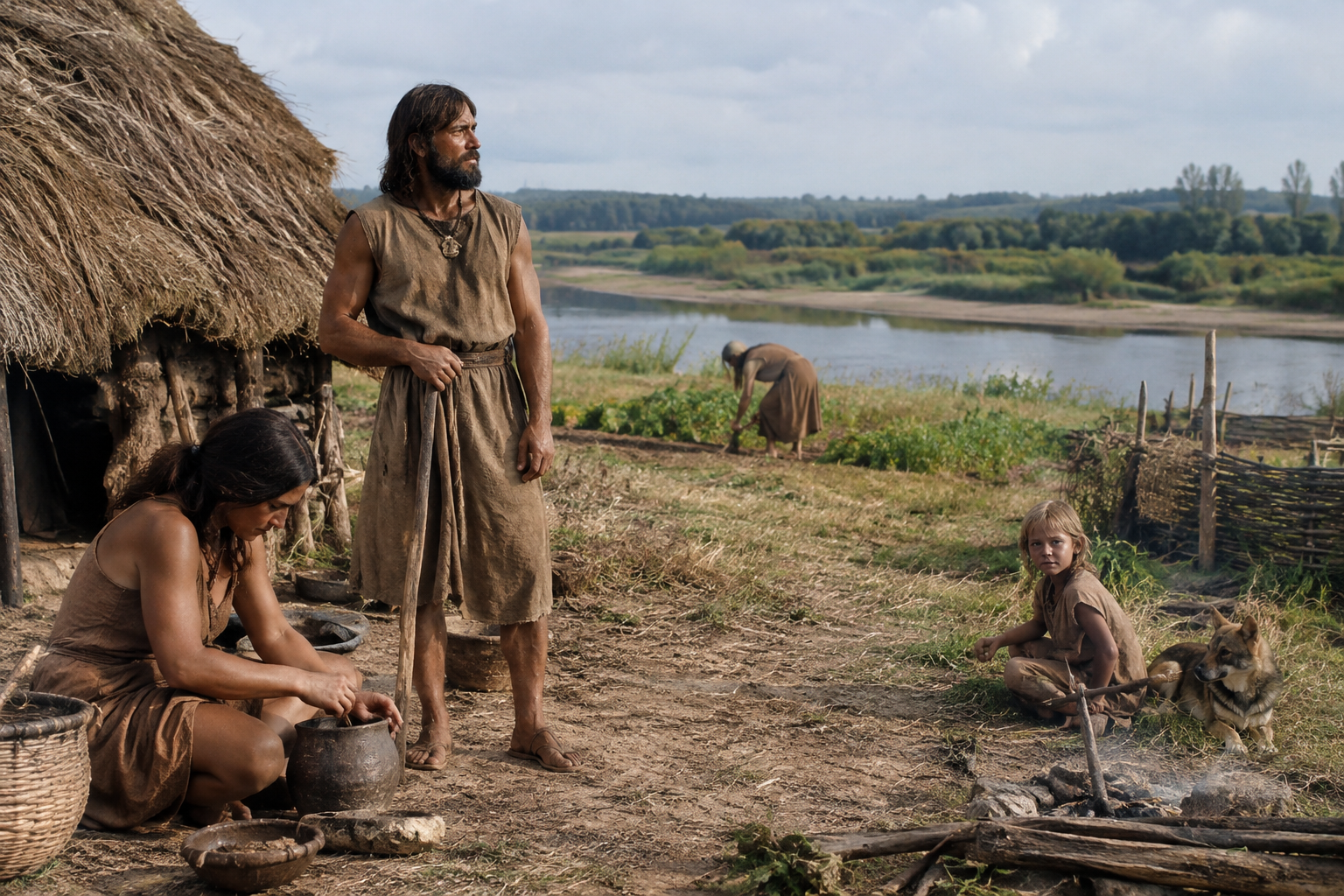
At Radovesice in what is now the Czech Republic, one ancient male sample offers a small but telling glimpse into a major turning point in European prehistory. The individual known as I7286x, dated to around 2350 BC, is associated here with the Y-DNA haplogroup R1b1a1a2a1a2b1, a branch within the wider R1b family that became increasingly visible in later prehistoric Europe. Even with just one securely named ancient individual, the setting matters: Copper Age Bohemia was not some quiet backwater, but part of a region where old farming communities, incoming steppe-related ancestry, and changing burial traditions were all colliding.
That is what makes this sample interesting. A Y-chromosome traces only one direct paternal line, not a person's whole ancestry, but paternal lines can be unusually informative in moments of demographic change. In central Europe during the later 3rd millennium BC, R1b lineages became entangled with some of the biggest questions in archaeogenetics: who moved, how male lines spread, and how new social worlds formed out of older Neolithic landscapes.
Radovesice lies in northwestern Bohemia, an area with a long archaeological sequence and a particularly important place in discussions of late Neolithic and Copper Age population change. By around 2350 BC, this was a landscape already shaped by centuries of farming, settlement, and burial traditions. Yet it was also a period when central Europe was being transformed by the spread of populations carrying substantial steppe-related ancestry and, often, new paternal lineages.
Sample I7286x belongs in that turbulent horizon. The exact fine-grained interpretation of his subclade should be handled carefully, because long haplogroup strings can suggest more precision than ancient coverage always allows. Still, the association of this Radovesice man with R1b1a1a2a1a2b1 places him within a paternal family that is highly relevant to the later 3rd millennium BC in central and western Europe.
A broad genetic picture for this era has been shaped by ancient DNA work on central European prehistoric populations, including research gathered through the Harvard Dataverse resource linked with this sample: a major ancient genomics dataset for prehistoric Eurasia. That kind of work has repeatedly shown that Bohemia was one of the regions where dramatic shifts in ancestry and social structure can actually be tracked in human remains rather than guessed from artefacts alone.
Central Europe and ancient DNA
The wider parent haplogroup here is R1b, one of the best-known Y-DNA lineages in Europe today. But that modern familiarity can be misleading. It does not mean every ancient R1b man belonged to the same historical people, spoke the same language, or moved in the same direction. The branch in this article, R1b1a1a2a1a2b1, is a much narrower twig on that larger paternal tree.
What can safely be said is that branches of R1b became especially prominent in Europe during the later Neolithic and Bronze Age, above all in contexts linked to major demographic change after the arrival of steppe-derived ancestry. In places like Bohemia, the Rhine-Meuse region, and other parts of central Europe, archaeologists and geneticists have had to rethink older narratives that treated cultural change as mostly local imitation. Sometimes the genes show continuity; sometimes they show sharp replacement; often, they show a mixture of both.
That is why a single male line from Radovesice matters. He is not "the founder" of anything, nor proof of one neat migration story. But he sits in exactly the period where these paternal lineages were becoming archaeologically visible as part of a much larger reordering of European populations.
Bohemia's prehistoric importance comes from geography as much as chronology. It sits between the Elbe basin, the Danube routes, and the uplands connecting central Europe to regions farther west and south. That made it a corridor for objects, ideas, and people long before written history. By the later 3rd millennium BC, the region was deeply involved in the cultural world often discussed under labels such as Corded Ware and Bell Beaker, though those labels do not map perfectly onto genetics or male descent.
Ancient DNA has made that point rather forcefully. Archaeological cultures are patterns in material remains; haplogroups are paternal lines; ancestry profiles are genome-wide mixtures. They overlap, but they are not identical. A man like I7286x may belong to a paternal branch associated with broader transformations in Copper Age Europe without being a shorthand for an entire culture.
That distinction matters especially in Bohemia, where research has shown successive changes rather than a single event. Some local populations persisted, others were absorbed, and some paternal lineages expanded strikingly. The result is less a clean invasion story than a long process of restructuring.
Corded Ware and Bell Beaker burials
Around 2350 BC is late enough to sit after the first major steppe-linked expansions into central Europe, but still early in the long Bronze Age story that followed. In other words, I7286x belongs to a world already altered by migration and admixture, yet still in the middle of forming the population structure that would shape much of later Europe.
That dating gives the haplogroup real historical weight. We are not looking at a medieval surname lineage projected backwards into prehistory. We are looking at a paternal branch present in a man from Copper Age Bohemia, at a time when male-line turnover in parts of Europe appears to have been substantial. Some of the most striking archaeogenetic debates of the last decade have turned on exactly this period: whether shifts in pottery or burial customs matched shifts in ancestry, and whether certain Y-lines spread faster than others for social as well as demographic reasons.
For central Europe, these are not abstract arguments. They affect how we understand later linguistic and historical developments too. The later spread of Indo-European daughter branches, including those discussed in relation to Germanic and Celtic language history, unfolded on top of these Bronze Age and pre-Bronze Age population foundations rather than in isolation from them.
Germanic languages and ancient genomics
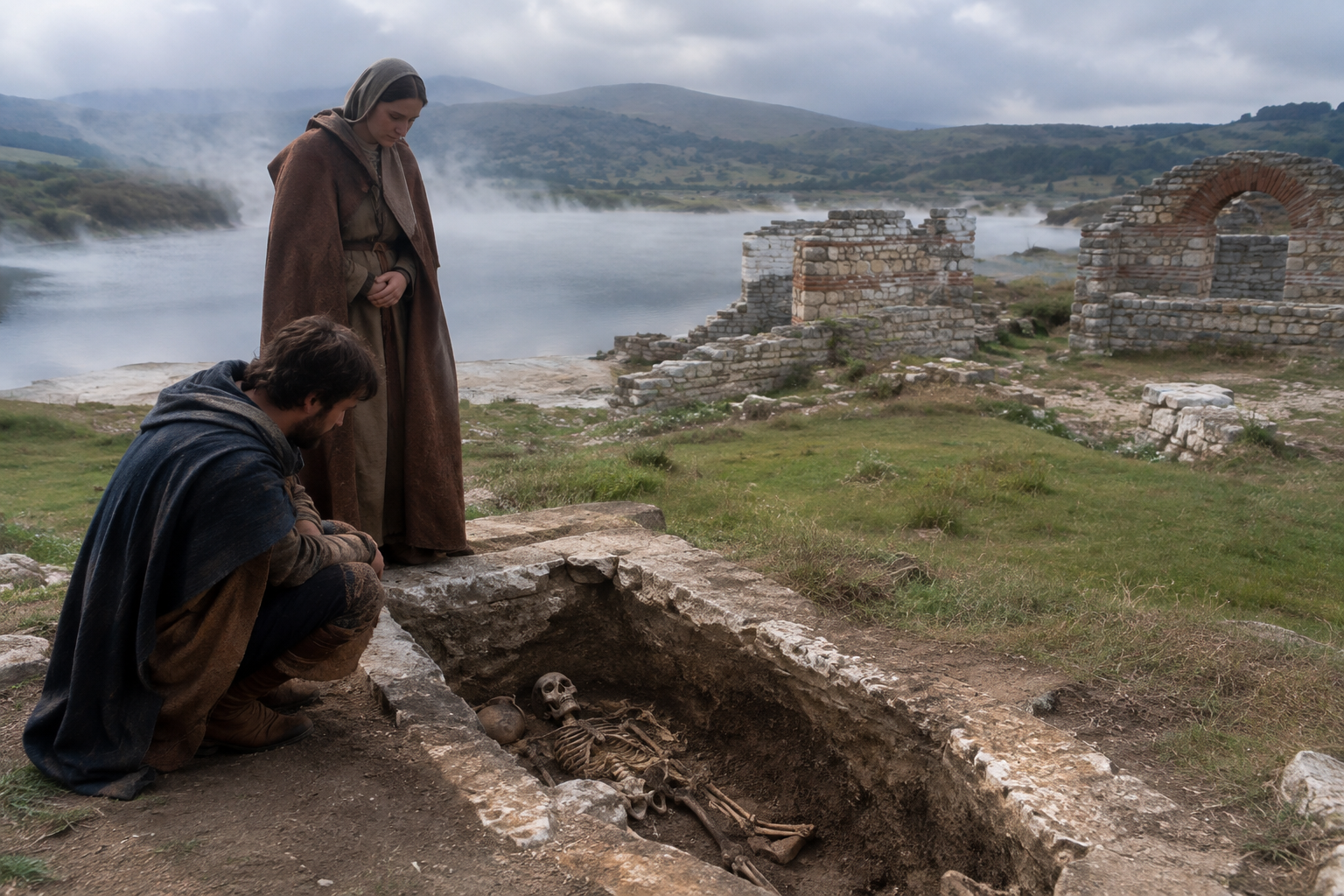
With only one named ancient sample in hand, the sensible approach is not to overbuild the case. We cannot reconstruct this man's family, social rank, language, or life story from a haplogroup label. We should not pretend that Radovesice alone explains the expansion of R1b branches across Europe. But one sample can still be historically significant when it appears in the right place and time.
Radovesice gives us exactly that: a documented paternal lineage in Copper Age Bohemia, anchored to a period when central Europe was being remade. The larger archaeological picture from nearby regions supports the importance of this horizon. Studies of Bell Beaker and related later 3rd-millennium populations in the Rhine-Meuse zone, for example, have shown how steppe-related ancestry and new male-line profiles could spread unevenly but powerfully across western and central Europe. For that broader context, the MyTrueAncestry discussion of Bell Beaker expansion in the Lower Rhine-Meuse region is a useful comparison.
If your paternal line falls under R1b1a1a2a1a2b1, the strongest ancient point here is not a promise of one famous tribe or dynasty. It is something subtler and, in its way, more interesting: this branch was present in central Europe during the later Copper Age, in a region crucial to the demographic reshaping of prehistoric Europe. Sample I7286x from Radovesice places that paternal line in Bohemia at around 2350 BC, right in the thick of a period when new ancestries and new male lines were becoming established across the continent.
That does not turn one ancient burial into a full family tree. But it does give the lineage a firm prehistoric footing in one of Europe's most important archaeological crossroads.





Comments