Haplogroup R1b1a1a2a1a1b

– 5 min read


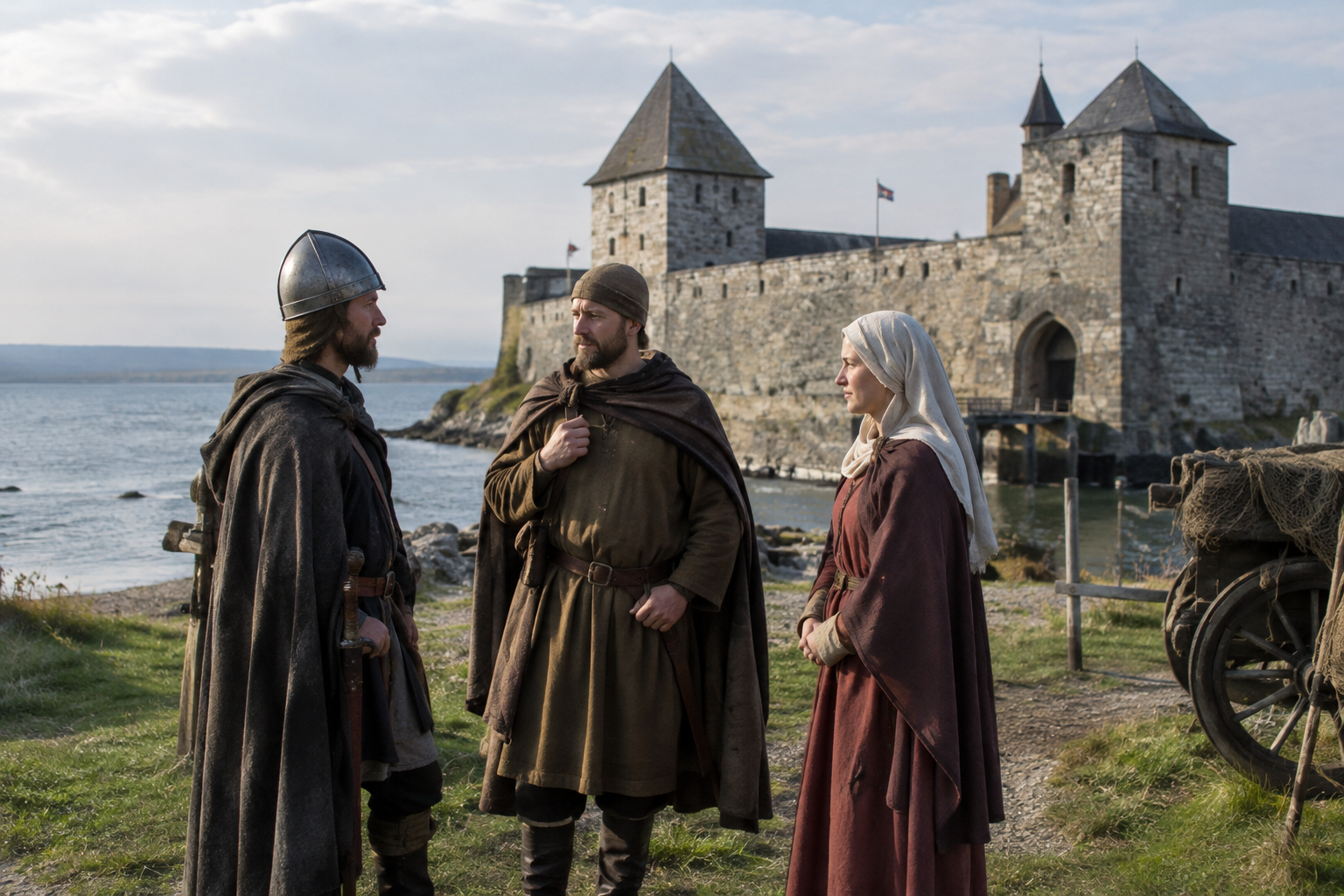
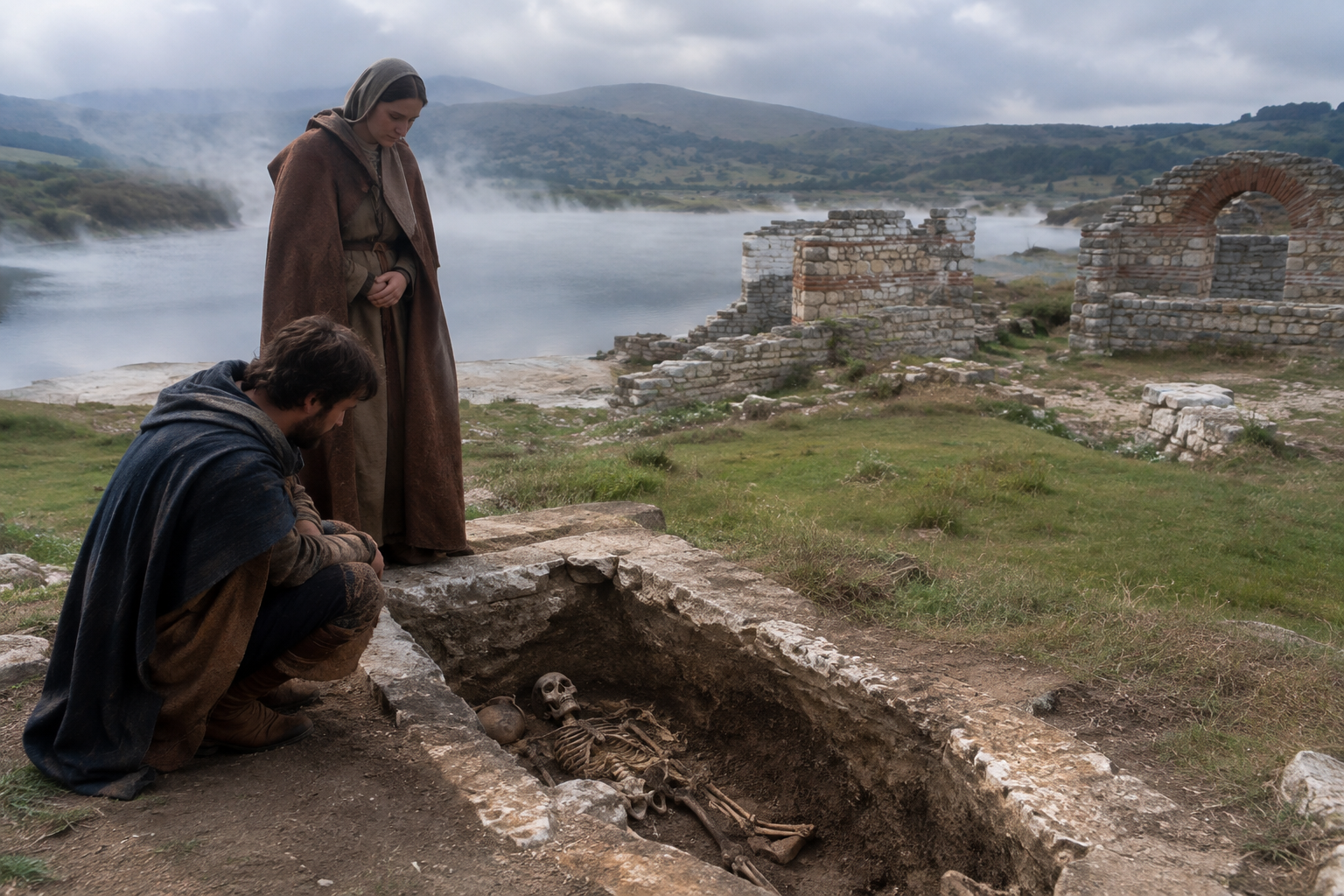
In 1313 AD, a man now known as sample mbv200 was buried at Vasterhus in central Sweden. On the face of it, this is not the sort of discovery that arrives trailing royal drama or saga thunder. But that is rather the point. Ancient DNA becomes most interesting when it pulls an ordinary life into focus, and in this case the paternal lineage reported for that medieval individual is R1b1a1a2a1a1b, a branch within the huge and complicated R1b family that is often associated, in broad terms, with later European male-line histories.
That does not mean one Swedish burial can stand in for all of Scandinavia, or that a Y-chromosome alone tells us a person's whole ancestry. It does mean that one direct paternal line, carried by a man living in medieval Jamtland, can be placed inside a much larger archaeological story: how western Eurasian male lines appeared, persisted, and mixed in the North long after the Viking Age, in communities that were Christian, local, and anything but genetically simple.
Vasterhus, on the island of Frösön in Jamtland, belongs to a fascinating phase of Scandinavian history. By the early 14th century, this was a Christian landscape of parish churches, cemeteries, farms, and regional connections across the Baltic and North Sea worlds. The burial of mbv200 belongs to that world, not to the heroic haze of Viking legend but to the stubbornly real society that followed it.
That matters for understanding R1b1a1a2a1a1b. A lineage like this should not be imagined as a tribal badge. In a medieval churchyard, it is better understood as one paternal thread among many in a settled population shaped by older migrations, local continuity, marriage patterns, and the long afterlife of earlier demographic shifts. Research connected with medieval Swedish multiple burials and kinship has drawn attention to exactly this sort of question: how biological relationships and social worlds intersected in Christian cemeteries of the Scandinavian Middle Ages. One project summary linked to this material can be found here: https://www.rj.se/en/grants/2016/biological-and-social-kinship-reflected-in-genomes-from-medieval-swedish-multiple-burials/.
The exact label R1b1a1a2a1a1b is a narrow twig on a very large paternal tree. Its importance lies partly in that contrast. The parent haplogroup R1b is widespread across much of western Europe today and appears in many later prehistoric and historic contexts, but that broad pattern cannot simply be poured into every downstream branch as if nothing changed along the way.
So the cautious way to read mbv200 is this: by 1313 AD, one man at Vasterhus belonged to a specific R1b-derived paternal line that had become part of medieval Swedish society. That tells us something real about male-line diversity in the region. It does not, by itself, prove where his father's line first entered Scandinavia, whether it arrived in the Bronze Age, Iron Age, Viking Age, or by some later movement, or what language his distant paternal ancestors once spoke.
Still, the presence of such a branch in medieval Sweden is not surprising in historical terms. Scandinavia had long been tied into continental Europe through trade, warfare, dynastic marriage, clerical networks, and migration. By the Middle Ages, paternal lineages that may once have had quite different regional centers were thoroughly entangled in local populations.
If one wants the deeper background, the best place to look is not to leap straight from mbv200 to a single heroic ancestor, but to the major population changes that affected northern Europe over millennia. Much of the spread of R1b lineages in Europe is usually discussed against the backdrop of Bronze Age expansions and the later reshaping of populations around the North Sea and Baltic. Those were not neat replacements of one people by another; they were long processes of movement, mixture, and regional variation.
In Scandinavia, the story is especially knotty. Neolithic foragers, incoming farmers, and later steppe-related ancestry all contributed to the populations that eventually formed Iron Age and medieval communities. By the time we reach Christian cemeteries like Vasterhus, the paternal landscape had already been shaped by thousands of years of demographic change. A medieval Y-line is therefore the end point of a very long chain, not a short-cut back to a single moment of origin.
This is also why northern European language history and ancient DNA need to be handled with care. Genetic patterns can illuminate broad population movements, but they do not map perfectly onto speech communities or identities. Even so, for readers interested in how ancient genomics is being used to frame the spread of Germanic-speaking populations, there is useful wider context in recent work on northern Europe.
Germanic languages and genomes
One can always be sniffy about single samples. Archaeologists do it all the time, and often for good reason. Yet individual burials matter because they pin abstract population history to an actual person in an actual place. mbv200 is not merely an example of a haplogroup on a chart; he was part of a living community in Jamtland during the later medieval period, when Scandinavian society was organised through parish life, law, landholding, and regional exchange.
That grounded context helps prevent a common mistake in popular DNA storytelling. People often treat Y-DNA as if it were a badge of pure descent from one ethnic bloc. Medieval Scandinavia, however, was not a sealed vessel. It was connected to Norway, Sweden proper, the Baltic zone, the British Isles, and beyond. A paternal branch like R1b1a1a2a1a1b in Vasterhus fits perfectly well within that mixed and mobile northern world.
There is another reason the Vasterhus evidence is useful. It reminds us that post-Viking Scandinavia deserves as much attention as the Viking Age itself. The glamour usually goes to raiders, ships, and silver hoards. But the long-term making of Scandinavian populations happened just as much in cemeteries, villages, and churches, where lineages endured, disappeared, or were absorbed into new social settings.
For someone researching this haplogroup today, the medieval Swedish evidence supports a modest but solid conclusion. R1b1a1a2a1a1b was present in northern Europe in a Christian medieval context, and at least one bearer is directly attested at Vasterhus by 1313 AD. That is valuable because it places the lineage inside a documented Scandinavian population rather than leaving it floating in generic maps of "European" DNA.
But the best history is the sort that resists overreach. mbv200 does not prove that every modern man with this haplogroup descends from medieval Swedes, nor that this branch is uniquely Scandinavian. What he does provide is something rarer and more useful: a real archaeological anchor point, showing that this paternal line formed part of the human mixture of medieval Sweden, where ancestry, place, religion, and everyday life had already been woven together for centuries.
So the significance of this haplogroup is not that it unlocks a lost dynasty. It is that it takes us into the lived population history of the North, where one burial in Vasterhus quietly shows how deep European paternal lineages had become part of medieval Scandinavian society.
Comments