Haplogroup R1a1a1b2a4

– 5 min read


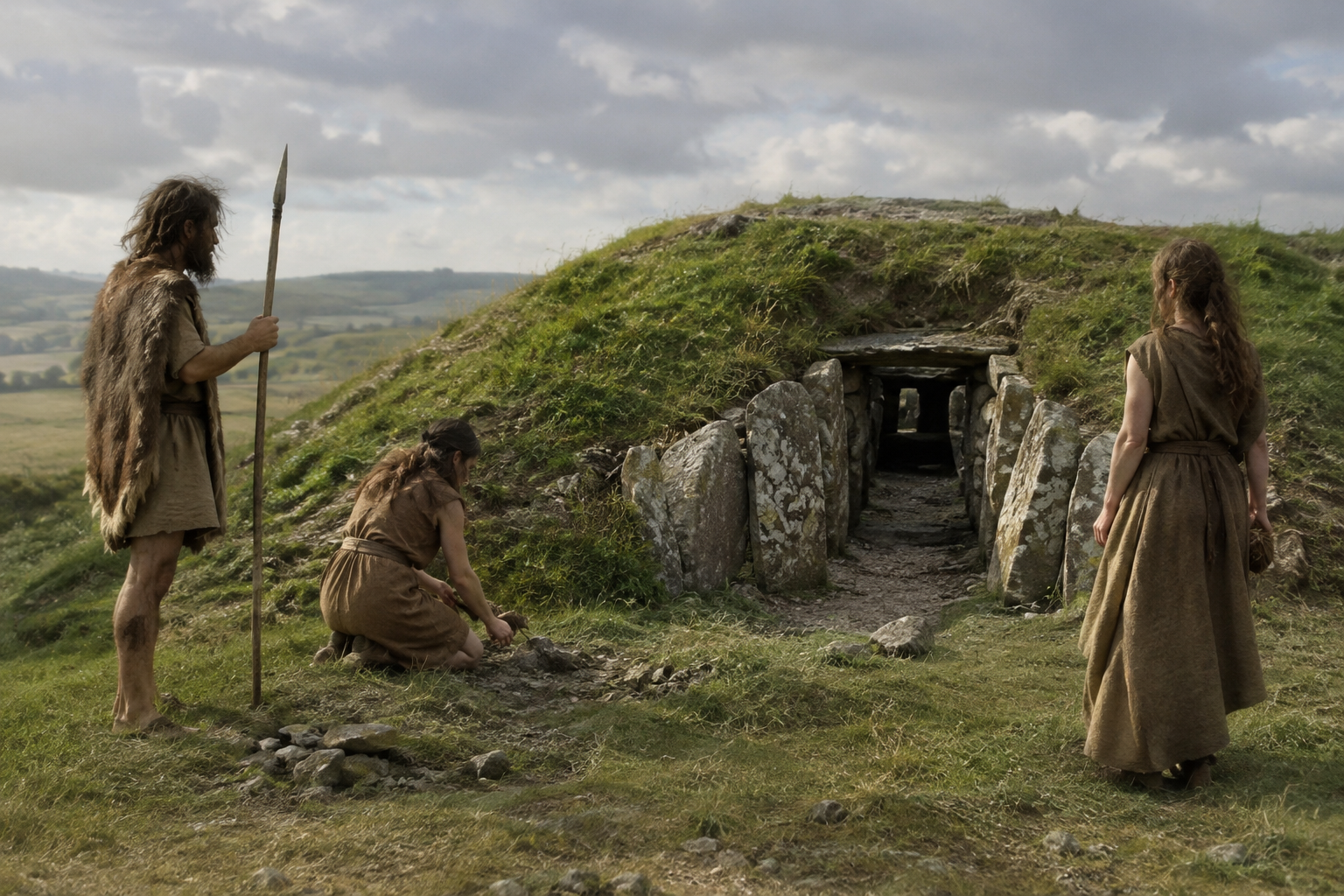
At Cranborne Chase in Dorset, one ancient male from the Sisters Long Barrow, sample slb016, offers a surprisingly sharp glimpse into a very old paternal line. He is dated to about 1900 BC, in the Bronze Age of southern England, and he has been associated here with the Y-DNA haplogroup R1a1a1b2a4. That is a small branch within the much wider R1a family, and it matters because ancient British examples at this level of resolution are still far rarer than broad stories about "steppe ancestry" might make us think.
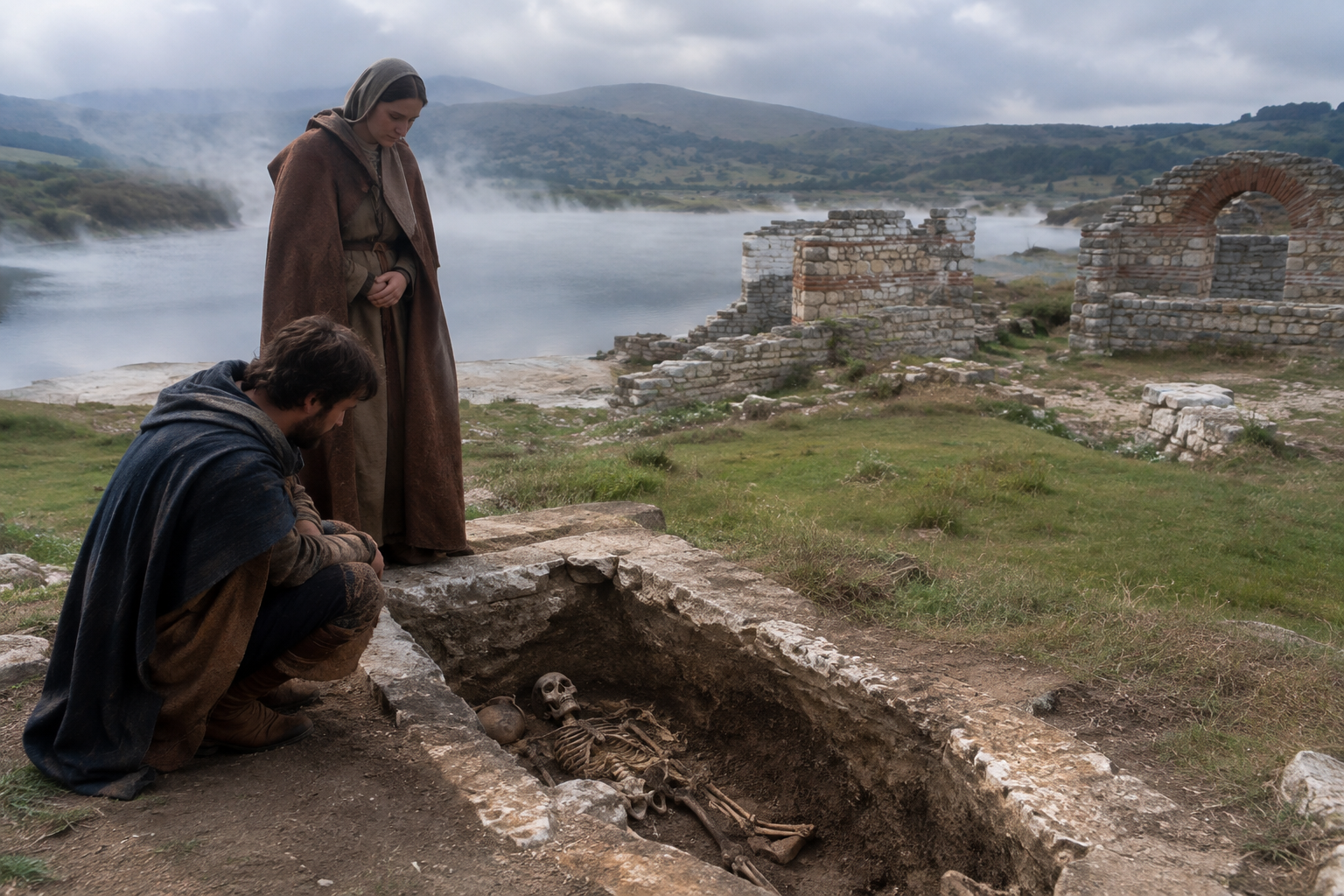
The setting is as interesting as the lineage. Sisters Long Barrow began life as a Neolithic monument, but like a number of prehistoric tombs in Britain, it did not simply vanish from memory when fashions changed. By the early 2nd millennium BC, people were still using, revisiting, or reworking these ancient places. So the significance of slb016 is not only genetic. It is also archaeological: this is a Bronze Age man buried in the shadow of a much older sacred landscape, carrying a paternal line that links Britain to wider prehistoric shifts across Europe.
Cranborne Chase is one of those regions where prehistory seems to sit almost on the surface. Long barrows, cursus monuments, round barrows, and later settlements are packed into the chalklands of Wessex, and archaeologists have long suspected that later communities were deliberately engaging with older monuments rather than merely stumbling across them. In that sense, Sisters Long Barrow is not just a burial place. It is part of a conversation across centuries.
The date of slb016, around 1900 BC, places him well after the first builders of Britain's long barrows. By then, the world of southern Britain had changed markedly. Metalworking was established, burial customs were evolving, and communities were living in landscapes already crowded with ancestral monuments. To bury or place human remains at such a site was to anchor the present to a visibly ancient past.
Bronze Age tomb reuse in Britain
Y-DNA follows one narrow thread: the direct paternal line, from father to son across generations. It does not describe a person's whole ancestry, still less their language or identity. But when a branch turns up in ancient graves, it can help show how male lineages moved, persisted, or became established in certain regions.
Here the important point is scale. R1a1a1b2a4 is not the same thing as the whole of R1a. The broader R1a umbrella is famous for its deep connections to Eurasian prehistory and its appearance in many later populations, especially across eastern and central Europe and parts of Asia. Yet a specific subclade such as R1a1a1b2a4 marks a much narrower paternal history. With only the evidence provided for slb016, the responsible claim is modest but still valuable: this branch was present in Bronze Age England, and it was present in a man tied to a monument with a far older biography.
That matters because Britain's Bronze Age was not simply a local continuation of the Neolithic. Ancient DNA research over the last decade has shown major population change after the arrival of Beaker-associated groups, with substantial ancestry ultimately linked to continental Europe. A male lineage like this sits inside that larger transformation, but it should not be mistaken for the whole story on its own.
By about 1900 BC, southern Britain had already absorbed centuries of demographic and cultural change that followed the Beaker phenomenon. Archaeologists and geneticists have shown that the centuries after roughly 2400 BC saw a striking reshaping of ancestry in Britain. That does not mean every community looked identical, nor that every burial tells the same story. But it does mean that a paternal lineage such as R1a1a1b2a4 in Dorset belongs within a Britain that had become deeply connected to continental networks.
In public discussion, these transformations are often flattened into a single sentence about migration from the steppe. Real archaeology is untidier and more interesting. People did not just move; they settled, intermarried, reused old ceremonial places, and created new local traditions. slb016 stands at exactly that intersection: a lineage with wider Eurasian roots, a burial in southern England, and a monument whose history stretched back long before his lifetime.
An ancient DNA study connected with these British prehistoric burials can be followed through the project record at https://www.ebi.ac.uk/ena/browser/view/PRJEB111359. Even without over-claiming details not stated here, the broader lesson is clear enough: prehistoric Britain was shaped by repeated episodes of continuity, replacement, and deliberate engagement with the material remains of earlier people.
Ancient Britain after prehistory
Modern discussions of R1a often drift quickly eastward, toward the Baltic, the Eurasian steppe, or later Slavic-speaking regions. That can make western finds seem anomalous when they are really part of the same long prehistoric web. Bronze Age Britain was not isolated at the edge of Europe. Its metals, objects, burial customs, and population history all show contact with a broader continental world.
So the Dorset evidence is useful precisely because it resists oversimplification. It does not mean that Bronze Age England was somehow "eastern" in character, nor that one man's paternal line defines a whole community. What it does show is that a lineage now often discussed in relation to central and eastern Europe also formed part of the paternal landscape of prehistoric Britain. And it appears not in a random blank spot on the map, but in Wessex, one of the most intensively monumentalized and archaeologically studied regions in Europe.
There is also a pleasing archaeological irony here. Long barrows are usually thought of as emblems of the Neolithic farming world, older than Beaker burials and older than the Bronze Age social order. Yet the presence of slb016 at Sisters Long Barrow shows that later people continued to make those monuments meaningful. A paternal lineage may change; ancestry may shift; customs may alter. But places retain power.
With only one named ancient individual in hand, restraint is part of good history. We should not turn slb016 into a dynastic founder, a tribal representative, or a spokesman for all Dorset in 1900 BC. Still, single samples are not trivial. They pin a lineage to a place and time, and that alone can be important when reconstructing the patchwork of prehistoric paternal variation.
They also remind us that genetic history works best alongside archaeology, not above it. Without the barrow, the date, and the landscape context, the haplogroup would be little more than a technical label. Without the haplogroup, the burial would remain part of a local story but would tell us less about wider male-line connections across Bronze Age Europe. Put together, they become a small but vivid historical document.
If your paternal line falls under R1a1a1b2a4, the strongest takeaway here is not a promise of one named people or one neat migration route. It is something subtler and, in a way, more impressive: this branch was present in Bronze Age England, in a man buried at an already ancient monument in Dorset. That places your direct male line, at least at this broad ancient checkpoint, within the world of prehistoric Britain after the great population changes of the later 3rd millennium BC and within communities that still cared about the ancestral landscapes around them.
That is a solid and evocative connection: not mythology, not pedigree fantasy, but one real ancient man, one real barrow, and one durable paternal thread.
Comments