Haplogroup R1a1a1b1a3a1b1
– 4 min read


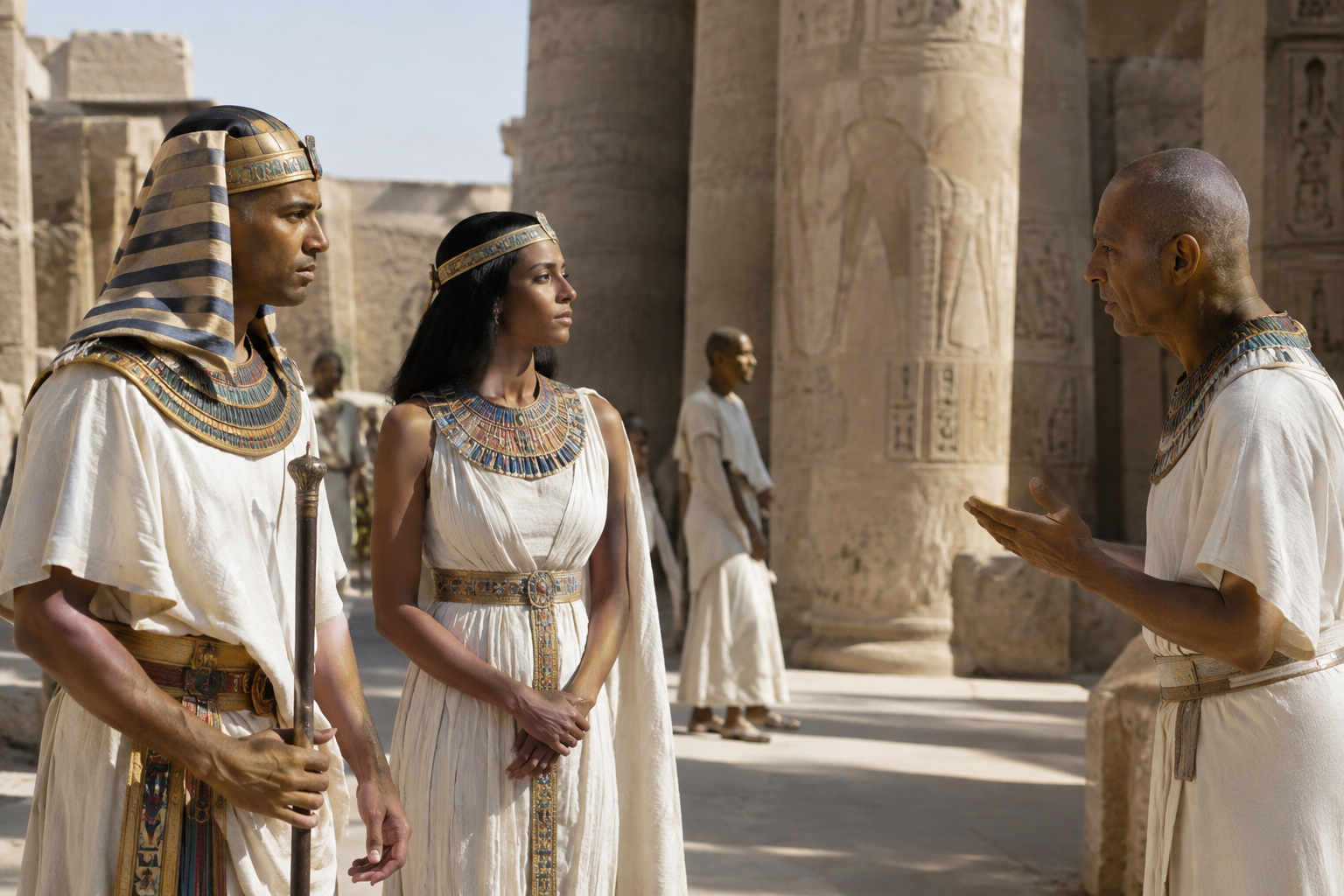
At this level of detail, R1a1a1b1a3a1b1 is a very narrow paternal branch, the sort of lineage label that sounds almost comically technical until you remember what it represents: one surviving line of fathers and sons, carried through centuries of very ordinary lives and only occasionally catching the archaeologist's torchlight. In this case, though, the difficulty is not that the branch is uninteresting. It is that the evidence provided here is extremely thin at the sample level.
No ancient sample details were supplied alongside the haplogroup, and that matters. A Y-DNA article worth reading should begin from an excavated person, a cemetery, a settlement, or at least a clearly documented regional cluster. Without that, the responsible thing is not to pad the silence with invented migrations, heroic tribes, or borrowed dynasties, but to explain what this branch likely belongs to in broader historical terms and how archaeogenetics usually approaches such a lineage.
R1a1a1b1a3a1b1 sits inside the wider Y-DNA haplogroup R1a, one of the best-known paternal lineages in Eurasian archaeogenetics. That larger family appears repeatedly in ancient DNA from the Eurasian steppe, from parts of Bronze Age and Iron Age eastern Europe, and later across a wide range of Slavic, Baltic, and some Central and South Asian historical populations. But that is the wider family. It would be careless to pretend that every story told about R1a automatically belongs to this far narrower twig.
That distinction is not just academic fussiness. Y-DNA tracks one direct paternal line only. It can tell us something about one thread in a man's ancestry, but not his whole genetic background, language, culture, or identity. A person carrying R1a1a1b1a3a1b1 could have lived in a community with quite mixed ancestry, married into many different groups, and spoken a language that the haplogroup alone cannot predict.
The real power of a branch like R1a1a1b1a3a1b1 emerges only when it is tied to excavated remains with secure dates and places. Then one can ask useful questions. Does the branch appear in one cemetery or several? Is it found among close male relatives, suggesting a local lineage? Does it recur across frontier zones, river corridors, or elite burials? Or does it turn up in quite modest graves, reminding us that most history is not dynastic at all?
That is exactly the sort of issue explored in MyTrueAncestry articles on early medieval and frontier populations in Europe, where paternal lines have to be read alongside isotopes, burial practice, and whole-genome ancestry rather than in splendid isolation.
In other words, a subclade this specific is most informative when it is anchored to archaeology. Without that anchor, we are left with probability rather than biography.
Because this lineage belongs within R1a, its deeper background likely lies somewhere in the long history of steppe-connected paternal expansions that reshaped much of Eurasia during and after the Bronze Age. That does not mean every later carrier was a migrant horseman sweeping across continents. Once such lineages spread, they became part of settled farming villages, trading towns, military communities, and medieval lordships alike.
Archaeogenetics has made this point again and again. The same broad paternal family can appear in very different social worlds: among populations associated with steppe-derived ancestry, among early medieval communities in central and eastern Europe, and among later historical groups whose identities were shaped by kingdoms, churches, and local marriage networks rather than by some timeless tribal essence.
That broader historical caution is especially useful for anyone seeing a highly resolved haplogroup on a DNA report. The long code invites grand claims. The evidence usually rewards patience instead.
If there is one period where branches inside R1a frequently become especially interesting, it is the early medieval world. This was an age of local communities, military mobility, new polities, and substantial regional mixing. Cemeteries from the Rhineland, central Europe, the North Pontic region, and further east show how unwise it is to equate one paternal line with one people.
Some burial grounds contain men whose Y-chromosome lines suggest continuity with earlier regional populations; others show newcomers, or at least men whose paternal ancestry links them to wider networks of movement. Whole-genome data often complicates the picture still further. A man with an R1a lineage may be genetically mixed in ways that reflect generations of interaction across cultural boundaries.
That is why the most valuable future evidence for R1a1a1b1a3a1b1 would not be a bare haplogroup label repeated on modern trees, but a securely published ancient individual from a dated context: a village cemetery, a frontier fort's burial ground, a princely mound, or even an urban churchyard. Context turns a code into history.
It is tempting to jump from a narrow R1a branch to a named medieval dynasty, a noble house, or a famous migration. But no associated family evidence was given here, and no ancient sample list was supplied to support that kind of leap. So it would be bad history to dress the branch in borrowed heraldry.
One sees the same problem in popular writing all the time: a haplogroup is assigned a nationality, a tribe, even a temperament. That is not how the evidence works. Paternal lineages are wonderfully precise in one sense and maddeningly limited in another. They can identify lines of descent and patterns of spread, but they do not hand us a ready-made historical identity card.
Even without named ancient samples in hand, R1a1a1b1a3a1b1 tells you that your direct paternal line belongs to a very specific surviving offshoot of a major Eurasian Y-DNA family. The historical value of that lies in comparison: with other tested men, with refined family trees, and eventually with ancient remains that may place this branch in a clearer archaeological setting.
For now, the most responsible reading is modest but still meaningful. This is a lineage likely tied to the broad and complicated history of R1a-bearing populations across Eurasia, and its real story will sharpen as more ancient DNA is published from early medieval, steppe, and eastern European contexts. For anyone researching their paternal ancestry, that is not a disappointment. It is an invitation to follow the evidence as it grows.
Comments