Haplogroup A2'3'4
– 5 min read


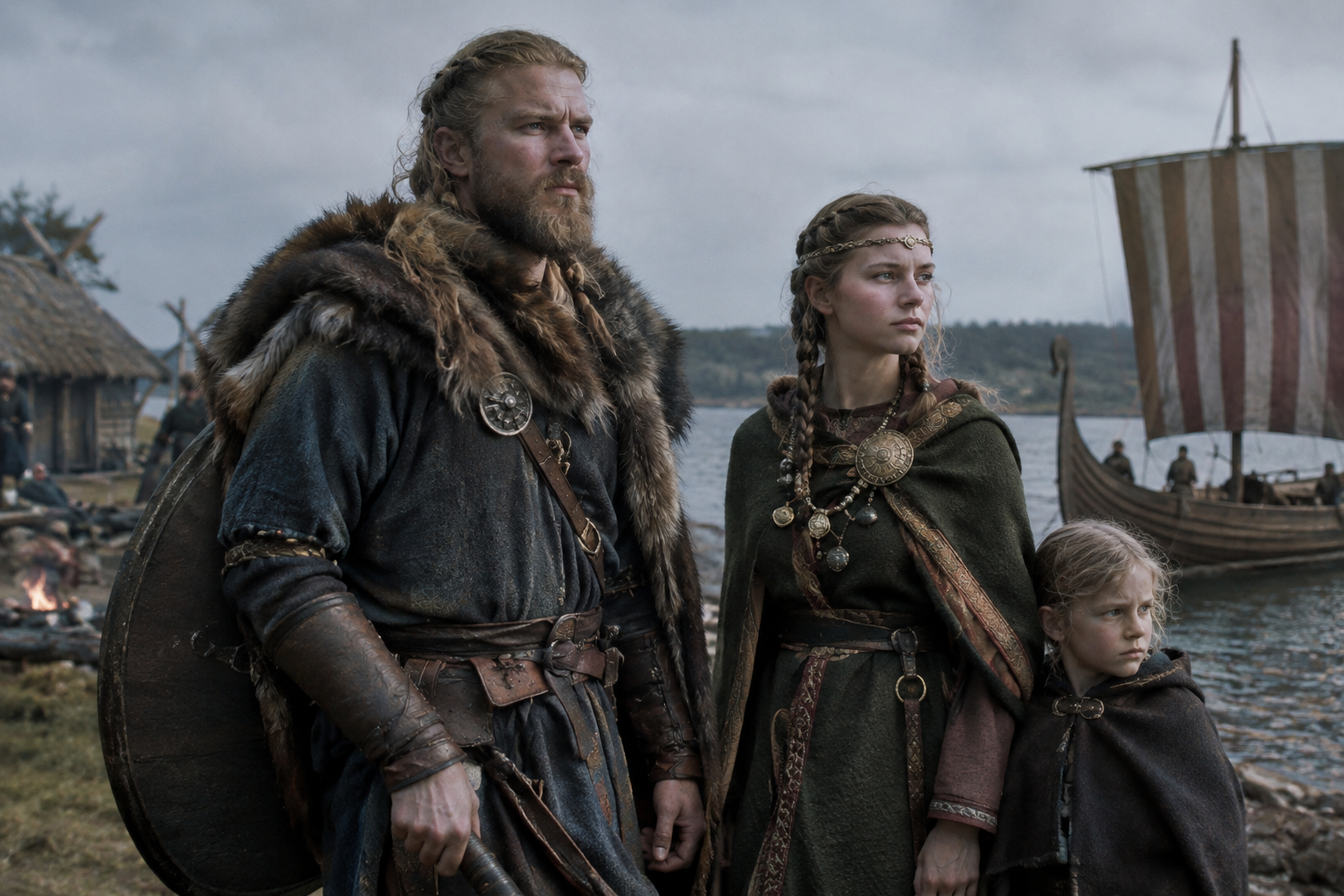
A man buried in Sweden around AD 1050, identified as urm161 and described here as a Viking-Celtic mix, is the sort of find that immediately stops you in your tracks. Not because one skeleton can "explain" the Viking world - archaeology is rarely so obliging - but because a paternal lineage reported under the very deep Y-DNA branch A2'3'4 is striking in a Scandinavian early medieval context. It hints at a life, or at least a paternal line, that reached Sweden through movements far wider than the usual shorthand of "Viking ancestry" suggests.
That is the first thing worth saying plainly. Y-DNA follows one direct male line only: father to son to son. It does not describe a person's whole ancestry, language, or identity. Still, when a lineage as ancient and uncommon in European ancient-DNA discussions as A2'3'4 turns up in a burial from Viking-age or just post-Viking Sweden, it becomes historically interesting precisely because it pushes us to think about mobility, mixture, and the human scale of long-distance connections.
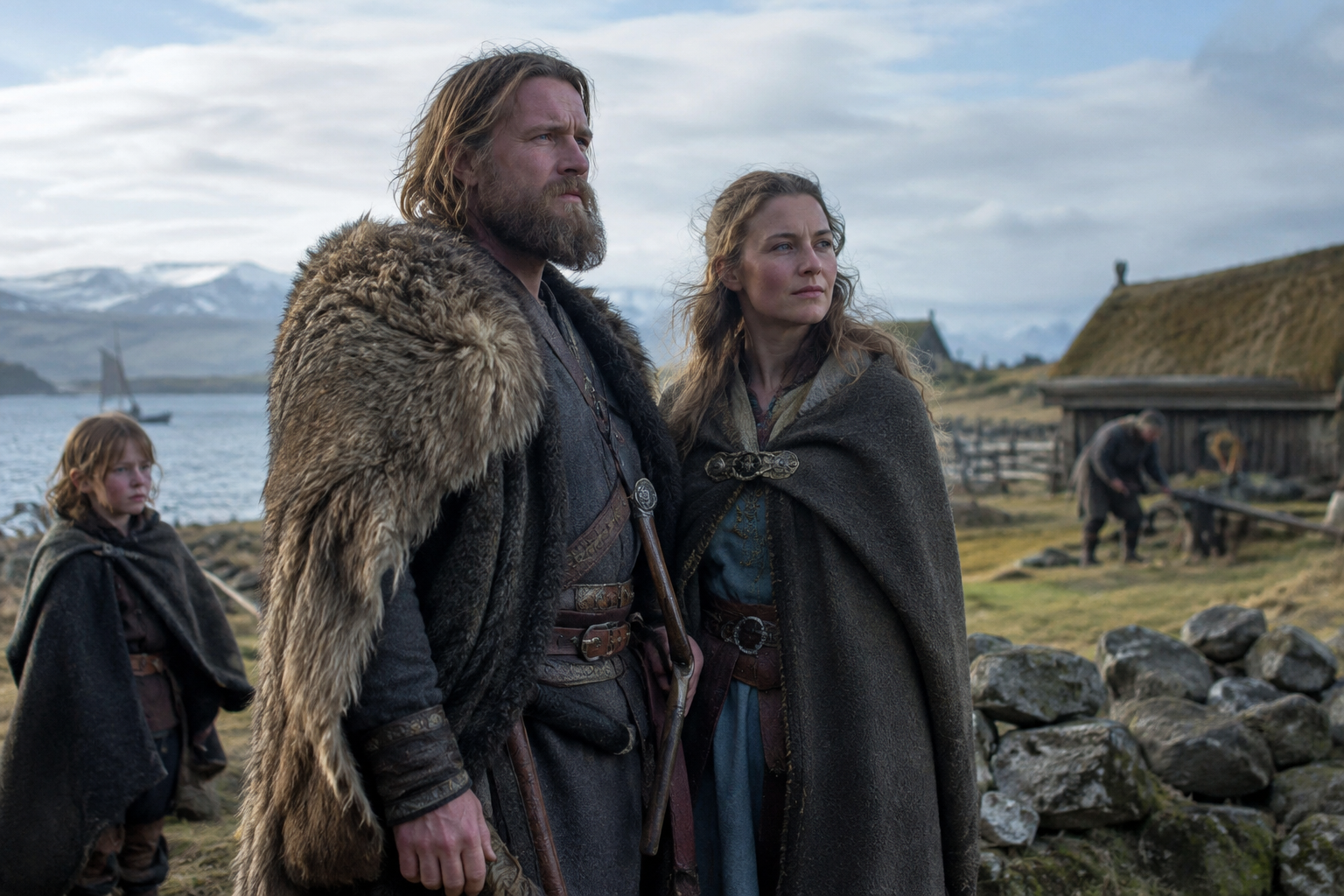
The dating of urm161 places him in a moment when Scandinavia was changing rapidly. Around AD 1050, the Viking Age was shading into the Christian Middle Ages. Ports, market towns, royal centres, and churchyards were knitting Sweden into a denser network of exchange across the Baltic, the North Sea, the British Isles, and beyond. People moved for trade, raiding, marriage, slavery, military service, pilgrimage, and settlement. Some journeys were voluntary, others absolutely not.
So the phrase "Viking Celtic mix" matters here not as a romantic label, but as a reminder that Scandinavian communities were often made from several strands at once. Genetic work on the Viking world has repeatedly shown that "Viking" was not a biological type. It was a social and historical world into which people with varied ancestries could enter. A broad ancient-DNA study of the Viking period, published in Current Biology, helped make that point forcefully: Scandinavian-linked populations were connected to wide zones of movement and admixture rather than sealed ethnic blocks.
A2'3'4 is not one of the Y-DNA branches usually associated in popular writing with medieval northern Europe. In fact, it belongs very near the deep root of the human Y-chromosome tree, among lineages with especially old African history. That does not mean that a man found in medieval Sweden should be reduced to a modern identity label, nor does it allow us to reconstruct a neat migration story from one code alone. But it does mean that this paternal line was already unusual enough in that setting to deserve careful attention.
The important distinction is between the deep parent branch and a specific recent family history. A lineage can have extremely ancient roots in one continent and yet reach another region through many possible historical processes: Roman-era mobility, early medieval trade, enslavement, service in elite households, ecclesiastical networks, or movement through the British Isles and North Atlantic world. With only one named ancient individual here, caution is essential. A2'3'4 in urm161 is best treated as evidence of paternal diversity in medieval Sweden, not as proof of one single route.
The description of urm161 as a Viking-Celtic mix is a useful historical clue because the Scandinavian world had deep and sustained ties to Ireland, Scotland, the Isle of Man, Wales, and northern England. Norse settlements in the Irish Sea region created households and communities in which Scandinavian and Insular ancestries mixed for generations. By the eleventh century, those networks had become ordinary facts of life. People, goods, and family lines crossed back and forth so frequently that the old idea of sharply separate "Viking" and "Celtic" populations simply does not hold up well.
That wider setting gives a plausible frame for why an unexpected paternal lineage might appear in Sweden. One need not imagine a single dramatic voyage from far away to a Scandinavian grave. The more historically sensible picture is cumulative: lineages moving through contact zones, being absorbed into mixed communities, and eventually appearing in places where, on first glance, they look surprising. Medieval northern Europe was full of such surprises once one stops expecting purity and starts looking for entanglement.
There is a temptation with rare haplogroups either to overstate them - turning one sample into a lost dynasty or a secret migration - or to shrug them off as anomalies. Both responses miss the point. Ancient DNA is often most valuable when it reveals the edges of what a society contained. Urm161 tells us that an early medieval person in Sweden could belong to a paternal line far outside the branches most commonly discussed for Scandinavia, while still being part of a recognisably local historical world.
That matters because the Viking and post-Viking North was a magnet and a crossroads. We know from archaeology, isotopes, texts, and genomics that people of different backgrounds ended up in Scandinavian settings. Some were traders. Some were migrants born into already mixed families. Some were captives or descendants of captives. Some may have arrived through Christian networks as the region changed religiously and politically in the eleventh century. A rare Y-line cannot tell us which life story applies to urm161, but it does fit the larger pattern of a society built through movement.
It is sometimes useful to remember just how connected Sweden was by this date. The Baltic linked it eastward; the North Sea linked it to England and the Frankish world; the river systems tied the wider Scandinavian sphere into routes reaching deep into Eurasia. And western connections to the British Isles had been intensive for centuries. In such a setting, genetic diversity is not a footnote. It is part of the main story.
Other MyTrueAncestry articles on early medieval and migration-period population change make the same general point from different regions: the period is full of blended communities rather than neatly bounded peoples. The Rhineland, Britain, frontier zones, and Scandinavian contexts all show that identities were historical and local, while ancestry could be geographically wide-ranging.
Germanic Languages and Genomics
For someone researching haplogroup A2'3'4 today, the lesson of urm161 is not that this branch was "typically Viking" - plainly it was not - but that rare paternal lines can appear inside very mixed historical populations. The sample shows that by around AD 1050, a man associated with Sweden's Viking-Celtic world carried this deep-rooted Y lineage. That is a small but vivid reminder that medieval Europe was more connected, and often more biologically varied, than older stereotypes allowed.
If A2'3'4 appears in your own paternal results, the most sensible historical takeaway is one of depth and complexity. Your direct male line belongs to a very ancient branch of the human story, and at least one known ancient individual linked to this branch stood in medieval Sweden at the meeting point of Scandinavian and Insular worlds. That does not hand you a ready-made biography - but it does place your lineage inside the real, restless human traffic of history.
Comments