Haplogroup I1a1b1a4a2f

– 5 min read


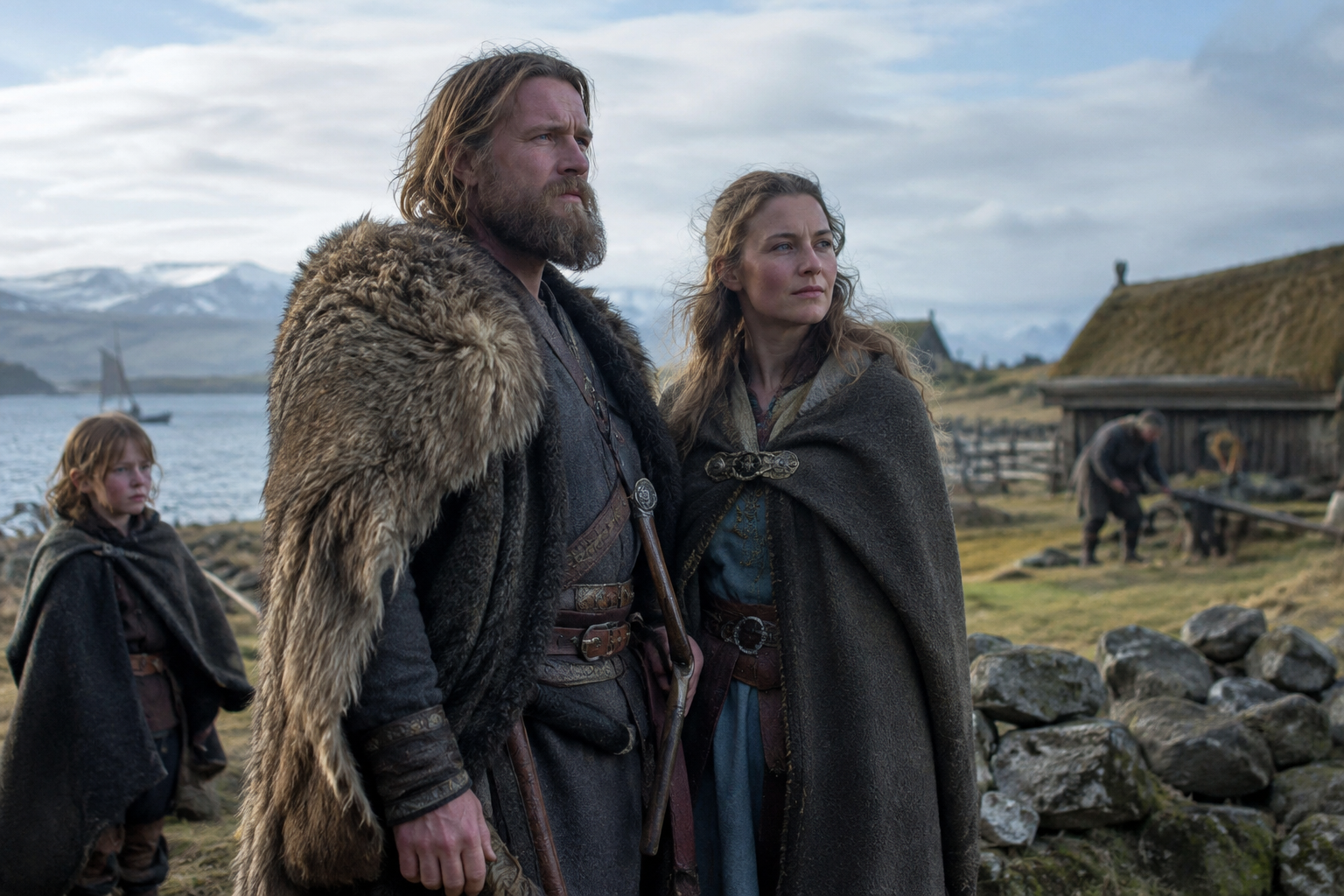
One of the more arresting clues for the haplogroup I1a1b1a4a2f comes from Iceland around AD 935, where an ancient individual identified as SSG-A3 is described as a Viking-Gaelic mix. That phrase matters. It places a paternal line within one of the best-known contact zones of the early medieval North: not simply Scandinavia, and not simply the Gaelic world, but the maritime frontier where Norse expansion and Insular communities became entangled through settlement, trade, alliance, and family life.
This is a useful place to begin because Y-DNA follows one direct paternal line only. It does not tell us everything about a person's ancestry, language, or identity. Yet when a branch like I1a1b1a4a2f appears in an early Icelandic context linked to mixed Viking-Gaelic ancestry, it invites a very specific historical question: what does this paternal line look like when placed inside the real, messy human world of the North Atlantic in the Viking Age?
Iceland in the late 9th and 10th centuries was not populated by a single neatly bounded people. The island was settled during the Viking Age by migrants whose backgrounds included Scandinavia as well as the Norse-controlled zones of the British Isles. By the time of a burial dating to around AD 935, the social world of Iceland already reflected movement across the Norwegian Sea and the Irish Sea alike.
The sample SSG-A3, labeled as a Viking Gaelic mix from Iceland, fits exactly this historical setting. The importance of the sample is not that it magically solves the history of one subclade, but that it anchors I1a1b1a4a2f in a documented world of mobility and admixture. A paternal lineage associated with the wider I1 family, often linked in broad terms with Scandinavian male lines, appears here in a context where ancestry was already being recombined in the western Viking world.
That distinction is worth keeping clear. The wider haplogroup I1 has a long and complicated northern European history, but that does not mean every narrow descendant branch had the same path or timing. For I1a1b1a4a2f, the evidence in hand is modest but suggestive: at least one early medieval bearer belonged to the Icelandic settlement horizon shaped by Norse-Gaelic interaction.
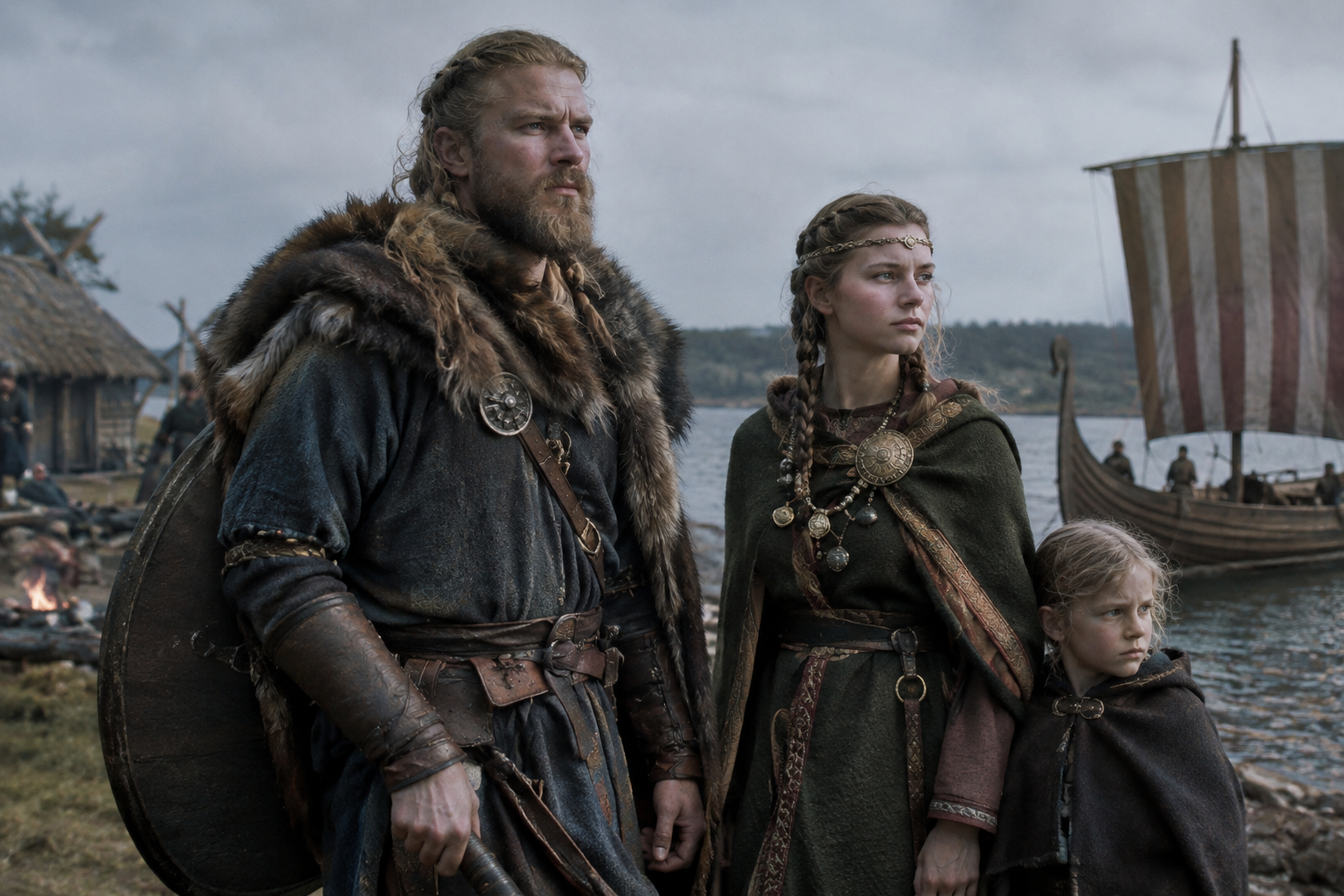
Viking North Atlantic settlers
"Viking-Gaelic" is not a romantic flourish. It points to a historical process visible across places such as Dublin, the Hebrides, Orkney, the Isle of Man, and the western seaways more generally. Norse-speaking groups did not simply raid these regions and vanish; they settled, intermarried, fostered children, formed local elites, and became part of Insular societies. By the 10th century, people in Iceland could easily carry ancestry drawn from several sides of the North Atlantic world.
That is why SSG-A3 is more interesting than a bare label of "Viking" would be. The sample sits in a cultural and genetic middle ground that historians have long suspected and archaeogenetics has increasingly clarified. In this setting, a Y-chromosome lineage could persist down the direct male line while the rest of a person's ancestry reflected substantial mixture from Gaelic-speaking communities and Scandinavian settlers.
This also helps explain a common misunderstanding about paternal haplogroups. If a man carried a branch such as I1a1b1a4a2f, that fact alone would not make him culturally Scandinavian in any simple sense. In Iceland around AD 935, identity could be local, hybrid, multilingual, and shaped by kin networks spanning sea routes rather than tidy ethnic boxes.
Although the article's focus is the narrow branch I1a1b1a4a2f, the broader parent haplogroup I1 is relevant because it provides the larger historical backdrop. I1 is one of the Y-chromosome lineages repeatedly associated with northern Europe, especially Scandinavia, in both modern and ancient genetic discussions. That background makes an Icelandic early medieval appearance unsurprising, but it still does not tell us when this exact sub-branch formed or how many routes it may have taken into the North Atlantic.
What the Icelandic evidence does suggest is that the branch belonged to the world created by Scandinavian expansion westward. That world was not a one-way export of people from Norway. It was a zone of return voyages, mixed households, shifting loyalties, and local adaptations. A paternal line could move from mainland Scandinavia to the islands of the British-Irish zone and on again to Iceland, or arrive in Iceland through descendants already shaped by that western contact zone.
A landmark ancient DNA study of Viking Age mobility and mixture, published in Science, helped establish just how varied Viking Age populations could be across the North Atlantic and beyond. Without pretending that one paper alone resolves the exact placement of SSG-A3, this body of research has made one thing very clear: Viking Age communities were genetically diverse, and historical labels often conceal a good deal of movement.
It is tempting to imagine early Iceland as a remote colony at the edge of the world. In fact, it was a meeting place. The settlers brought livestock, law, religious habits in transition, oral tradition, and family feuds, but they also brought inherited connections to Norway, the Scottish islands, and Gaelic-speaking coasts. The archaeology and written tradition both point to a society formed quickly from people who were already mobile before they arrived.
In that sense, SSG-A3 is historically well placed. A man with haplogroup I1a1b1a4a2f in Iceland around AD 935 does not represent an isolated "type." He belongs to a formative period in which the island's population was being assembled from linked but different North Atlantic worlds. The paternal line may have deeper Scandinavian associations, but the individual's total ancestry reminds us that Viking expansion created new populations rather than simply reproducing old ones abroad.
That pattern has parallels elsewhere in early medieval Europe, where genetics increasingly shows that political frontiers and cultural labels did not map neatly onto ancestry. Studies of migration-period and post-Roman populations repeatedly uncover local continuity mixed with newcomers, and newcomers themselves were rarely uniform. The North Atlantic was one version of that broader early medieval story, only with more sea between the settlements.
Germanic languages and genomics
With only one explicitly listed ancient individual here, caution is not just good manners but good method. We should not claim that I1a1b1a4a2f was uniquely Icelandic, uniquely Norse-Gaelic, or representative of all Viking settlers. Nor should we push the branch back into earlier prehistory without direct evidence at this same level of resolution. A narrow subclade needs narrow evidence.
Still, even a single well-placed sample can be illuminating. SSG-A3 shows this paternal line in an early Icelandic setting during the settlement age, and in a context explicitly described as mixed Viking-Gaelic ancestry. That makes the branch especially relevant to men whose paternal heritage may connect, not to one modern nation, but to the interconnected maritime world of Scandinavia and the Gaelic west.
For readers exploring their own paternal ancestry, the most responsible takeaway is this: I1a1b1a4a2f is compatible with the historical networks that carried men and families through the Viking North Atlantic, and at least one ancient bearer stood within that mixed world in 10th-century Iceland. That is not a royal pedigree or a saga-proof identity badge. It is something better: a real fragment of early medieval human history.

Comments