Haplogroup R1a1a1b1a3a1a10

– 5 min read


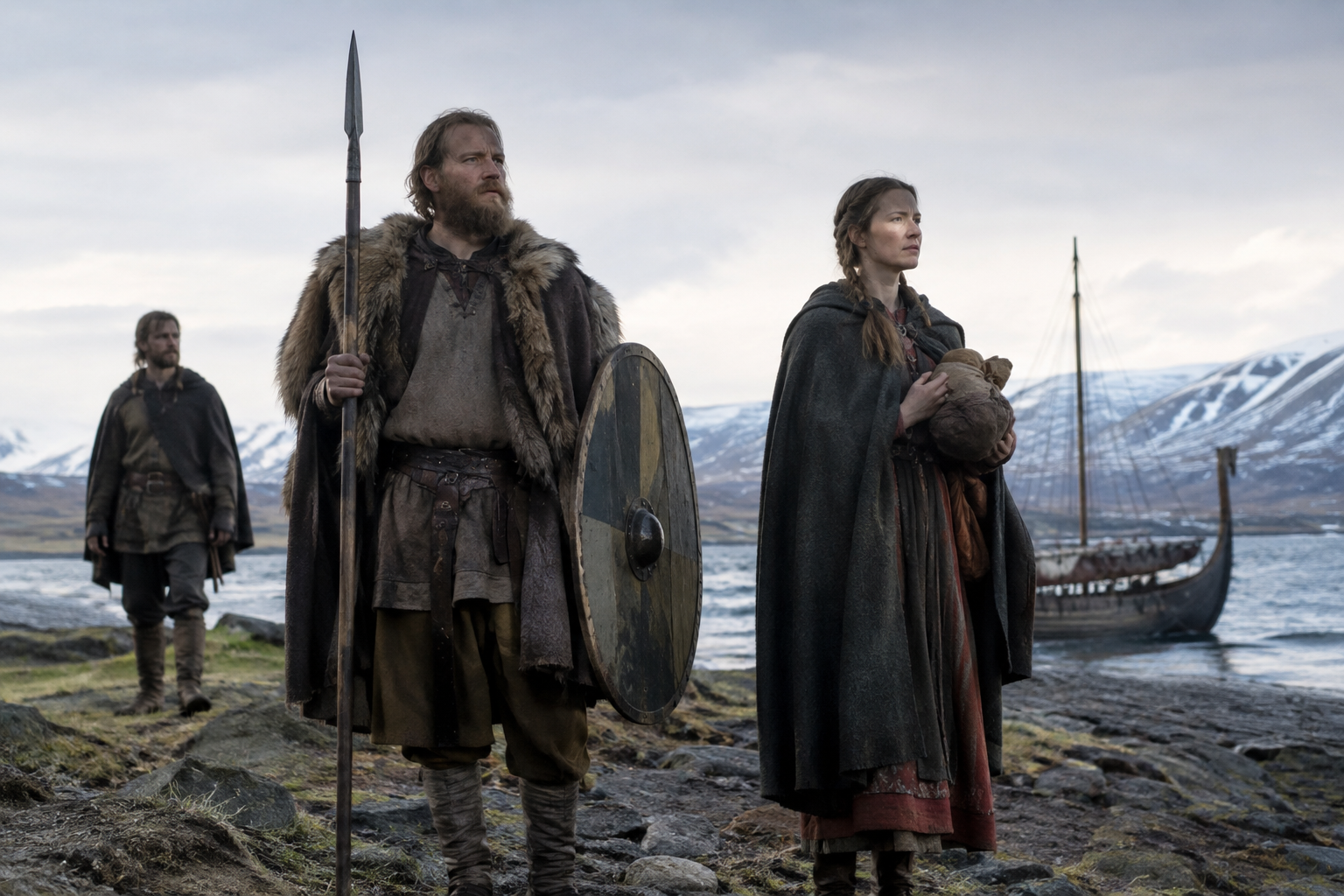
In the early 12th century, one man buried in Iceland carried a Y-chromosome line now reported in MyTrueAncestry as R1a1a1b1a3a1a10. He appears in the sample list simply as TSK-A26, described as a Viking Saxon individual from Iceland dated to 1104 AD. It is a sparse record, but that sparseness is itself revealing: even a single well-placed medieval male can open a window onto the crowded human worlds behind Viking Age and post-Viking Iceland.
Iceland is often imagined as isolated, almost laboratory-like. In reality it was founded and peopled through movement: settlers from Scandinavia, people from the British Isles, trade across the North Atlantic, and continuing contact with Norway and beyond. A Y-DNA result such as R1a1a1b1a3a1a10 does not describe a man's whole ancestry or identity, but it does trace one direct paternal line. In a place like medieval Iceland, that paternal line matters because it sits at the meeting point of Norse expansion, migration from Anglo-Saxon and other North Sea populations, and the making of a new society on the Atlantic edge.
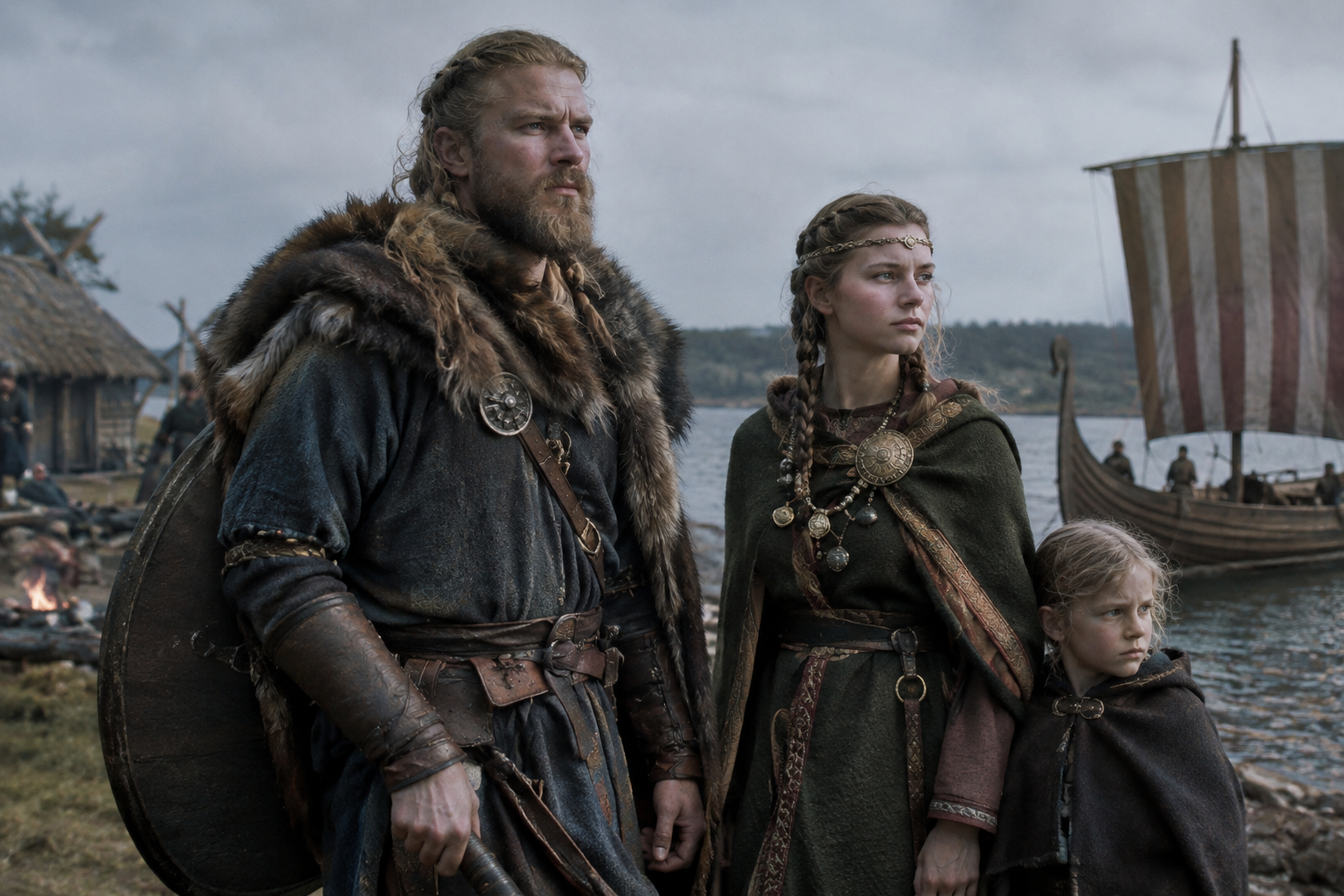
The label "Viking Saxon Iceland" attached to TSK-A26 is especially striking because it points to a mixed historical setting rather than a neat ethnic box. By the early 1100s, Iceland had already been settled for more than two centuries, Christianity had taken hold, and the island was tied into the shipping lanes and kin networks of the wider North Atlantic. A man buried there in 1104 AD was living in a society shaped by Scandinavian settlers, but also by generations of contact with people whose family origins lay around the North Sea, including areas associated with the Anglo-Saxon world.
That makes the haplogroup worth noticing. R1a is a broad and widespread paternal lineage with a long Eurasian history, but the article haplogroup here is a much narrower downstream branch, R1a1a1b1a3a1a10. We should be careful not to pour the whole prehistory of R1a into this one Icelandic man. What TSK-A26 can support is a more modest and more interesting point: a specific medieval Icelander belonged to a paternal line that fits the historically mixed, mobile, and connected character of North Atlantic society.
The phrase sounds contradictory only if we imagine the Viking world as purely Scandinavian. Archaeology and ancient DNA have been steadily dismantling that old picture. Viking Age mobility drew in people from many backgrounds, and those backgrounds did not vanish when migrants crossed the sea. Men with Scandinavian cultural affiliations could carry paternal lines with histories rooted elsewhere in northern Europe; equally, men born into mixed communities could be buried under local customs that make them look straightforwardly "Norse" in the archaeological record.
Research on ancient populations in Britain, Scandinavia, and the North Atlantic has repeatedly shown that migration in this period was not a one-way stream of ethnically uniform colonists. Instead, it was a network. The same maritime world that carried Norse settlers to Iceland also connected Danish, Norwegian, English, Frisian, and Saxon coasts through raiding, trade, fosterage, enslavement, marriage, and seasonal movement. Seen in that context, TSK-A26 is less an anomaly than a reminder that medieval identities were assembled from several layers at once: language, law, belief, kinship, and ancestry did not always line up neatly.
A landmark ancient DNA study of Iceland and the wider Viking world, published in Science, helped establish just how entangled these North Atlantic populations were. Without over-claiming what that publication says about this exact subclade, it supports the broader historical setting in which an Icelandic male connected with a Saxon-associated label is entirely credible.
By 1104 AD, Iceland was no longer a frontier camp of first arrivals. It was a structured commonwealth with farms, churches, law, memory, and inherited status. That changes how we should read TSK-A26. He need not represent a newly arrived migrant; just as plausibly, he may belong to a family line that had already been in Iceland for generations, preserving on the Y chromosome a paternal signature from an earlier movement across the North Sea.
This is one of the strengths of Y-DNA in archaeology. Autosomal DNA can show mixed ancestry across many branches of a family tree, while Y-DNA follows one father-to-son line through time. For medieval Iceland, that means a man can be culturally Icelandic, legally part of Icelandic society, perhaps even many generations removed from migration, and still preserve a paternal branch that hints at older ties to Saxon or broader northern European populations.
The caution is just as important. One male line is not a whole people. TSK-A26 cannot stand for all medieval Icelanders, all Viking settlers, or all men labelled Saxon in North Atlantic contexts. But he does capture something historically real: the founding and development of Iceland involved the sorting and re-sorting of lineages from several shores.
The most useful comparison for TSK-A26 is not with some imagined primordial homeland of R1a, but with the early medieval North Sea zone where Germanic-speaking societies interacted constantly. In that world, political labels such as Viking, Saxon, Angle, or Dane were historically meaningful, but they were not genetic cages. Ancient DNA from early medieval Germany and the Rhineland, for example, has emphasized diversity, movement, and the survival of multiple family histories within communities that written sources often treat more simply.
That matters for this haplogroup article because R1a1a1b1a3a1a10 appears here in a context defined by language spread, maritime mobility, and frontier settlement. It is quite possible for a paternal line to move through one cultural setting and become embedded in another. A lineage associated in one generation with a Saxon background can, after a few centuries, belong to an Icelander whose daily life was governed by Norse law, Christian practice, and Atlantic farming rhythms.
This is also why broad ethnic storytelling can mislead. Haplogroups do not speak languages, compose sagas, or swear oaths at assemblies. People do. Yet paternal lines can survive those changes and help us see how populations formed. In TSK-A26, the value of the evidence lies precisely in showing that medieval Iceland was not merely Scandinavian transplanted westward, but a society formed from overlapping streams of ancestry and identity.
Although only one ancient sample is listed here, it sits in a much bigger pattern. Icelandic settlement drew heavily on Norway, but it also absorbed substantial ancestry from the British Isles. Historical and genetic work alike have shown that the making of Iceland involved both free settlers and unfree people, both planned colonization and messy human entanglement. A paternal lineage such as that of TSK-A26 belongs to that world of transmission, inheritance, and adaptation.
Seen this way, the interest of R1a1a1b1a3a1a10 is not that it proves a dramatic migration on its own. It is that it survives in exactly the kind of place where we would expect older North Sea connections to be preserved, transformed, and reinterpreted. Iceland, remote on a map, was central to a living network of ships, families, and remembered origins.
For someone researching the haplogroup R1a1a1b1a3a1a10, TSK-A26 offers a grounded medieval point of reference: one documented male in Iceland, in 1104 AD, living in a society built from Scandinavian and wider North Sea connections. That does not make every present-day carrier "Viking" or "Saxon" in any simple sense. But it does place this paternal branch within a real historical landscape of maritime migration, mixed communities, and long-lived family lines that crossed from continental and insular northern Europe into the North Atlantic world.
Comments