Haplogroup R1b1a1b1a1a2c1a4b2c3a

– 5 min read


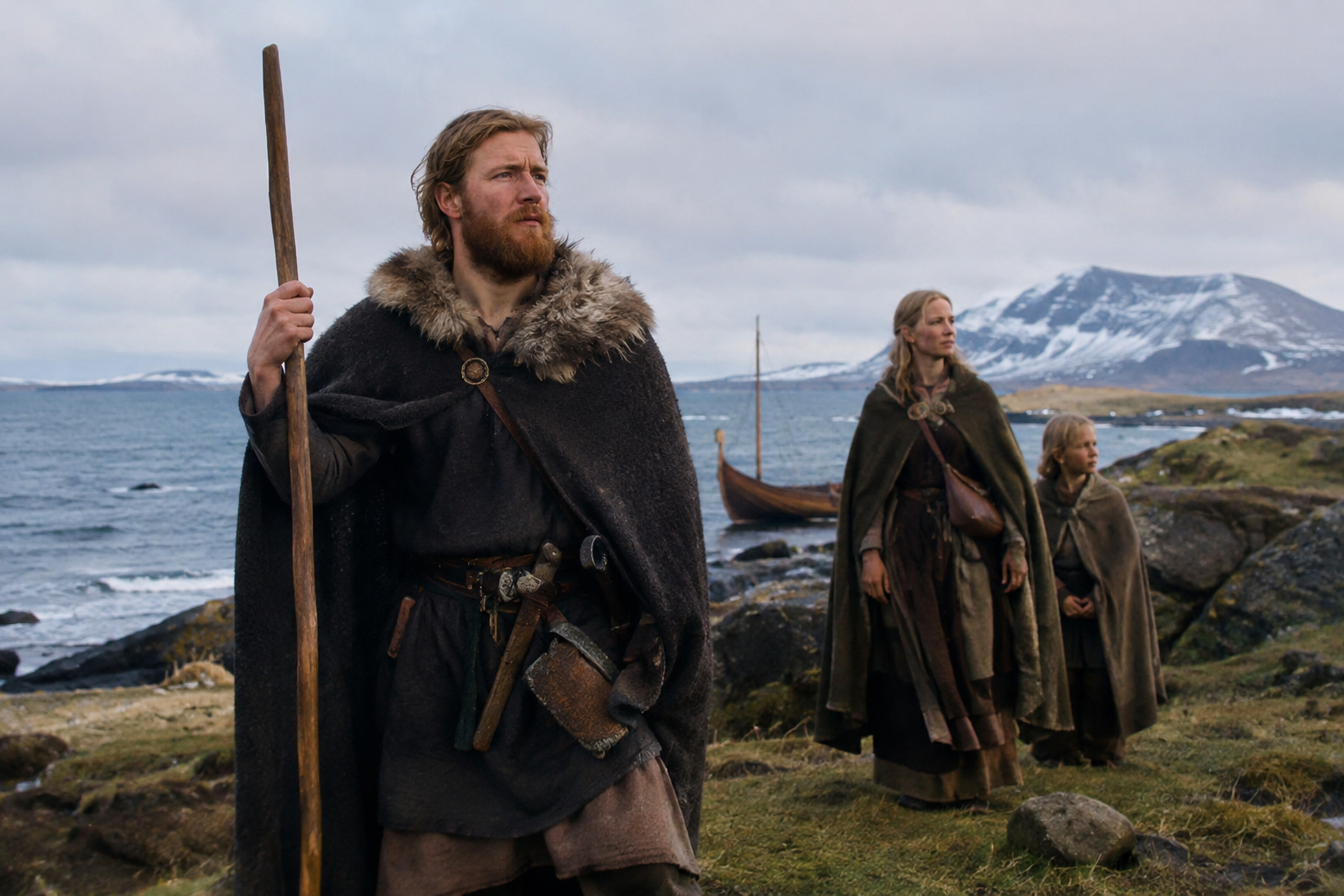
In around AD 935, one man associated with the settlement of Viking Age Iceland appears in the ancient DNA record as ORE-A1, described here as a Gaelic settler in Viking Iceland. That pairing is the real point of interest. It is not simply that he lived in Iceland during the Norse expansion across the North Atlantic, but that his label already hints at the mixed society forming there: Scandinavian political power and seafaring on the one hand, and substantial Gaelic ancestry and migration on the other.
The Y-DNA lineage linked here is R1b1a1b1a1a2c1a4b2c3a, a very narrow paternal branch within the wider R1b family. Y-DNA follows one direct male line only, so it does not sum up a person's whole ancestry, language, or identity. In a place like early Iceland, that matters enormously, because the archaeology and the genetics alike show that settlement was not the work of one neatly bounded "people", but of communities assembled across the Irish Sea and the North Atlantic.
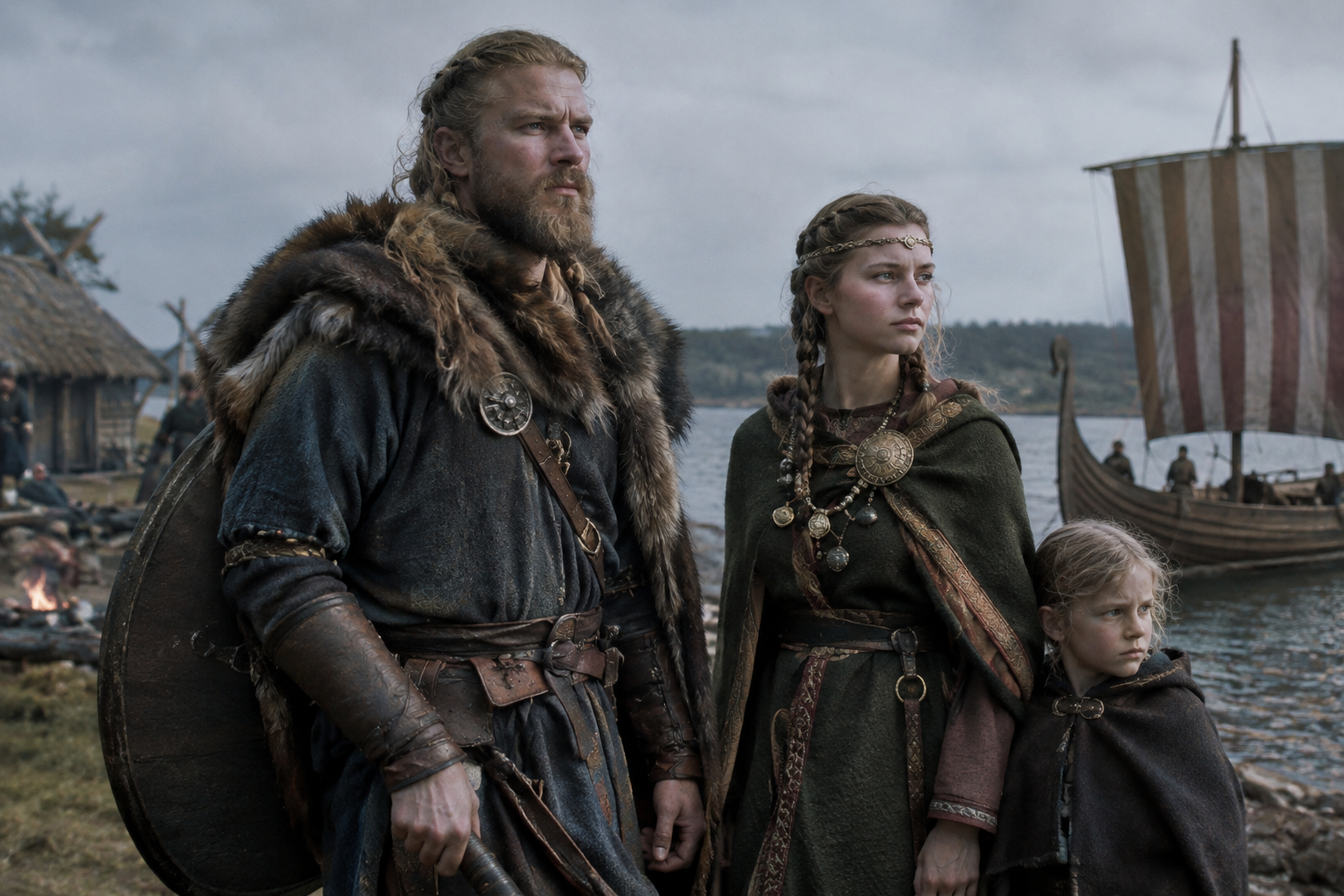
The sample ID ORE-A1 is brief, but the historical setting behind it is anything but. Ninth- and tenth-century Iceland was colonised during a period when Norse activity connected Norway, the Scottish islands, Ireland, western Britain, and the Faroes. By the time a man like ORE-A1 was living in Iceland, movement across those waters had already produced households, alliances, and communities with blended cultural backgrounds.
That is why the phrase "Gaelic settler Viking Iceland" should not be treated as a contradiction. It reflects the well-established fact that Viking Age expansion was also an age of entanglement. Men and women moved voluntarily and involuntarily, as traders, raiders, spouses, dependants, foster-kin, captives, and settlers. A paternal lineage such as R1b1a1b1a1a2c1a4b2c3a appearing in that setting fits a world in which the North Atlantic was less an ethnic frontier than a maritime zone of constant contact.
A major ancient DNA study of Icelandic and North Atlantic population history helped establish just how mixed those early communities were, and remains the key scientific backdrop for interpreting finds like ORE-A1: http://science.sciencemag.org/content/360/6392/1028.
Because this article concerns a very fine-grained branch, it is important not to smuggle in claims that belong only to the much broader R1b tree. R1b as a whole is widespread in western Europe and deeply important in the later prehistory and history of Atlantic Europe, but that does not mean every tiny descendant branch can be assigned a single origin story from prehistory onward.
What can safely be said is narrower and more useful. A lineage like R1b1a1b1a1a2c1a4b2c3a turning up in a man from Viking Age Iceland points to continuity of a paternal line that had already become embedded somewhere in the populations feeding into North Atlantic settlement. In this case, the label attached to ORE-A1 makes the Irish Sea zone especially relevant: the same sea-lanes that linked Dublin, the Hebrides, Man, western Scotland, and northern Britain also fed the settlement of Iceland.
For generations, older history writing liked tidy categories: Norse here, Gaelic there. The archaeology has long made that look inadequate, and genetics has made it harder still to sustain. Early Icelandic society drew in people from areas where Scandinavian and Gaelic worlds had already overlapped for decades, especially in places touched by Viking towns, island lordships, and mixed rural settlements.
That helps explain why a "Gaelic settler" could belong fully within Viking Age Iceland. Cultural labels describe social worlds; haplogroups describe one paternal line. The two may intersect, but they are not the same thing. ORE-A1 may therefore be read not as an odd exception, but as evidence of the kind of population mixture that was normal in the North Atlantic colonies.
This matters beyond Iceland itself. Once settlement began, the island became a kind of genetic archive of earlier movements around the North Atlantic. Some lines arriving there may have roots in Norway; others in Gaelic-speaking regions; many families likely carried both backgrounds within only a generation or two. The written sagas, composed later, preserve memories of mobility, fosterage, exile, and alliance; the DNA gives those patterns a biological dimension, though never a complete script.
One of the most striking lessons from Icelandic and North Atlantic research is that political dominance and genetic contribution do not always align neatly. Norse language and institutions became central in Iceland, yet the biological ancestry of settlers included strong input from the British Isles. In other words, a society can look Scandinavian in its public culture while still containing many paternal and maternal lines drawn from Gaelic regions.
That historical asymmetry is precisely why ORE-A1 is so interesting. A sample like this helps move discussion beyond stereotypes of longships filled only with men from western Norway. The population that actually built Iceland was more varied. Some settlers came from already mixed communities in places such as the Hebrides or Ireland, where Norse and Gaelic identities had been rubbing against one another for years.
Readers interested in how population movements reshaped the North Sea and British world may also want to compare this broader regional picture:
With only one featured ancient individual, it would be careless to turn ORE-A1 into the founding father of anything. He does not represent all of Iceland, all Gaelic migrants, or all carriers of R1b1a1b1a1a2c1a4b2c3a. But single ancient samples are still valuable when they are historically well-placed. They show that a lineage was present in a particular time and social setting, and they anchor family-history questions to a real human context.
For people exploring this haplogroup today, the most responsible insight is not a grand claim about tribal identity, but a concrete historical possibility. This paternal branch was present in the North Atlantic world of the tenth century, in an individual associated with Gaelic settlement in Viking Iceland. That places the lineage within one of medieval Europe's most mobile and hybrid frontier societies.
There is also a useful parallel here with other early medieval genomic work across northern Europe, where supposedly simple ethnic categories often dissolve under closer examination. Mixed origins, movement over water, and local reassembly of communities appear again and again in the evidence.
So what does R1b1a1b1a1a2c1a4b2c3a suggest, cautiously and usefully? Not a guaranteed saga ancestor, and not a single homeland fixed for all time. What it does suggest is that this paternal line was part of the human mixture that made early Iceland: a world shaped by Norse expansion, Gaelic movement, and the dense maritime links of the Irish Sea and North Atlantic. ORE-A1 gives that story a human scale, reminding us that behind every long haplogroup label stands an actual man who lived in a recognisable historical moment.
Comments