Haplogroup R1a1a1a~

– 5 min read


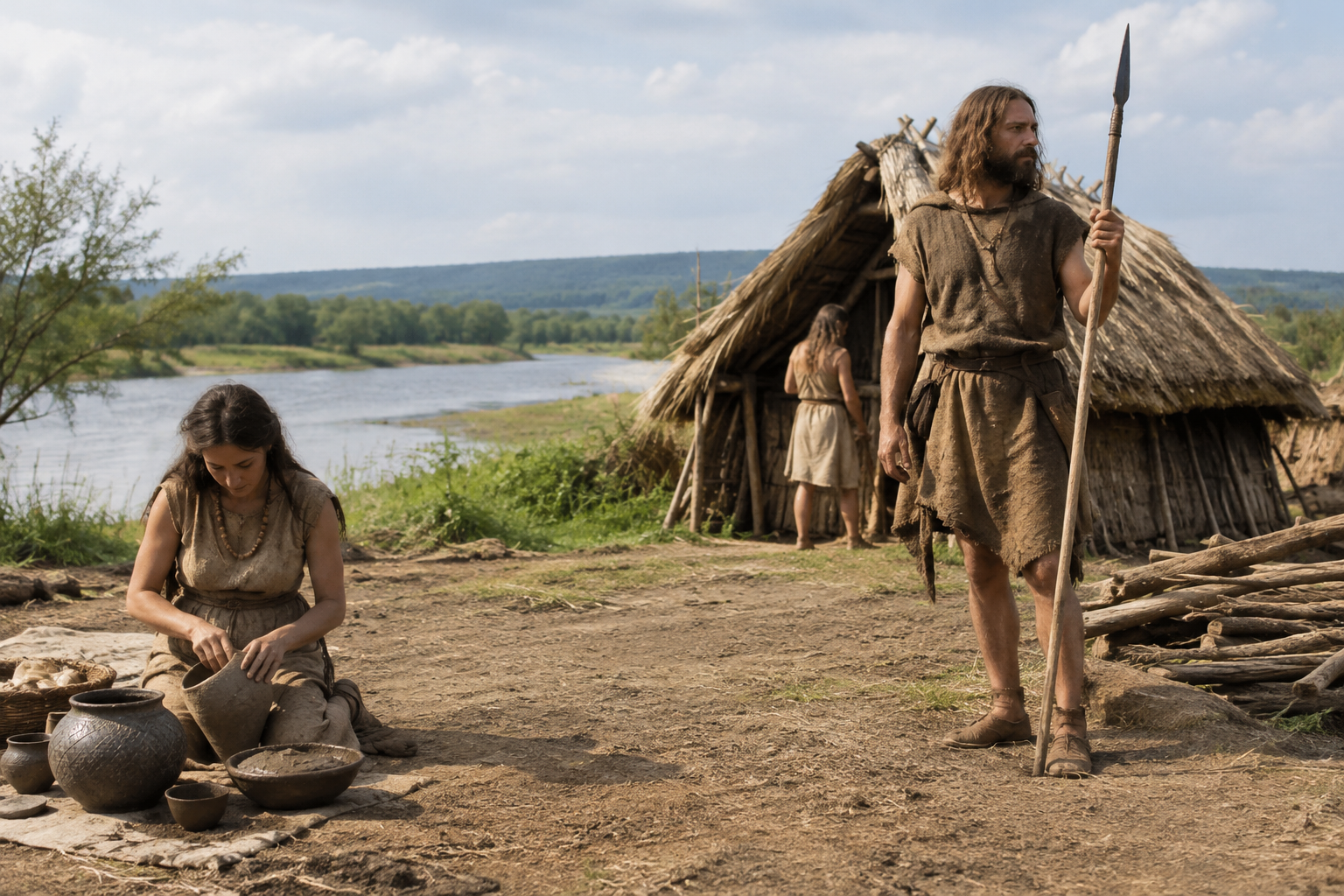
At Plotiste nad Labem in the Czech Republic, one ancient male labeled PNL002 was buried around 2100 BC in a Corded Ware context. On its own, that may sound like a dry catalogue entry. But for Y-DNA R1a1a1a~, it is exactly the sort of find that matters: a paternal line turning up in the archaeological world of late third-millennium and early second-millennium BC Central Europe, where questions of mobility, ancestry, and emerging social networks are unusually sharp.
A second sample, VLI016 from Bronze Age Vlineves in Bohemia, dated to about 1500 BC, places the same broad paternal signal in a later setting. Together these two men do not give us a dynasty, a tribe, or a neat migration arrow. What they do offer is something more useful: a small but telling glimpse of continuity and change in male lines across centuries of major cultural transformation in Bohemia and the wider Czech lands.
R1a1a1a~ is a Y-chromosome designation, which means it traces one direct paternal line only: father to son, back through time. It is not the same thing as a person's total ancestry, language, status, or ethnic identity. That distinction is worth keeping firmly in view, especially in Bronze Age Europe, where archaeological cultures and genetic patterns overlap, but never perfectly.
The tilde in R1a1a1a~ is also a warning against false precision. It suggests an association with that branch level, but not necessarily a securely published terminal subclade for every individual. In other words, these ancient men are useful evidence for the broader paternal pattern, but not a licence to invent a sharply defined family tree stretching from one grave to another.
That caution matters because R1a lineages are frequently discussed in connection with steppe-derived ancestry and later Indo-European language histories. Some of that broader background is real and important, but this article's evidence is narrower. Here, the strength of the story lies in where and when these samples appear: in Central Europe, across the transition from Corded Ware horizons into later Bronze Age societies.
PNL002, from Plotiste nad Labem, belongs to the archaeological orbit of the Corded Ware phenomenon, a vast horizon that stretched across much of Europe in the late Neolithic and early Bronze Age. In Central Europe, Corded Ware communities are especially significant because they sit near the crossroads of older farming populations, incoming steppe-related ancestry, and new local identities that were being forged on the ground rather than simply imported whole.
That makes a Y-line such as R1a1a1a~ especially interesting here. It fits into a setting where male-mediated ancestry shifts have often been observed, yet every excavated individual still lived as part of a local community with its own material culture, burial customs, and social rules. The man in grave PNL002 is therefore not just a datapoint for a haplogroup map. He is evidence that this paternal branch had reached, or was already embedded in, the lived world of Bohemian Corded Ware populations by around 2100 BC.
An ancient DNA study of populations from this broader period in Europe, published in this research paper, helped clarify how strongly structured some of these prehistoric communities could be, especially along lines of kinship and ancestry. Even without forcing a claim about the exact family of PNL002, the wider lesson is clear enough: paternal lines were part of social history, not just biological history.
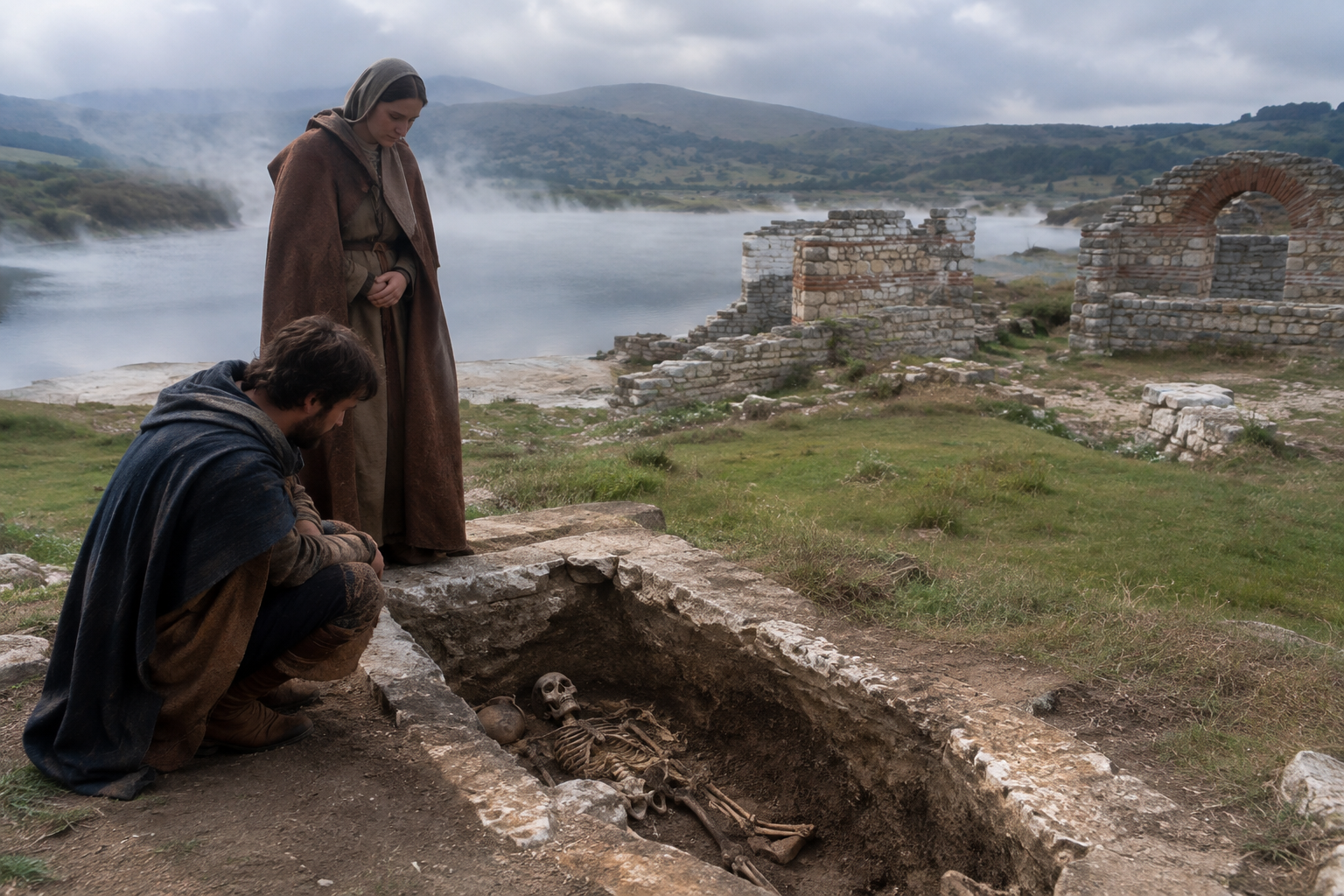
Several centuries later, VLI016 appears in Bronze Age Vlineves in Bohemia, around 1500 BC. By this point, the archaeological landscape had changed considerably. The Corded Ware horizon was long gone as a living culture, and Central Europe was now populated by communities with different ceramic traditions, settlement patterns, exchange networks, and increasingly complex regional identities.
Yet the appearance of the same broad Y-DNA branch in Vlineves suggests that at least some paternal lines associated with earlier Bronze Age transformations continued within the region. That is exactly the sort of pattern archaeogenetics often reveals: not a simple replacement of one people by another, but a messier combination of persistence, admixture, and social reorganization.
Bohemia is one of the best places in Europe to watch this happen because the archaeological record is so dense and the sequence of cultural change so well studied. Research on ancient populations in the region, including this study, has shown that prehistoric population history in Central Europe was dynamic without being uniformly disruptive. Some lineages expanded, some disappeared, and others persisted through changing cultural labels.
Late Bronze Age Central Europe
It is tempting to think of Bohemia merely as a corridor between east and west, but that understates its role. In prehistory it was also a place where new populations settled, local groups mixed, and older traditions were reworked into new forms. For a haplogroup like R1a1a1a~, that makes Bohemia important not because it provides a mythical point of origin, but because it preserves evidence for real people living through those transformations.
The two samples here are separated by roughly six centuries. That span crosses major changes in archaeological culture, but not a complete break in male-line history. One lesson of ancient DNA is that cultural change and paternal continuity can coexist. A lineage may remain present even while pottery styles, burial practices, and political landscapes alter beyond recognition.
This is also why one should be careful with later historical labels. It would be wrong to leap from Bronze Age Bohemia straight to named medieval peoples, or to assume that one Y-line equals one language community. Still, the repeated appearance of R1a-associated lines in prehistoric Central and Eastern Europe does help explain why this broader paternal family became so prominent in later parts of the continent.
Central Europe and Language Spread
There is something wonderfully bracing about these dry-looking codes: PNL002, VLI016. They remind us that ancient DNA usually begins not with grand legends, but with a bone, a site report, a calibrated date, and a cautious classification. Only then can the larger historical picture be assembled.
For R1a1a1a~, the value of these Bohemian samples lies in their modesty as much as their significance. They do not prove a single unbroken family line between Plotiste nad Labem and Vlineves. They do, however, place this paternal branch within two important archaeological settings in the Czech lands: one in the Corded Ware sphere, and another in the mature Bronze Age world that followed it.
If your own paternal ancestry falls somewhere under this branch, these finds suggest a deep connection to the kinds of male lineages present in prehistoric Central Europe during periods of remarkable social change. That is not a claim of descent from a famous house or a named chieftain. It is, in many ways, more interesting than that: a link to the ordinary but history-making men whose lives helped shape Bronze Age Europe.
Ancient Genomics and Language History
The strongest insight from these R1a1a1a~ samples is not a tale of sudden conquest, but of presence across time. In Bohemia, this paternal branch appears in both a Corded Ware individual around 2100 BC and a later Bronze Age man around 1500 BC. That makes R1a1a1a~ part of a long Central European story: one shaped by migration, yes, but also by continuity, local survival, and the steady inheritance of fathers to sons through changing archaeological worlds.





Comments