Haplogroup Q1b2b1b2b

– 5 min read


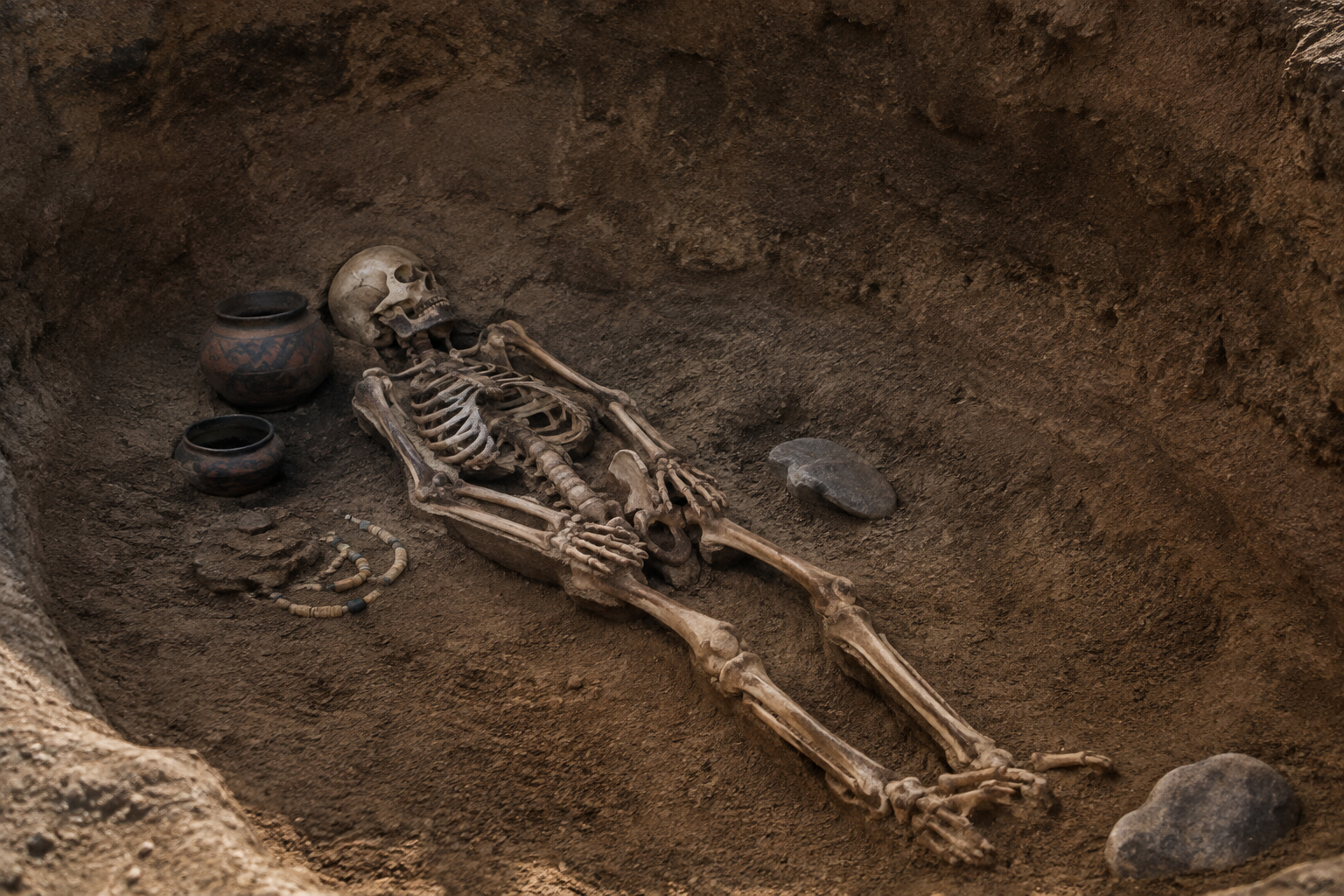
At Taraclia II in present-day Moldova, one Eneolithic burial from Usatove stands out because it anchors a very rare paternal line in a precise archaeological setting. The individual known as I20078, from Kurgan 2 Burial 14 and dated to around 3187 BC, connects the Y-DNA haplogroup Q1b2b1b2b to the northwestern Black Sea world at a moment when farming communities, steppe influences, and new burial customs were meeting in sometimes startling ways.
That matters because Q lineages are often discussed in very broad terms, usually with attention pulled far eastward or toward the Americas. But a specific branch such as Q1b2b1b2b needs to be treated on its own evidence. Here, the strongest evidence is not a sweeping migration tale. It is one excavated man in a kurgan burial within the Usatove horizon, on the edge of the steppe and the farming world, where the prehistoric north Pontic region was being remade.
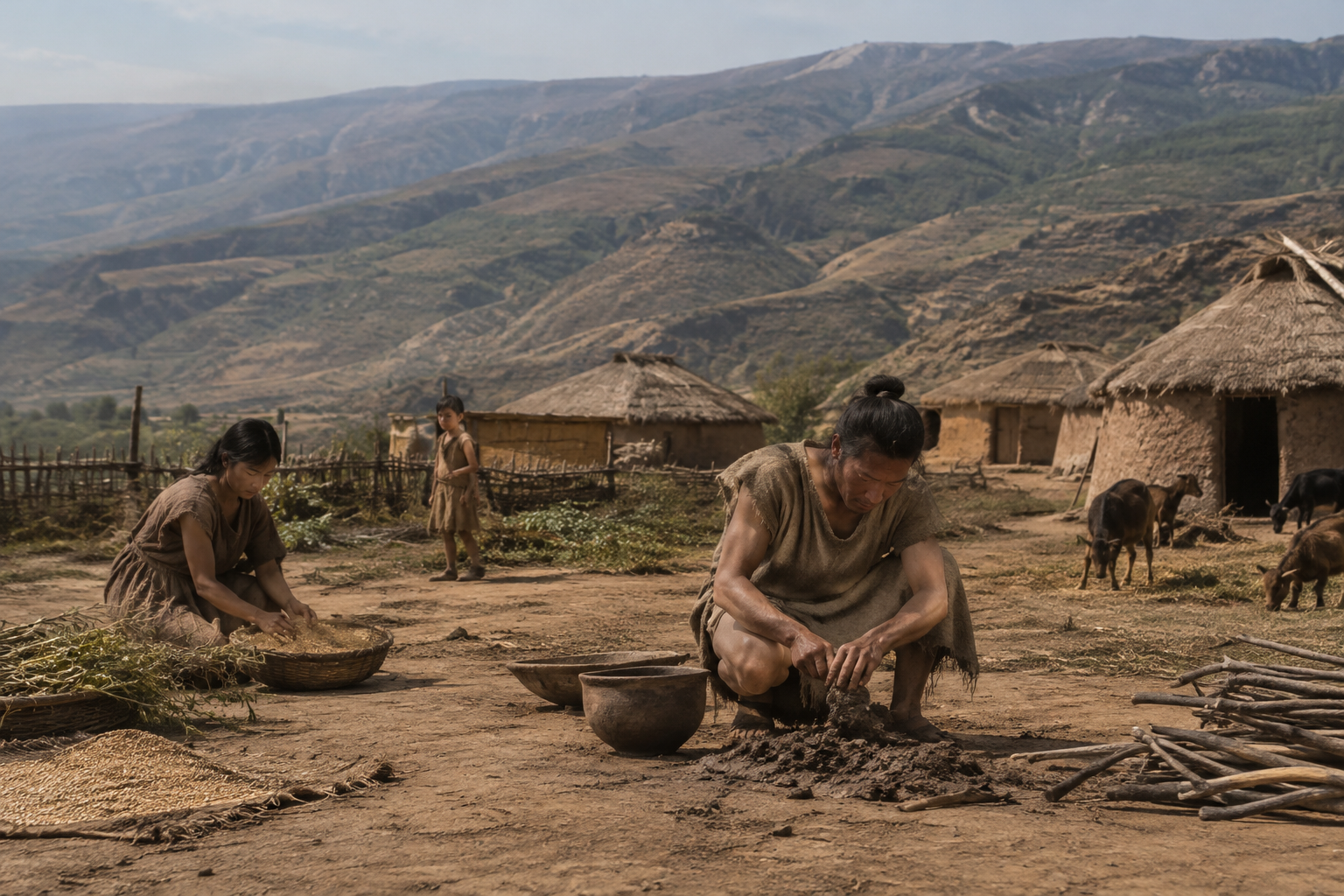
The Usatove archaeological complex belongs to the late Eneolithic, broadly in the fourth to early third millennium BC, in the lands between the lower Dniester, the Danube approaches, and the Black Sea. This was not a quiet backwater. It was a contact zone, where traditions associated with older farming populations overlapped with steppe-linked practices, including the use of kurgans.
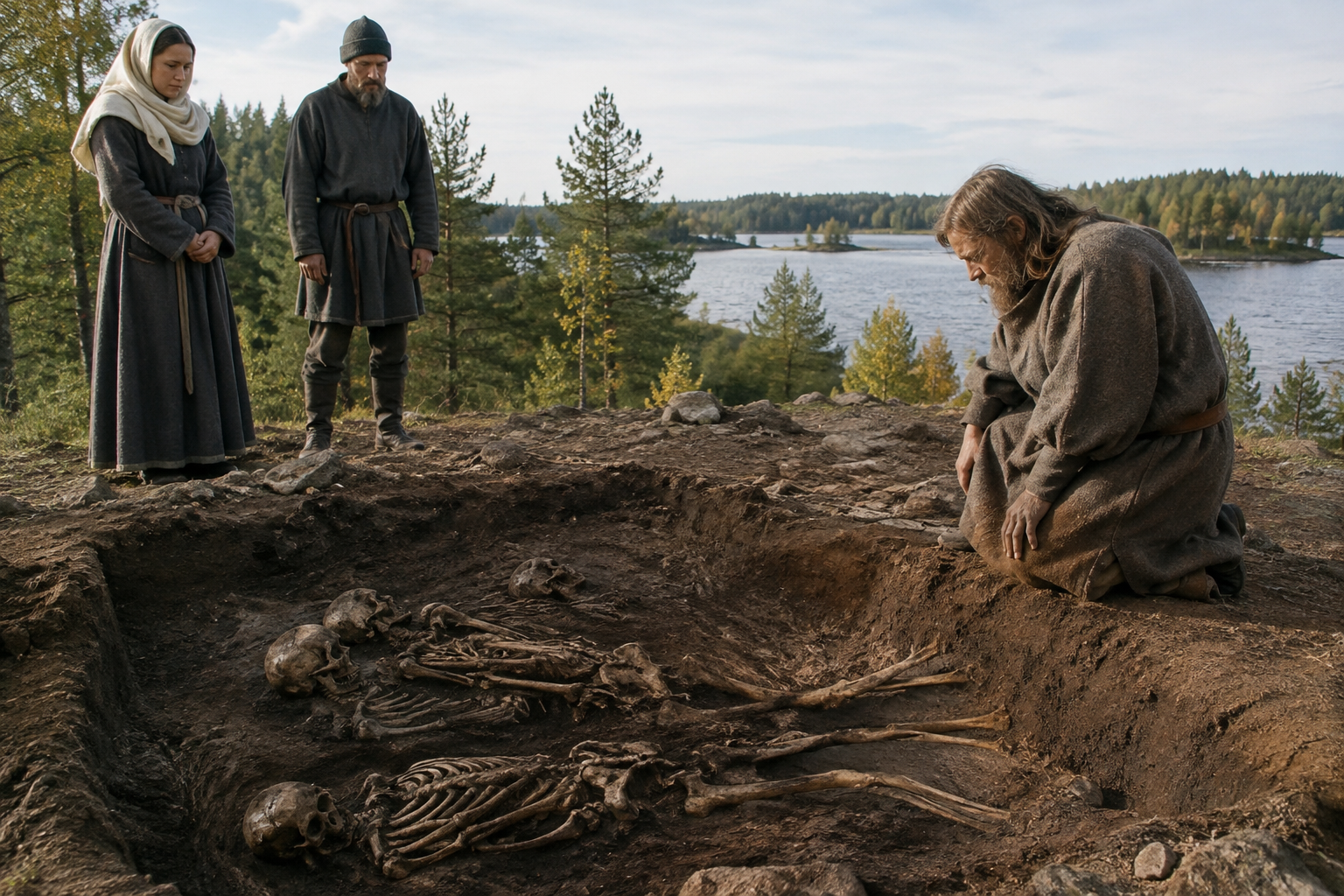
I20078 comes from Taraclia II, a kurgan cemetery in Moldova, and the burial designation is worth preserving exactly because context matters: Usatove Eneolithic Moldova Taraclia II Kurgan 2 Burial 14. Even when we know little about grave furnishings or the biography of the dead man, the archaeological frame is already informative. A kurgan burial in this region and period places him in a society negotiating status, ancestry, and landscape in very visible ways.
An ancient DNA study of the north Pontic region has helped place such burials within a larger picture of population change and mixture across 5600-2500 BC, showing just how dynamic this zone was in genetic as well as cultural terms: research on genomic ancestry and migrations in the North Pontic region. For a lineage like Q1b2b1b2b, that wider setting is essential. The branch appears here not as an isolated curiosity, but as part of a human landscape shaped by mobility and local continuity at the same time.
Y-DNA tracks one direct paternal line: father to son, back through time. That makes it especially useful for asking narrow questions about male-line ancestry, but it does not describe a person's whole ancestry, language, or identity. A man with haplogroup Q1b2b1b2b in Eneolithic Moldova could still have had most of his overall ancestry from populations shared with his neighbors.
It is also important not to inflate the evidence. The article haplogroup is Q1b2b1b2b, and that exact label should not be blurred into claims about all of haplogroup Q. The parent lineage Q has a very wide and complicated history across Eurasia and beyond. What this burial shows securely is that this narrower paternal branch, or a classification associated with it, appears in an Eneolithic Usatove context in the northwestern Black Sea region.
That alone is historically interesting. Rare lineages can be especially revealing in frontier zones, because they remind us that prehistoric populations were rarely tidy or uniform. One burial can show that a paternal branch had reached a region; it cannot, by itself, tell us whether that branch arrived recently, had already been present for generations, or represented a large share of the local male population.
The Taraclia II burial belongs to a period when kurgan-building had become one of the most visible expressions of social life across parts of the Pontic-Caspian world. Yet in the northwest Black Sea region, these burial customs did not simply replace older lifeways. Instead, archaeologists see a mosaic: some communities retained local traditions, while others adopted or adapted steppe-linked forms.
Usatove is a particularly telling example of this mixed world. Its communities stood close to the fading orbit of the great farming societies of southeastern Europe while also engaging with steppe herders and the social language of mound burial. A paternal lineage like Q1b2b1b2b appearing in this setting fits that archaeological picture rather well: not a single-wave story, but a layered one, in which people, practices, and kin lines met and recombined.
This is one reason the north Pontic region keeps reappearing in archaeogenetics. It is not simply a corridor through which populations passed. It was a place where new populations formed. The burial of I20078 matters because it pins one paternal branch to that formative process.
Readers sometimes assume that one ancient sample is too little to be useful. In one sense, that is true: it cannot sustain extravagant conclusions. But in another sense, a single securely placed sample can be invaluable, especially for a rare branch. It gives us a real person, a date, a burial context, and a map point. That is far better than speculation.
For Q1b2b1b2b, I20078 is precisely that kind of anchor. Around 3187 BC, a man carrying this paternal line was buried in a Usatove kurgan cemetery in Moldova. That places the lineage within the late Eneolithic world of the northwestern Black Sea, long before the classical peoples and medieval polities that usually dominate popular history.
It also nudges us toward a more careful habit of thinking. Paternal lines survive through chance as much as through power. Some branches become common; others persist quietly in scattered descendants. Ancient DNA gives us flashes of those earlier distributions, and sometimes those flashes come from the margins of the map rather than its centers.
Moldova in the late fourth millennium BC sat within a broader zone of interaction stretching from the Balkans to the steppe. To the southwest and west were regions shaped by long farming traditions; to the east and northeast lay the grassland networks that later loom large in discussions of steppe ancestry. Communities in between did not merely absorb influences from both sides. They created new local blends.
That is why the Taraclia II burial should be read regionally, not nationally. Modern borders are irrelevant to the man's own world. His community belonged to a prehistoric belt of exchange and movement tied to the lower Danube, the Dniester basin, and the Black Sea littoral. In that setting, a paternal lineage like Q1b2b1b2b becomes evidence for diversity within the communities occupying this frontier.
For readers who want the larger archaeological background on how ancient DNA is changing our understanding of such regions, MyTrueAncestry's overview of Ancient DNA and the Rise of Archaeogenetics is a useful companion. The point here, though, is specific: Q1b2b1b2b is not floating abstractly in a phylogenetic tree. It is attached to a documented Eneolithic burial in the north Pontic world.
If you belong to Q1b2b1b2b, the most responsible historical takeaway is modest but meaningful. Your direct paternal line is now tied, through ancient evidence, to at least one man buried in the Usatove cultural sphere of Eneolithic Moldova around 3187 BC. That does not make every later bearer of the branch a steppe nomad, a farmer, or a member of any named people. It does place your line in one of prehistoric Europe's great contact zones, where different ancestries and customs were meeting face to face.
For family historians, that is often the most exciting kind of clue: not a fantasy pedigree, but a real archaeological horizon. Q1b2b1b2b currently points toward a paternal history that was already present in the complicated human world of the northwestern Black Sea over five thousand years ago.
Comments