Haplogroup Q1b1b1a
– 5 min read


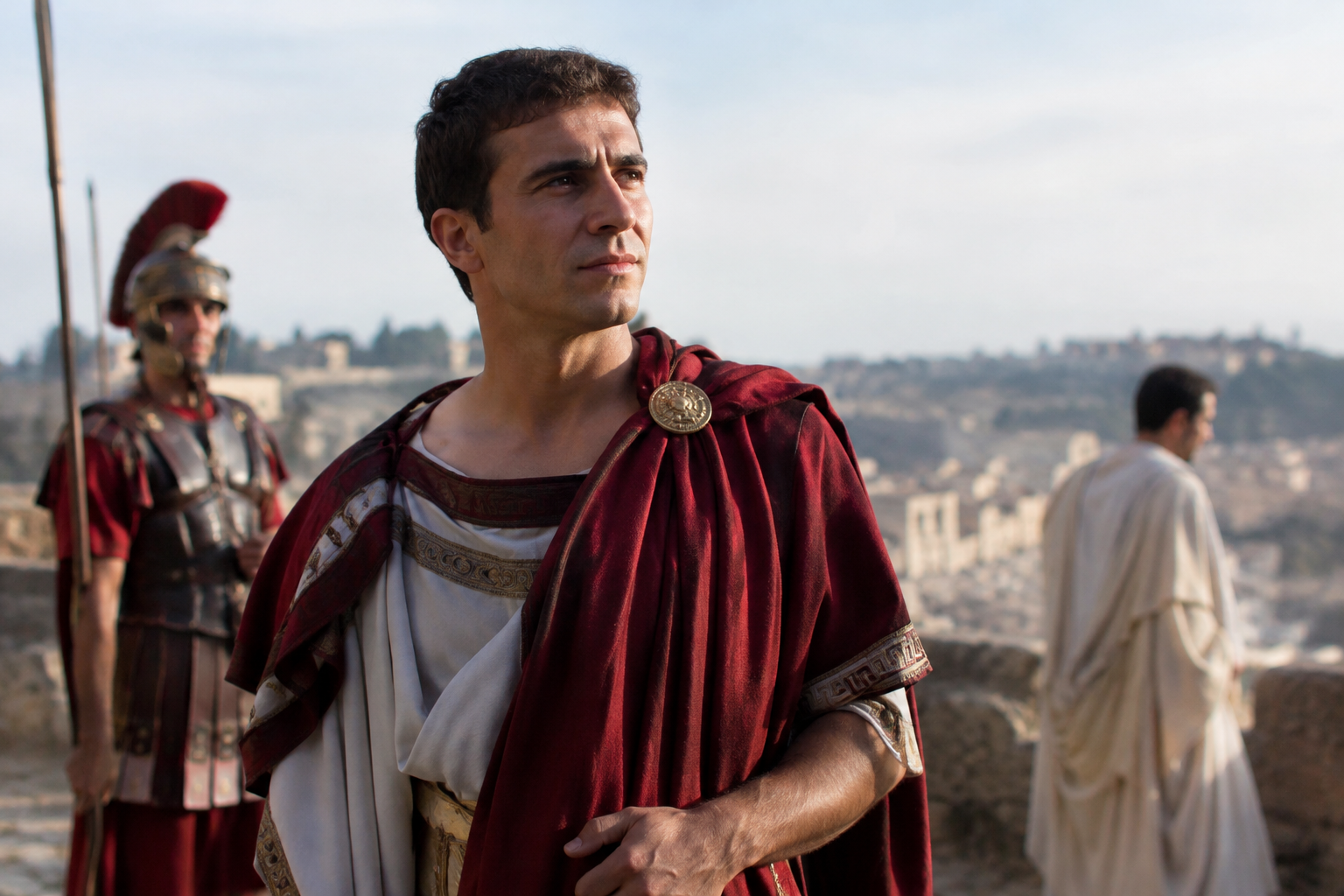
One of the more arresting details in the ancient DNA record for Q1b1b1a is how little fanfare it arrives with. Here the clue is a single man: DA162, dated to around AD 250 and identified as Alan. That is already enough to place him in a world of movement across the Eurasian steppe, where political identities could expand fast, alliances shifted, and men, animals, weapons, and ideas crossed enormous distances.
For anyone carrying Q1b1b1a today, that matters because this is not one of the Y-chromosome branches most people first associate with Roman Europe or later medieval western dynasties. Instead, its appearance in an Alan-associated ancient individual points us toward the steppe frontier: a landscape where paternal lines could travel far and survive inside mobile confederations rather than neat, stable kingdoms. Y-DNA traces one direct male line only, not a person's whole ancestry, but sometimes that single line is enough to put a family history into a very particular historical conversation.
The label "Alan" is doing important work here. The Alans were an Iranian-speaking steppe people, usually linked to the wider Sarmatian world, and by the first centuries AD they were active across the regions north of the Caucasus and the Black Sea and beyond. Their history is not a tidy march from one homeland to another; it is a story of mounted mobility, shifting coalitions, and repeated contact with empires at the edges of the steppe.
So DA162 is interesting not because he lets us turn one grave into a grand national origin story, but because he gives this paternal branch a real foothold in that mobile Alan horizon. Around AD 250, the steppe was not peripheral to history. It was one of the great connectors of Eurasia, linking the Caucasus, the Pontic zone, Central Asia, and the Roman frontier. A haplogroup found in that setting belongs, at the very least, to a historical world defined by movement.
Research on ancient populations of the Eurasian steppe has repeatedly shown that these societies were genetically varied, often far more mixed than older textbook stereotypes allowed. A broad ancient DNA synthesis on steppe populations, published in Nature, helped establish just how dynamic these regions were over long spans of time. That wider context is useful here even when a single sample must be handled cautiously.
Q is a broad Y-DNA haplogroup with a deep history across northern Eurasia and, in other branches, the peopling of the Americas. But that bigger story should not simply be poured into Q1b1b1a as though every sub-branch shared the same route, date, or historical role. The narrower branch in this article has to be treated on the basis of the evidence actually in front of us.
In practice, that means DA162 does not prove that all men of Q1b1b1a were Alans, nor that the branch "belongs" to a single ethnicity. What it does show is that this paternal line appears in a documented ancient individual associated with the Alan sphere in the third century AD. That is a meaningful data point because the Alans were one of the steppe groups who carried eastern Iranian languages and who became entangled with Roman, Caucasian, and later European history.
The result is especially striking because steppe populations often preserve lineages that do not fit modern national expectations. Ancient DNA keeps reminding us that the men who rode with confederations such as the Alans did not need to look genetically uniform in order to share a political identity. A tribe in the written sources and a haplogroup in a lab report are different kinds of evidence.
By the Roman imperial period, the Alans were known well beyond their original eastern horizons. Some groups pressed toward the Caucasus. Others appeared in the north Pontic region. Still others entered the Roman story through raiding, military service, diplomacy, and migration. That is why a paternal line linked to an Alan-associated individual is historically so evocative: it sits exactly where frontier history gets messy and interesting.
Roman authors often wrote about peoples beyond the frontier as if they were fixed blocks. Archaeology and genetics have been much less obedient. The steppe was full of overlapping populations, and identities could be assembled from different local and long-distance elements. A line such as Q1b1b1a may therefore mark not an isolated "origin point" but participation in a network stretching across the grasslands and into settled borderlands.
This is also the period when steppe groups could leave descendants far from where we first detect them archaeologically. Alan groups later appear in western Europe, in the Caucasus, and in medieval successor communities. That does not let us draw a straight genealogical line from DA162 to every later Alan-related population, but it explains why a seemingly obscure Y-branch can surface in unexpectedly wide historical settings.
There is a temptation, when evidence is sparse, to dismiss it. But in archaeogenetics, a single well-placed sample can be immensely useful if it comes from a historically informative context. DA162 is one of those cases. He does not give us a dynasty, a whole cemetery pattern, or a population frequency map. What he gives us is something more basic and often more valuable: proof that this paternal line existed in an Alan-associated ancient man in late antiquity.
That anchors Q1b1b1a in a particular historical landscape. It places the branch, at least once, in the world of Sarmatian-Alan mobility rather than only in the much later distribution of modern testers. For descendants today, that can be more meaningful than a vague statement about "Eurasian origins," because it connects the branch to a recognisable chapter of ancient history.
It also fits a larger lesson from steppe archaeology. Political worlds on the steppe were often built by aggregation. Groups absorbed newcomers, split apart, re-formed, and moved again. A paternal lineage could persist through all of that while the language, material culture, or political label around it changed. In other words, continuity of Y-DNA does not require continuity of tribe name.
One useful comparison comes from other ancient DNA work on frontier and post-Roman populations, where mobility turns out to be the rule rather than the exception. The later centuries of the Roman world saw soldiers, merchants, captives, pastoralists, and whole communities on the move. Alan-related groups were part of that broader story, and their genetic signatures belong in the same conversation as Gothic, Sarmatian, and other frontier populations.
That does not mean every occurrence of Q or every eastern-looking signal in Europe should be called Alan. Far from it. But the Alan identification for DA162 does mean that Q1b1b1a deserves to be read against the archaeology of long-distance movement, especially across the north Caucasus and Black Sea zones where steppe and empire repeatedly collided.
That broader frame also helps avoid a common mistake: imagining that paternal ancestry must line up neatly with later language or nationality. The same direct male line might pass through Iranian-speaking nomads, frontier communities, Christian kingdoms, Muslim polities, or modern nation-states without changing its chromosome label at all. The history is human; the haplogroup is just one thread through it.
At present, the most distinctive ancient clue for Q1b1b1a is not a castle, a royal house, or a crowded cemetery. It is that third-century Alan-associated man, DA162, standing in for a wider world of steppe mobility. For someone researching this haplogroup, that is the responsible takeaway: your direct paternal line has at least one documented foothold in the late antique steppe frontier, among peoples who linked the Caucasus, the Black Sea, and the larger Eurasian world.
That is not a promise of descent from a famous clan, and it is not the whole of your ancestry. But it is a vivid historical setting, and a very real one.
Comments