Haplogroup Q1a2b

– 4 min read


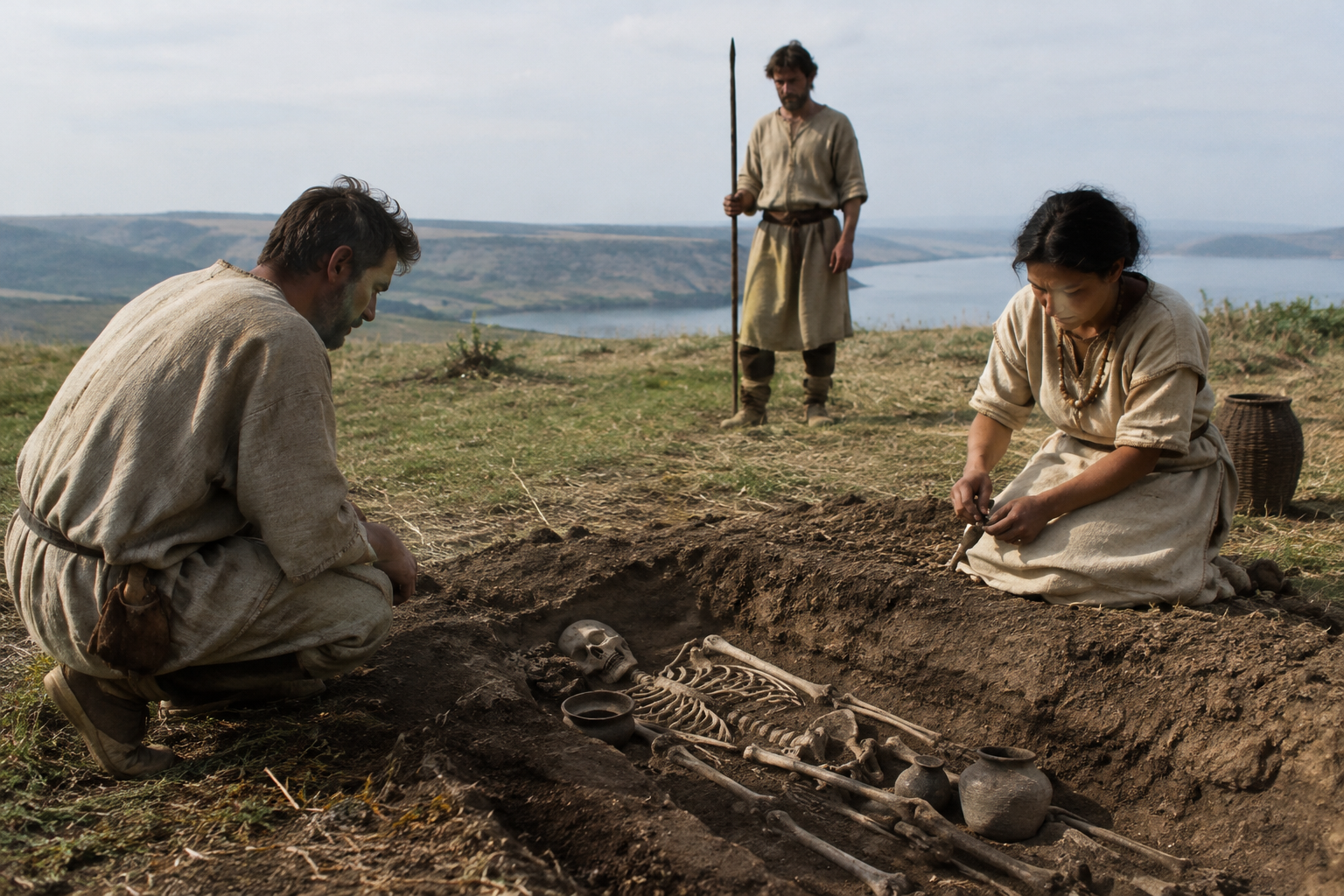
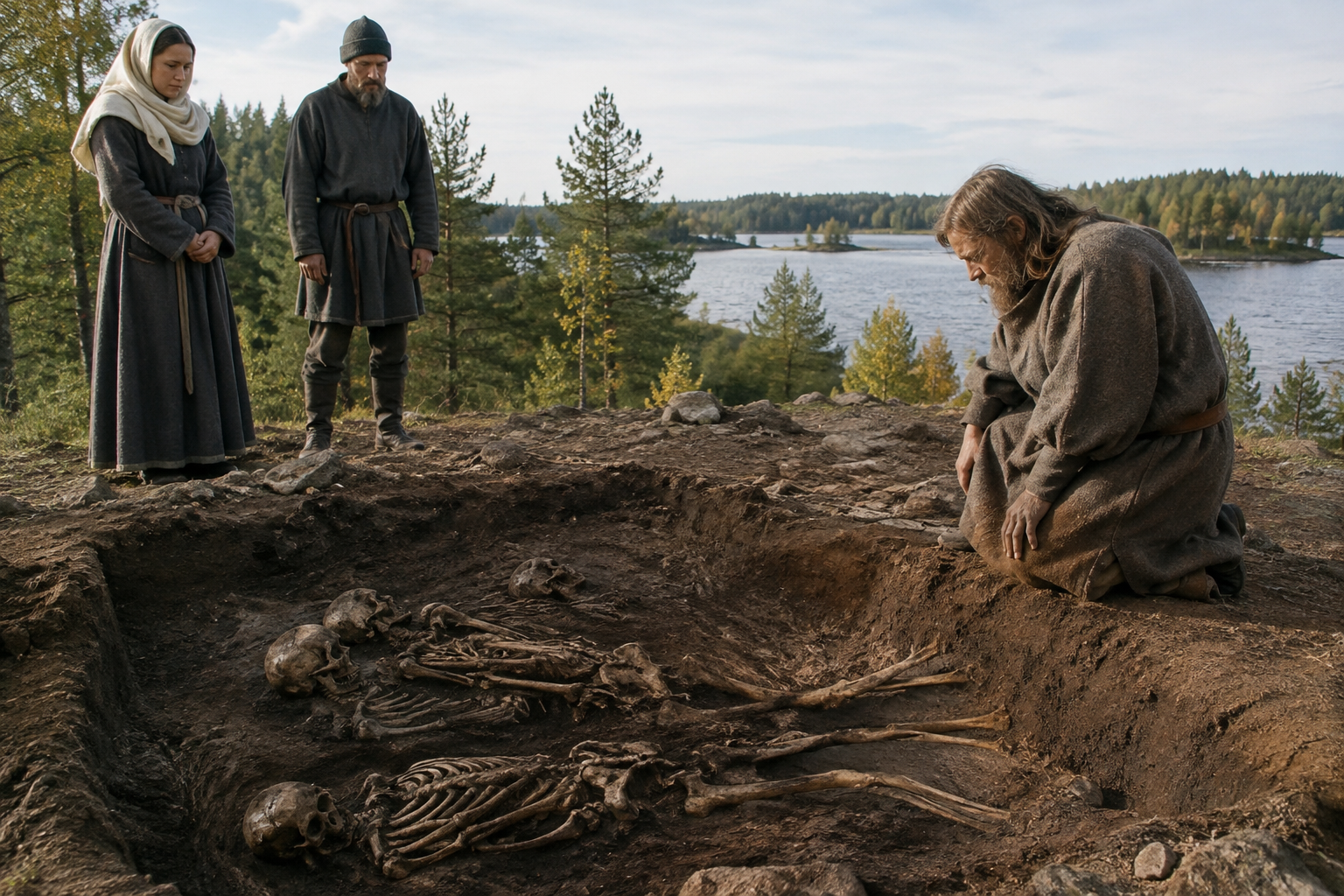
At Giurgiulesti, near Cahul in present-day Moldova, one Eneolithic burial has become unexpectedly important for the history of Y-chromosome lineages in southeastern Europe. The individual known as I20072, from Suvorovo-related Burial 6 and dated to around 4194 BC, has been associated with Q1a2b, a paternal branch that is rare enough in European prehistory to make any secure appearance worth pausing over.
That matters because Q is not the Y-DNA lineage most people expect to meet in an Eneolithic grave west of the steppe. In broad terms, Y-DNA tracks one direct paternal line rather than a person's total ancestry, but even that single line can be historically revealing. In this case, the interest lies in seeing a branch linked to the wider haplogroup Q turn up in the lower Danube world at a time when populations, burial customs, and long-distance contacts were changing fast.
The sample comes from the Suvorovo-Giurgiulesti archaeological setting, a horizon often discussed in connection with early movements between the Pontic steppe and the Balkans. That does not mean one burial can stand in for an entire migration. But it does place I20072 in a very specific historical landscape: the frontier zone between steppe communities and the farming societies of southeastern Europe in the later 5th millennium BC.
Giurgiulesti is significant precisely because it sits in that contact belt. Archaeologists have long treated the lower Danube and nearby steppe margins as places where technologies, animals, objects, and people moved in different combinations. A paternal lineage such as Q1a2b appearing here suggests that the male lines present in these communities could be more varied than older, simpler models once assumed.
An ancient DNA study of populations from the wider North Pontic region has helped sharpen this picture by showing just how dynamic the centuries between roughly 5600 and 2500 BC really were, with local continuity in some places and marked shifts in others. That broader regional context is crucial for making sense of isolated but striking finds such as I20072 without turning them into legends of instant conquest or neat one-way migration.
Research on the North Pontic region is especially relevant here because it frames sites like Giurgiulesti within a much larger zone of interaction rather than treating them as curiosities at the edge of Europe.
Most readers encounter haplogroup Q in discussions of northern Eurasia, Siberia, or the deep paternal history of Indigenous populations in the Americas. That is the wider family story. But a branch such as Q1a2b should not be collapsed into the whole haplogroup's immense geographic and chronological spread. What matters in this Moldovan burial is not a grand claim about continents, but the local fact that a Q-line paternal ancestry was present in an Eneolithic community at the lower Danube.
That alone makes I20072 a useful reminder of how mixed and experimental prehistoric population history could be. European prehistory was not built from tidy blocks in which one culture carried one lineage and another culture carried another. Even in periods where some paternal lines became very prominent, the older and rarer branches did not simply vanish everywhere at once.
There is also a methodological lesson here. When only a small number of ancient males from a site or horizon have usable Y-DNA, any unusual lineage can seem disproportionately dramatic. The safer conclusion is narrower: Q1a2b, or a reported association with that branch, was present in at least one male buried in the Suvorovo-Giurgiulesti context around 4194 BC. That is already interesting enough.
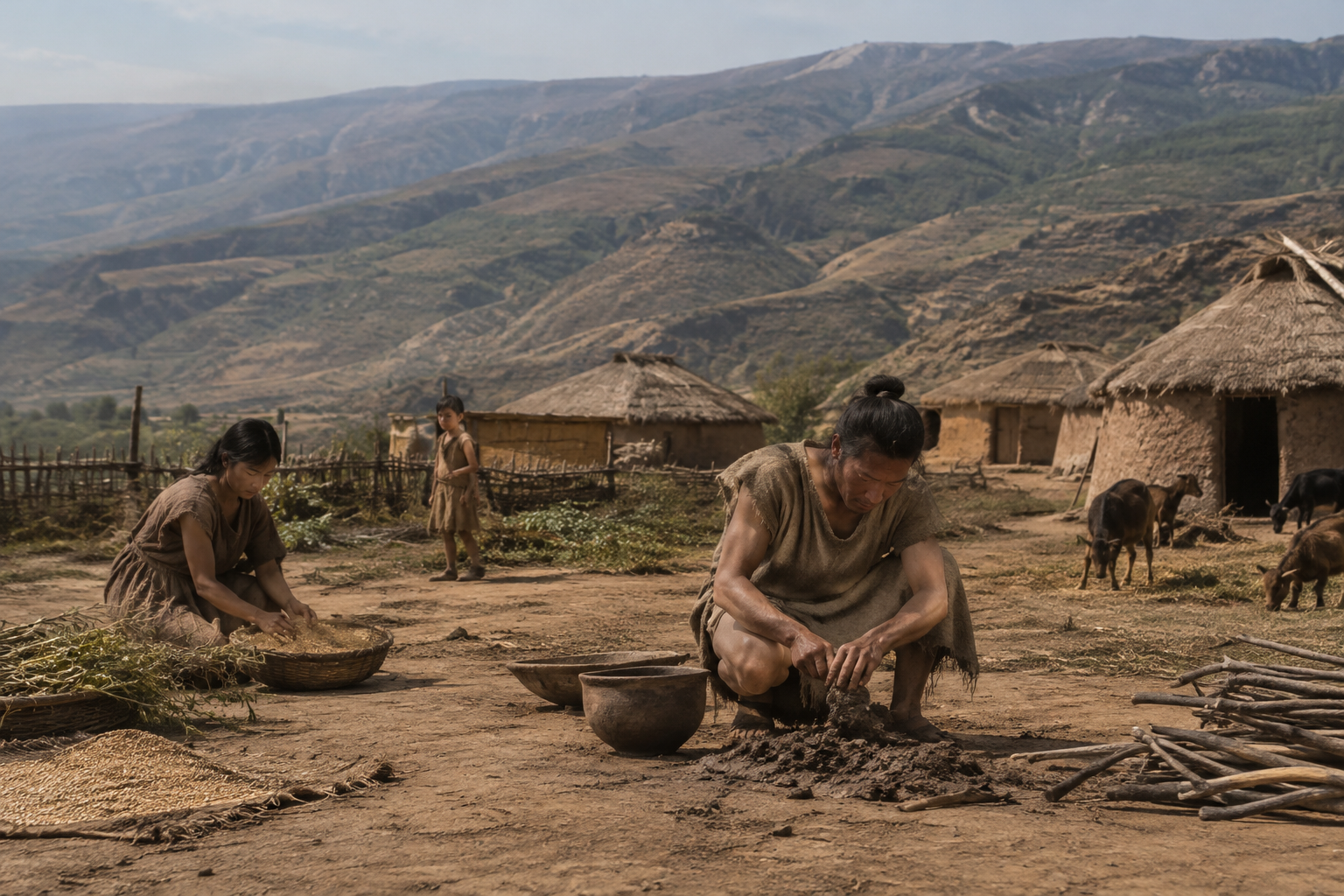
It is easy to draw thick lines on a map between "the steppe" and "Old Europe," but the archaeology of the lower Danube consistently resists that kind of simplification. This was a corridor of marshes, rivers, grazing zones, and settlement networks, where communities could be mobile, connected, and culturally inventive without fitting later ethnic labels. A lineage like Q1a2b appearing here belongs to that world of contact.
That is one reason Giurgiulesti matters beyond the single grave. The site helps show that the lower Danube was not merely receiving outside influence; it was one of the main arenas in which new social patterns were being made. If a rare paternal branch is present there, the most responsible interpretation is that men from varied backgrounds could be incorporated into these communities, whether through mobility, alliance, descent, or small-scale population mixing across regions.
In other words, the burial does not prove a dramatic trek by one named people. It does, however, fit a wider archaeological reality in which the late 5th millennium BC was a period of intense reshaping along the steppe-farming frontier.
Ancient DNA is at its best when it forces us to stop telling over-neat stories. I20072 does exactly that. A single paternal assignment to Q1a2b from Eneolithic Moldova cannot tell us the language this man spoke, the identity he claimed, or whether his father's father's line had been in the region for generations or had arrived more recently. But it can tell us that the paternal landscape of prehistoric southeastern Europe contained more variety than older stereotypes allowed.
That is particularly important for users exploring their own direct paternal ancestry. If you belong to Q1a2b, this ancient Moldovan burial does not make you a direct descendant of a known Suvorovo individual in any genealogical sense. What it does offer is something subtler and historically richer: evidence that your paternal branch, or a closely related one, was present in a key contact zone between the Pontic steppe and the Balkan world more than six thousand years ago.
Such finds also encourage comparison rather than certainty. As more ancient genomes are published from the North Pontic and lower Danube regions, Q-lineages may turn out to be isolated traces, signs of broader diversity, or markers of specific episodes of contact. At the moment, Giurgiulesti stands as an early and memorable data point rather than the final word.
The real value of Q1a2b at Giurgiulesti is not prestige or rarity for its own sake. It is that this lineage appears in exactly the sort of place where archaeology already suggests mobility, exchange, and reconfigured communities. For someone researching a Q1a2b paternal line today, that makes the lower Danube evidence especially evocative: not a royal pedigree, not a myth of pure origins, but a glimpse of one male line moving through one of prehistoric Europe's busiest crossroads.
Comments