Haplogroup N1a1a1a1a2a1a1a1a1a

– 5 min read


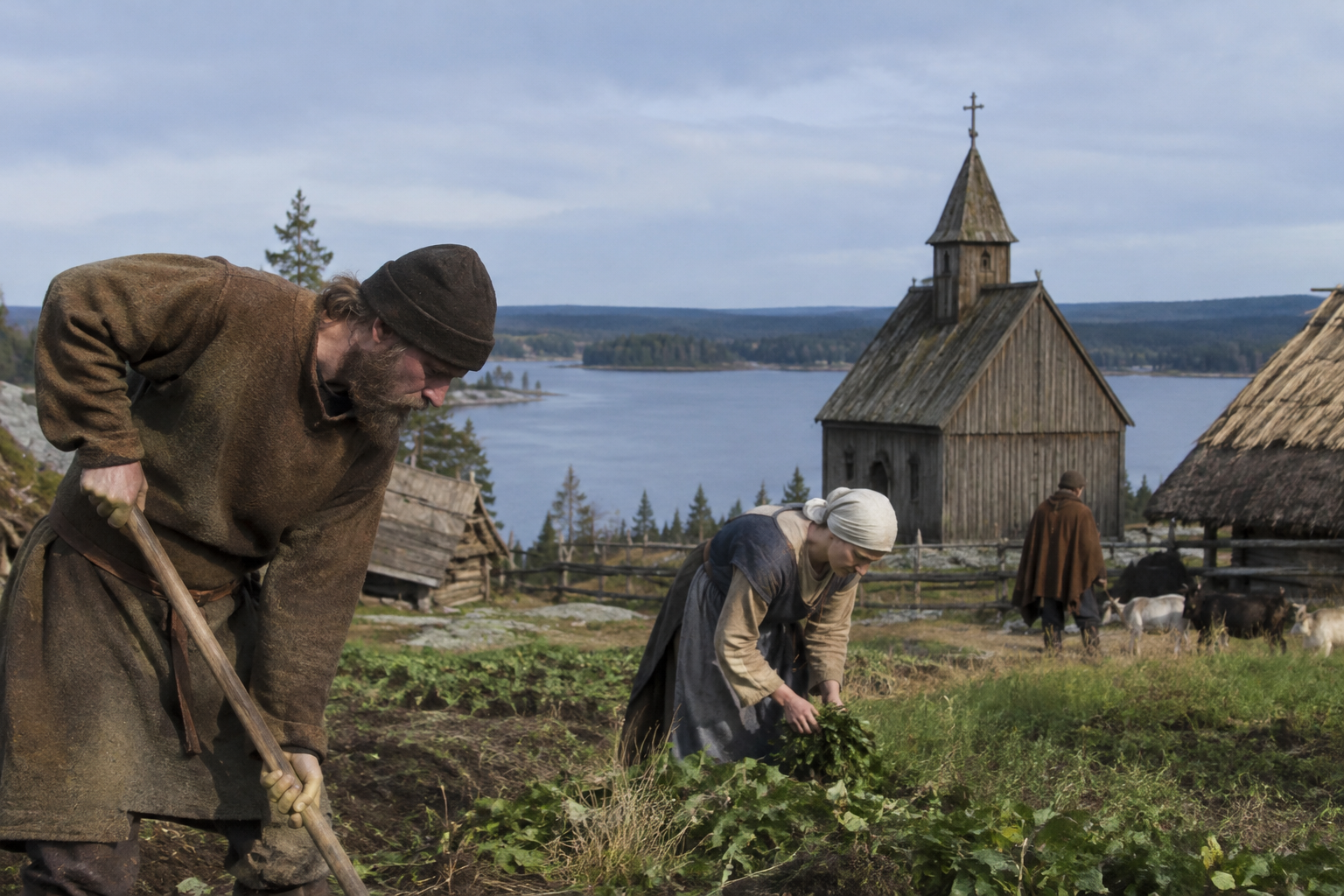
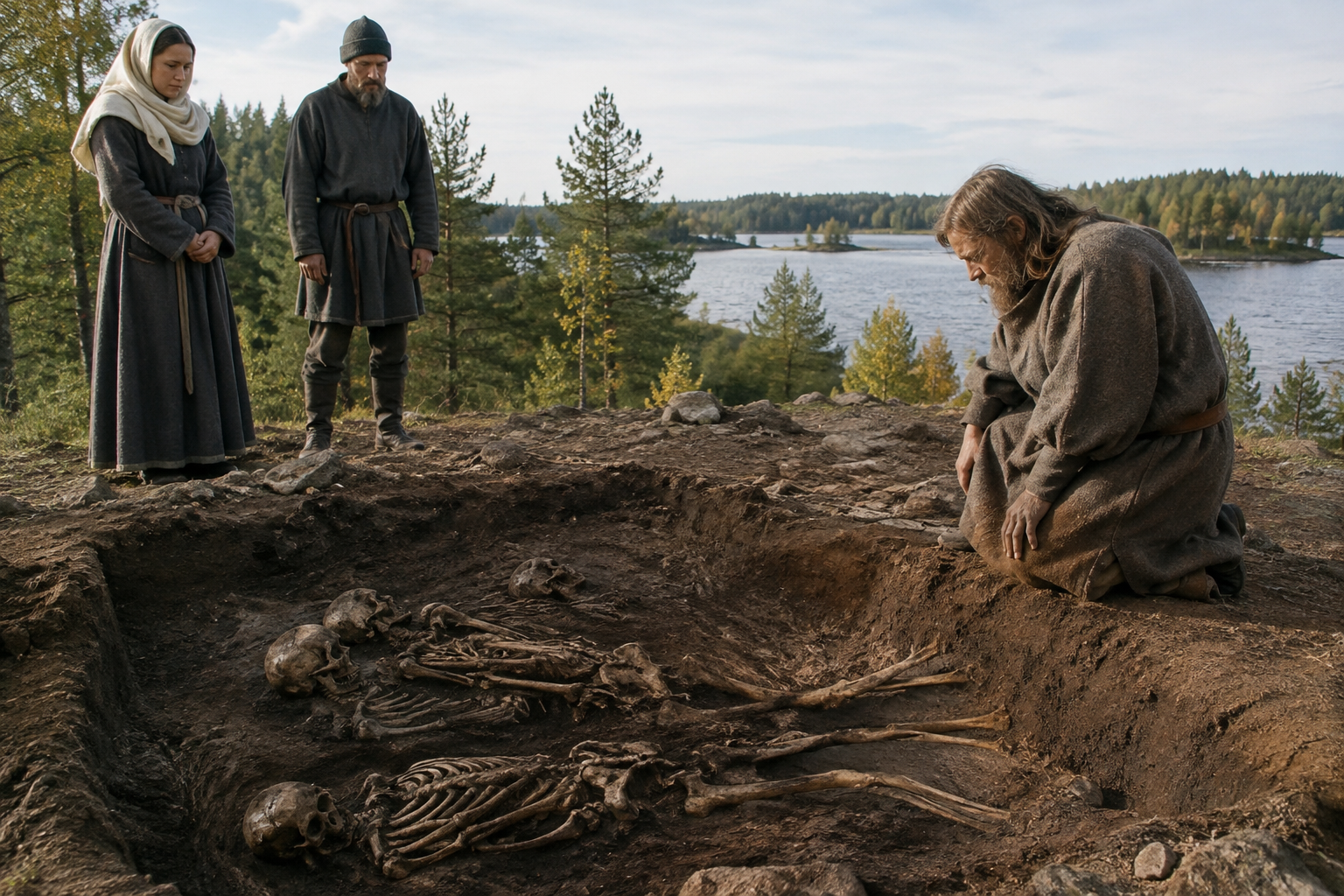
At Hollola in Tavastia, in southern Finland, one medieval burial has become unexpectedly important for the history of a very specific paternal line. The individual known as KIR016, dated to around AD 1350 at Kirkkailanmäki, carries the Y-DNA haplogroup N1a1a1a1a2a1a1a1a1a. That is a formidable string of letters and numbers, but the real interest lies in where it turns up: in the medieval interior of Finland, in a region that sat at the meeting point of local tradition, Christianity, and wider Baltic connections.
This is exactly the sort of finding that ancient DNA does best. A single male-line signal does not tell us a person's whole ancestry, language, or identity. But it can place one paternal thread inside a real archaeological landscape. In this case, N1a1a1a1a2a1a1a1a1a appears not in legend, but in a documented medieval burial from Tavastia, giving us a fixed point for thinking about how northern paternal lineages persisted into the later Middle Ages.
Hollola's Kirkkailanmäki belongs to a part of Finland where medieval archaeology has become increasingly revealing. Tavastia was not some isolated backwater waiting for history to happen to it. By the 14th century it was part of a changing world of parish organization, shifting political power, trade across the Baltic, and the spread of Christian burial customs. KIR016 belongs to that world.
What makes the sample valuable is not aristocratic glamour or an unusually lavish grave, because none of that is established here. It is valuable because it anchors a precise paternal branch in a named place and period. For a lineage as narrow as N1a1a1a1a2a1a1a1a1a, even one secure medieval occurrence matters, especially in a region where population history has involved long local continuity mixed with contacts from both east and west.
A genetic study examining early medieval and medieval Finland has helped sharpen this broader picture, showing that the country's past cannot be reduced to a single migration or a single ancestral source. The research connected with these Finnish burials points instead to regional variation and long-term population structure, which is exactly the context in which a haplogroup like N1a1a1a1a2a1a1a1a1a should be understood: as one paternal branch within a much more complicated human story. See the related discussion here.
The wider haplogroup N has a deep history across northern Eurasia, and several of its branches are especially associated with Uralic-speaking and northeastern European populations. But that broad background should not be lazily poured into this far narrower subclade. N1a1a1a1a2a1a1a1a1a is not the whole history of haplogroup N in miniature. It is one late twig on a much larger tree.
That distinction matters. If your own Y-DNA falls on this branch, the safest historical reading is not "my ancestors were definitely X people" but rather that your direct paternal line belongs to a northern Eurasian lineage with a documented medieval presence in Finland. Ancient DNA can show that this branch existed in Tavastia by about AD 1350. It cannot, on the strength of one burial, assign a medieval man to a tribe described in later texts, nor can it prove a neat migration route for his father's father's fathers.
Still, there is something striking about the survival of such a branch in inland medieval Finland. Paternal lineages can vanish quickly in history; some expand, others thin out, and many disappear from the record. KIR016 shows that this one endured long enough to be captured in an excavated burial from a region whose communities were already fully entangled in medieval northern Europe.
Modern readers sometimes imagine Finland's past in overly simple terms: remote forests, static villages, and an almost timeless population. Archaeology has been chipping away at that picture for years. The Finnish interior was connected by waterways, trade routes, and seasonal movement; its communities dealt with influences from the Baltic world, Scandinavia, and regions further east.
That does not mean every lineage marks a newcomer. Often the opposite is more interesting. A branch like N1a1a1a1a2a1a1a1a1a may represent the persistence of a paternal line already at home in the wider region, surviving through centuries of religious and political change. Medieval cemeteries in Finland therefore matter not only for detecting outsiders, but for showing which local male lines remained present through the period when older burial traditions gave way to Christian frameworks.
This is one reason the Finnish evidence has drawn so much interest in archaeogenetics. Research published on these populations has emphasized that different regions of Finland were not genetically interchangeable. Tavastia had its own position in that mosaic. KIR016 is therefore best read not as a symbol of all Finns, but as one man from one historically important region whose paternal line belonged to this rare and specific branch.
Medieval Finland Archaeogenetics
Ancient DNA articles sometimes give the impression that only grand sample sets count. In reality, a single well-placed individual can be immensely useful. KIR016 comes with a date, a site, and a regional context that historians can actually work with. That is better than vague antiquarian claims or unsourced family traditions.
For a very derived lineage, one securely attributed ancient carrier can establish a minimum historical presence in a region. In plain English: by the mid-14th century, this paternal branch was already there in Tavastia. Future finds may push that history earlier, connect it to nearby regions, or show whether it was common or rare locally. But even now, the sample gives genealogically minded readers something precious - not a fantasy pedigree, but a real human anchor in time and place.
The main research URL associated with this Finnish evidence is this ancient DNA study of the region. Even without overclaiming its details, the value of the work is clear: it places genetic data back into the archaeological map of medieval Finland, where named sites such as Hollola can be discussed historically rather than abstractly.
There is also a useful corrective here for anyone interested in deep ancestry. Y-DNA can tempt people into thinking only in immense migrations and prehistoric expansions. But KIR016 brings the scale back down. Here we are not dealing with a sweeping mythic founder. We are dealing with one medieval man in Tavastia, buried in a community that lived through the ordinary but profound changes of the 14th century.
That human scale is important. A lineage survives not because it is famous, but because generation after generation of ordinary families had sons. When a branch like N1a1a1a1a2a1a1a1a1a appears in the archaeological record, it reminds us that population history is built as much from local continuity as from headline-making migrations.
A 16th-Century Individual from Finland
The most solid insight from haplogroup N1a1a1a1a2a1a1a1a1a, based on the evidence here, is modest but meaningful: this paternal branch was present in medieval Tavastia by around AD 1350, documented through the individual KIR016 from Hollola Kirkkailanmäki. For someone researching this line today, that does not promise a noble house or a simple ethnic label. What it does offer is something better grounded - a genuine archaeological foothold in Finland's medieval past, where one direct male line can be seen living inside a real historical community.
Comments