Haplogroup N1a1a1a1a1a1a7a3b

– 5 min read


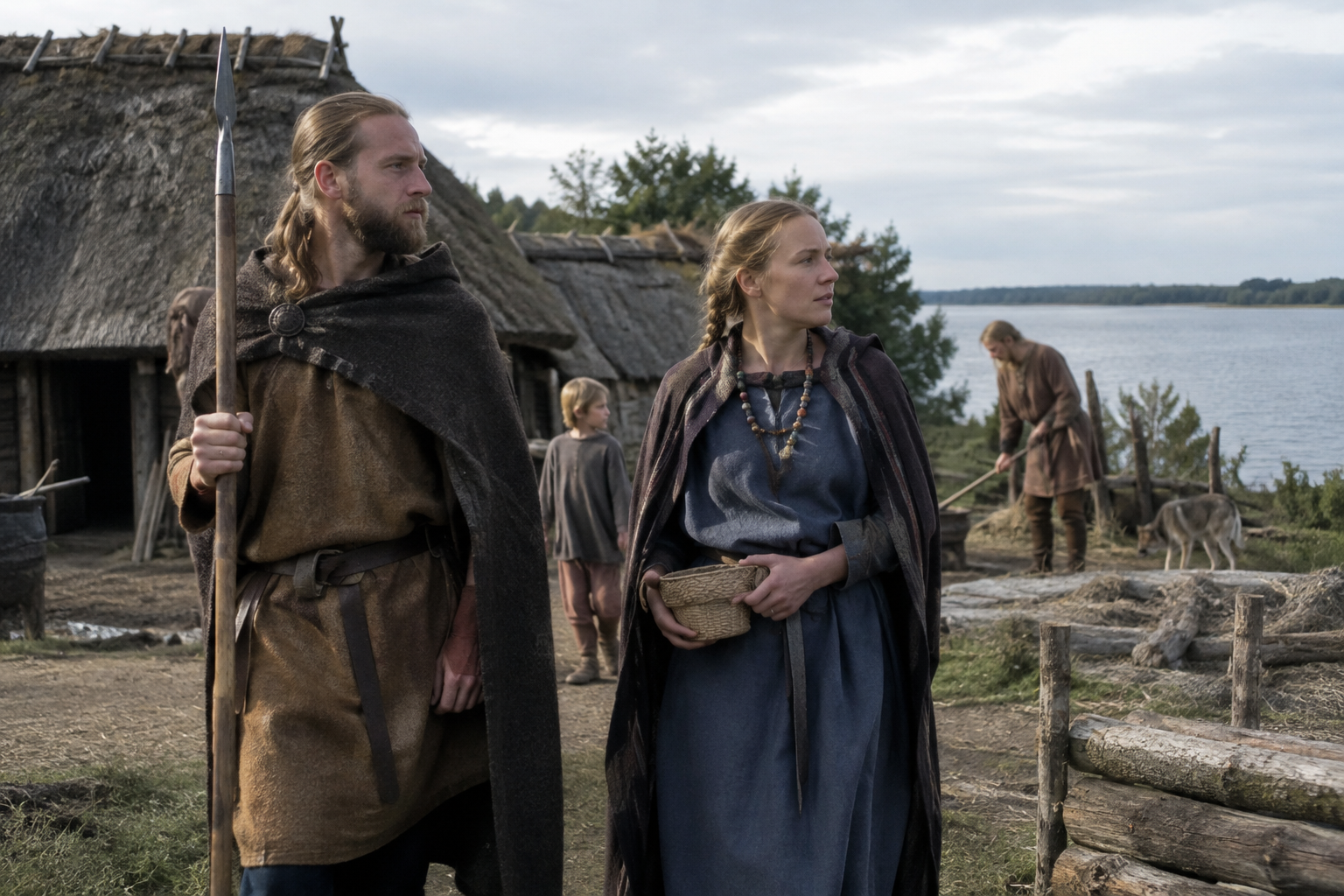
In the evidence for Y-DNA haplogroup N1a1a1a1a1a1a7a3b, one of the clearest ancient anchors is a man identified as VL11, dated to around AD 900 in Latvia, during the Late Iron Age. That is already enough to make him interesting. This was a period when the eastern Baltic sat at the edge of the Viking world, tied into trade, raiding, local power, and shifting cultural contacts across the sea and into the forests and river routes inland.
VL11 matters because haplogroup N lineages have a long and complicated history across northern Eurasia, but a very narrow branch such as N1a1a1a1a1a1a7a3b is not something we should casually project across every Finnic- or Baltic-speaking community. What the Latvian sample offers is something much more useful than a grand myth: a real man, in a real early medieval setting, showing that this paternal line was present in the eastern Baltic by the end of the first millennium AD.
The label "Baltic Late Iron Age Latvia" is not just a date tag. Around AD 900, Latvia was part of a busy contact zone linking the Baltic Sea to the Daugava and other river corridors that connected Scandinavia, the eastern Baltic, and farther regions of northern and eastern Europe. Archaeology from this period in Latvia has repeatedly shown that local societies were neither isolated nor simply passive recipients of outside influence. They were active participants in exchange networks and local political competition.
That context is important for reading VL11 properly. A Y-chromosome lineage traces one direct paternal line only. It does not define the whole ancestry, language, or identity of the individual. But it can still be historically revealing, especially when placed in a region where paternal lineages associated with haplogroup N have often been discussed in relation to northern forest-zone populations, Uralic-speaking groups, and later Baltic-Finnic histories.
Research on Latvia's Viking Age and Late Iron Age populations has been framed through interdisciplinary work on precisely these kinds of burials and settlement contexts, including the broader project hosted here: https://www.lvi.lu.lv/en/research/projects/translate-to-english-vikingu-laikmets-latvija-starpdisciplinara-izpete/. Even when one sample is all we have for a specific branch, the wider archaeological setting gives it real depth.
The first temptation with a highly specific haplogroup is to treat it as a miniature tribe name. That is not how the evidence works. N1a1a1a1a1a1a7a3b is a fine-resolution paternal branch inside the much wider haplogroup N family, and the wider family has a broad northern Eurasian story stretching across many places, languages, and periods. The narrower branch in this article should not automatically inherit every claim made about haplogroup N as a whole.
What we can say, cautiously, is that VL11 shows this paternal line in the eastern Baltic during the Late Iron Age, at a time when local communities were shaped by both continuity and mobility. The eastern Baltic was not a neat ethnic map. It was a zone where Baltic-speaking and Finnic-speaking populations, traders, warriors, craftspeople, and migrants could all intersect. A lineage found there may reflect long local roots, regional movement, or a mixture of both.
That is precisely why ancient DNA is so useful. It interrupts the old habit of drawing sharp cultural borders where past populations probably saw gradients, alliances, and seasonal routes instead.
When people imagine the Viking Age, they often picture longships and Scandinavian expansion, full stop. But the eastern Baltic had its own dense history. Coastal and inland communities in what is now Latvia were connected to Scandinavia, yes, but also to neighboring Baltic regions and to the north Eurasian forest belt. In such places, paternal lineages could persist locally for centuries while material culture, political ties, and trading links shifted around them.
That makes a sample like VL11 doubly valuable. He is not evidence for a single dramatic migration event. He is evidence that by about AD 900, this branch had a place within the human landscape of Latvia. Sometimes that is the more important historical point. Populations are not made only by famous invasions; they are also made by long residence, local marriage networks, and the slow layering of connections over generations.
This is also where the eastern Baltic becomes especially relevant for members of the MyTrueAncestry community. If your direct paternal line falls under a rare N branch, the best parallels may not come from sweeping maps of Europe, but from these borderland regions where northern and eastern lineages remained visible into the historical era.
Latvia sits in one of the most informative zones for studying haplogroup N in Europe. Not because every branch originated there, and not because every ancient Latvian male carried such a lineage, but because the region helps bridge several histories at once: Baltic, Finnic, Scandinavian, and the deeper north Eurasian background of haplogroup N.
Studies of early medieval populations in nearby parts of northern Europe have increasingly shown that the Baltic was a web of movement rather than a simple frontier. That broader picture is nicely complemented by work on early medieval Finland, where ancient genomics has helped clarify changing population structure and regional links across the Baltic world.
Seen in that light, VL11 is not an isolated curiosity. He belongs to a wider historical problem: how northern paternal lines were distributed across the Baltic rim, and how those lines intersected with the emergence of historically known populations in the early medieval period. The answer is unlikely to be a single migration arrow. It is more likely to be a story of layered contacts, regional persistence, and recurring mobility.
A single sample cannot carry the whole weight of a haplogroup's history. Still, one well-placed sample can do something very important: it can fix a branch in time and place. For N1a1a1a1a1a1a7a3b, VL11 gives us exactly that sort of anchor in Late Iron Age Latvia.
More broadly, ancient DNA has transformed how we think about northern Eurasia and the eastern Baltic. Instead of relying only on language histories or medieval chronicles written from elsewhere, we can now test which paternal lines were actually present in particular communities. That is especially valuable for haplogroup N, whose branches are historically important but often unevenly documented in older archaeological narratives.
The most defensible insight from the present evidence is modest, but meaningful. Y-DNA haplogroup N1a1a1a1a1a1a7a3b is attested in the eastern Baltic through the Late Iron Age Latvian individual VL11, placing this direct paternal line within the busy human world of around AD 900. For someone researching this haplogroup today, that does not promise a single ethnic label or a royal pedigree. What it does offer is something better grounded: a real connection to the northern Baltic frontier where local continuity and long-distance contact met in the same communities.




Comments