Haplogroup N/A

– 5 min read



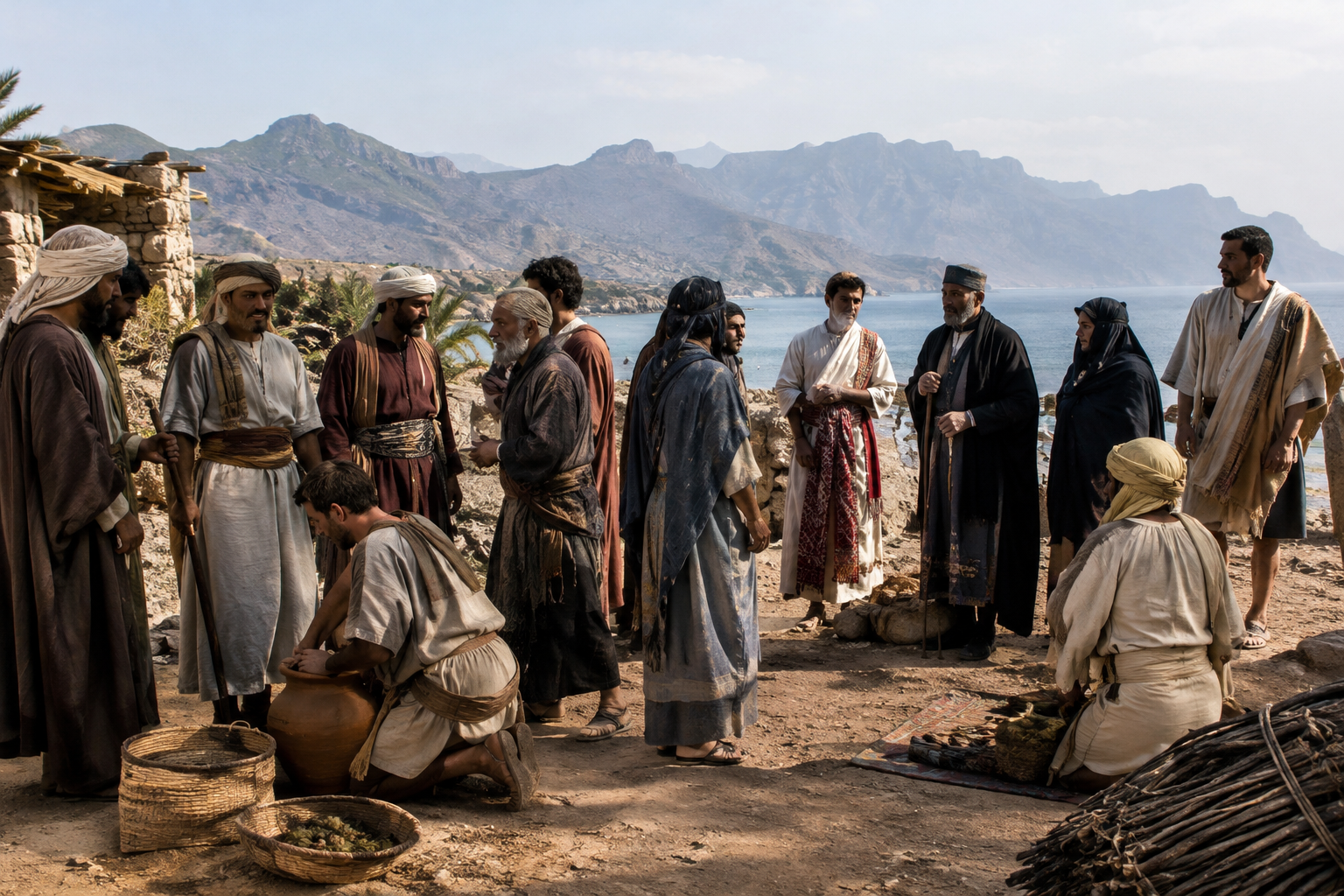
At Chokhopani in Nepal, one ancient male sample stands out simply because of where and when he lived. CHO003, dated to around 785 BC, comes from a high-altitude Himalayan context where survival, trade, and movement all depended on mountain corridors rather than easy plains travel. That matters because the Y-DNA signal associated here with N/A is not turning up in one neat, local sequence. Instead, the listed ancient matches stretch from Nepal to Viking Age Scandinavia and even to Greenland.
That does not mean one man walked from the Himalayas to the North Atlantic, nor that everyone in these graves belonged to a single historical people. Y-DNA traces one direct paternal line only. But when the same reported branch appears in such different settings, it becomes archaeologically interesting: not as a fantasy of one migration, but as evidence that a paternal lineage could persist across radically different worlds.
The earliest sample in this group, CHO003 from Chokhopani, anchors the story in the trans-Himalayan zone. Chokhopani is one of those sites that repeatedly draws attention because the Mustang region of Nepal sat on routes linking the Tibetan Plateau, the Himalayan valleys, and wider Inner Asia. A paternal lineage reported from this setting is immediately more interesting than a simple national label would suggest, because these were communities shaped by altitude, exchange, and long-distance contact.
A later sample, S29_S30 from Iron Age Samdzong, Nepal, dated here to about AD 550, shows that this paternal signal did not vanish after the early first millennium BC. Whether or not these two men belonged to the same immediate local population, they place the lineage in the broader Himalayan region across a very long time span. That is exactly the kind of pattern ancient DNA is good at exposing: continuity of some paternal lines alongside all the other changes in language, culture, and political control that archaeology documents.
Research on ancient Himalayan populations has begun to show just how mixed and regionally varied these mountain societies were. One useful example is a genetic study of high-altitude populations in and around the Tibetan world, which underlines that the Himalayas were not an isolated edge of history, but a connected and shifting human landscape.
When readers see a cluster like this, the temptation is to ask for a single origin story. But the evidence here resists that. The haplogroup is given only as N/A, so it would be wrong to assign a precise terminal subclade, a confident homeland, or a tidy map of expansion. The safer conclusion is narrower and, in its way, more revealing: the paternal line associated with these samples appears in both Inner Asian mountain contexts and later northern European maritime societies.
That sort of spread tells us less about ethnicity than about durability. Paternal lines can survive language shift, religious change, and dramatic political transformation. A lineage present in an early Himalayan burial landscape can also appear centuries later in settings shaped by Rus trade, Viking mobility, and Norse Atlantic colonization, without implying a simple or direct chain from one excavated man to another.
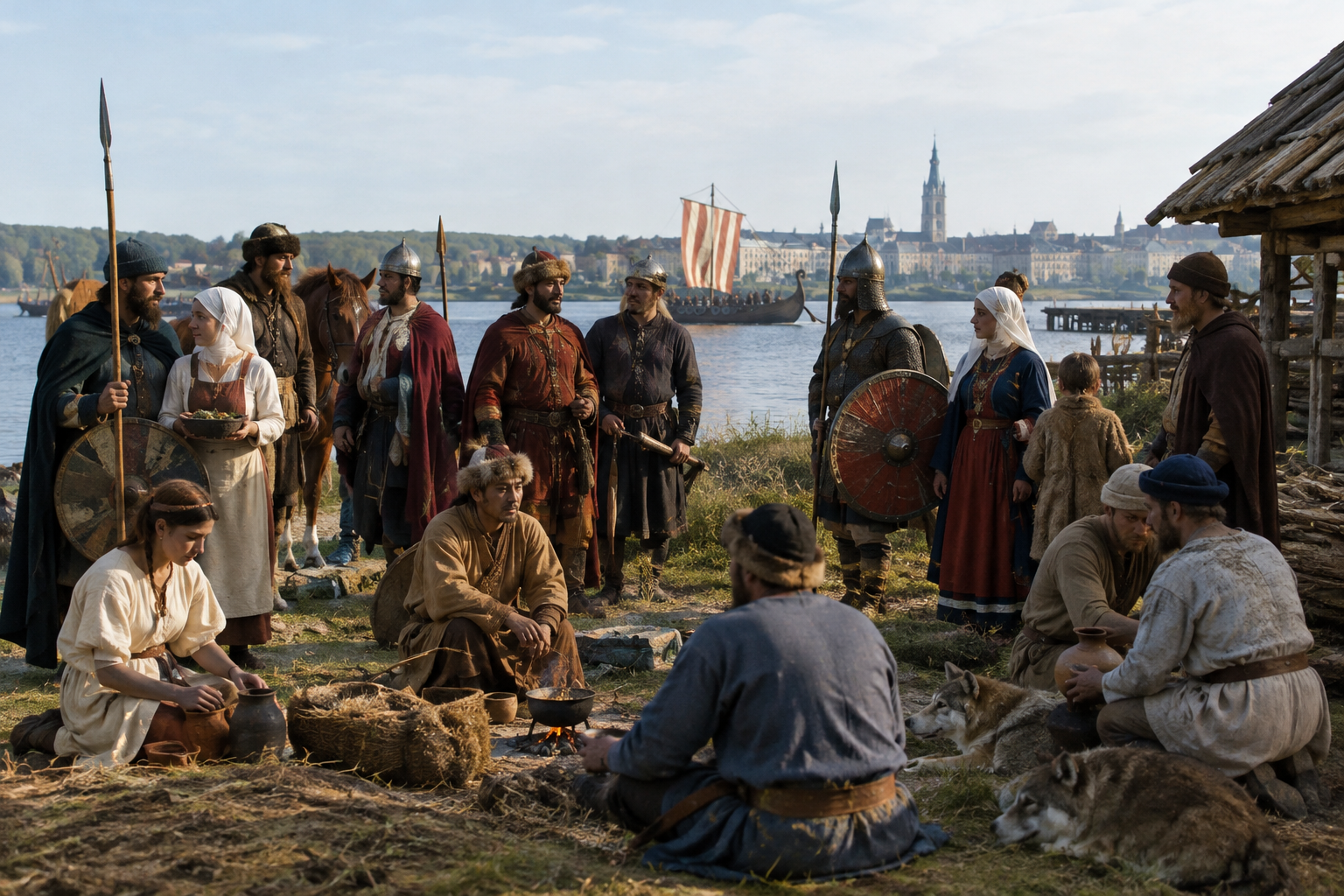
The sample VK252 from Viking Age Gnezdovo, Russia, dated here to about AD 950, brings the story into a very different world. Gnezdovo was one of the great contact zones of the Viking Age east, tied to the river routes that connected the Baltic to the lands of the Rus and onward toward Byzantium and the Islamic world. A paternal lineage turning up here belonged, quite literally, in a crossroads society.
That is important because Gnezdovo is not just "Viking" in the narrow raider sense so often imagined. It was part of a broader trading and political sphere where Scandinavians, local eastern Europeans, and others met, intermarried, and built new communities. A Y-line found there may reflect Scandinavian ancestry, eastern connections, or a blend of both over generations. The archaeological lesson is not purity but entanglement.
Ancient DNA work on Viking Age mobility has repeatedly reinforced that point, showing how burial grounds associated with Norse activity can include people of varied ancestry and life history. The eastern routes mattered every bit as much as the more famous westward voyages.
Two more samples place the same reported paternal branch in unmistakably Scandinavian contexts: VK318 from Viking Hesselbjergmarken, Denmark, dated to about AD 913, and VK125 from Medieval Trondheim, Norway, dated to about AD 1200. These are not marginal outposts. Denmark was central to Viking Age political expansion across the North Sea and Baltic, while Trondheim was one of medieval Norway's major urban and ecclesiastical centers.
Taken together, these samples suggest that the lineage was not confined to one expeditionary fringe. It was present within Scandinavia itself and remained visible into the high medieval period. That continuity through Viking and post-Viking centuries is historically valuable, because it bridges the dramatic changes from pagan-age raiding and trading networks to more settled Christian kingdoms.
An ancient DNA preprint examining broad patterns across Eurasian populations, including northern connections, has helped push this kind of discussion forward by comparing lineages across space and time rather than treating each burial ground in isolation: research shared as a large-scale ancient DNA study. Even where one specific sample is only a small part of the picture, this comparative approach is exactly what makes scattered paternal signals meaningful.
The most dramatic location in the set is VK76 from the Western Settlement of Greenland, dated here to about AD 1294. That date places the sample in the closing centuries of Norse Greenland, when the colonies were remote, vulnerable, and deeply dependent on North Atlantic links. A paternal lineage associated with this individual had reached one of the outermost edges of medieval European settlement.
This is where archaeology does something family legend cannot. It shows that a direct male line could survive not just political upheaval but geographical extremity. Whatever its deeper past, by the late 13th century this lineage was carried by a man living in a colony perched at the edge of viability, part of a society that connected Iceland, Norway, and Greenland across one of the hardest seascapes on earth.
The striking thing about this group is not a single homeland claim, but the sheer breadth of settings in which the paternal line appears: Himalayan uplands, a Rus trading center, Viking Denmark, medieval Norway, and Norse Greenland. For someone exploring a matching Y-line today, that is a reminder that direct paternal ancestry can be old, resilient, and geographically surprising. It may connect you to histories of mobility and survival rather than to one neat ethnic label.
In other words, the value of this evidence lies in its reach across real archaeological worlds. CHO003 at Chokhopani and VK76 in Greenland did not live in the same culture, speak the same language, or belong to the same state. Yet the paternal line associated with N/A appears in both horizons, which is precisely why ancient DNA remains such a powerful tool for thinking about the long human past.
Comments