Haplogroup L1a2b1

– 5 min read


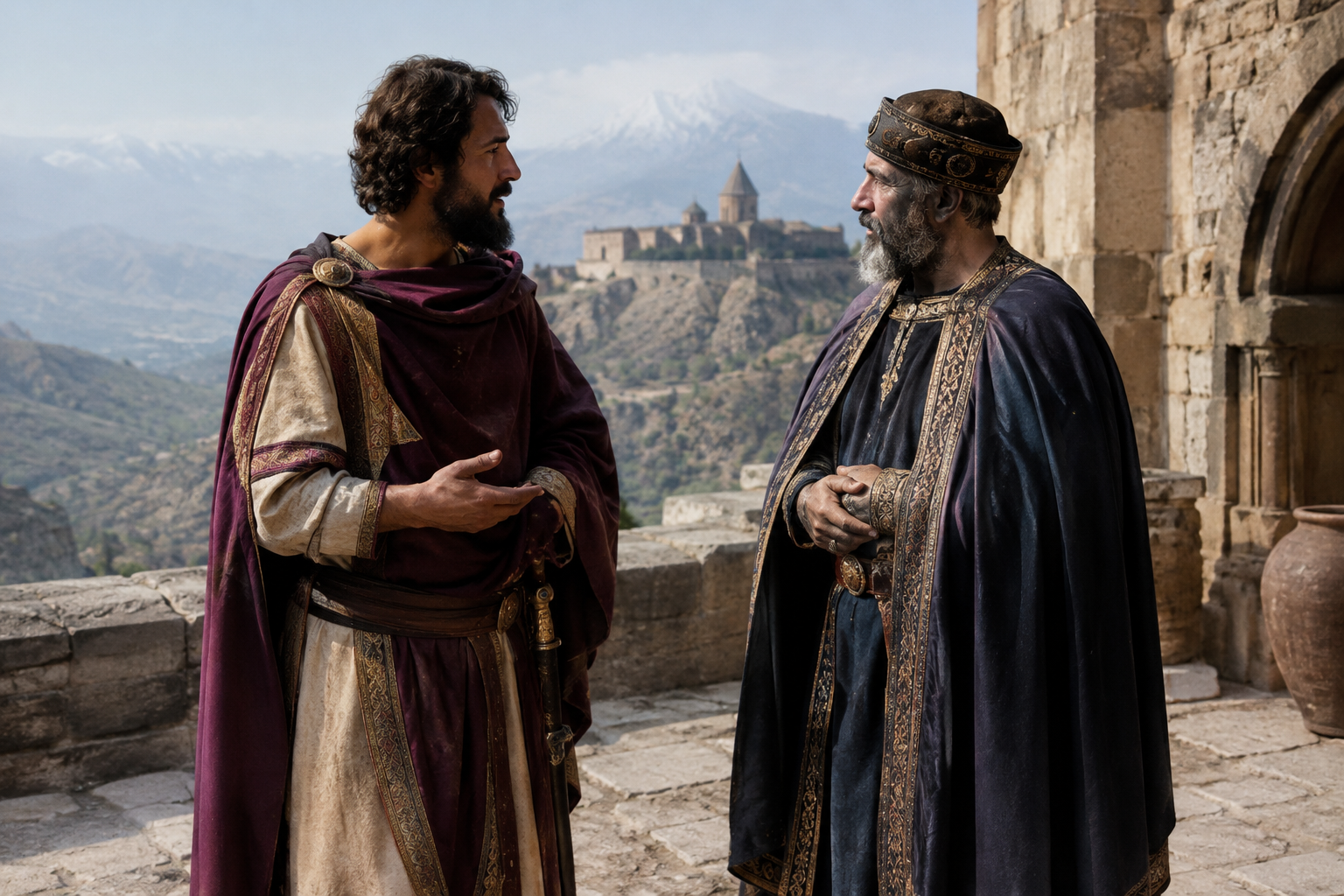
In Byzantine Armenia, around AD 475, two men identified as R11651 and R11653 carry an unexpectedly useful clue for the history of Y-DNA haplogroup L1a2b1. They are not legendary founders or named rulers. What makes them valuable is precisely that they seem to belong to an ordinary late antique population in the South Caucasus, giving this paternal branch a firm archaeological foothold in a region that sat between empires, languages, and trade worlds.
That matters because Y-DNA tracks one direct paternal line only, not a person's whole ancestry. Even so, when the same branch appears in securely dated ancient individuals from a specific place, it gives us something far better than folklore: an actual historical setting. In this case, L1a2b1 appears in Byzantine-period Armenia, a frontier zone where Roman, Persian, and local Caucasian histories overlapped.
The core evidence here is narrow but important. The ancient individuals R11651 and R11653 are both dated to about AD 475 and classified as Byzantine Period Armenia. With only two samples, caution is essential; this is not enough to claim a dynasty, a tribe, or a regional majority. But it is enough to show that a paternal line associated with L1a2b1 was present in Armenia during the later fifth century.
That date is historically rich. Armenia in late antiquity was not a quiet backwater but a politically divided and culturally layered landscape. It lay between the Eastern Roman Empire and the Sasanian Empire, and its elites, clergy, soldiers, farmers, and townspeople lived in a world shaped by both local continuity and imperial pressure. A Y-chromosome lineage found here belongs to that mixed but very real historical environment, not to some abstract map of "ancient migrations."
A regional ancient DNA study has helped bring this broader Caucasus setting into focus, even if one should be careful not to overstate what any single preprint can prove about a particular subclade. The research context linked to these Armenian samples is a study of ancient genomes from the South Caucasus and neighboring periods, and that is the right scale at which to understand why two fifth-century Armenian males matter: they sit inside a long, complicated history of continuity and change rather than representing an isolated curiosity.
Haplogroup L is a broad paternal lineage with deep roots mainly associated with parts of South and Southwest Asia. But that wider background should not be lazily collapsed into the narrower label L1a2b1. A subclade is not identical to its parent branch, and ancient evidence for one local occurrence does not automatically tell us when or where the entire branch first formed.
Still, the Armenian evidence is historically plausible in an interesting way. The South Caucasus has long been a corridor rather than a wall. Armies crossed it, merchants used it, imperial administrators contested it, and religious networks stitched it to both Mesopotamia and the eastern Mediterranean. If a branch like L1a2b1 appears in late antique Armenia, that fits a region where paternal lines from different backgrounds could persist for centuries without needing a single dramatic migration story to explain them.
That is one of the great lessons of archaeogenetics. Ancient Y-DNA often turns up not in the places modern people expect, but in the places history tells us were densely connected. Armenia is exactly such a place: a landscape of uplands, fortified settlements, church foundations, caravan movement, and competing political loyalties.
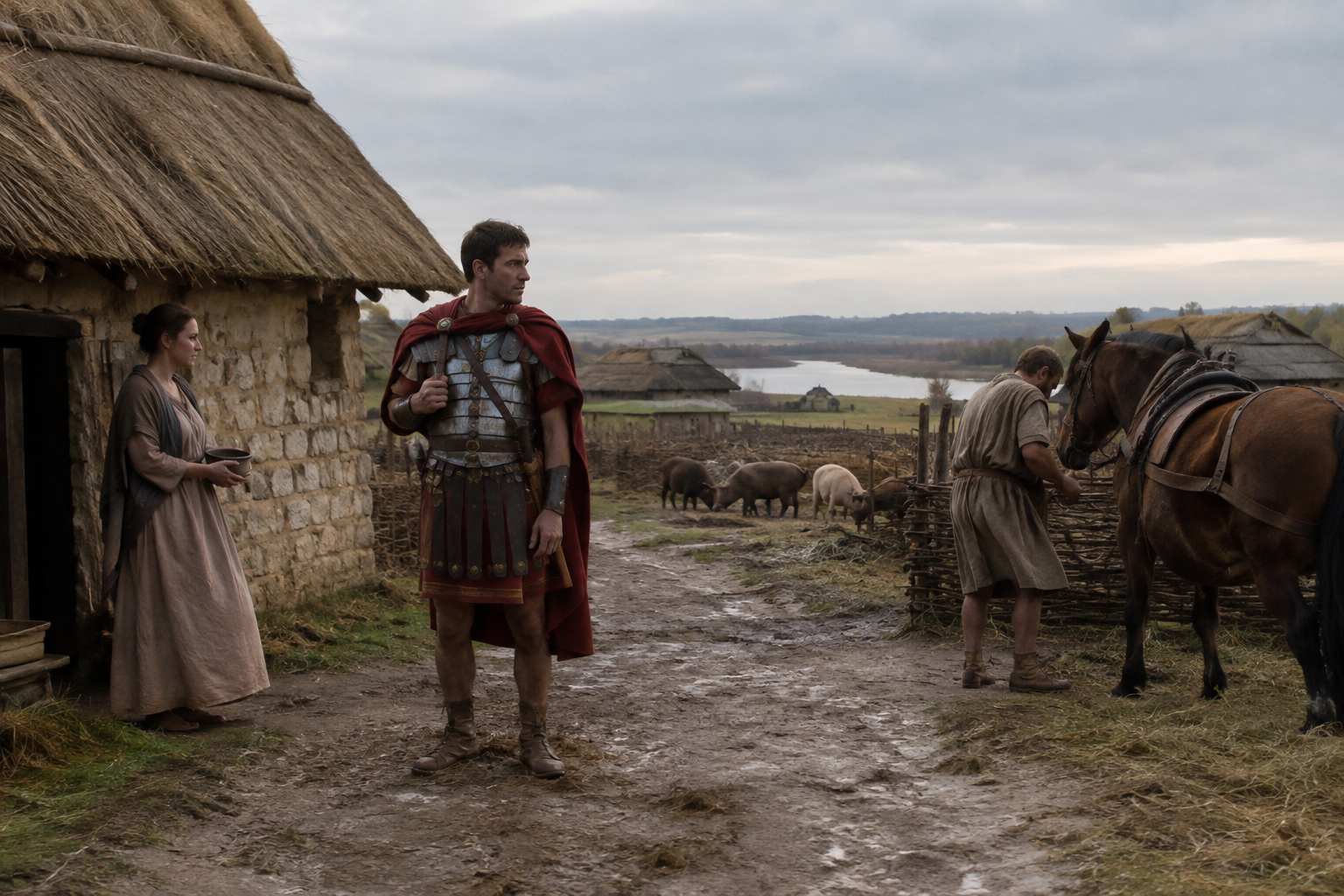
The year attached to these men, about AD 475, lands us in the unsettled aftermath of the classical world. In the west, Roman power was fracturing; in the east, imperial authority remained formidable but constantly negotiated. Armenia was caught in those pressures while also maintaining its own religious and aristocratic traditions.
By this date, Christianity had long been established in Armenia, yet the region's political life remained deeply entangled with the Sasanian sphere. That dual orientation makes the appearance of L1a2b1 here especially suggestive. Rather than pointing neatly westward or eastward, it reflects a population living at a crossroads, where paternal lineages could survive through local family continuity even as states and allegiances shifted overhead.
It is worth stressing the modesty of the evidence. R11651 and R11653 do not tell us that L1a2b1 was common in all of Armenia, nor that all men with similar lines shared one ethnicity, language, or social rank. What they do provide is far more solid: a dated presence in a specific late antique society.
Readers are often tempted to translate a Y-DNA result directly into an ethnic badge. Ancient evidence from the Caucasus repeatedly warns against that habit. The same region can show continuity in some lines, new arrivals in others, and cultural change that does not map cleanly onto genetics at all.
That is why these Armenian samples are best read as evidence of presence, not of a single grand identity. Byzantine-period Armenia included communities shaped by older local roots, imperial administration, ecclesiastical structures, and ties reaching south toward northern Mesopotamia and the Iranian world. A paternal lineage such as L1a2b1 could belong perfectly well in that setting without standing for any one political label.
There is also a wider methodological point here. Two nearby samples carrying the same haplogroup can be significant without proving close kinship. Ancient DNA studies increasingly show how burial grounds can contain both relatives and unrelated individuals linked by neighborhood, faith, status, or custom. So the strength of R11651 and R11653 lies not in a claim that they were necessarily close family, but in the repeated appearance of the same paternal branch in one place and period.
For a modern tester with Y-DNA haplogroup L1a2b1, these Armenian finds offer a grounded historical reference point. They suggest that this paternal branch, or a closely related reported assignment within it, was present in the South Caucasus by late antiquity. That may be particularly interesting for people whose deeper family history points toward Armenia, eastern Anatolia, northern Mesopotamia, Iran, or adjacent regions.
But the responsible reading is a measured one. Ancient Y-DNA does not let us jump straight from a modern result to a named people, a medieval house, or one exact migration route. What it does do, and does powerfully, is place a paternal line into a real human landscape. In the case of L1a2b1, that landscape includes Byzantine-period Armenia: a borderland of churches and empires, where two fifth-century men quietly preserve the historical visibility of a lineage still carried today.
The most distinctive thing we can say about L1a2b1 from the evidence at hand is not that it belonged to a famous dynasty, but that it is archaeologically visible in late antique Armenia through R11651 and R11653. That is valuable because it anchors a living paternal lineage in a documented historical world. For anyone researching this haplogroup, the strongest lead is therefore not prestige but place: the South Caucasus, where family lines endured through one of history's most complicated frontier societies.
Comments