Haplogroup J2b2a1

– 5 min read


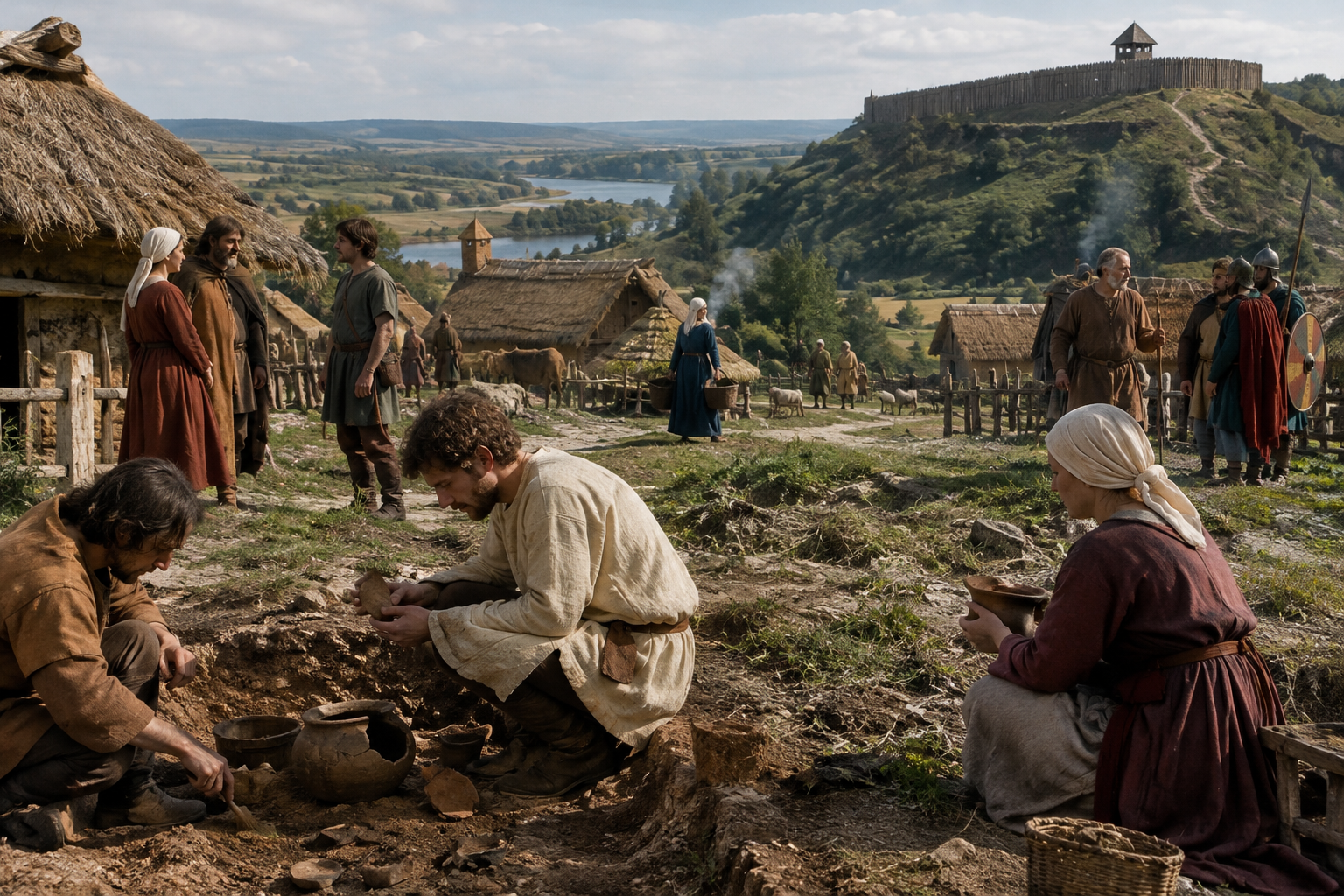
One of the more arresting appearances of Y-DNA haplogroup J2b2a1 comes from a man buried in medieval Sicily at Segesta, sample SGBN5, dated to around AD 1200 and identified in a Muslim grave context. Sicily is exactly the sort of place where a paternal lineage becomes historically interesting not because it belongs to one people, but because it turns up where several worlds met: Islamic, Greek, Latin, and older Mediterranean ones besides.
That is the right place to begin, because J2b2a1 does not look, in the ancient record here, like a lineage tied to one short-lived political episode. Instead it appears across a long arc of Mediterranean and Balkan history: in Bronze Age Moldova, Bronze Age and Iron Age Croatia, Mycenaean Greece, Punic and Etruscan Italy, Roman Pompeii, the late Roman Danube frontier, post-Roman Pannonia, medieval Sicily, and even later medieval and post-medieval settings farther north. Y-DNA traces only one direct paternal line, not a person's whole ancestry, but this particular line is still a remarkably good witness to movement around the inland sea the Romans later called mare nostrum.
Sample SGBN5 is valuable not because one grave can explain Sicily, but because it sits in a region where population history is famously layered. By the 12th and 13th centuries, western Sicily had lived through Greek colonization, Carthaginian competition, Roman rule, Byzantine government, Islamic emirates, and Norman conquest. A Muslim burial from Segesta carrying J2b2a1 fits that larger picture of continuity mixed with reordering, rather than any simple tale of replacement.
A recent ancient-DNA study of the island's medieval population has emphasized just how mixed and locally complex Sicily could be, especially across communities divided by religion and language. That broader setting helps make sense of why a paternal line like J2b2a1 could appear there without needing to be reduced to a single ethnic label or a single migration event. For readers interested in that wider Sicilian background, this related post gives the larger context:
And Sicily offers an older echo too. The sample I4798 from Motya, dated to about 492 BC, comes from a Carthaginian-era site on the same island. Motya was one of the great Phoenician and Punic centers of western Sicily. We should not pretend that a Punic-period man from Motya and a medieval Muslim burial from Segesta mark an unbroken father-to-son line across seventeen centuries; that would be far too much to claim. But taken together, they show that this branch was present in Sicily in very different historical worlds, long before and long after the Roman Empire.
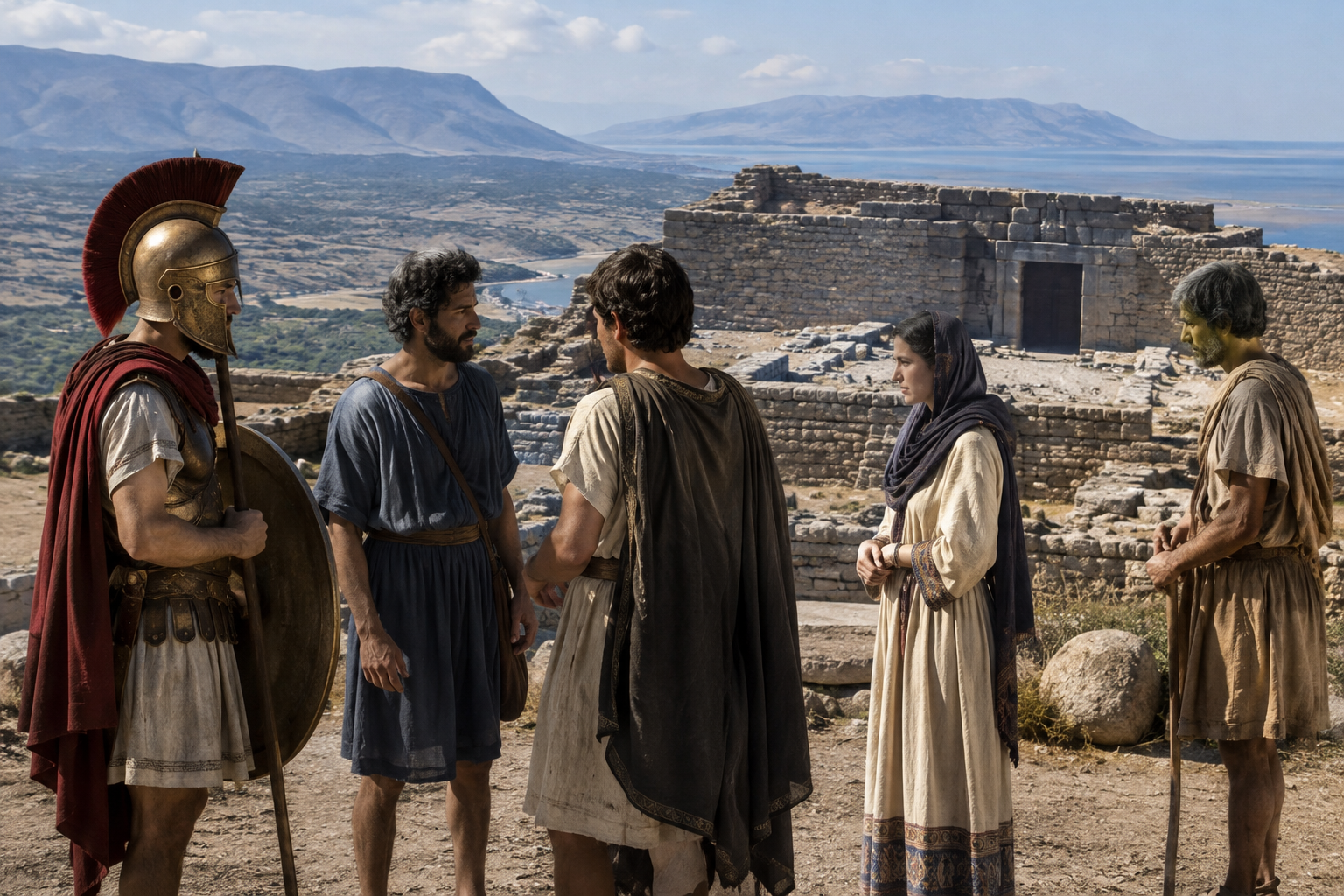
If Sicily shows endurance, the Bronze Age samples show depth. Four men from Mygdalia in Achaean Greece - MYG001, MYG005, MYG006, and MYG008 - are dated to around 1500 BC and place J2b2a1 in the Mycenaean world. That matters because Mycenaean Greece sits at the intersection of palace society, maritime exchange, and the wider eastern Mediterranean. A paternal lineage found there is not merely "Greek" in some timeless sense; it belongs to a Bronze Age society already entangled with Crete, Anatolia, the Balkans, and beyond.
The Balkan side of the story is just as striking. In Croatia, the Cetina Valley produced two Bronze Age individuals, I19025 from around 1800 BC and I19029 from around 1700 BC. Add to them the Nuragic sample ORC007 from inland Sardinia, dated to about 1140 BC, and what you see is not a neat corridor but a broad southern European zone in which this paternal branch was already established.
Research on Bronze Age and later southeastern Europe has increasingly shown that paternal lineages could persist through major cultural shifts even while overall ancestry profiles changed through marriage, mobility, and local mixture. A genetic study exploring long-term patterns in Croatia is especially relevant to this problem of continuity and change: https://royalsocietypublishing.org/doi/10.1098/rsos.240436.
There is also an even earlier and more northerly appearance: I10206 from Crihana-Veche in Moldova, dated to about 2500 BC in a Yamnaya context. That is a reminder to be careful. J2b2a1 is not only a "classical Mediterranean" lineage in the evidence here. It also appears on the northwestern Black Sea steppe in the Early Bronze Age, which hints that the history of this branch involved contact zones between steppe populations and farming societies to the south, not just the later cities and ports that leave more familiar names in written history.
By the first millennium BC, J2b2a1 turns up in several distinct Italian settings. CSN004 from Casenovole, dated to about 400 BC, places it in an Etruscan Iron Age context. ORD014 from Herdonia in Apulia, around 500 BC, ties it to Daunian southern Italy. And the Phoenician-associated sample R11753 from Kerkouane in Tunisia, around 410 BC, shows the same branch in another major maritime culture of the central Mediterranean.
That list is useful precisely because the archaeological labels differ so much. Etruscan, Daunian, Punic, Greek: these are historical and cultural categories, not Y-chromosome tribes. The recurrence of J2b2a1 across them suggests that the lineage moved within the trading and colonizing world of the Mediterranean, where men, goods, and families crossed seas more often than nationalist maps would lead us to expect.
Then there is I3690, one of the Pompeii victims from the House of the Cryptoporticus, killed in AD 79 by the eruption of Vesuvius. Pompeii has a special power over the imagination because it gives us a Roman town stopped mid-course. But genetically it is just as important because it preserves ordinary urban people, not only emperors and generals. In this case J2b2a1 appears in an unmistakably Roman civic setting, showing that by the early imperial period the branch belonged within the lived population of Italy itself. For a broader look at Pompeii's ancient genomes, this related post is worth reading:
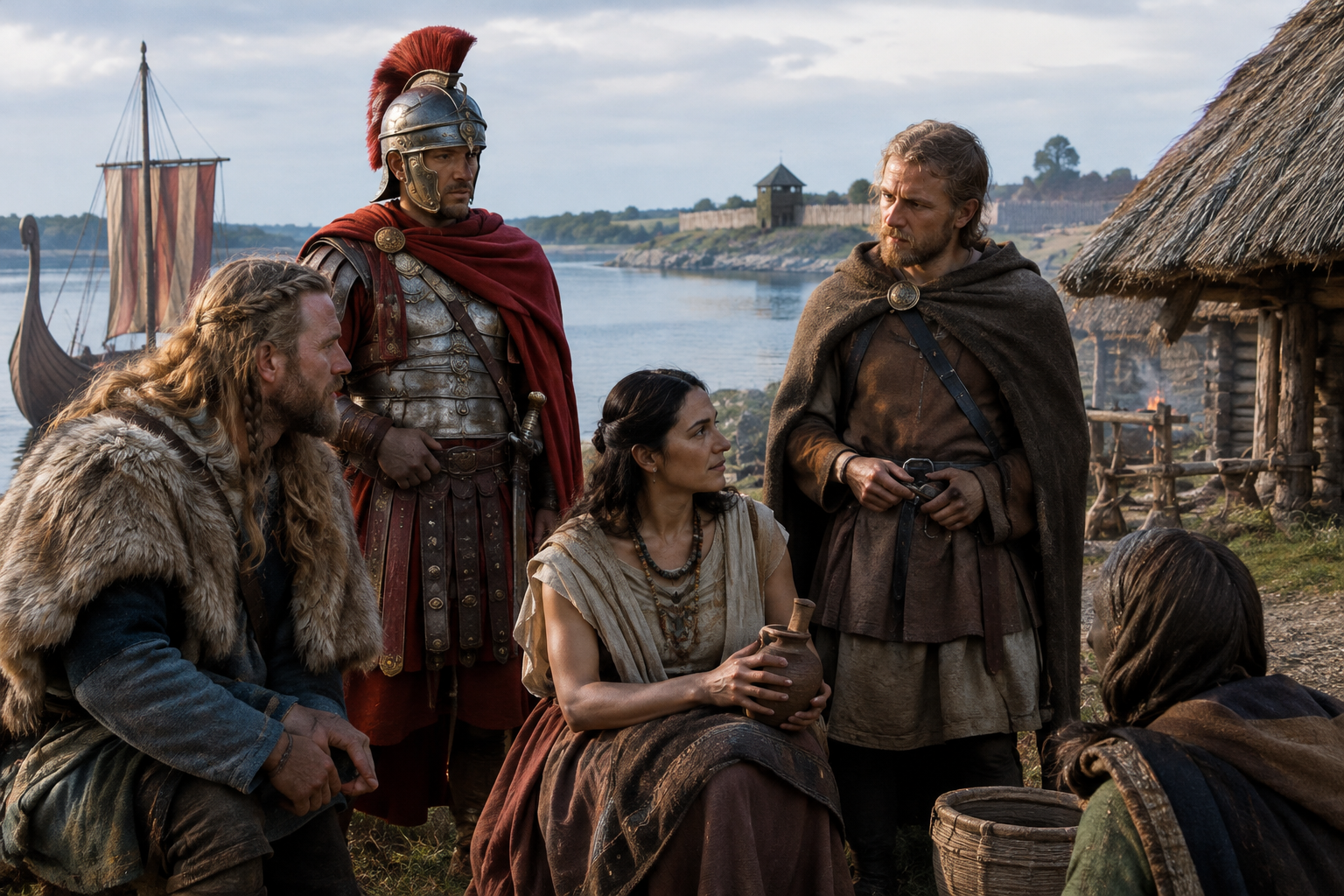
If the Mediterranean shows breadth, the middle Danube shows endurance under pressure. Several samples associated with J2b2a1 come from the late Roman and post-Roman frontier zone: R2040b from Sisak in Croatia around AD 245; I15547 from Timacum in Serbia around AD 395; STRAZ_I_88 from Straubing-Azlburg in Germany around AD 400; and a whole cluster from Arrabona, Savaria, Scarbantia, Szeleste, Kony, and Hacs in Pannonia and nearby Barbaricum between roughly AD 425 and 550.
These include GYS025, GYS031, SZL004, SZL077, HMU036, KMU008, and Hacs_24. Some are described as late Roman, some post-Roman, some Germanic or Longobard-period, and some explicitly from Barbaricum beyond the formal imperial frontier. That is exactly why they matter. The same paternal branch appears on both sides of political boundaries during the centuries when Roman authority in the region was weakening, shifting, and being replaced by new powers.
An ancient-DNA study on post-Roman society in the Little Hungarian Plain has helped underline this frontier-zone complexity, where local continuity, incoming groups, and mixed communities all played a part. J2b2a1 fits neatly into that sort of evidence: not a badge of one invader, but a lineage present within a zone of intense contact.
The same point is reinforced by PCA0113 from Masłomęcz, dated to around AD 300 and labelled Goth. Recent work on that community has stressed that Gothic-associated populations in east-central Europe were genetically diverse rather than biologically uniform. That is a helpful warning against reading too much ethnicity into any one Y-line. For context, see this related article on the Masłomęcz evidence:
The most distinctive thing about J2b2a1 in this dataset is not one homeland stamped in permanent ink. It is its repeated appearance in contact zones: Bronze Age corridors between steppe and Balkans, Mycenaean Greece, Adriatic Croatia, Punic and Roman Sicily, imperial Italy, and the turbulent Danube frontier. That is the kind of distribution you would expect from a paternal line that became woven into Mediterranean and southeast European history very early, and then stayed there through changing languages, religions, and states.
For someone researching this haplogroup today, the ancient evidence points less toward a single romantic identity than toward long involvement in the connected worlds of the Balkans and Mediterranean. It is a lineage found among Bronze Age communities, classical-era populations, Roman urbanites, and medieval islanders alike - which is, in historical terms, a rather grand inheritance.
Comments