Haplogroup J2a2a

– 4 min read


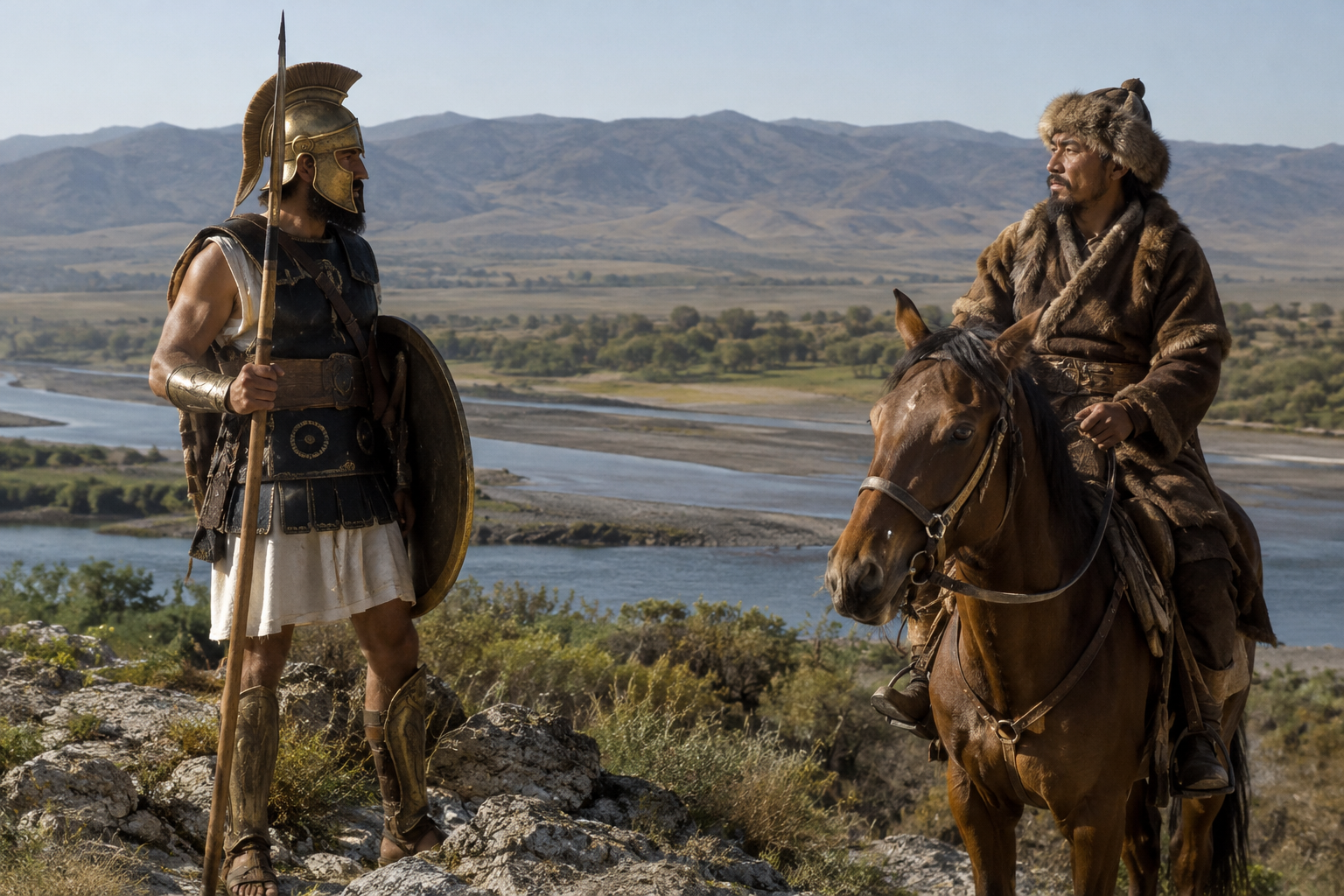
At Aidonia in Corinthia, one Mycenaean-era man dated to around 1450 BC, sample AID007, offers a particularly useful anchor for thinking about Y-DNA haplogroup J2a2a. Aidonia sits in the northeastern Peloponnese, in a landscape tied to the wider Mycenaean world of palaces, regional elites, and maritime contacts. A paternal lineage like J2a2a does not tell us everything about that man's ancestry or identity, but it does place one direct male line of the Bronze Age Aegean within a branch long associated, at broader levels, with populations of the eastern Mediterranean and western Asia.
What makes this interesting is not simply that J2a2a appears in Bronze Age Greece. It is that the same article haplogroup also turns up, much later, in a very different setting: sample ULI002 from the lower terrace of the Uliastai River, dated to around AD 650 in a Turkic-period context on the Inner Asian steppe. Put bluntly, these are not two nearby villages preserving one obvious local family line. They are two very distant archaeological worlds. That contrast is the real story.
The Aidonia cemeteries are best known archaeologically for their place in Mycenaean Corinthia, a region that linked the Peloponnese to the wider Aegean and beyond. By about the mid-second millennium BC, this was a world of strong local centres, inherited status, exchange networks, and constant movement of goods and people. AID007 belongs within that setting, and his reported association with J2a2a adds one more paternal line to the growing genetic picture of Bronze Age Greece.
It is worth being careful here. J2a2a is a specific branch within the wider J2 family, and one Bronze Age individual cannot stand for all Mycenaeans, let alone for all Greeks. But he does fit a broader archaeological pattern in which the Aegean was never isolated. The Mycenaean world drew on older Neolithic and Bronze Age populations of the eastern Mediterranean while also developing its own local histories in places like Corinthia.
A useful companion piece here is MyTrueAncestry's discussion of Corinthian links beyond the city itself:
Research presented on ancient Corinthian material has helped sharpen this picture of local continuity mixed with regional connection, especially in work such as a genetic study of ancient Corinth and its colonial network. Even without forcing a grand migration tale onto a single Y-chromosome line, the Aidonia sample shows that a branch identified here as J2a2a was already present in the Mycenaean-era northeast Peloponnese.
Y-DNA follows one line only: father to son across generations. That makes it powerful for tracking paternal continuity, but narrow by design. A man with J2a2a in Mycenaean Corinthia was not "made Mycenaean" by that haplogroup, any more than pottery style or burial architecture alone could define his entire ancestry.
Still, paternal lineages matter because they can reveal structure inside ancient societies. Some branches persist locally for centuries; others appear in new regions through marriage, mobility, trade, military movement, or small-scale founder effects. J2a2a is best treated here not as a badge of ethnicity, but as a clue that some paternal lines moved across interconnected Old World landscapes much more widely than older, simpler historical models once allowed.
That broader Aegean background is explored further in another relevant post:
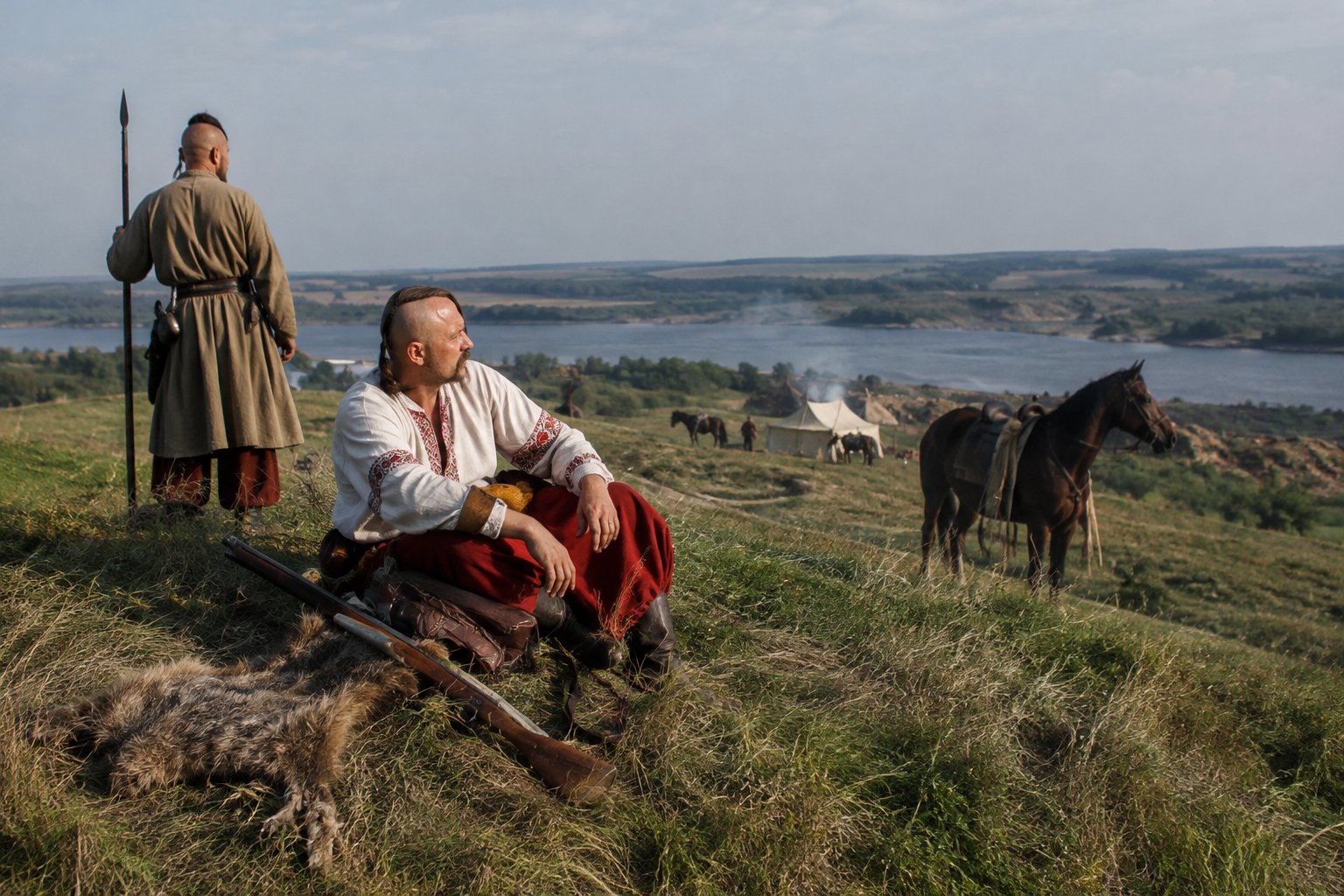
The second sample, ULI002, comes from the lower terrace of the Uliastai River and is dated to around AD 650, in a Turkic-period context. This is a strikingly different archaeological setting from Bronze Age Greece: not a palace-linked Aegean society, but the political and cultural world of Inner Asia in the early medieval centuries, when steppe confederations connected Mongolia, the Altai, and the routes reaching westward into Central Eurasia.
That a sample associated with J2a2a appears here does not mean a straight, traceable line runs from Aidonia to the Uliastai River. It does mean that this paternal branch, or a closely related one, belonged to the sort of long-distance human geography that made Eurasia so historically dynamic. By the seventh century AD, steppe societies were drawing together lineages from multiple backgrounds, and ancient DNA increasingly confirms that political groupings labelled "Turkic" were genetically diverse.
An ancient DNA study connected with Inner Asian population history, available in supplementary form at this research publication, sits within that larger scholarly effort to map the complexity of the eastern steppe. For ULI002, the key point is not prestige or exoticism. It is that J2a2a appears in a world shaped by mobility, alliance, and repeated demographic mixing.
For readers following the genetic history of this broader region, this related post gives helpful context:
Ancient haplogroup articles can sometimes fall into the trap of treating every occurrence as if it proves one grand migration. Here, the better lesson is subtler. AID007 and ULI002 show that J2a2a appears in two historically important but very different contact zones: the Late Bronze Age Aegean and the early medieval Inner Asian steppe.
Both zones were connectors. Mycenaean Corinthia sat within maritime networks linking mainland Greece, the islands, Anatolia, and farther east. The Turkic-period Uliastai region belonged to overland systems of movement that tied together herders, empires, and frontier communities across enormous distances. If a paternal branch shows up in both places, that does not collapse them into one story, but it does remind us that Eurasian history was built from overlapping circuits of mobility, not sealed-off civilizations.
There is another useful comparison in MyTrueAncestry's coverage of steppe-facing regions and mixed frontier populations:
For someone researching a present-day paternal line, J2a2a is best understood here as a lineage with documented ancient presence in more than one major historical sphere, including Bronze Age Greece and the early medieval eastern steppe. That does not mean every modern carrier descends from Mycenaeans, or from Turkic elites, or from any single famous people. What it does suggest is that this branch participated in the deep, messy, well-travelled human history of the eastern Mediterranean and Eurasia.
That is, in its own way, more interesting than a tidy legend. J2a2a in the ancient record points not to a single heroic origin story, but to real populations living in connected worlds: one in Mycenaean Corinthia, another on the Uliastai River centuries later, both now visible because archaeology and DNA have finally learned how to speak to each other.
Comments