Haplogroup J2a1a1b3
– 5 min read


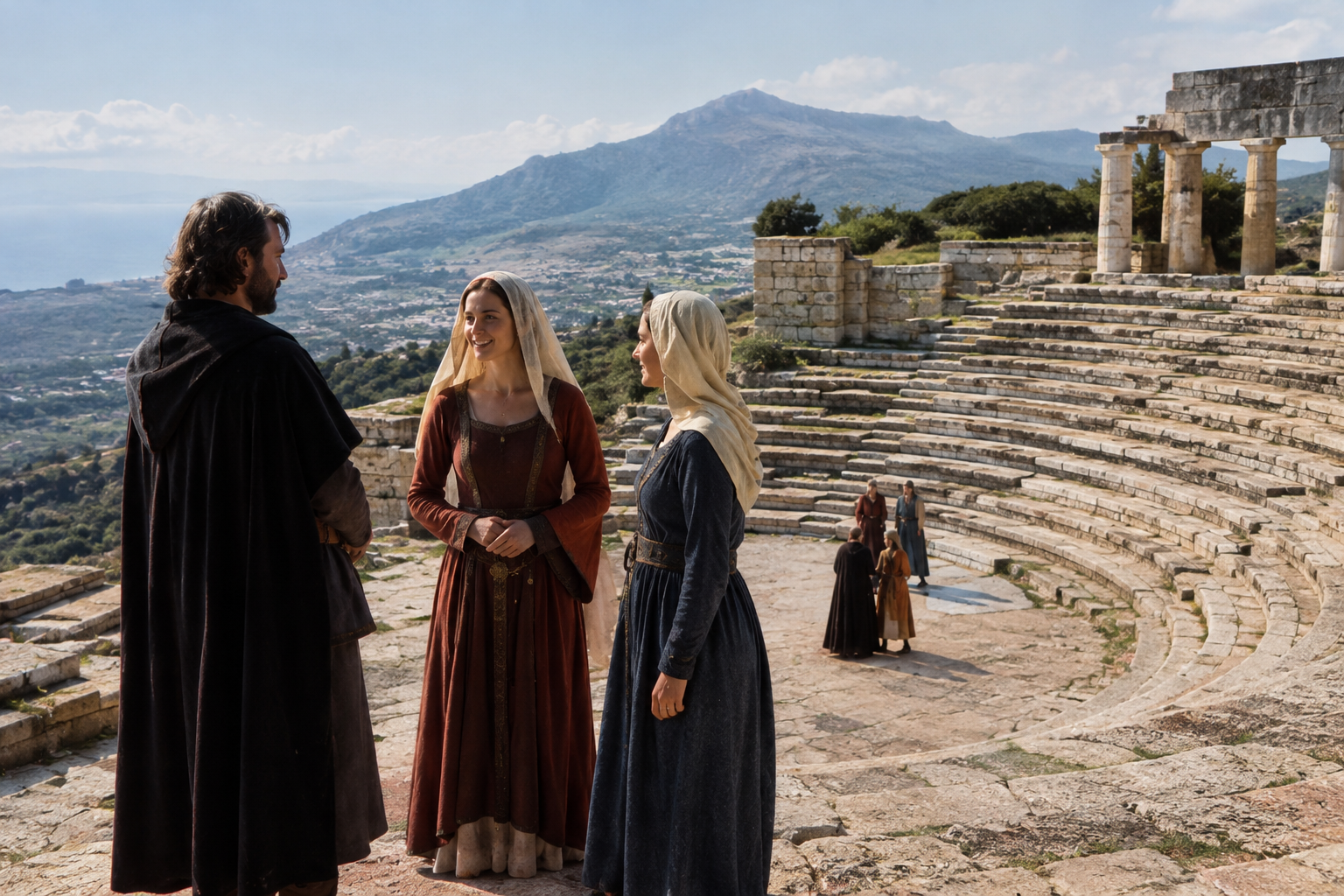
At Teatro di Segesta in western Sicily, one medieval man has become an unexpectedly useful guide to a much bigger history. The individual identified as SGBN25, dated to around AD 1250, carried the Y-DNA haplogroup J2a1a1b3. That may sound like a tiny technical label, but in Sicily a tiny label can open onto a very large stage: Greek foundations, Roman rule, Byzantine reconnections, Islamic-era movement, Norman conquest, and the crowded, practical cosmopolitanism of a medieval island.
Segesta is especially apt for this kind of story. It is one of those Sicilian places where archaeology refuses to stay in a single period. An ancient city with deep classical associations later became part of a medieval landscape shaped by shifting rulers and overlapping communities. So when a medieval burial from the site produces a paternal lineage like J2a1a1b3, the interesting question is not whether one man can stand for all Sicilians. He cannot. The real interest lies in how a direct male line associated with the wider J2 family appears in a region long known as one of the Mediterranean's great meeting grounds.
Y-DNA follows one narrow thread: the direct paternal line, passed from father to son. It does not describe a person's whole ancestry, language, religion, or social identity. Still, such lineages can be historically revealing when they turn up in well-dated archaeological settings.
J2a1a1b3 is a fine-grained branch within the broader haplogroup J2, a lineage widely discussed in connection with the eastern Mediterranean and western Asia over long spans of prehistory and history. That broader background matters, but it should not be lazily projected onto this exact subclade. For SGBN25, the defensible point is simpler: by the mid-13th century, a paternal line within this branch was present in medieval Sicily, in a place whose history had already been shaped for centuries by mobility across the Mediterranean.
A recent ancient DNA study of Sicily's medieval population has helped underline that wider setting, showing that the island's people were not genetically uniform and that local communities preserved evidence of multiple historical connections across regions and faiths. The broader context is explored in Genetic Diversity in Medieval Sicily.
The site name itself does some of the historical work here. Segesta is famous above all for its ancient theatre and temple, but medieval people were not simply wandering through a dead classical ruin. Across Sicily, older monumental landscapes were repeatedly reused, reoccupied, and folded into later settlement and burial patterns. A medieval individual from Teatro di Segesta therefore belongs not to a nostalgic afterlife of antiquity, but to an active, living landscape.
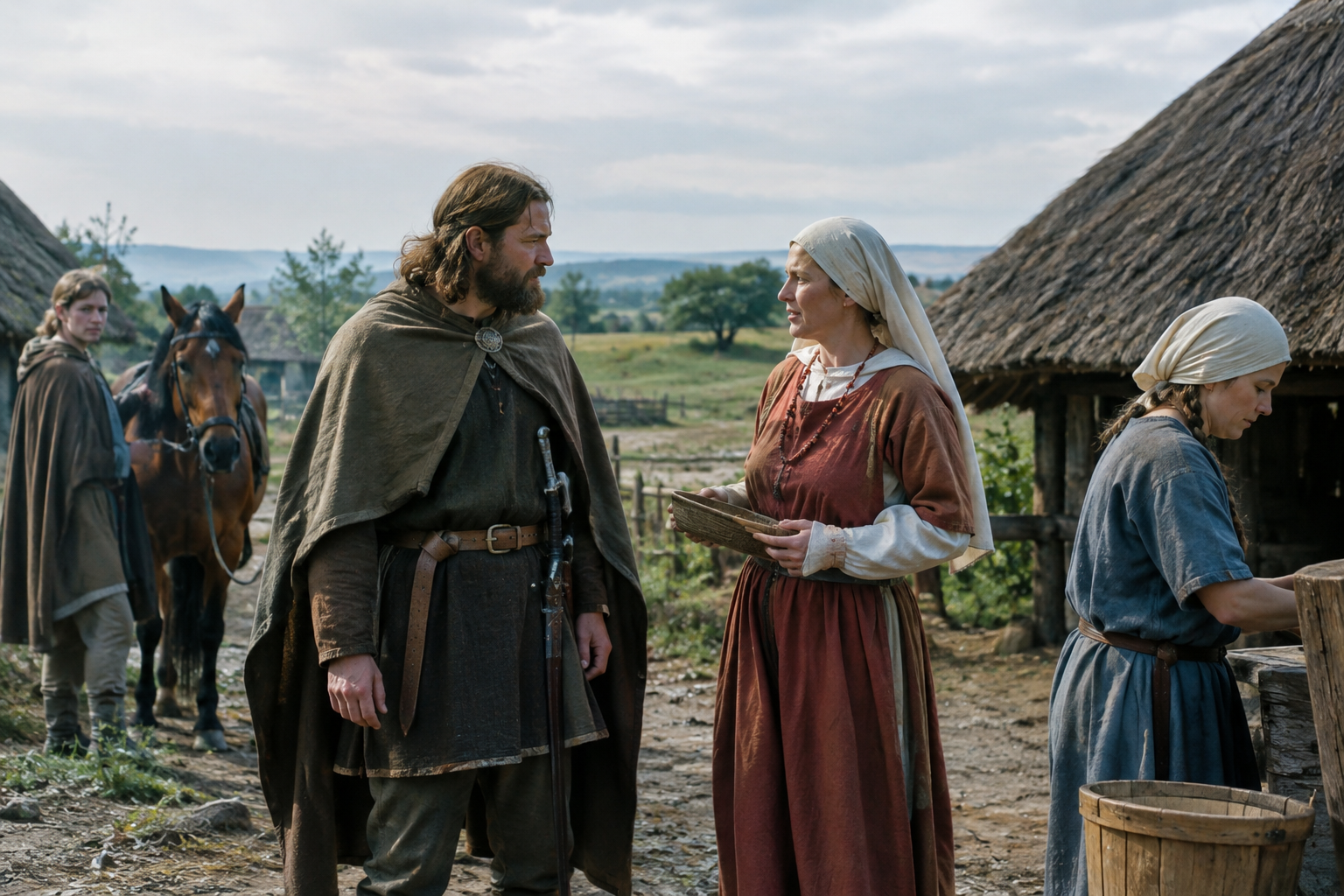
That matters because SGBN25 is not merely "a Sicilian sample." He belongs to the world of medieval western Sicily after the great political transformations of the island. By about AD 1250, Sicily had passed through Byzantine, Islamic, Norman, and Hohenstaufen phases. Administrative systems changed, elites changed, languages in use changed, and yet ordinary local life continued in towns, villages, cemeteries, and churches. A paternal lineage such as J2a1a1b3 fits neatly within what we would expect from such a place: not purity, not isolation, but continuity mixed with repeated arrivals and integrations.
Research published on medieval Sicilian populations has emphasized precisely that sort of complexity, and one relevant scientific study can be found here: https://royalsocietypublishing.org/doi/10.1098/rsos.240436. Even without forcing every detail onto one burial, the larger lesson is clear enough. Medieval Sicily was a population crossroads, and lineages like J2a1a1b3 help make that crossroads visible at the level of actual people.
If you were looking for a place where a J2-related paternal branch might surface in a medieval burial, Sicily would be one of the least surprising and most historically interesting candidates. From the Bronze Age onward, the island sat in the path of maritime networks linking the Aegean, southern Italy, the Levant, North Africa, and later the Islamic Mediterranean. Greek colonists, Phoenician and Punic communities, Roman settlers and soldiers, merchants, enslaved people, clerics, artisans, and administrators all passed through or settled there across different periods.
That does not mean any one J2a1a1b3 line can be assigned to one named migration. Archaeology is messier than that, and more honest too. But Sicily gives us the right sort of historical ecology for such a lineage: centuries of movement layered onto substantial local continuity. In other words, a medieval Sicilian man with J2a1a1b3 is not a puzzle that demands an exotic solution. He is exactly the sort of evidence one would expect from an island tied into the central Mediterranean's busiest human traffic.
The deeper island background is worth setting beside another MyTrueAncestry discussion, Paleogenomics of Ancient Italian Islands, which places Sicily and its neighbours in a longer genetic frame.
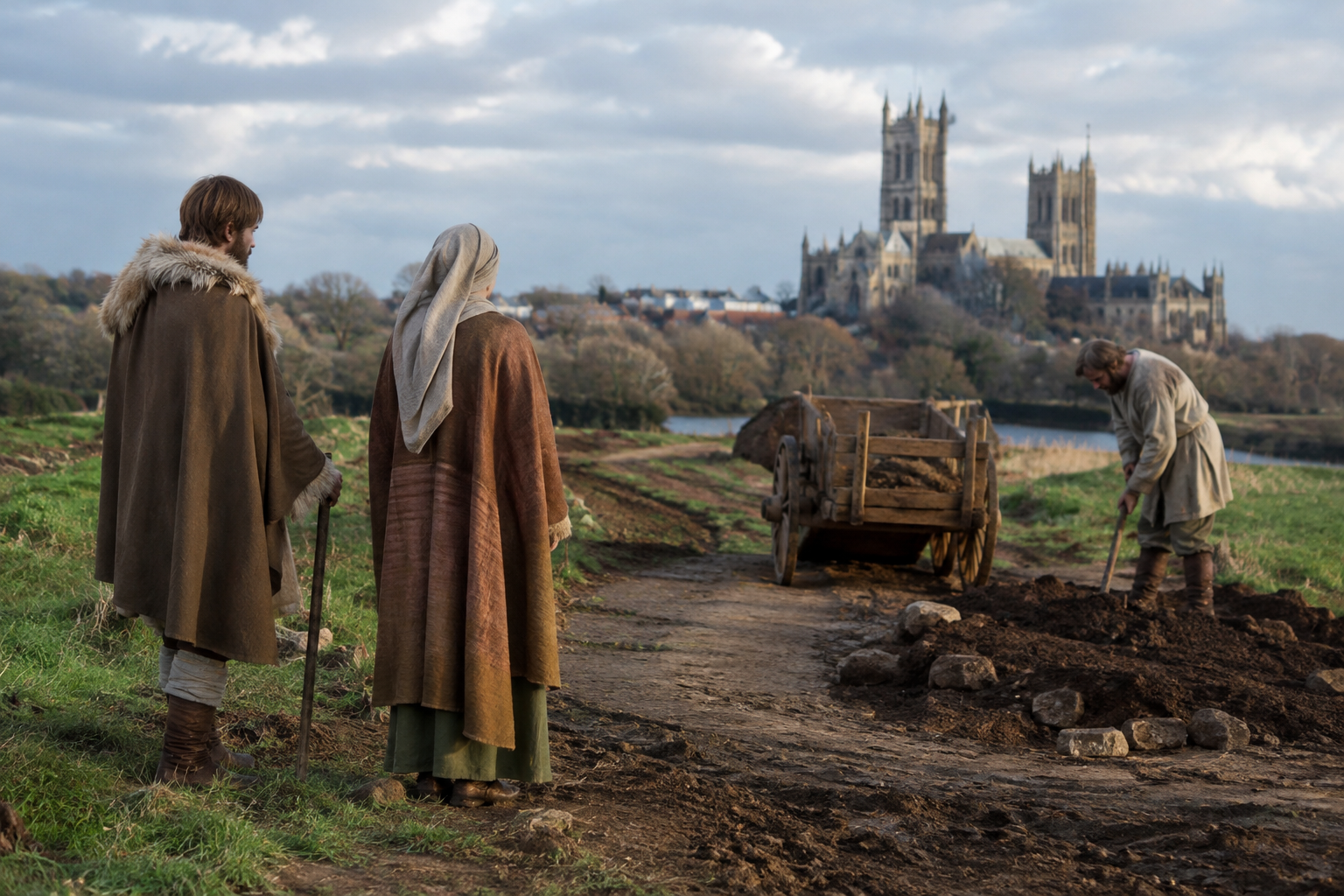
The date attached to SGBN25 is especially suggestive. Around AD 1250, Sicily was no longer under Muslim rule, and the great Norman takeover was already in the past. Yet it would be a mistake to imagine that conquest wiped the population clean and started again. Medieval states can change rulers far faster than populations change fathers, sons, and grandsons.
That is why a Y-DNA result from this period is so valuable. It reminds us that the medieval island under Latin Christian government still carried lineages shaped by older Mediterranean histories. The Norman and post-Norman centuries did not erase Sicily's Byzantine and Islamic-era human foundations; they governed them, taxed them, married into them, displaced some groups, and absorbed others. A paternal branch like J2a1a1b3 may therefore reflect continuity through political change as much as movement into Sicily from elsewhere.
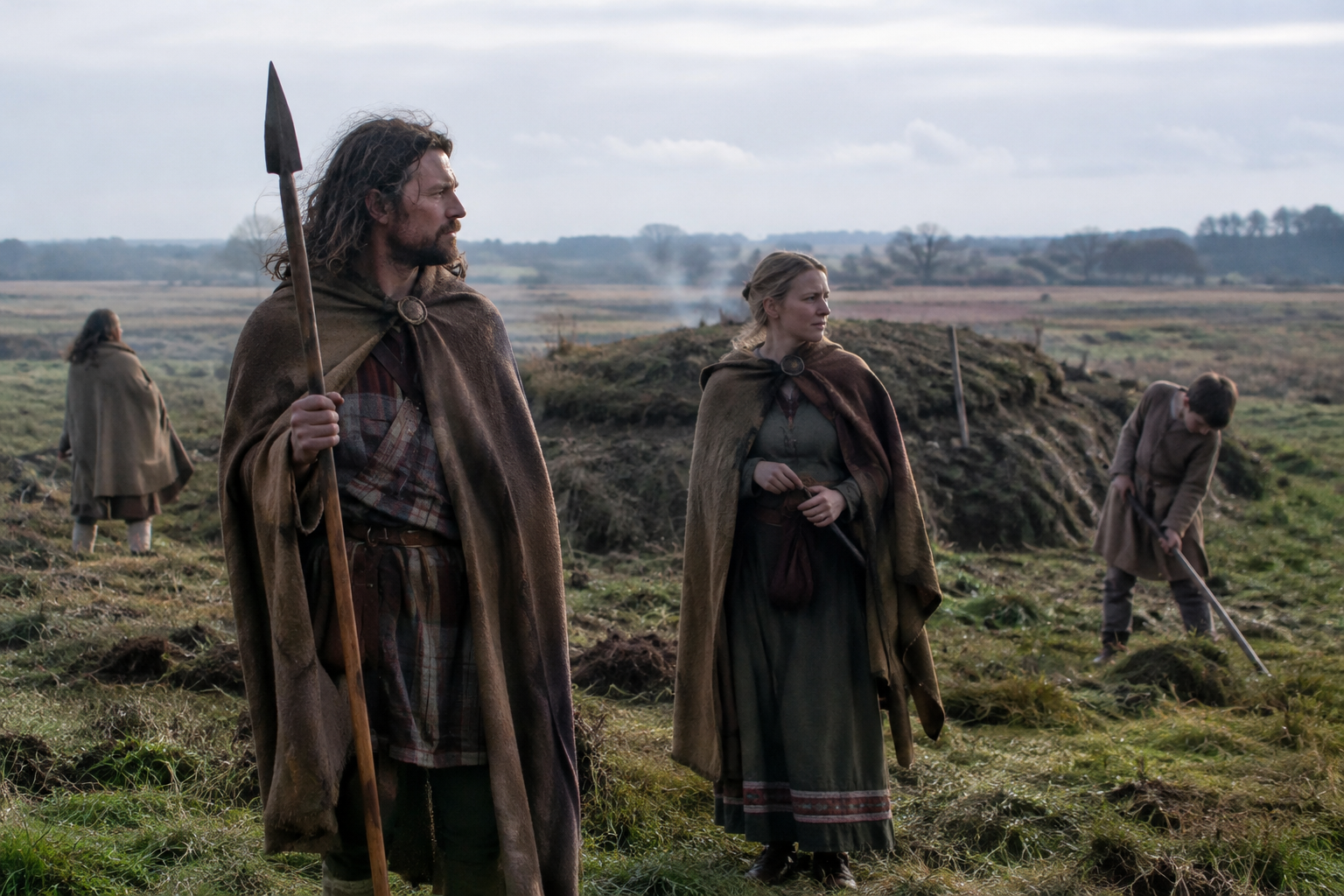
This is one of the most useful correctives offered by ancient DNA. Written history often privileges dynasties, wars, and official religion. Burials like SGBN25 restore the ordinary demographic truth underneath: islands are peopled not once, but repeatedly.
Western Sicily has long had a particularly entangled history. In antiquity it was a zone of interaction among indigenous communities, Greek colonies, and Phoenician-Punic centres. Later it was drawn into Roman, Byzantine, Arab-Islamic, Norman, and Swabian political worlds. A medieval cemetery in this region is therefore unlikely to represent a sealed-off lineage pool.
That wider western Sicilian story is also why comparisons with other Mediterranean-facing studies are useful. A related MyTrueAncestry article, Medieval Sicily's Multi-Faith Genetic History, speaks directly to the same broad environment: populations living through changes in political sovereignty while preserving evidence of older and overlapping ancestries.
There is also a wider southern Italian and insular context to keep in view. Sicily was never an isolated genetic box floating offshore. It was tied constantly to Calabria, Campania, Apulia, North Africa, and the eastern Mediterranean. That makes any medieval Sicilian Y-lineage part of a regional conversation, not merely a local curiosity.
For readers interested in how long-term population history in southern Italy can preserve older eastern Mediterranean links while also showing local continuity, Genetic History of Grecia Salentina's Greek-Speaking Community offers a useful comparison from another southern Italian setting.
For someone exploring haplogroup J2a1a1b3, the strongest point from the current evidence is not a grand claim of royal descent or a single dramatic migration. It is something more historically grounded. This paternal line is present in a documented medieval Sicilian individual, SGBN25, from Teatro di Segesta around AD 1250, placing it within one of the most connected societies in the medieval Mediterranean.
That makes J2a1a1b3 in this case a marker of participation in Sicily's long history of continuity, exchange, and layered settlement. If your own paternal ancestry falls on this branch, the most sensible historical image is not of one lone origin story, but of generations moving through the trading ports, upland towns, religious communities, and political changes of the central Mediterranean world.
Comments