Haplogroup J2a

– 6 min read


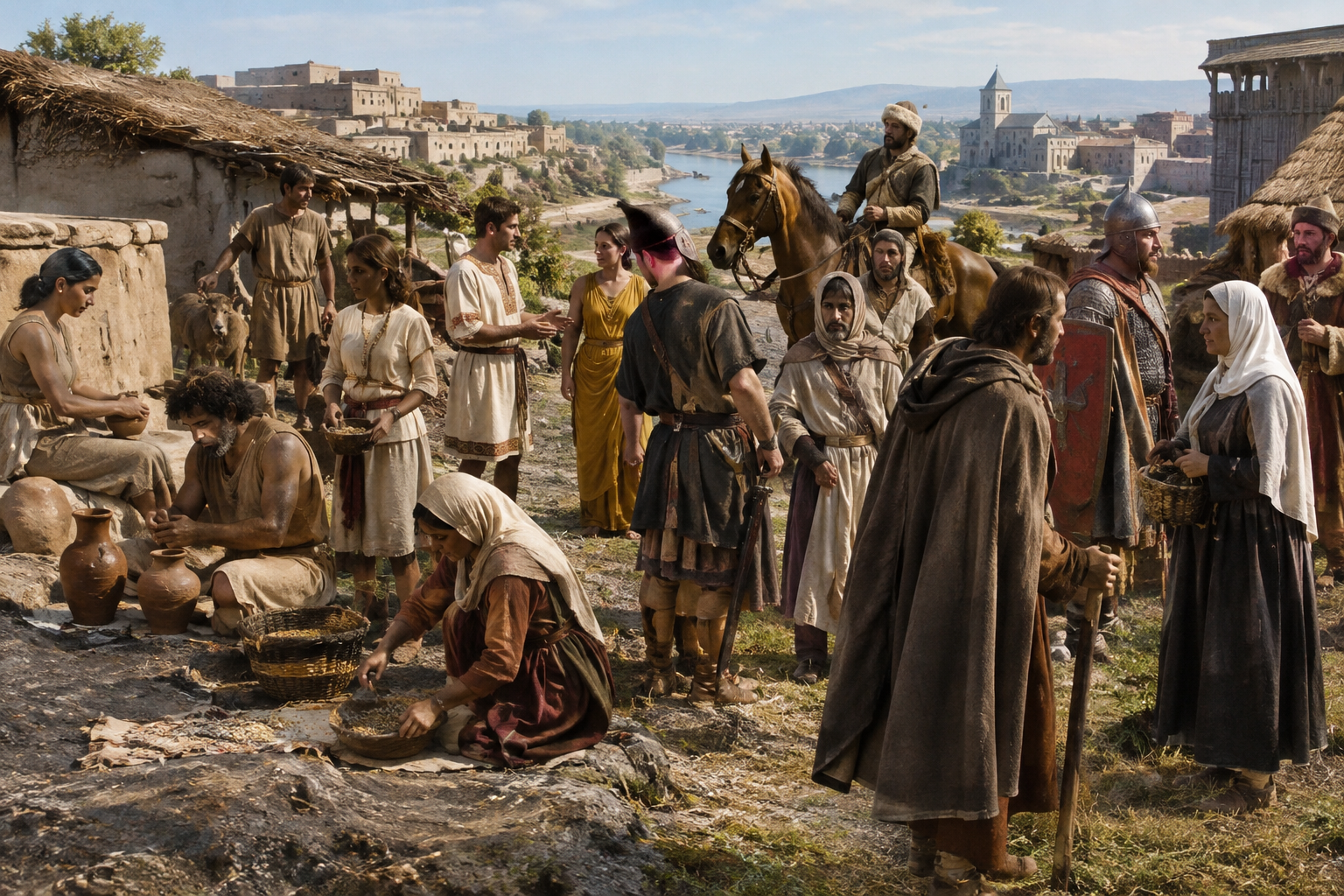
There are some Y-DNA haplogroups that seem to sit at the crossroads of ancient history, and J2a is one of them. It turns up again and again in places where some of the biggest changes in human history were underway: the first farming villages of the Near East, the early spread of agriculture into Europe, Bronze Age societies around the Mediterranean, and later populations linked by trade, empire, pilgrimage, and war. If you want a paternal lineage that takes you from Neolithic house floors in Anatolia to medieval hospital burials in England, J2a is hard to ignore.
As ever with Y-DNA, though, a note of caution is essential. A Y-chromosome haplogroup traces only one line of ancestry: your direct paternal line, father to father to father. It does not represent all of a person's ancestry, culture, language, or identity. Still, because that one paternal line can sometimes be followed across thousands of years in ancient DNA, it gives us a remarkable way to watch long-term male-line continuity, movement, and change.
J2 is a major branch of the wider Y-chromosome tree, and J2a is one of its best-known subdivisions. Broadly speaking, J2a is often associated with regions stretching across the Near East, Anatolia, the Caucasus, Iran, and the Mediterranean world. That does not mean every ancient person in those places belonged to J2a, nor that J2a belongs to one single people. What it does suggest is that this lineage became part of the demographic story of the very regions where early settled life, farming, metallurgy, and later urban civilization took shape.
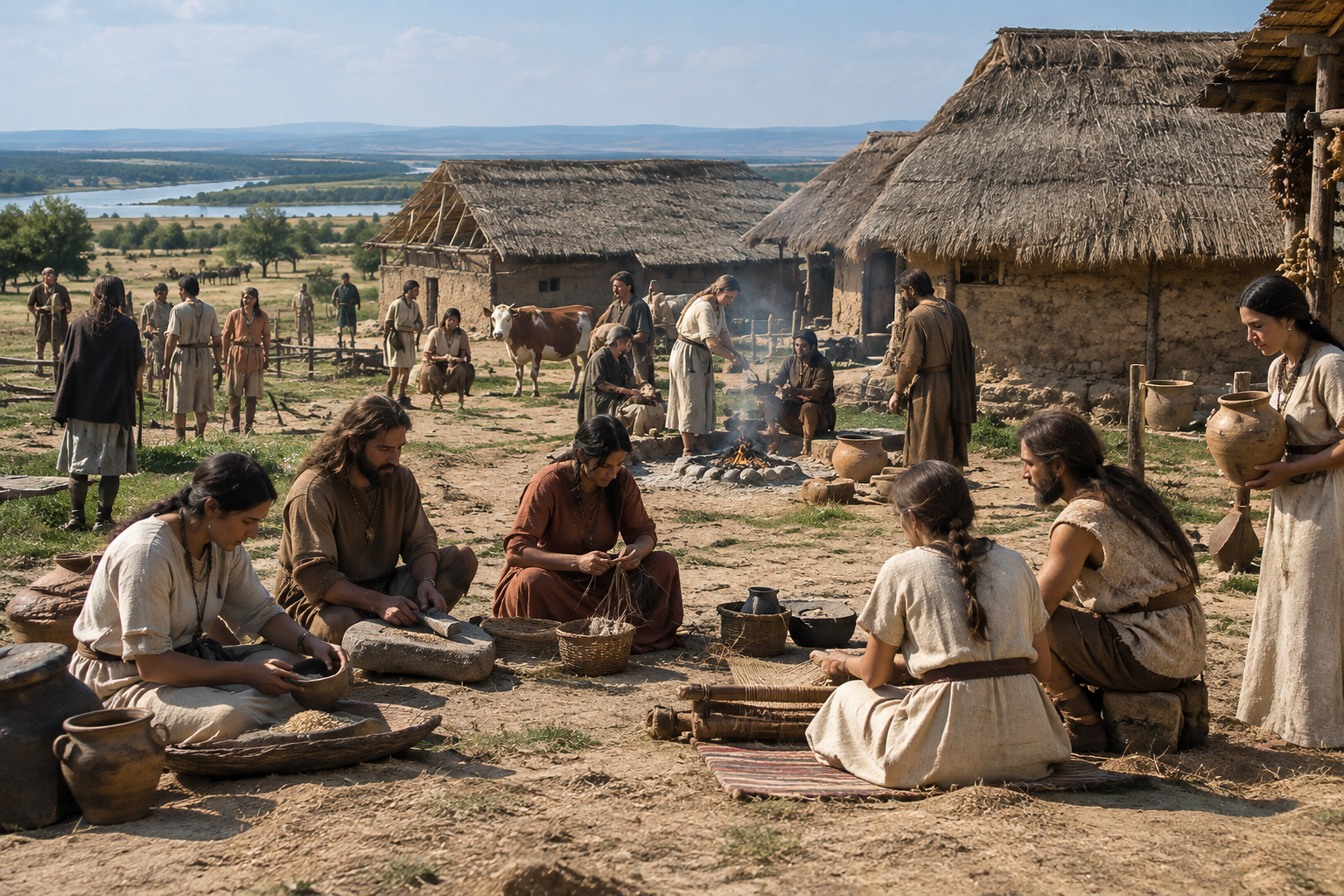
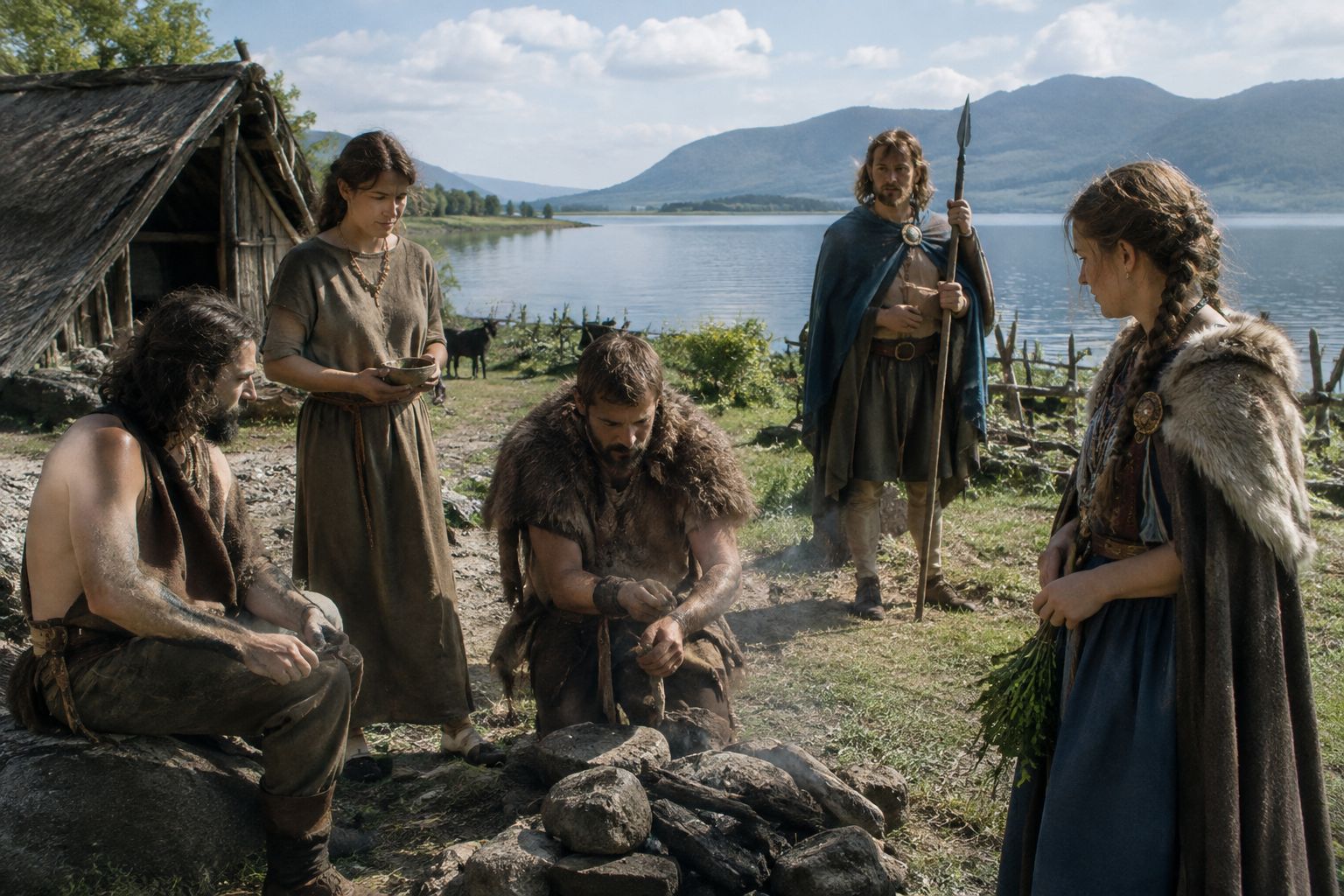
The ancient samples supplied here fit that larger picture rather well. One of the earliest is NEO816, from Neolithic Iran Tepe Guran, dated to 6750 BC. That is deep in the early farming world of the Zagros region, a landscape central to debates about how agriculture developed and spread. Another key sample is cch508 from Late Neolithic Anatolia Catalhoyuk, dated to 5000 BC. Catalhoyuk hardly needs introduction: a vast settlement of tightly packed mudbrick houses, entered from the roof, with burials beneath domestic floors. To find J2a in that context is a reminder that this paternal lineage was present in one of the classic centers of early settled life.
From Anatolia and Iran, the story then opens westward. Samples such as I5207 from Neolithic Austria Asparn Schletz dated to 5150 BC, and NEO143 from Ancient Hungary Gorzsa Cukormajor dated to 4675 BC, show that lines associated with J2a were also part of the early farming expansion into central Europe. Not every farmer who moved into Europe carried the same paternal lineage, of course. But these finds place J2a squarely in the world of Europe's first agricultural communities.
Explore the Neolithic Expansion
What makes J2a particularly interesting is that it does not remain confined to one early homeland in the evidence. By the Bronze Age, it appears across a much wider zone, which fits a world of increasingly dense contacts linking Anatolia, the Levant, the Aegean, Italy, and beyond.
Take MA2212, from Early Bronze Age II Anatolia Turkey Ovaoren, dated to 2625 BC. This is a reminder that J2a remained present in Anatolia long after the first Neolithic farmers. Then there is I10359 from Late Bronze Age Canaanite Megiddo, dated to 1570 BC. Megiddo was no backwater. It sat at a strategic point in the Levant, tied into Egyptian power, regional trade, and the political turmoil of the eastern Mediterranean. A J2a-associated paternal line here belongs to a world of chariots, city-states, and diplomatic networks.
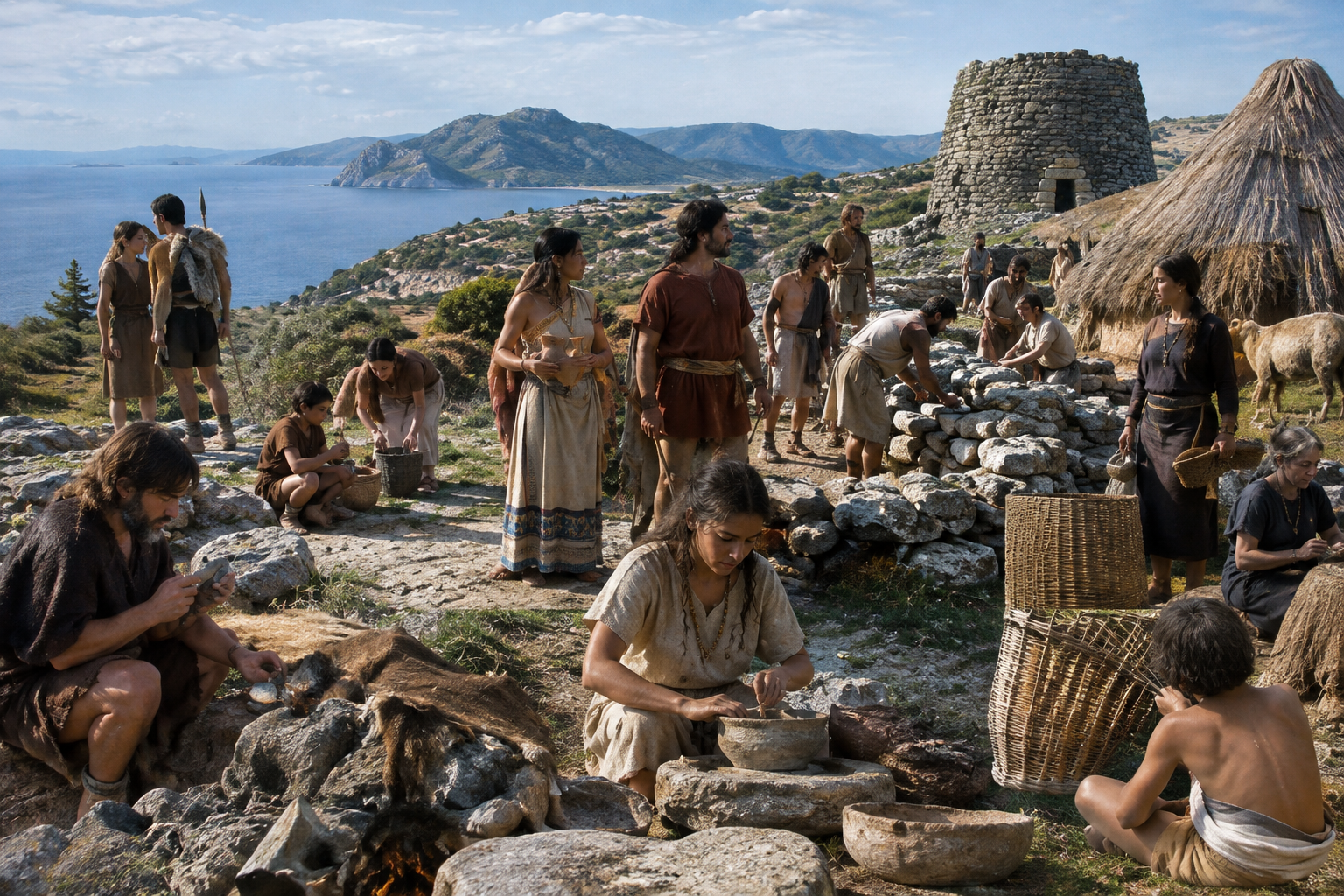
Further west, NEO828 from Bronze Age Southern Italy Gaudo, dated to 2796 BC, shows the lineage in prehistoric Italy. That matters because southern Italy was one of the great meeting zones of the Mediterranean, with influences arriving by sea as well as overland. J2a in this setting does not prove a single migration event, but it does fit a broader pattern in which eastern Mediterranean-linked paternal lines became part of Italian population history very early.
If you want to pursue that Italian angle further, MyTrueAncestry has several useful companion pieces on Mediterranean population history, including one on ancient Amiternum from Roman to early medieval Italy and another on Ancient Italian Islands. The broader point is that J2a often appears where maritime and overland exchange mattered.
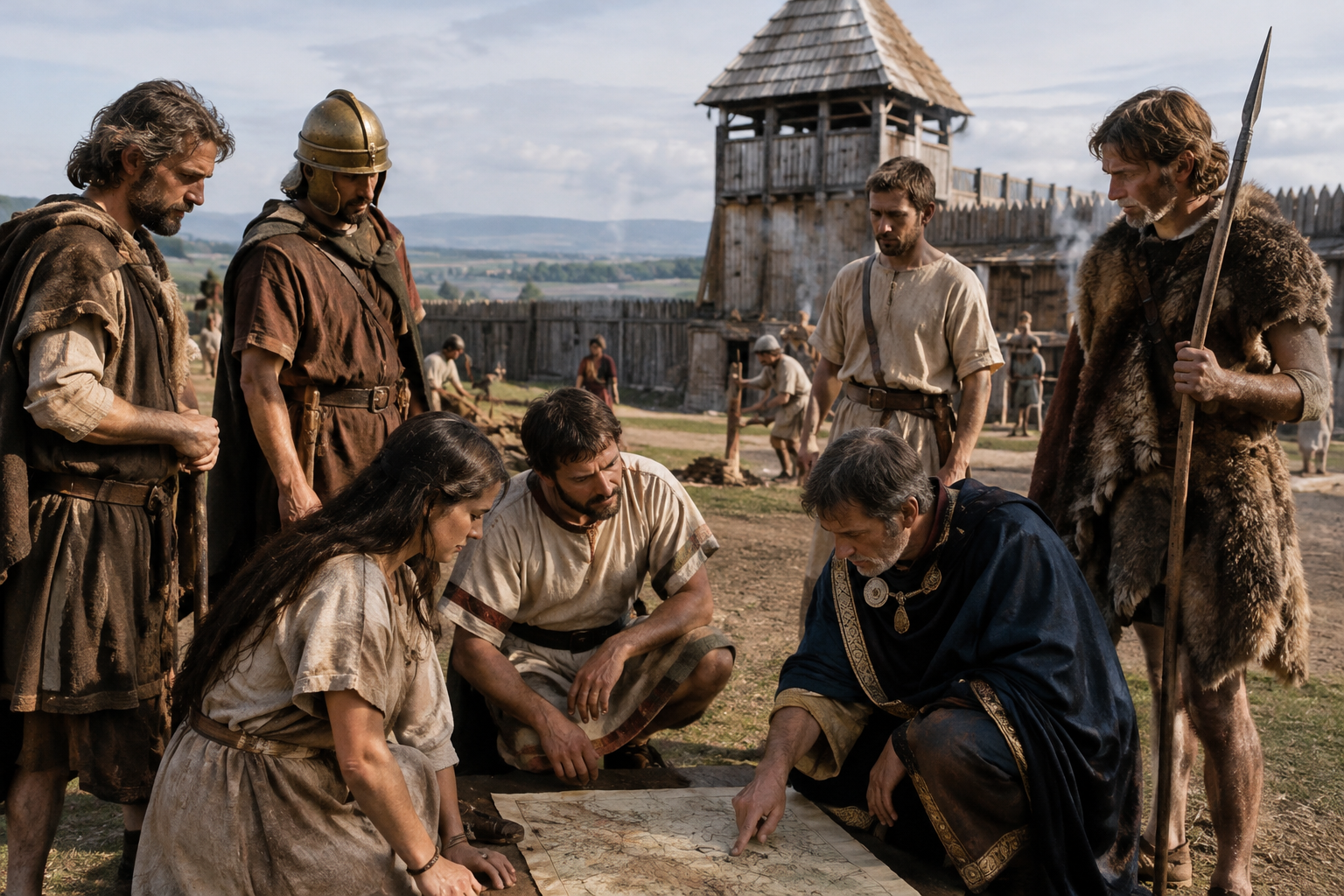
By Late Antiquity and the Middle Ages, the pattern becomes even more revealing. GYS050 from Late Antique Pannonia Arrabona Szechenyi Square Hungary, dated to 425 AD, places J2a in the Carpathian Basin during a time when the old Roman order was under enormous strain. Pannonia was one of those frontier regions where soldiers, traders, settlers, and refugees mixed in bewildering combinations. A haplogroup like J2a in that setting is a quiet reminder that male-line ancestry did not respect neat textbook boundaries between "Roman" and "barbarian."
The same is true further east. KKB001 from Medieval Nomad Karakaba Khazakhstan, dated to 850 AD, and SHK001 from Medieval Russia Shekshovo, dated to 1200 AD, show that J2a was also present in medieval populations far beyond the core Mediterranean. That does not make J2a a "steppe haplogroup" in any simple sense. Rather, it shows how lineages with deep roots in western Asia and the Mediterranean could travel, persist, and become part of very different historical societies over time.
Readers interested in these frontier zones may also want to compare this with MyTrueAncestry's coverage of Khazar Frontier Graves and Saltovo-Mayaki Diversity and Ancient DNA and Migrations in the Northern Black Sea Region. J2a belongs very comfortably in that wider conversation about mobility across Eurasia.
Perhaps the most charmingly unexpected sample in this set is ATP_PSN_18 from Medieval England Cambridge St Johns Hospital, dated to 1250 AD. Medieval hospitals were not hospitals in the modern sense alone; they were also religious and charitable institutions, caring for the poor, the sick, and travelers. Finding J2a in Cambridge reminds us that by the High Middle Ages this paternal lineage had long since become part of the human background of Europe, including places far from its older concentrations in Anatolia, Iran, and the Levant.
That does not mean a man buried in Cambridge had a recent eastern Mediterranean origin. Medieval England was already a product of many earlier layers of migration, trade, pilgrimage, and dynastic movement. A broad haplogroup like J2a can persist for millennia and surface in very different social settings. It gives us context, not a complete biography.
The supplied noble-family field here is effectively absent, and that is worth saying plainly rather than trying to bluff past it. Without specific family names, dynasties, or castle details attached to this article input, it would be irresponsible to assign J2a to any particular noble house. That is exactly the sort of leap ancient DNA should teach us to avoid.
Still, the historical setting matters. By the medieval and early modern periods, paternal lineages such as J2a were distributed across many parts of Europe and western Asia, so it is entirely possible for men from noble, urban, clerical, mercantile, or rural backgrounds to have belonged to it. But a castle is not a genetic test, and a surname is not a haplogroup. Even when a house later becomes associated with a Y-DNA lineage, that does not prove that every documented bearer of the name carried the same paternal line.
This is one of the most useful lessons in genetic history. Written genealogy follows titles, inheritances, marriages, and documents. Y-DNA follows one biological line. Sometimes the two align beautifully; sometimes they do not. That gap between record and biology is not a flaw. It is where some of the most interesting history lies.
Explore Roman and Medieval Britain
Put all this together and J2a begins to look less like the badge of one people and more like a witness to long-term connectivity. It appears in NEO816 in Neolithic Iran, in cch508 at Catalhoyuk, in early farming Europe through I5207 and NEO143, in Bronze Age Anatolia, Canaan, and southern Italy through MA2212, I10359, and NEO828, and later in Late Antique Hungary and medieval contexts from England to Russia and Kazakhstan through GYS050, ATP_PSN_18, SHK001, and KKB001.
That is not a single tidy migration story. It is something better: evidence that one paternal lineage could be carried by early farmers, Bronze Age townsmen, frontier populations, medieval patients, and mobile Eurasian communities alike. Ancient DNA lets us see that continuity and dispersion in a way chronicles never could.
If your own Y-DNA falls under J2a, that does not make you a Canaanite, a Catalhoyuk villager, or a medieval man from Cambridge. But it may place your direct paternal line within one of the most historically revealing lineages in western Eurasia. And that is a fascinating starting point.
Upload your DNA to MyTrueAncestry to explore whether your results show similarities to ancient individuals like cch508, NEO816, or ATP_PSN_18, and to discover how archaeology and genetics together can shed light on your past. These matches do not by themselves prove direct descent or noble ancestry, but they can open an extraordinary window onto the ancient world behind your family history.
Comments