Haplogroup J1a2a1b1

– 5 min read


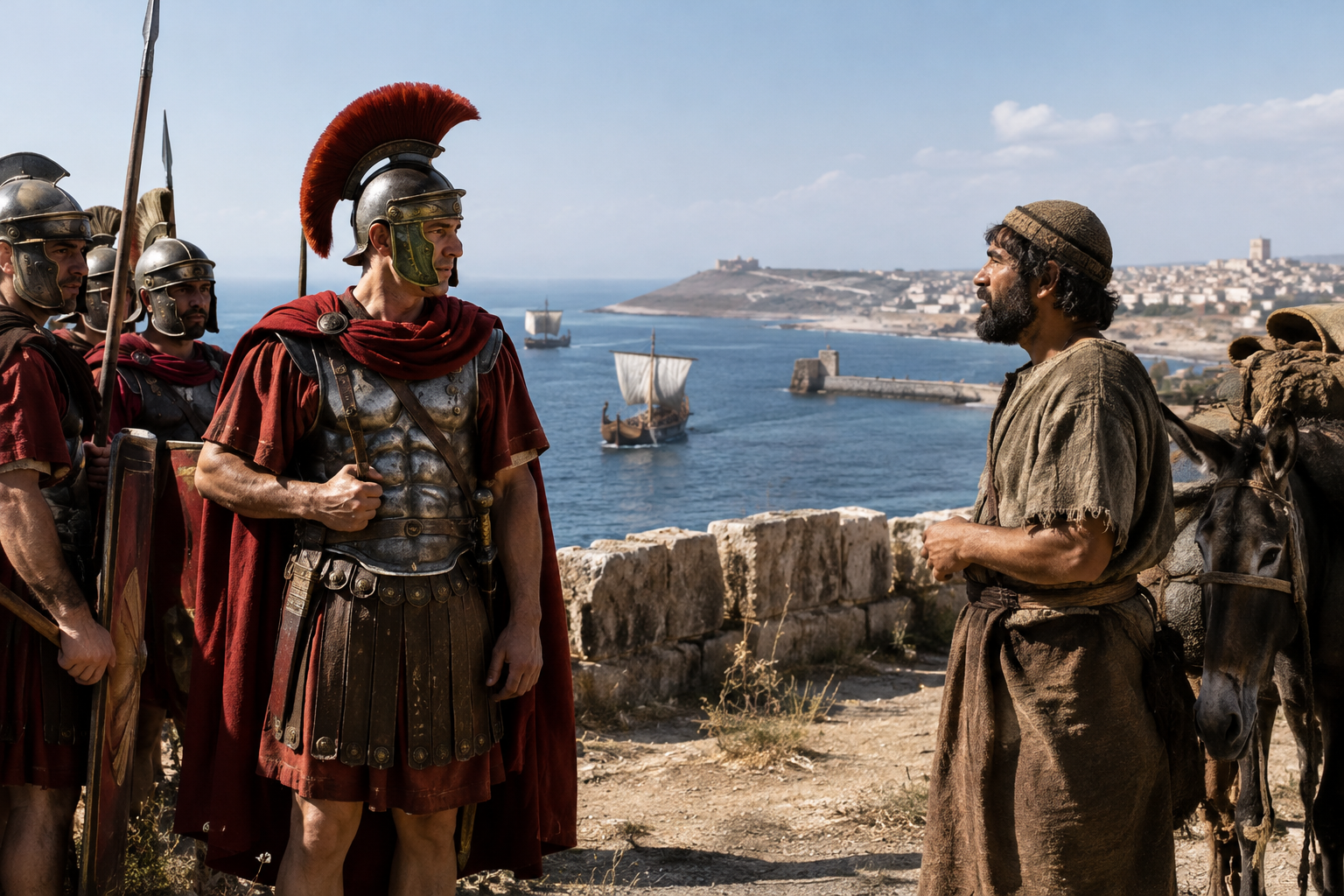
In around AD 218, at Marsala in western Sicily, one man from Imperial Roman Lilybaeum was buried carrying a paternal line identified here as J1a2a1b1. He appears in the ancient DNA record as I7265. That is a very small detail on its own, just one Y-chromosome line in one ancient individual, but the setting makes it unusually interesting: Marsala was not an inland village at the edge of empire, but a place shaped for centuries by movement across the central Mediterranean.
The point is worth dwelling on, because Y-DNA follows only a direct paternal line. It does not define a whole person or a whole population. Yet when a branch like J1a2a1b1 turns up in both Roman Sicily and earlier southeast Anatolia, it gives us a glimpse of male-line continuity and mobility in regions linked by trade, empire, settlement, and war. In this case, the evidence is sparse but evocative, and it belongs squarely to the historical world of the eastern and central Mediterranean.
Ancient Marsala stands over Lilybaeum, a city with a formidable past. Founded by Phoenicians after the fall of Motya, then absorbed into the Roman world, Lilybaeum was one of the great hinge-points of Sicily. By the Imperial period it was thoroughly Roman in political terms, but its deeper history had never been simple. Punic, Greek, Italian, and wider Mediterranean connections were all layered into the life of the city.
That is what makes sample I7265 so suggestive. A paternal line classified as J1a2a1b1 in Roman-era western Sicily does not by itself prove Phoenician descent, Anatolian migration, or any single ethnic story. But it does fit the broader reality that Roman Sicily sat at the meeting place of older eastern Mediterranean and local island histories. A recent ancient DNA study on Italian island populations helps frame that larger background, showing just how mixed and regionally varied these island communities could be across time: research on ancient Italian islands.
For readers with this haplogroup, the Sicilian sample is important not because it offers a neat badge of identity, but because it places this paternal branch in a cosmopolitan Roman port landscape. Men carrying related lines could have arrived generations earlier or been part of much older local communities already shaped by Mediterranean exchange.
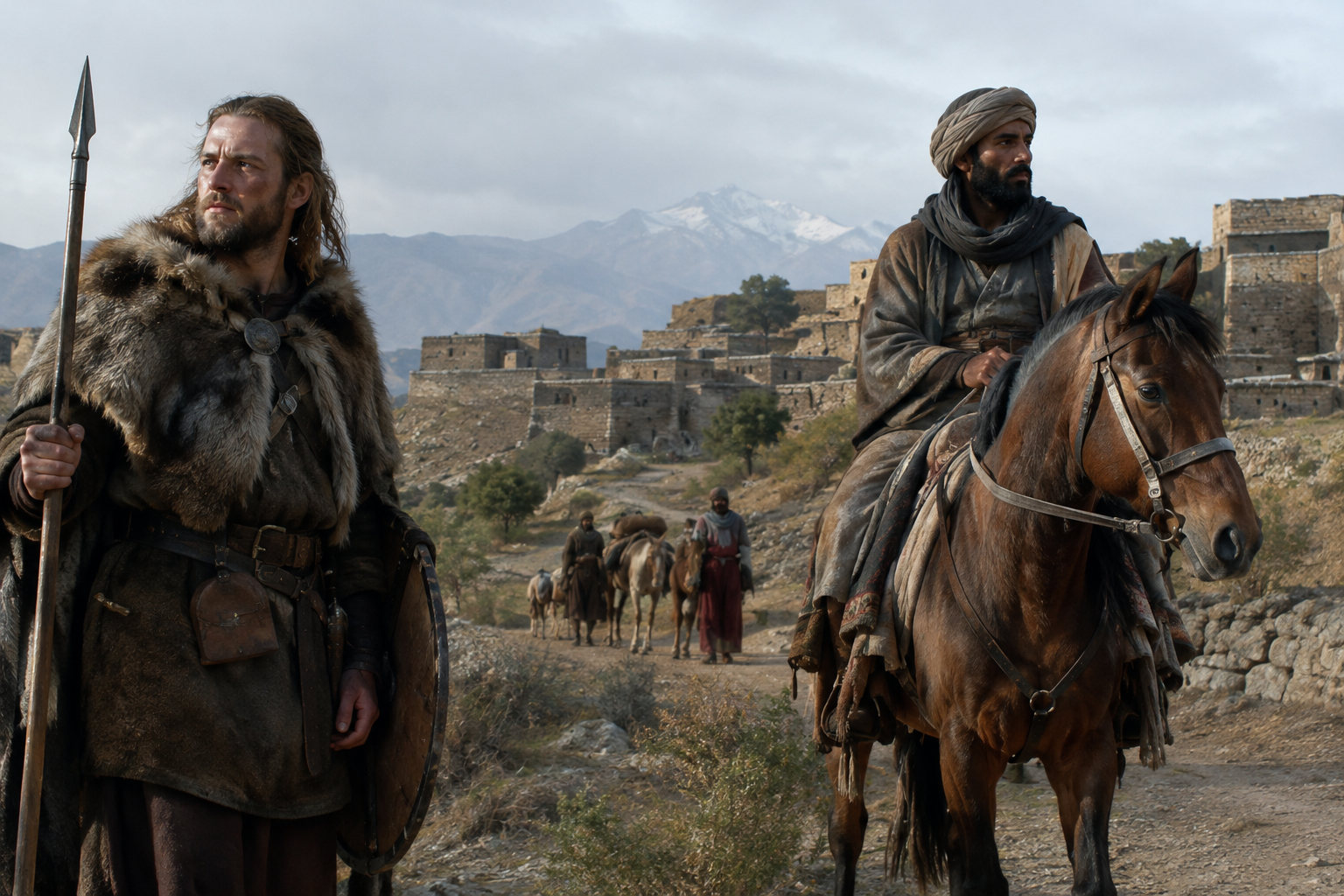
The second ancient individual linked here is older and comes from a very different political world. I14733, dated to around 470 BC, was found at Kuriki Hoyuk in present-day Batman province in southeast Anatolia. That is an Iron Age landscape of frontier zones, imperial influence, and deep local continuity, where Anatolia and Upper Mesopotamia meet.
This matters because southeast Anatolia is one of those regions where categories in textbooks start to blur. Was a community "Anatolian"? "Mesopotamian"? Under Achaemenid influence? All of those labels may be useful, but none of them is the Y-chromosome. The presence of a J1a2a1b1-associated line in this setting tells us only one very specific thing: this paternal branch was present in Iron Age southeast Anatolia centuries before the Roman sample from Sicily.
That earlier appearance gives the haplogroup a firmer archaeological footing in the eastern Mediterranean world. It does not prove that the Sicilian man descended directly from this Anatolian individual, nor that the branch moved in one simple line westward. But it does show that this paternal lineage belonged to the human networks of the Near East and Anatolia before it appears in a Roman-period island context.
With only two ancient examples provided here, caution is not just sensible; it is essential. J1 is a broad Y-DNA family with a long and complicated history across western Asia and adjoining regions. J1a2a1b1 is a much narrower branch, and we should not casually project the full story of the larger haplogroup onto this exact subclade.
What the evidence does support is narrower and more useful. First, a lineage associated with J1a2a1b1 is documented in Iron Age southeast Anatolia. Second, it is also documented in Imperial Roman Sicily. Those two appearances, separated by about seven centuries and a considerable stretch of sea, fit a world in which male lines moved through connected Mediterranean corridors rather than staying neatly within later national or ethnic boundaries.
That should not surprise anyone who knows the archaeology. Sicily in particular drew people from every direction. Roman rule did not erase older Punic or Greek foundations; it added another layer. In the same spirit, an Anatolian Iron Age burial need not belong to some tidy, isolated population either. These were historical landscapes of circulation.
One temptation in popular genetics is to look for a single origin story: one migration, one tribe, one homeland, one answer. Ancient DNA is often much more awkward than that, which is precisely why it is so valuable. A paternal branch like J1a2a1b1 appearing in Anatolia and later Sicily does not point to a single dramatic episode. It points instead to the ordinary untidiness of Mediterranean history.
Trade routes, military service, resettlement, slavery, marriage, and urban migration all moved people around long before the modern age. Western Sicily had especially deep eastern links, first through Phoenician and Punic networks, then through the broader structures of the Roman Empire. Southeast Anatolia, meanwhile, sat in one of Eurasia's great contact zones. A wider ancient DNA study of the Mediterranean and adjacent regions has helped underline that such mobility was not exceptional but structural to life in antiquity: research on ancient Mediterranean population change.
Medieval Sicily's multi-faith DNA
That broader picture also helps explain why one Roman Sicilian sample cannot be boxed into one cultural label. In a place like Lilybaeum, ancestry could be local, inherited, recent, mixed, or all of those at once. The Y-chromosome gives us a line of fathers; archaeology reminds us those fathers lived in busy, entangled societies.
Sicily is especially good at exposing lazy assumptions. It has often been written about as if one wave of newcomers simply replaced another: Phoenicians, Greeks, Romans, Arabs, Normans. The archaeology says otherwise. Each new political order met populations already shaped by earlier arrivals, older communities, and regional survival.
That is why I7265 matters beyond being just one Roman-era data point. He belongs to a setting where lineages from different parts of the Mediterranean could persist side by side. If your paternal ancestry falls under J1a2a1b1, this sample does not tell you that your line is "Roman" or "Sicilian" in any exclusive sense. What it does offer is a solid example of this branch being present in a central Mediterranean population during the high Roman period.
The most distinctive thing about J1a2a1b1 in this evidence is not a single birthplace or dynasty, but a pattern of presence across connected Mediterranean worlds: Iron Age southeast Anatolia and Imperial Roman Sicily. That is a historically meaningful range. It suggests that this paternal branch belonged to the web of populations linking Anatolia, the Near East, and the central Mediterranean long before modern identities existed.
For someone researching this haplogroup today, that is the useful lesson. J1a2a1b1 is not a shortcut to one ethnicity, but it may place your direct paternal line within some of the oldest documented corridors of Mediterranean movement and exchange.



Comments