Haplogroup R1b1a1b1a1a1c2b2a1b6

– 4 min read


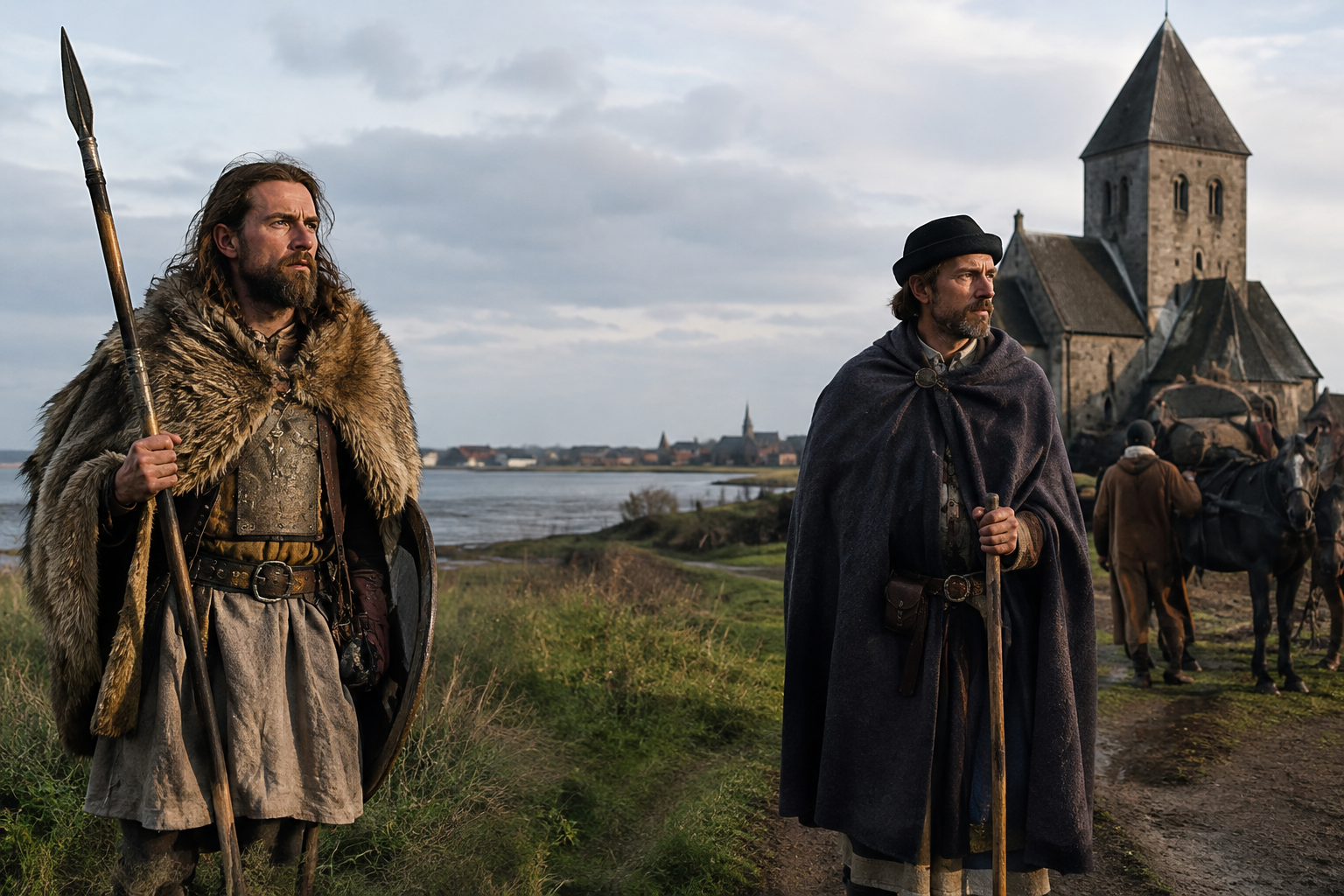
At Obermollern in central Germany, one man from a cemetery associated with the Thuringii stands out in an unexpected way. Sample OBM007, dated to around AD 500, belongs to the Y-DNA line reported here as R1b1a1b1a1a1c2b2a1b6 - an extremely narrow paternal branch that appears in the record not as a grand prehistoric phenomenon, but as a quietly traceable male line moving through the unsettled centuries after Rome.
That is what makes this haplogroup interesting. It is part of the much larger R1b family, a major Y-chromosome lineage across western Europe, but this exact subclade is far more specific. Y-DNA follows one direct paternal line only, so it does not define a person's whole ancestry. What it can do, when ancient samples turn up in good archaeological context, is place one male-line branch inside real historical communities. In this case, the branch appears in an early medieval Thuringian setting and again several centuries later in the northern Netherlands, in sample GRO016 from Groningen, dated around AD 1090.
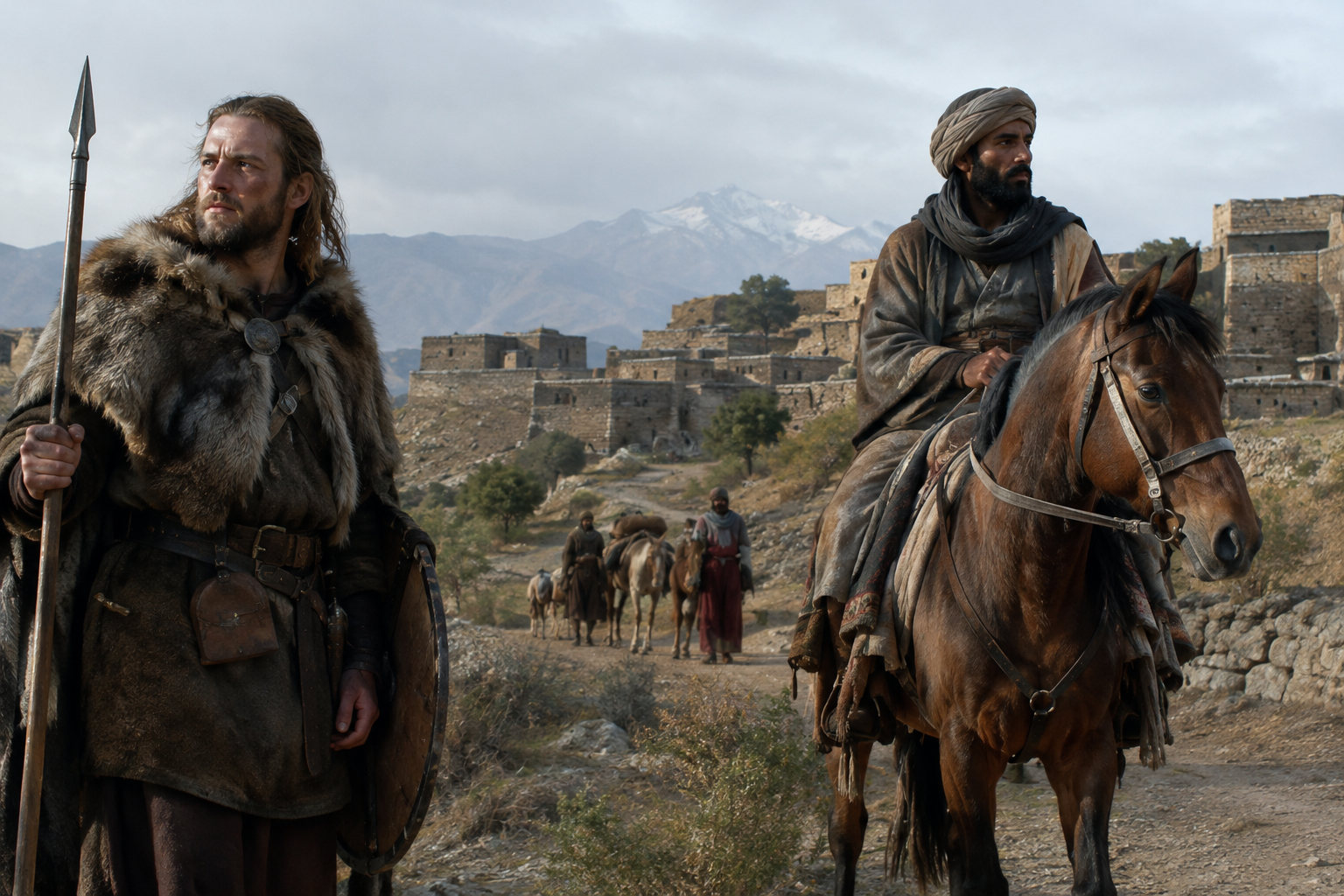
The cemetery label attached to OBM007 places him in the orbit of the Thuringii, a people known from the post-Roman centuries in central Germany. Around AD 500, this was a period of political reassembly: Roman authority had collapsed in the west, regional kingdoms were forming, and communities were negotiating new loyalties while still living amid the material and demographic legacy of the late empire.
That setting matters more than any romantic image of a "tribe." Archaeology and ancient DNA increasingly show that early medieval populations were not sealed ethnic blocks. A paternal line like R1b1a1b1a1a1c2b2a1b6 appearing in Obermollern does not prove a timeless Thuringian essence; it shows that this male line was present among people living in a Thuringian cultural and political landscape at the start of the Migration Period world.
An ancient DNA project associated with these materials can be traced through this research archive entry, which links the genetic work to the wider study of early medieval individuals from the region. Even with sparse public-facing detail for OBM007 itself, the larger significance is clear enough: this is not a lineage floating in abstraction, but one anchored to a real burial community in central Europe at a historically charged moment.
With very long haplogroup names, there is a temptation to overread precision. The wider R1b family has a vast and complex history stretching across many regions and periods, but that does not mean every tiny downstream branch shares the same story in any simple way. For R1b1a1b1a1a1c2b2a1b6, the safer approach is to stay close to the evidence: two medieval-era occurrences in north-central Europe, separated by roughly six centuries and found in different historical settings.
That kind of pattern is still useful. It suggests a paternal line with continuity inside the broader North Sea and central European zone rather than a one-off appearance. Yet continuity here should be understood socially as well as biologically. Male lines persist through ordinary generations - farmers, townsmen, retainers, migrants, converts, husbands arriving from elsewhere, sons staying local - and the historical importance lies precisely in that mixture of stability and movement.
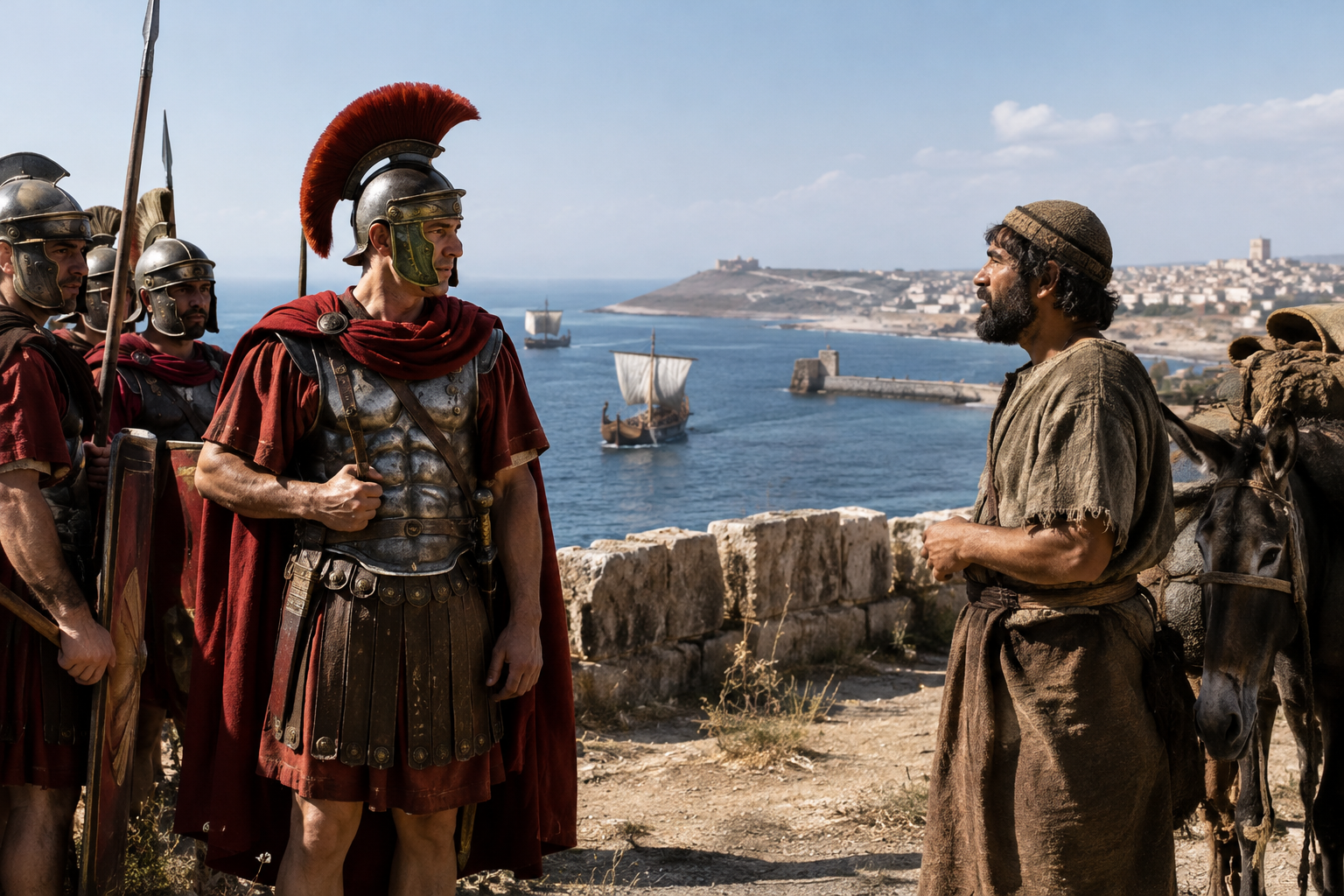
The second ancient sample, GRO016, comes from Groningen in the Netherlands and is dated to around AD 1090, squarely in the Carolingian-afterlife world of the high Middle Ages. By then the political map had changed utterly from the age of the Thuringii. Kingdoms had hardened into principalities and counties, churches structured daily life more deeply, and the North Sea littoral had become a zone of trade, shipping, and dense local identities.
Here again, the lineage appears not in a legendary king but in an archaeological individual. That is often more revealing. Groningen in this period belonged to a networked maritime region tied to Frisian, Saxon, Frankish, and broader North Sea currents. A Y-line found there may reflect local continuity, regional movement, or the ordinary reshuffling of medieval families over generations. What it does show is that the branch associated with R1b1a1b1a1a1c2b2a1b6 was still present in the Low Countries long after the post-Roman world of Obermollern had passed.
Research on early medieval and medieval population formation in northwestern Europe has repeatedly shown how such regions were shaped by both local persistence and incoming ancestry. One study often cited in this broader context is The Anglo-Saxon migration and the formation of the early English gene pool. It is not evidence specifically for GRO016, but it helps frame the wider North Sea world in which male-line branches could spread, persist, and blend across coastal communities.
Taken together, OBM007 and GRO016 create a small but suggestive map. One point lies in inland central Germany around AD 500, amid the fractured successor world of Rome. The other lies in the northern Netherlands around AD 1090, in a society shaped by medieval lordship, church institutions, and coastal exchange. The same reported paternal branch appears in both.
That does not give us a neat migration arrow from one grave to the other. History is rarely so courteous. But it does place this male line within the broad corridor linking the Elbe, central German lands, the lower Rhine basin, and the North Sea coast - one of the great connective zones of early medieval Europe. Armies moved there, but so did marriages, seasonal labor, monastic contacts, traders, craftsmen, and families whose names are lost even when their DNA survives.
There is also a useful corrective here to older historical habits. Earlier scholarship often tried to match every burial population to a named people as if labels such as Thuringian, Saxon, or Frisian were biologically tidy categories. Ancient DNA has made that harder to sustain. The paternal line in OBM007 may be real and specific, but its historical meaning lies in how it sits inside communities that were already mixed, adaptive, and politically changing.
For someone researching this haplogroup today, the value of these ancient matches is not that they promise descent from a famous house. There is no need to dress the evidence up in borrowed heraldry. The real interest is more archaeological: this branch is documented in men living in two historically important northern European settings, one in the immediate post-Roman centuries and one in the mature medieval Low Countries.
That gives R1b1a1b1a1a1c2b2a1b6 a distinctly early medieval and northwestern European flavor in the present evidence. It suggests a paternal line that belonged to the ordinary historical fabric of the region - surviving changes in kingdoms, identities, and languages while remaining traceable through ancient remains. As more medieval burials are studied, this sort of narrow branch may yet acquire a sharper map. For now, its strongest story is one of durable male-line continuity across the shifting world between Thuringia and the North Sea.

Comments