Haplogroup J1a2a1a2d2b2b2c4b2

– 5 min read


At Nemrik in northern Iraq, one Late Bronze Age man dated to around 1350 BC appears in the record as sample I6441. On its own, that might sound like a very small clue. But for the Y-DNA haplogroup J1a2a1a2d2b2b2c4b2, it is exactly the sort of clue that matters: a direct paternal line turning up in Mesopotamia at a time when the region was tied into empires, caravan routes, and long-settled farming communities.
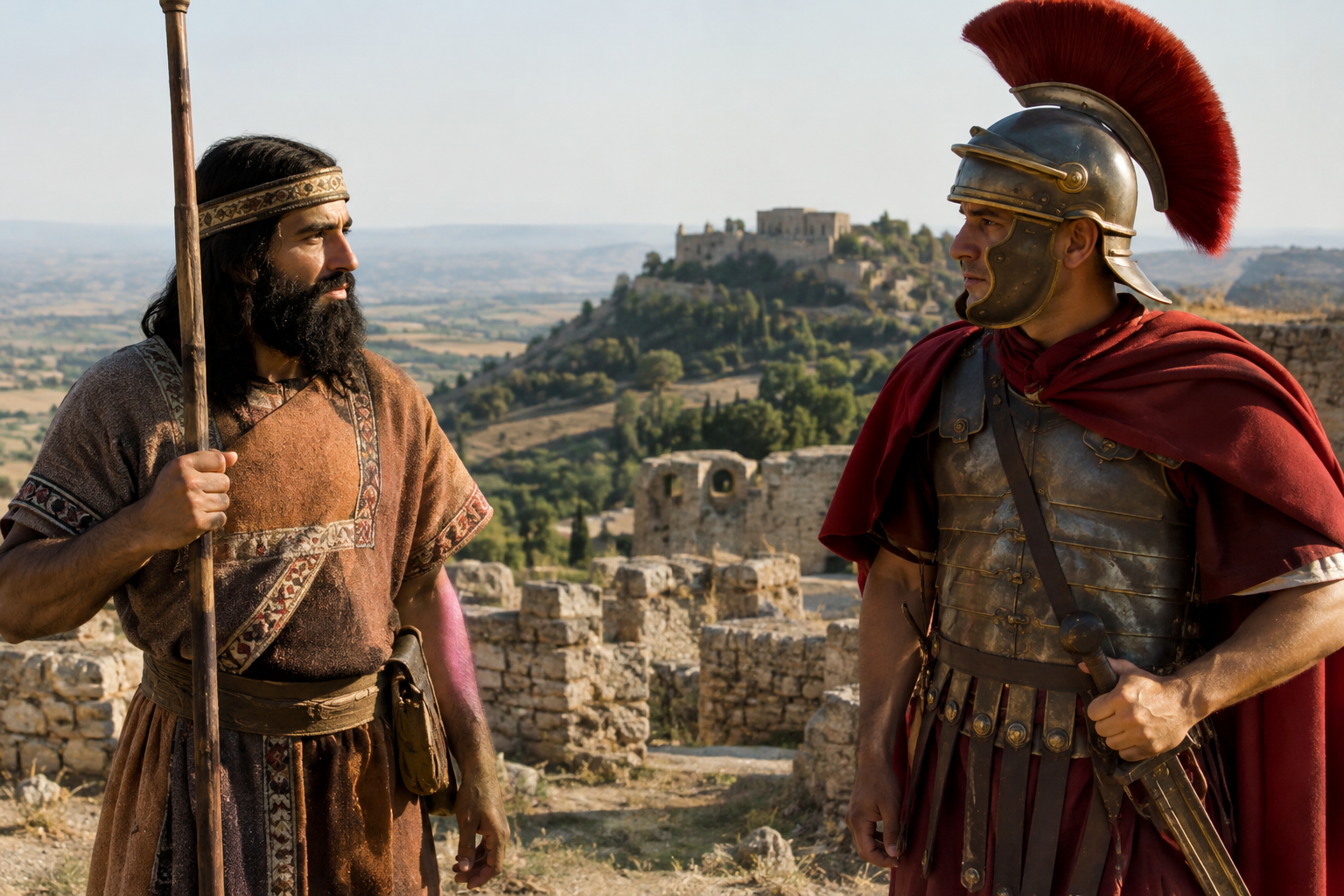
The second ancient pointer is very different in setting but just as interesting. Sample R1547, described as an Amorite-period lineage found in Roman Empire-era Monterotondo and dated to around AD 165, places this paternal branch in central Italy in the imperial world. That does not mean one man in Iraq was the ancestor of one man in Roman Italy, nor that Y-DNA tells us a person's whole ancestry. It does mean that this paternal line, or a closely related branch associated with it, appears in two historical landscapes linked by centuries of movement across the Near East and Mediterranean.
J1a2a1a2d2b2b2c4b2 is a very narrow terminal branch name, far more specific than the broader haplogroup J1. That distinction matters. Broad J1 lineages have a deep history across parts of West Asia, the Levant, Arabia, and neighboring regions, but it would be careless to project the full spread of J1 onto this exact subclade without direct evidence.
What the ancient samples do suggest is a paternal thread with a credible place in western Asian history, and one that later appears in a Roman imperial context. In practice, that is how ancient Y-DNA often works best: not as a badge of ethnicity, but as a way of spotting continuity, mobility, and occasional long-distance connections between historical populations.
A major ancient DNA study of the broader region has helped reshape discussion of population change in Mesopotamia and adjacent lands, even when individual subclades remain sparsely sampled in publication summaries. For readers following the Mesopotamian angle, research on Bronze and Iron Age populations in and around this world can be found here: https://www.science.org/doi/10.1126/science.abm4247.
Bronze and Iron Age Mesopotamia
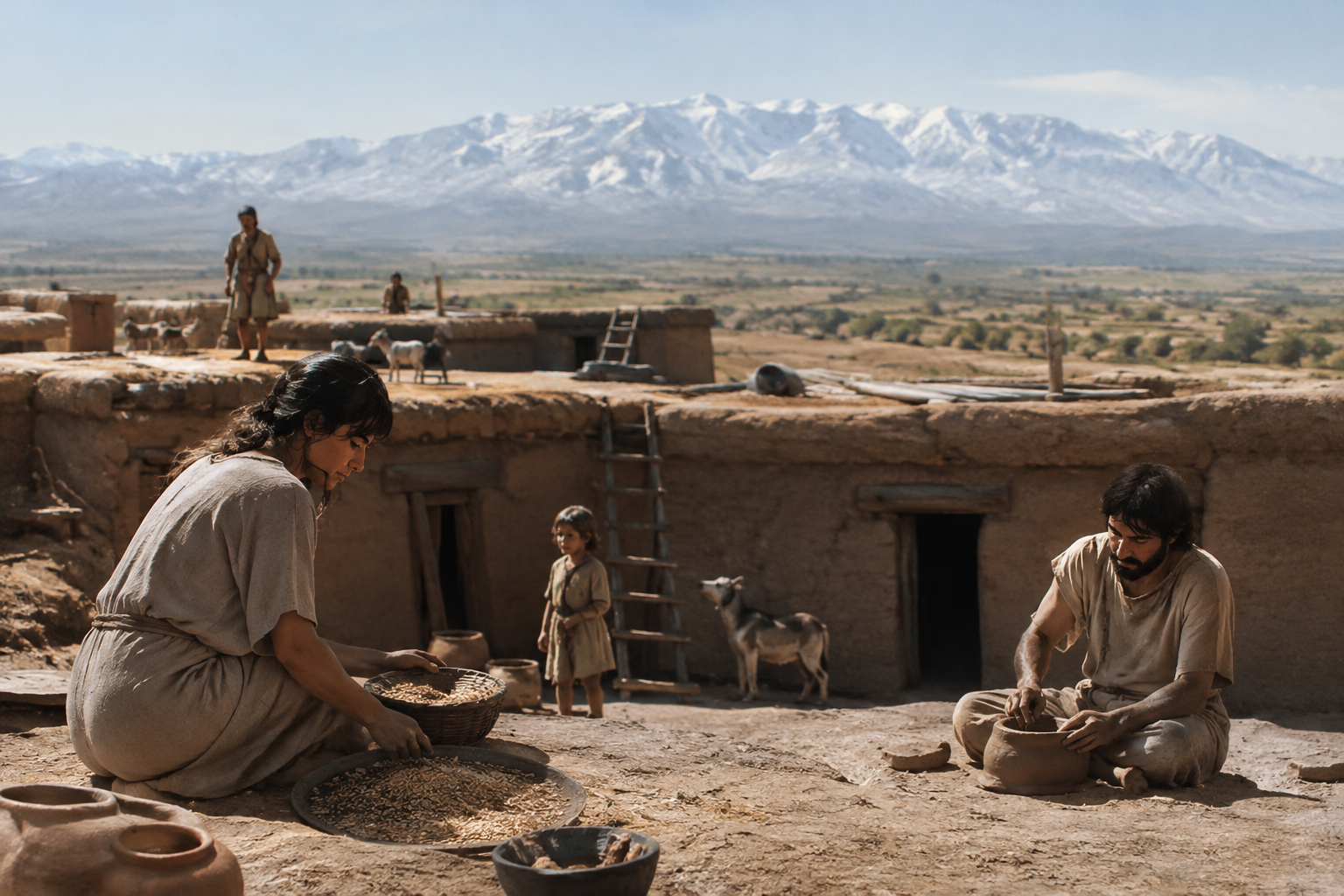
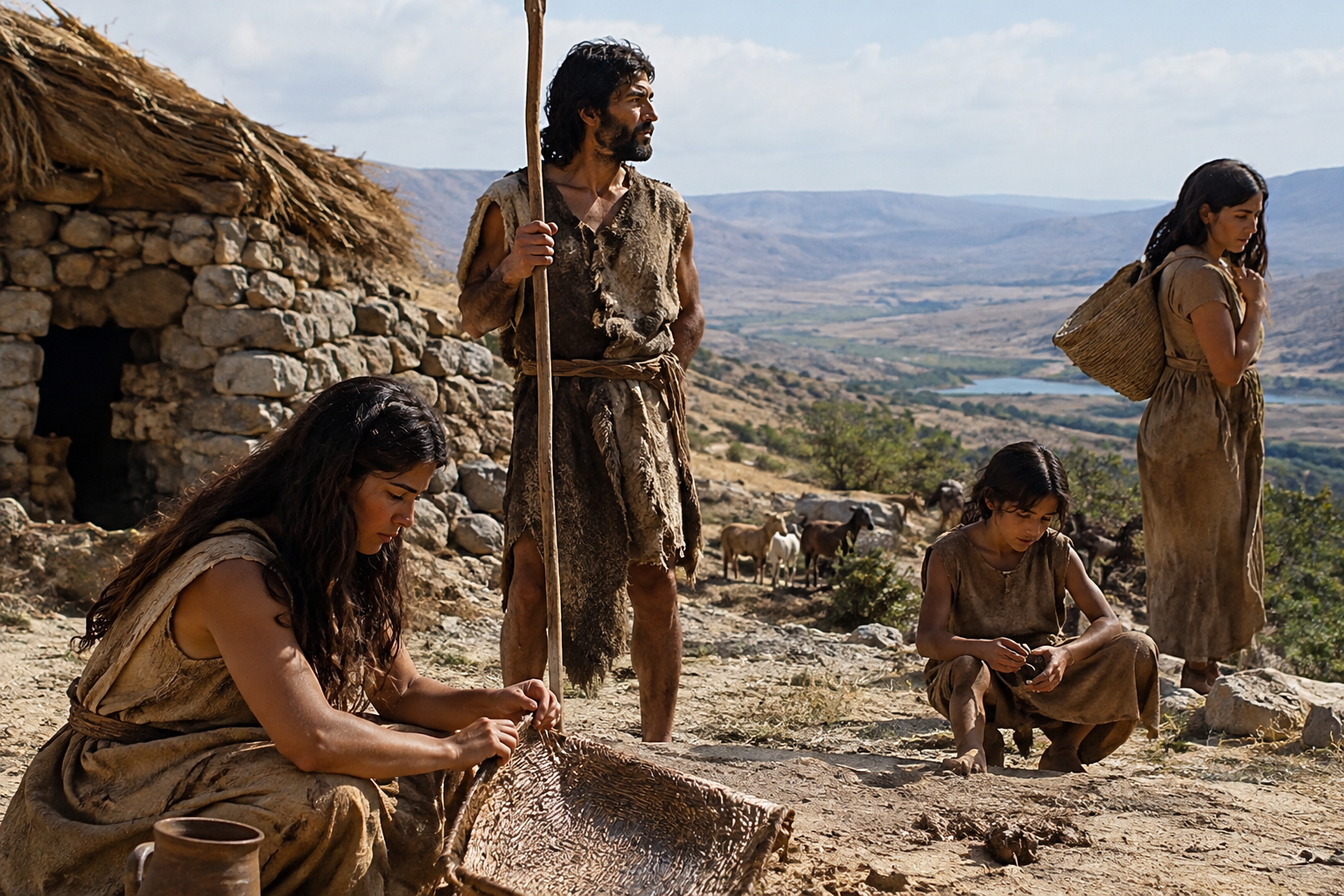
Nemrik is better known to archaeologists for much earlier prehistoric occupation, but the appearance of sample I6441 in a Late Bronze Age Iraqi context is what matters here. Around 1350 BC, northern Iraq sat within a world of powerful states, shifting frontiers, agricultural estates, temple economies, and multilingual elites. This was not a remote backwater. It was a region where local continuity and outside connections constantly overlapped.
That makes a lineage like J1a2a1a2d2b2b2c4b2 historically plausible in several different ways. It could represent a long-established paternal line within Upper Mesopotamia. It could reflect movement from neighboring zones to the west or south. Or it might belong to a family whose ancestors had already been mobile for generations before this man was buried. The point is not to force a single migration story, but to place the lineage in a landscape where such movement was normal.
Mesopotamia in the Late Bronze Age was also politically fragmented and culturally entangled. Kassite Babylonia, Assyria, the Hurrian sphere, and wider Levantine networks all mattered. A paternal lineage found there need not correspond neatly to one language group or one political identity, because ancient men did not carry tidy labels in their chromosomes.
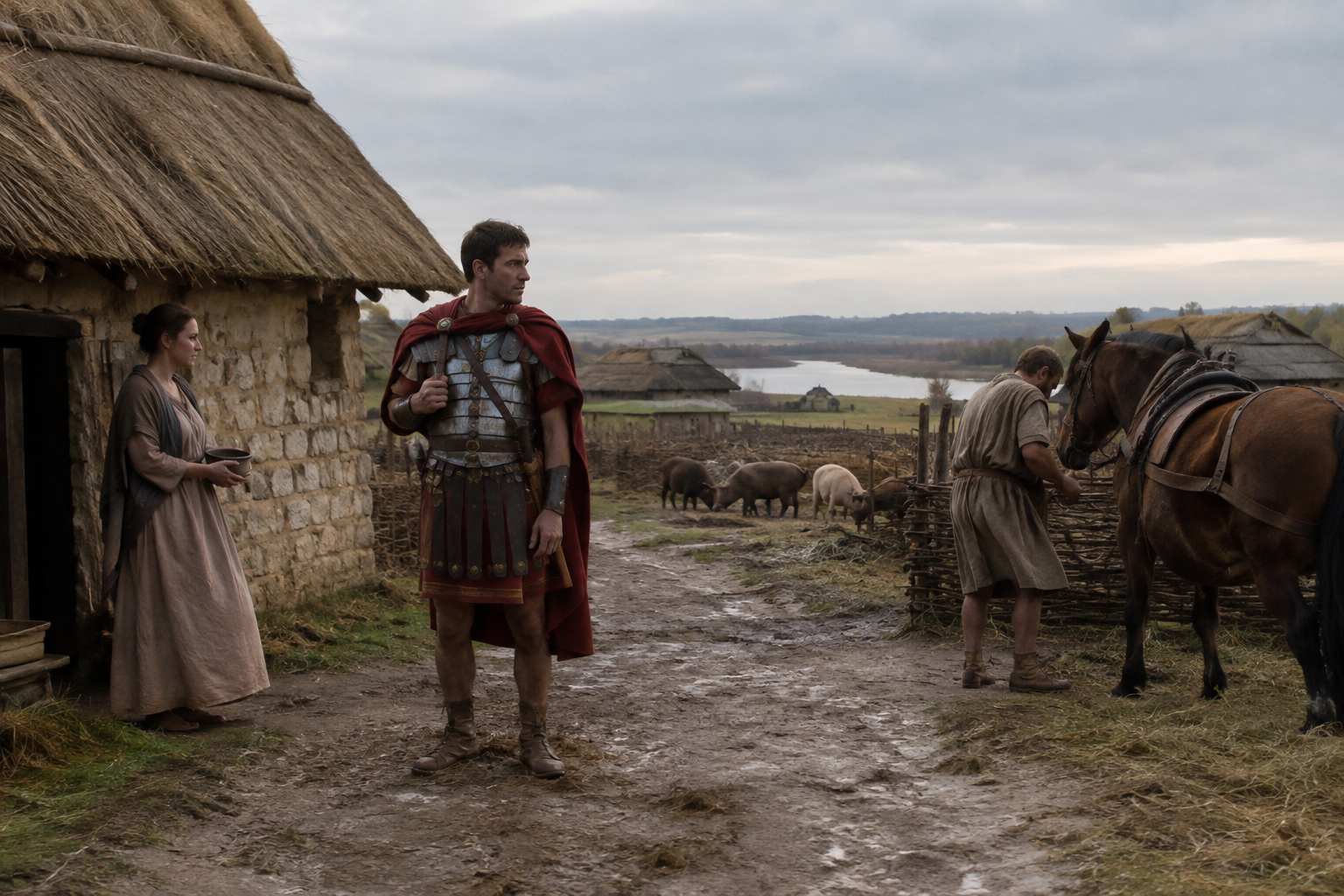
The more surprising sample here is R1547, dated to about AD 165 at Monterotondo in the Roman Empire and described with an Amorite association. Even with cautious wording, that combination is arresting. By the second century AD, central Italy was part of an empire that drew in soldiers, merchants, enslaved people, administrators, pilgrims, and families from across the Mediterranean and Near East.
So when a paternal line associated with this haplogroup turns up in Roman Italy, the historical backdrop is clear enough even if the personal biography is not. The Roman world made movement ordinary. Some people came through military service, some through trade, some through forced migration, some through marriage, and some because their grandparents had already moved. A Y-chromosome cannot tell us which of those stories applies to R1547, but it can show that paternal lines with Near Eastern roots were part of the human reality of Roman Italy.
This fits a broader pattern already visible in ancient DNA work on the empire: Roman populations were often more mixed, more mobile, and more regionally varied than older textbook versions allowed. For the larger Italian setting, MyTrueAncestry readers may enjoy this related discussion of mobility and genetic change in the peninsula.
Monterotondo lies just north of Rome, and that alone places R1547 in one of the most connected landscapes in the ancient world. The city of Rome and its hinterland were fed by roads, ports, estates, and administrative circuits reaching from Britain to Syria. In such a setting, a paternal lineage with deeper western Asian ties is not an anomaly in need of special pleading. It is exactly the sort of thing ancient DNA has increasingly revealed.
There is a useful historical discipline in that observation. We should not jump from "Amorite" to a theatrical picture of one named ethnic survivor striding unchanged across 1,500 years. Amorite is a label rooted in much earlier Near Eastern history, and by the Roman period identities had been remade many times over. But the genetic signal still has value. It shows that paternal continuity from the broader Near Eastern world could persist, travel, and reappear in imperial settings far from its earlier documented contexts.
Research on ancient populations from imperial Italy helped establish just how much eastern Mediterranean and Near Eastern ancestry could be present in Roman-era individuals, especially in and around the capital. For that wider backdrop, see the Roman population study here: https://science.sciencemag.org/content/366/6466/708.
With only two ancient points, this is not a haplogroup article that should pretend to have mapped an entire lineage in detail. Yet the two points are not trivial. They place this branch in two historically connected regions: Mesopotamia in the Late Bronze Age and central Italy in the Roman imperial period.
That pattern raises sensible historical possibilities. One is continuity within interconnected West Asian populations over a very long timespan. Another is dispersal through the great mechanisms of ancient history: trade, state expansion, resettlement, military recruitment, and urban life. The Roman Empire in particular was an enormous machine for moving paternal lines away from their earlier homelands and embedding them in new communities.
It is also worth noting what we do not have. We do not have a chain of intermediate ancient samples proving a step-by-step route from Iraq to Italy. We do not have grounds to assign this branch to a single ancient people as though chromosomes and cultural names were interchangeable. What we do have is a credible archaeological frame in which such a branch belongs to the long human traffic linking the Near East and Mediterranean.
If your direct paternal ancestry falls under J1a2a1a2d2b2b2c4b2, the ancient evidence currently points toward a lineage with documented presence in the Near Eastern world and later visibility in a Roman imperial setting. That is a modest claim, but a valuable one. It places your paternal line in the kind of historical corridor where empires rose, merchants crossed frontiers, and families were folded into new societies without losing every trace of their older origins.
For now, the most distinctive insight is not a royal legend or a single tribal label. It is the combination of I6441 in Late Bronze Age Iraq and R1547 in Roman Italy: a narrow paternal branch appearing at two ends of a very old zone of contact between Mesopotamia and the Mediterranean.
Comments