Haplogroup J1a2a1a2d2b2b2

– 6 min read


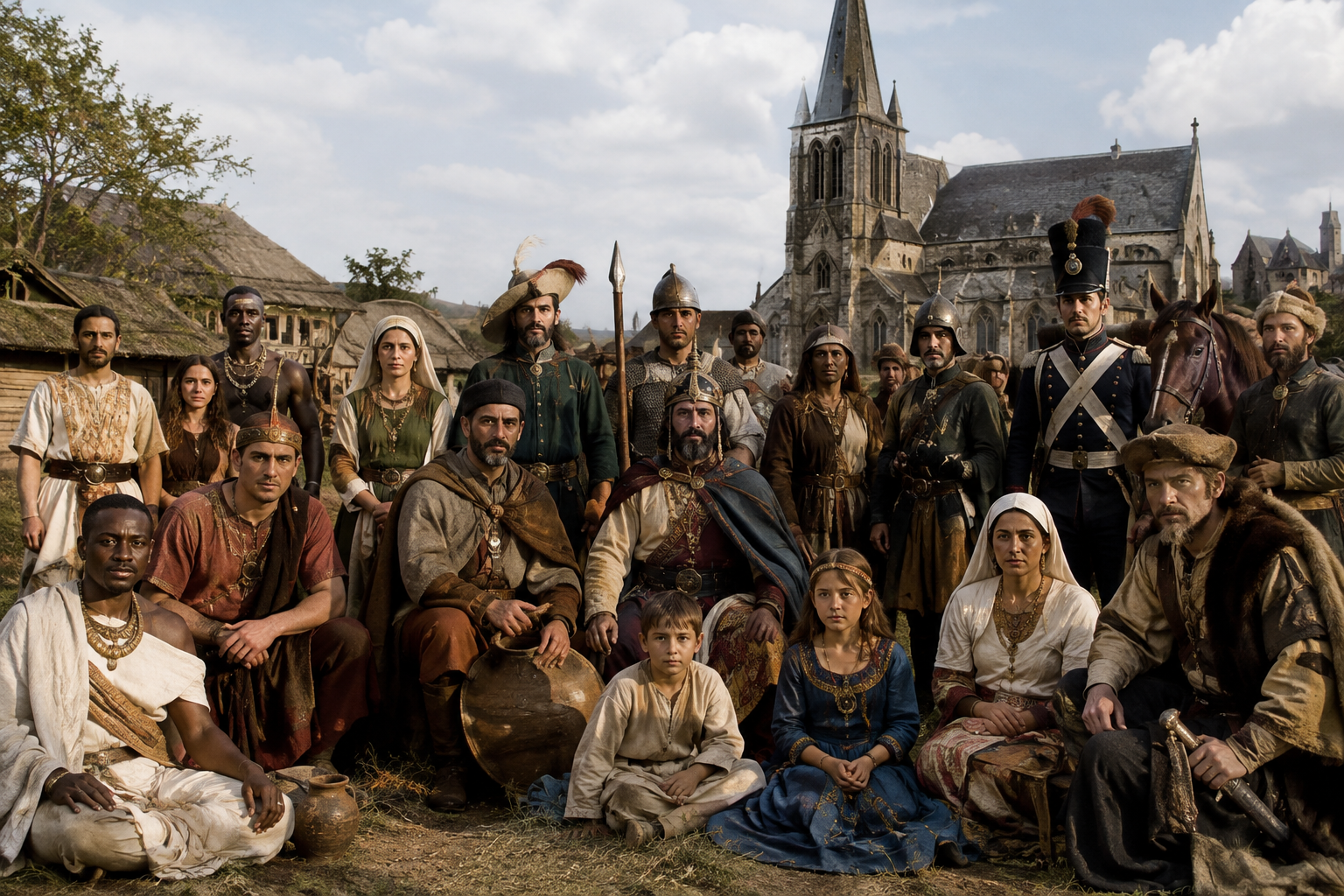
Some Y-DNA haplogroups turn up in one neat historical setting and stay politely there. Haplogroup J1a2a1a2d2b2b2 does not. The samples supplied for this branch point instead to a much wider and more intriguing story: one that stretches from Bronze Age Syria and Anatolia to Armenia, from a Punic burial in Sardinia to Gothic-period Bulgaria, from Avar-period Hungary to medieval Spain, late medieval Belgium, Nubia, and even a soldier in Napoleon's Grande Armee.
That does not mean all these men belonged to one close-knit family roaming across history. Far from it. Y-DNA haplogroups trace only a direct paternal line - father to father to father - and they represent just one narrow strand of a person's ancestry. But that single strand can still be remarkably revealing. In this case, J1a2a1a2d2b2b2 sits within the wider J1 paternal tree, a lineage broadly associated with parts of the Near East and neighboring regions in deep time, while this particular downstream branch appears in a striking set of ancient and historical contexts linked to mobility, frontier societies, trade, and long-distance connections.
With a subclade this specific, caution matters. We should not simply project the whole history of broad haplogroup J1 directly onto J1a2a1a2d2b2b2. Still, the sample pattern strongly suggests that this lineage, or closely related paternal lines, had an important presence in the eastern Mediterranean and Near East before appearing farther west and north in later centuries.
The earliest supplied anchors are especially telling. ALA035, a Canaanite Alalakh individual dated to 1685 BC, and I14762 from the Yamhad Kingdom, Kilis, Southeast Anatolia, dated to 1640 BC, place this paternal branch in the world of Bronze Age Levantine and northern Syrian kingdoms. Add ALA018, the Amorite Outlier Child, Alalakh, dated to 1410 BC, and I16120 from Late Bronze Age Armenia, Dzori Gekh, dated to 1380 BC, and we are looking at a lineage present across a corridor linking Syria, southeast Anatolia, and the South Caucasus.
That is a region famous for movement: merchants, soldiers, dynasts, deportees, and caravan traffic all crossing paths. Ancient DNA now gives us a paternal clue that written history alone could never provide.
Discover How Ancient DNA Rewrites History
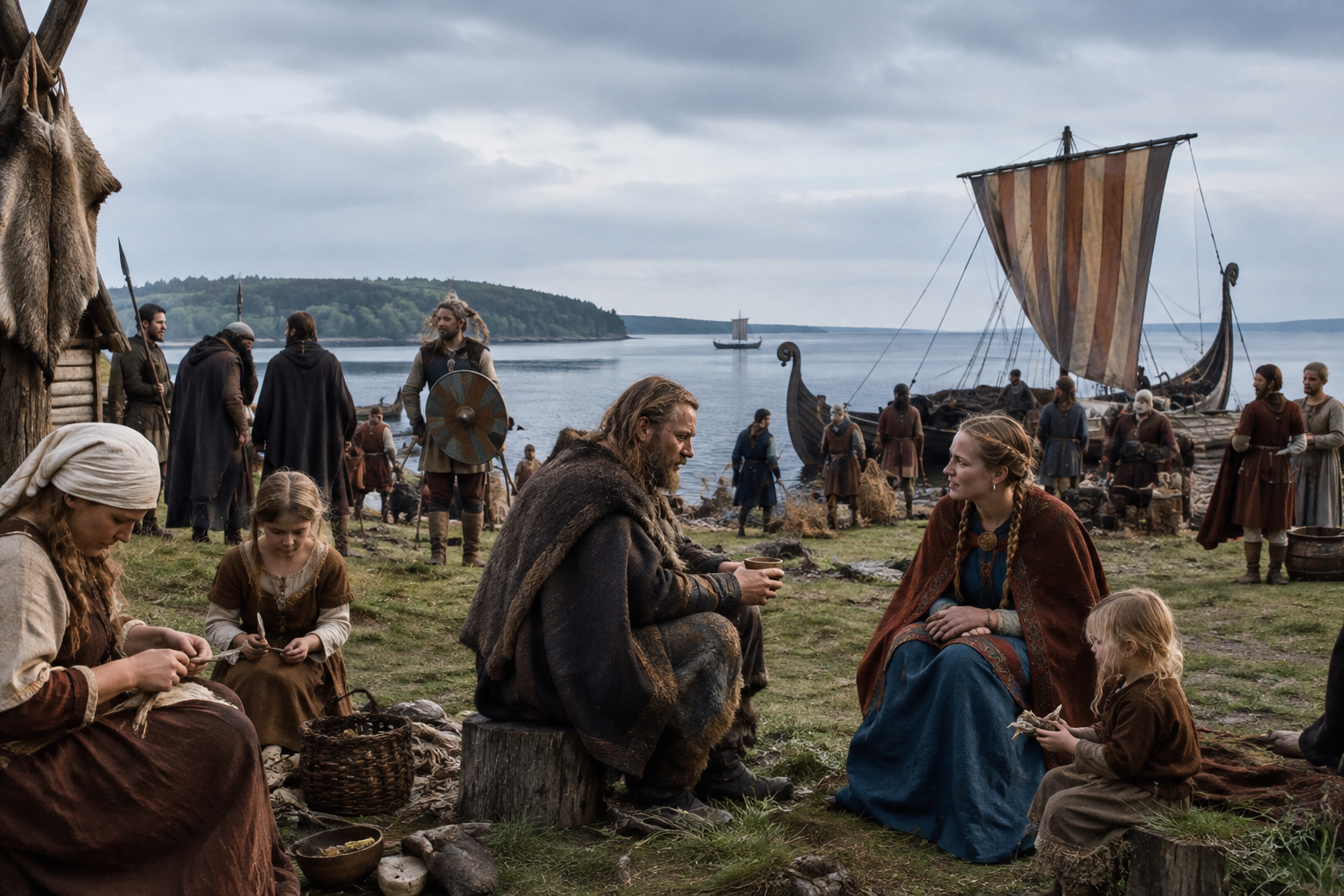
One of the most interesting later appearances of this branch is I22119, a Phoenician/Punic Sardinia Tharros individual dated to 269 BC. Tharros was part of the Punic Mediterranean, a maritime world built on seafaring, exchange, and colonization. A paternal line with eastern Mediterranean roots turning up in Sardinia is exactly the sort of thing that makes archaeogenetics so exciting: it offers a biological footnote to the trade routes and settlement networks we already know from archaeology and history.
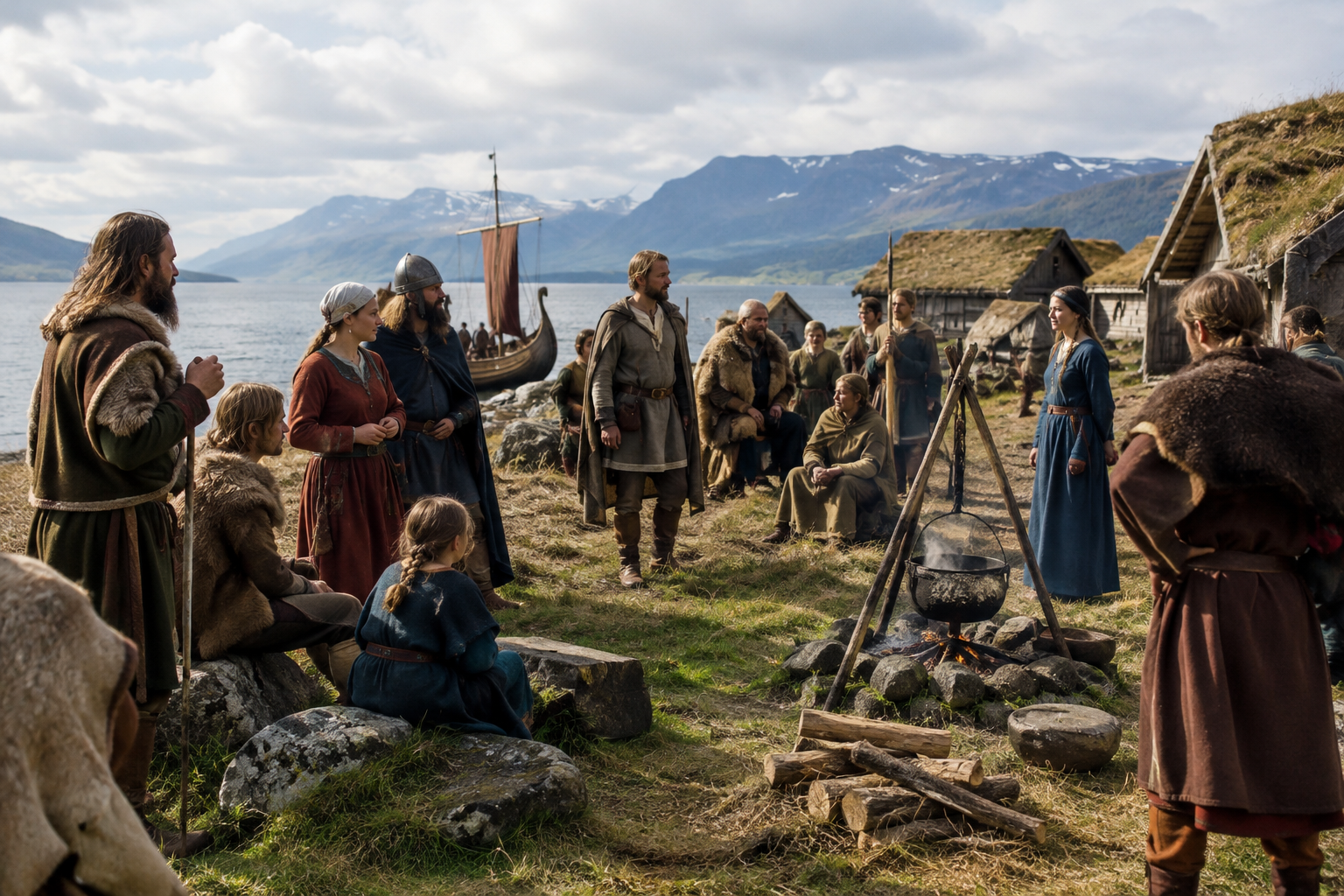
Then there is I40570, identified as a Levantine Outlier Gothic Grave Aquae Calidae Bulgaria and dated to 350 AD. That label alone is extraordinary. A Gothic grave in Bulgaria containing a man with a Levantine outlier profile reminds us that late antique "barbarian" groups were not sealed ethnic boxes. They were mixed, mobile, and often entangled with the Roman world. A shared paternal branch here does not prove some tidy Gothic-to-Levant genealogy, but it does fit a late Roman and post-Roman world full of movement across the Balkans and Black Sea zones.
Western Europe also enters the picture early. I20278 from Early Medieval Spain Girona Sant Julia de Ramis Les Goges, dated to 621 AD, shows that this paternal line had reached, or persisted within, the Iberian Peninsula by the early medieval period. Whether that reflects earlier Roman-era mobility, late antique Mediterranean contacts, or local continuity from prior movements must remain an open question. But it is a valuable data point all the same.
Readers interested in that mixed Gothic world may also enjoy the broader discussion in this related piece on Bulgaria's late antique communities.
Explore Gothic Bulgaria's Mixed Origins
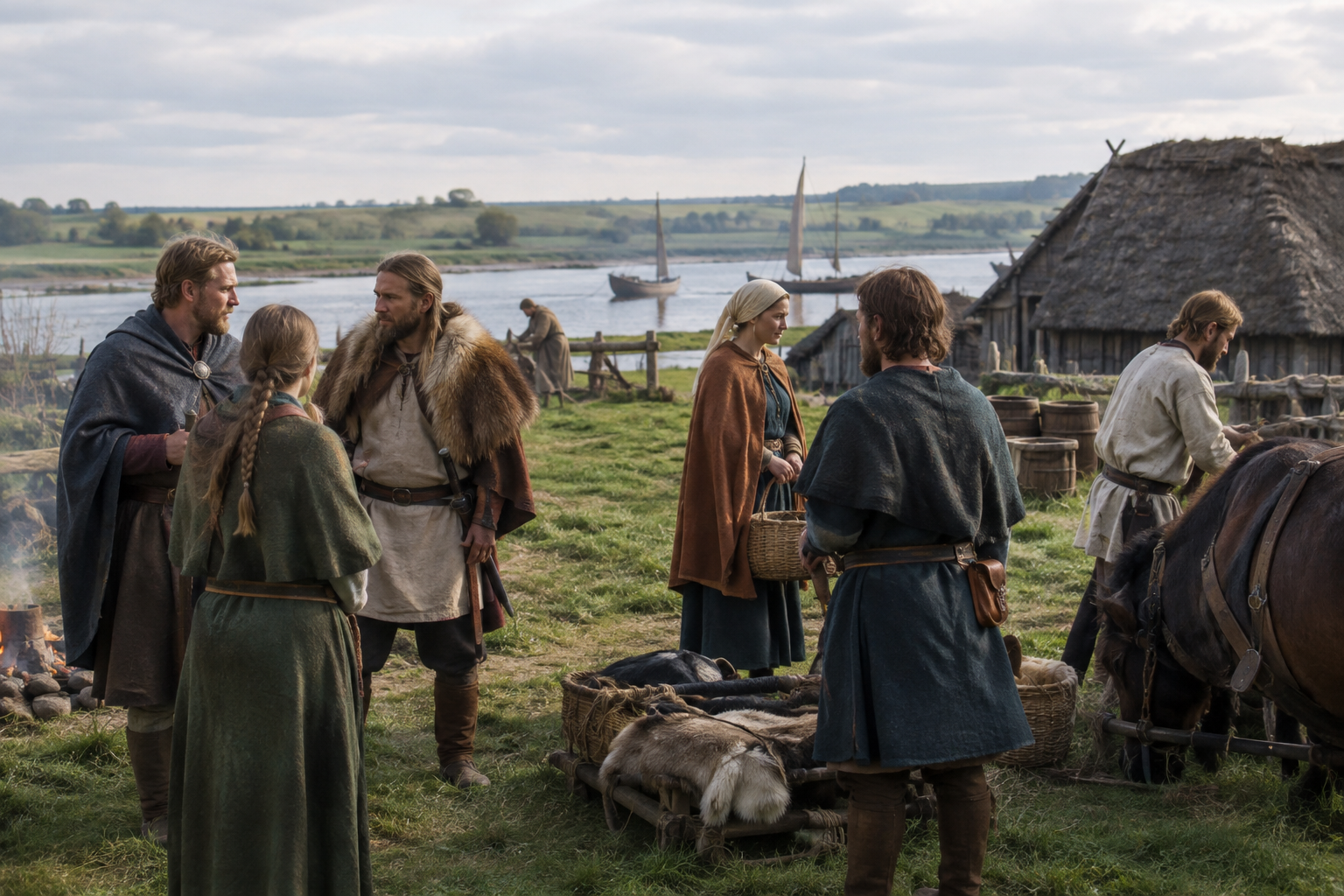
If one cluster dominates the supplied evidence, it is Rakoczifalva in Hungary, around 650 AD. Here the lineage appears repeatedly in RKF098, RKF110, RKF129, RKF147, RKF226, RKF124, RKF121, RKF182, RKF225, RKF192, RKF237, RKF117, RKF194, RKF053, RKF060, RKF062, RKF068, and RKF079, alongside the Avar Elite Hungary Rakoczifalva samples RKC009, RKC021, and RKC018.
That concentration matters. It suggests this was not an isolated wanderer but a paternal lineage with real presence in a Migration Period and Avar-period community of the Carpathian Basin. But one must not jump from that to simplistic ethnic labeling. The Avar realm was itself a political confederation with varied origins and local populations. What the Y-DNA tells us is narrower and, in some ways, more interesting: this paternal branch was established among men living in that world, including individuals associated with elite burials.
That may indicate continuity from earlier southeastern European or eastern Mediterranean contacts, incorporation of men from distant regions into Avar networks, or a mixture of both. Ancient DNA is very good at showing that historical societies were more connected than old textbook maps imply.
For a wider look at how post-Roman Hungary became such a crossroads, this companion article is well worth reading.
Explore Post-Roman Hungary's DNA Story
The later history of this lineage is no less scattered. I18520, from Kulubnarti Early Makurian Nubia, dated to 750 AD, places it in the Christian kingdom of Makuria on the Nile. Again, this does not mean a direct line from Bronze Age Alalakh to medieval Nubia can be drawn in any simple fashion. But it does show how paternal branches with eastern Mediterranean associations could appear in African Christian contexts as well.
By the early modern period, the lineage shows up in the Low Countries in three linked late medieval samples from Belgium St. Rombouts dated to 1561 AD: STR140, STR140a, and STR140d. These are especially evocative because they hint at close paternal continuity within a local setting, perhaps multiple sampled remains representing the same immediate male line or a nearby kin network. Without further specifics, we should not overstate that point - but the cluster is suggestive.
Finally there is YYY083A, a Soldier of Napoleon Grande Armee Mass Grave Vilnius Latvia dated to 1812 AD. That sample is a reminder that by the modern era, paternal lines with much older eastern and Mediterranean histories had become thoroughly embedded in European populations. The march to Moscow was not just a military event; it was a collision of thousands of family histories, many far older and stranger than the uniforms suggested.
In this case, the supplied section for associated noble families and castles is empty, and that absence is worth acknowledging plainly. It means we should resist the temptation to bolt this haplogroup onto a famous medieval house, a princely dynasty, or a castle pedigree without evidence. That is not a limitation so much as good historical practice.
Too often, people want a haplogroup to deliver a ready-made coat of arms. But genetics does not work like that. A Y-DNA match to a broad lineage found in medieval or ancient contexts is not proof that one descends from a specific noble family, still less that every man in that family shared the same paternal branch. Noble lineages could split, adopt heirs, absorb non-paternal events, and leave behind documentary legends that do not map neatly onto DNA.
What we can say is more subtle. A paternal line such as J1a2a1a2d2b2b2 appears in regions long tied to courts, armies, ports, and frontier societies: Bronze Age kingdoms in Syria and Anatolia, Punic Sardinia, Gothic and late Roman Bulgaria, Avar Hungary, Christian Nubia, medieval Iberia, the Low Countries, and Napoleonic Europe. That is the historical stage on which later noble houses also emerged. Genetics and castles are therefore connected not by fantasy descent claims, but by shared geography and the long persistence of male lines within historically important regions.
If you enjoy following how historical DNA illuminates ruling families and later dynastic memory, this article on the Arpad line provides a more direct example of where the evidence is unusually strong.
Read About the Royal Arpad Dynasty
J1a2a1a2d2b2b2 is historically interesting precisely because it refuses to sit still. The supplied ancient DNA evidence places it first in the Bronze Age Near East, then in Mediterranean colonial settings, late antique frontier burials, Avar-period Hungary, early medieval Spain, Nubia, the Low Countries, and modern European military history. That pattern speaks to endurance, dispersal, and repeated incorporation into new societies.
And that is one of the most useful lessons of Y-DNA. A paternal lineage can survive enormous cultural changes. Languages shift. Empires rise and collapse. Men who share a remote paternal ancestor may end up buried as Canaanites, Amorites, Punic islanders, Gothic outliers, Avar elites, Christian Nubians, Flemish townsmen, or soldiers in Napoleon's army. The haplogroup links them biologically at some depth, but history explains why they lived such different lives.
That is exactly where MyTrueAncestry becomes so compelling. It allows you to compare your DNA with ancient individuals and historical populations, not to claim a throne or a castle by wishful thinking, but to see whether your own ancestry intersects with the same deep human story.
If your results include J1 or one of its downstream branches, you may be looking at a paternal line with roots in some of the most mobile and interconnected regions of the ancient world. Uploading your DNA can help you explore those connections - while remembering that ancient DNA matches reveal historical context, not automatic proof of direct descent from any one ancient person or noble family.
Comments