Haplogroup J1a2a1a2

– 6 min read



Some Y-DNA haplogroups announce themselves with a neat, single homeland and a tidy route across history. J1a2a1a2 is not one of them. What makes it so interesting is that the evidence we have for this paternal line appears in places that force us to think about the ancient world as it really was: connected, mobile, argumentative, commercial, and gloriously untidy. From Bronze Age Syria and Canaan to Minoan Crete, from Roman Spain to medieval Italy, coastal Kenya, and even late medieval Mongolia, this is a lineage that appears in settings shaped by trade, empire, migration, and local continuity.
As ever with Y-DNA, there is an important health warning. A Y-chromosome haplogroup traces only one narrow line of descent: father to son to son. It does not describe a person's full ancestry, culture, language, or identity. And for a very specific branch such as J1a2a1a2, we should be especially careful not to dump onto it the whole history of broader haplogroup J1. Still, ancient DNA gives us precious glimpses of where related paternal lines turned up, and those glimpses can be wonderfully revealing.
Broadly speaking, lineages within haplogroup J are deeply associated with western Asia and the eastern Mediterranean in prehistoric and historic periods. For a downstream branch like J1a2a1a2, the safest thing to say is that its story seems to belong to that broad zone of interaction linking the Levant, Anatolia, the Aegean, and later the wider Mediterranean world. The samples supplied here fit that picture rather well.
The most striking thing is not a single origin myth, but a pattern: this paternal line or closely related branches show up in palace centers, cave burials, Roman provincial settings, and medieval port societies. That suggests movement through human networks rather than through a single dramatic migration that explains everything at once.
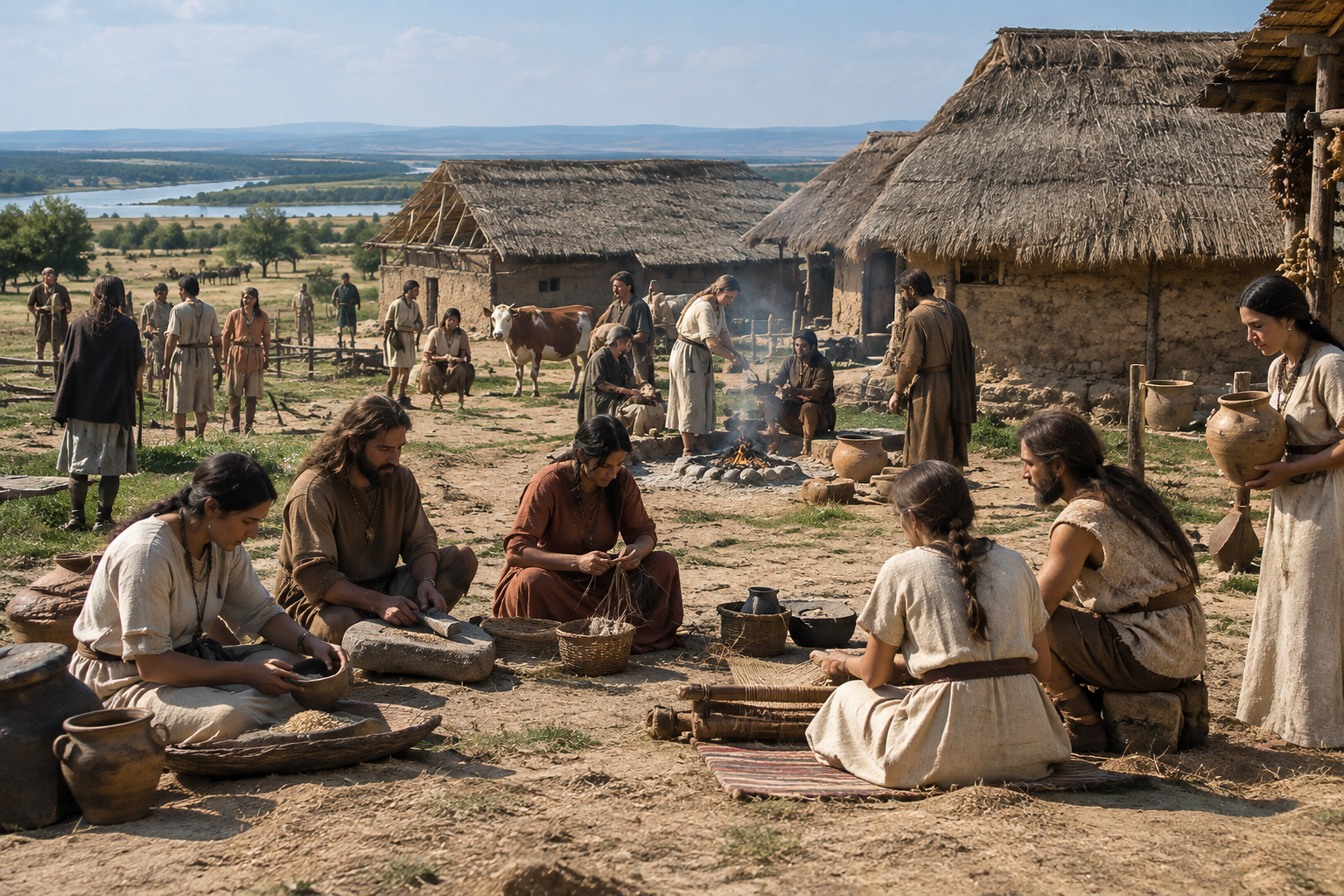
If you want to understand why J1a2a1a2 matters, begin in the Bronze Age eastern Mediterranean. Two samples from Middle Bronze Age Ebla Syria, ETM005 and ETM001, both dated to 1900 BC, place this haplogroup in one of the great urban centers of ancient Syria. Ebla was not some isolated town on a map. It was a kingdom tied into long-distance exchange, diplomacy, and rivalry across the Levant and Mesopotamia. A paternal line found there belongs in a world of palaces, scribes, caravans, and political marriages.
Nearby in historical terms, though not identical in political identity, is I14798 from the Yamhad Kingdom Kilis Southeast Anatolia, dated to 1600 BC. Yamhad was another major power of Bronze Age northern Syria and southeast Anatolia. Put that beside Ebla, and we begin to see a regional pattern: J1a2a1a2 or near relatives were present in the northern Levantine sphere well before classical antiquity.
Then there is I10101, a Late Bronze Age Canaanite Megiddo sample dated to 1570 BC. Megiddo is one of those sites that historians cannot resist because it sits at a strategic crossroads. Armies fought over it; traders passed through it; empires coveted it. A paternal line appearing there is a reminder that the Levant was not peripheral. It was one of the engines of Bronze Age connectivity.
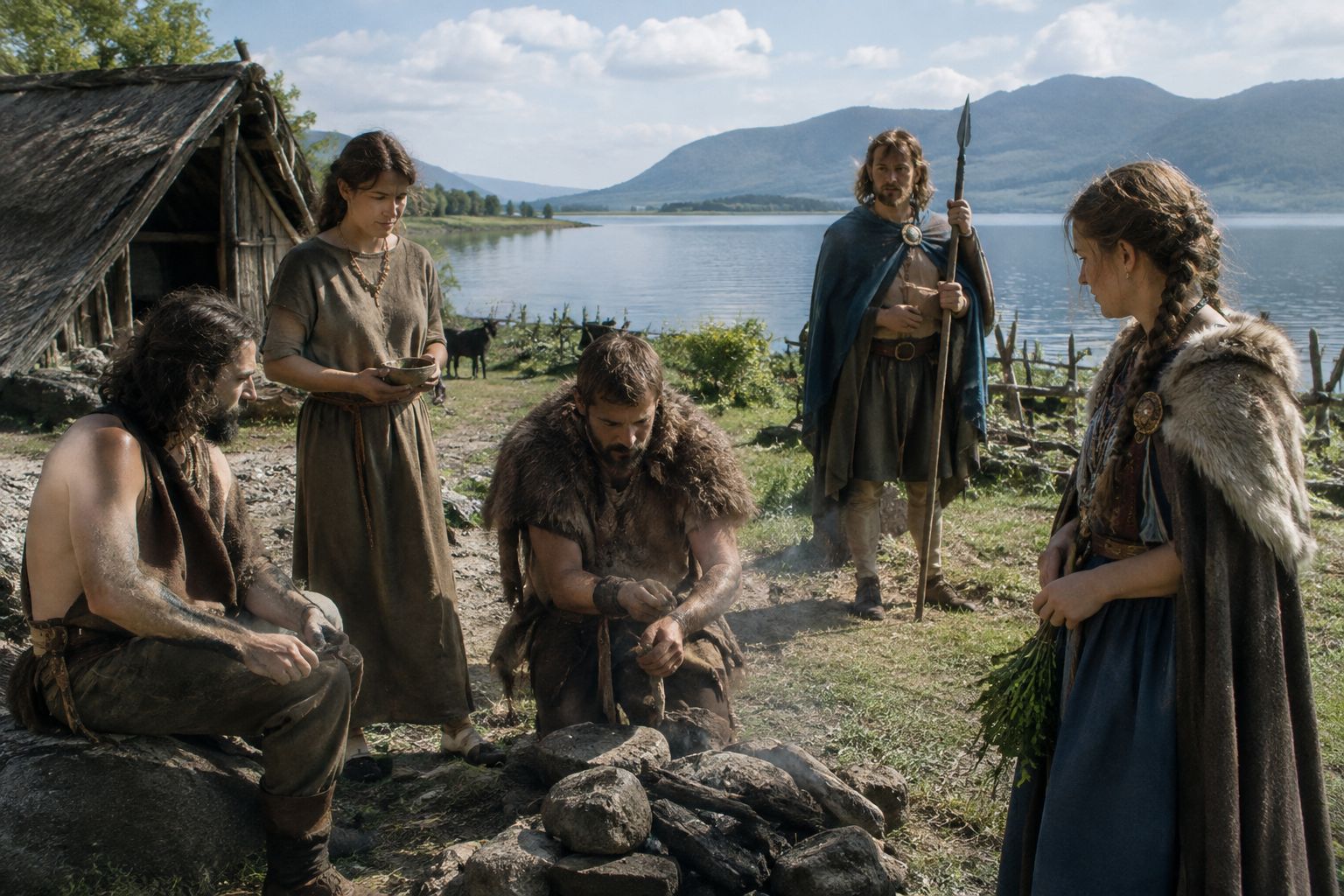
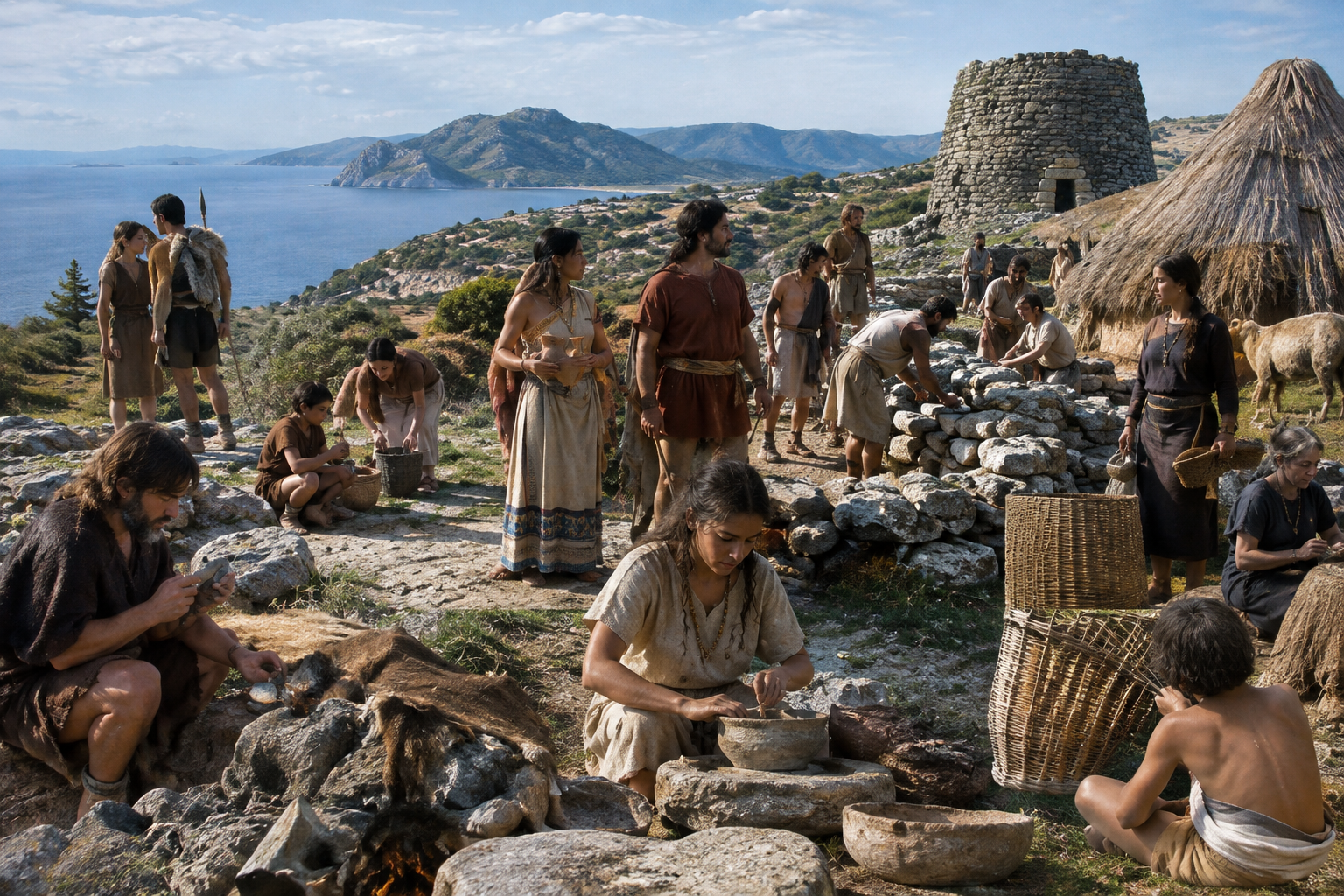
And then, crossing the sea, we find multiple Minoan-era samples from Hagios Charalambos Cave Crete: HGC063, HGC013, HGC001, and HGC002, all dated to 1900 BC. This is where things get especially intriguing. Crete was not Syria, and the Minoans were not Canaanites. But they were enmeshed in the same maritime world. The appearance of this paternal branch in Minoan Crete suggests that related male lines circulated around the eastern Mediterranean far earlier than older, simpler narratives once allowed.
That does not prove a single migration from one named kingdom into Crete, nor does it make all these men members of one family. What it does show is that the sea was not a barrier. It was a highway.
Discover Prehistoric Aegean DNA
By the Roman period, the old eastern Mediterranean networks had not vanished. They had been folded into something even larger. The sample I29548 from Imperial Roman Era Spain Tarragona La Canonja Villa Romana dels Castellets, dated to 400 AD, is a fine example of that bigger world. Tarragona in Roman Hispania was a major provincial center, deeply tied to Mediterranean administration, commerce, and migration. A J1a2a1a2 paternal line turning up there should surprise no one who takes Roman mobility seriously.
This is exactly the kind of evidence that punctures romantic ideas of ancient populations sitting still for centuries. Roman Spain was full of movement: soldiers, merchants, slaves, officials, settlers, and their descendants. A Y-line with eastern Mediterranean associations appearing in late Roman Iberia fits the empire's habits perfectly.
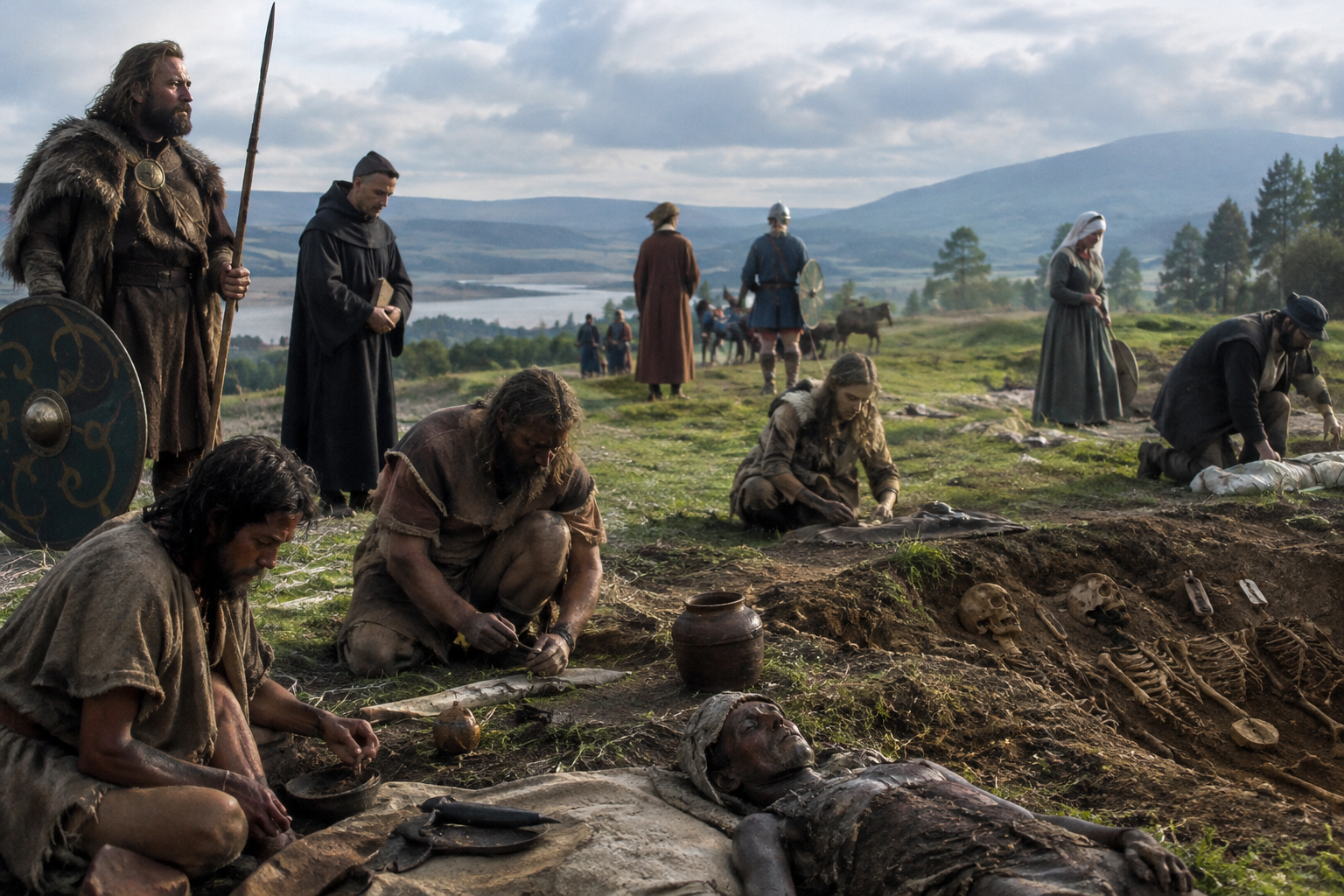
Another revealing case is CGG021912 from Sarmatian Hungary Migration Period Madaras, dated to 363 AD. The Sarmatian context places us in the restless borderlands between Roman and steppe worlds. Here again, the point is not to force a single ethnic label onto the haplogroup. Rather, it shows that this paternal line could also appear in populations shaped by frontier mixing and movement across the Carpathian Basin.
Read Roman Hispania's DNA Story
The medieval evidence widens the picture further. ETR014 from Medieval Chiusi Siena Italy, dated to 1000 AD, places the lineage in Tuscany in the early medieval world. Chiusi was an old place with deep Etruscan and Roman roots, but medieval Italy was also a place of pilgrimage, warfare, trade, ecclesiastical links, and constant local reshuffling. A paternal line like J1a2a1a2 could persist locally, arrive through earlier Roman-era movement, or be refreshed by later Mediterranean contacts. The evidence alone does not let us choose one explanation with certainty.
More arresting still are I19417 and I19419 from Medieval Coastal Kenya Mtwapa, both dated to 1600 AD. Mtwapa belonged to the Swahili coast, one of the great trading regions of the Indian Ocean world. Here African, Arabian, Persian, and wider Asian connections were part of daily life. These samples are a splendid reminder that paternal lineages do not respect the neat boundaries of school atlases. J1a2a1a2 in coastal Kenya makes historical sense in a maritime world joining East Africa to the Red Sea, Arabia, and beyond.
And then there is UUS001 from Uushigiin Uver Khuvsgul Late Medieval Mongolia, dated to 1400 AD. One should be cautious here: a single sample in Mongolia does not rewrite the origin story of the haplogroup. But it does underline how far male-line branches could travel in the medieval era, whether through trade, warfare, imperial expansion, or small-scale movement of individuals and families. It is precisely the sort of outlying data point that makes ancient DNA so valuable. It warns us against tidy maps.
In this case, the supplied field for associated noble families and castles is empty, and that is worth saying plainly rather than papering over it. There is no responsible way to invent dynasties, castles, or aristocratic houses and attach them to J1a2a1a2. That would be bad history and even worse genetics.
Still, the absence of named families is itself instructive. Haplogroups often long predate medieval surnames, heraldry, and castles by thousands of years. Ancient DNA gives us a much deeper timescale than documentary genealogy. Written pedigrees may take a family back a few centuries; a Y-line can point to much older regional histories, though not to a specific baron or castle unless direct evidence exists.
So for J1a2a1a2, the stronger story is not one of a single noble house, but of the older landscapes from which medieval societies later emerged: Levantine palace kingdoms, Aegean cave communities, Roman villas, frontier burials, and maritime trading towns.
Explore Medieval Mediterranean Mixing
Put all this together, and J1a2a1a2 looks less like the badge of one people and more like a witness to long-lived Mediterranean and western Asian connectivity. Its appearance in Bronze Age Syria, Canaan, and Crete suggests an early foothold in the eastern Mediterranean world. Its later presence in Roman Spain and Sarmatian Hungary shows how imperial and frontier systems redistributed paternal lines. Its medieval examples in Italy and coastal Kenya, and the later case in Mongolia, show that mobility did not stop with antiquity.
That is one of the great lessons of Y-DNA. Paternal lines can persist across vast stretches of time while moving through utterly different cultural settings. The same broad branch may be found in a palace-associated Bronze Age context, a Roman provincial settlement, and a medieval port town, without implying direct genealogical descent between those individuals.
For MyTrueAncestry members, that is the excitement. A haplogroup match or a genetic similarity to an ancient sample does not make you a Minoan courtier, a Canaanite noble, or a Roman provincial landowner. But it can place one strand of your ancestry inside a very old historical map, and that is often far more interesting than simplistic legends of descent.
Explore Ancient Mobility Across Frontiers
If your Y-DNA belongs to J1a2a1a2, or to a nearby branch, your paternal line may connect to some of the same broad worlds seen in these ancient samples: Bronze Age Levantine kingdoms, the Minoan Aegean, the Roman Mediterranean, and later maritime and frontier societies. Uploading your DNA to MyTrueAncestry can help you explore those ancient connections through archaeological samples and historical populations, while remembering that genetic similarities illuminate the past without proving descent from any particular ancient individual or noble line.

Comments