Haplogroup J

– 6 min read



Haplogroup J is one of those Y-chromosome lineages that keeps turning up in places where the history is already crowded: early farming villages, Bronze Age towns, eastern Mediterranean ports, Roman frontier communities, and medieval trading worlds. That alone makes it historically interesting. It is not a marker of one people, one kingdom, or one identity. Rather, it is part of a long paternal story that appears again and again in regions linked by cultivation, commerce, empire, pilgrimage, and migration.
As a Y-DNA haplogroup, J traces a direct paternal line: father to son to son across many generations. It does not describe a person's whole ancestry, culture, language, or social rank. In the wider Y-chromosome tree, haplogroup J is a major branch usually discussed through its better-known downstream divisions, especially J1 and J2, each with their own histories and distributions. Broadly speaking, J is strongly associated with western Asia and the eastern Mediterranean in deep time, and ancient DNA has helped show just how varied its later paths became.
If you want to understand why haplogroup J matters, start with the first farming worlds of the Near East and adjacent regions. Ancient DNA has made that early landscape much less abstract. A striking example is I2328, from Neolithic Hajji Firuz Iran, dated to 5950 BC. This is exactly the kind of setting where haplogroup J becomes historically vivid: settled life, food production, village society, and the human networks that linked the Zagros and neighboring regions.
Another early marker comes from sha004, an Early Bronze Age Iran Shah Tepe individual dated to 3250 BC. By this point, we are in a very different world from the earliest Neolithic villages: larger communities, wider exchange systems, and more developed social hierarchies. Add I11480 from the Bronze Age Helmand Civilization Shahr-e Sukhteh Seistan Southeast Iran, dated to 2850 BC, and you can see haplogroup J appearing within regions tied to some of the great early corridors of movement between the Iranian plateau, Central Asia, and the Indus-facing world.
None of this means that haplogroup J belonged exclusively to early farmers, nor that every movement of farming populations carried the same paternal lines. But ancient DNA does support the broad picture that J was established in parts of western Asia very early and became part of the demographic background from which later historical populations emerged.
Explore Ancient Iran's Genetic History
The Bronze and Iron Age samples show just how mobile, and yet regionally persistent, this paternal lineage could be. At Megiddo in the southern Levant, several Late Bronze Age individuals fall under the umbrella of haplogroup J in this dataset: I4525 dated to 1550 BC, I10104 and I10268 both dated to 1439 BC, I2195 dated to 1440 BC, and I2190 dated to 1302 BC. There is also I10266, a Late Bronze Age Outlier Canaanite Megiddo sample dated to 1725 BC. Taken together, these are a reminder that haplogroup J sat within the urban and semi-urban societies of the Levant long before classical empires wrote their histories there.
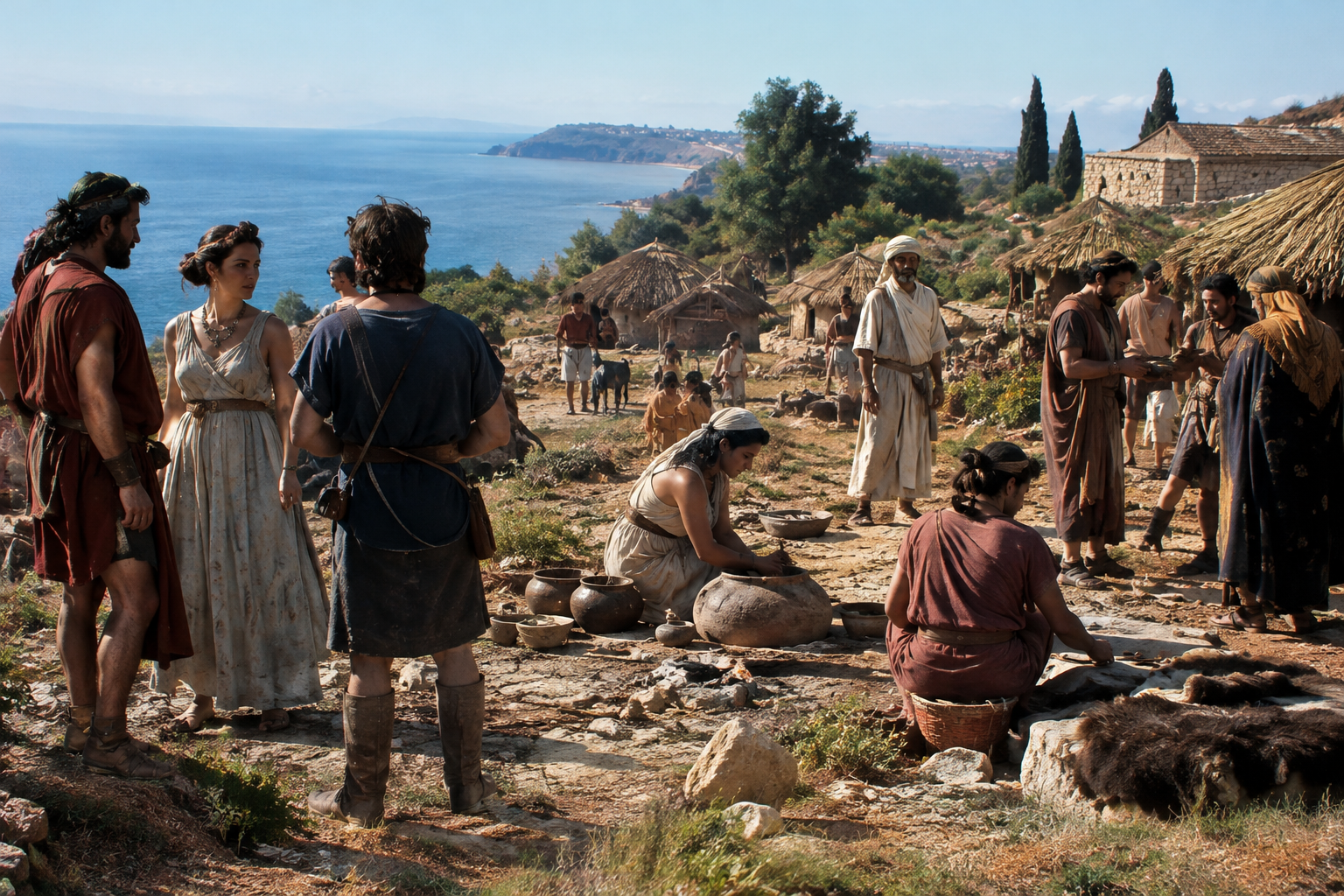
Then comes the Mediterranean. I6420_d from Mycenaean Lokris Proskynas Ancient Greece, dated to 1560 BC, and I17959 from Ancient Mycenaean Phokis Delphi Greece, dated to 650 BC, place J in Greek contexts across a long span of time. That does not make haplogroup J a specifically "Greek" lineage; rather, it shows it was present in populations that formed part of the Aegean historical world.
Farther west, I27075 from Phoenician Spain Malaga Calle Mrmoles, dated to 300 BC, is especially evocative. Phoenician and Punic networks tied the Levant to North Africa, Sicily, Sardinia, and Iberia. A lineage like J appearing in a Phoenician context in Spain fits neatly into what archaeology has long told us: the Mediterranean was not a set of sealed ethnic boxes but a sea of movement. The same applies to I8208x from Greco-Era Empuries, dated to 290 BC, another Iberian coastal setting shaped by mobility, colonization, and exchange.
Read About Roman Hispania's DNA Legacy
One of the most interesting things about haplogroup J is that it does not stay politely in the eastern Mediterranean. By Late Antiquity and the early Middle Ages it appears in central and western European settings that reflect the untidy realities of Roman and post-Roman life.
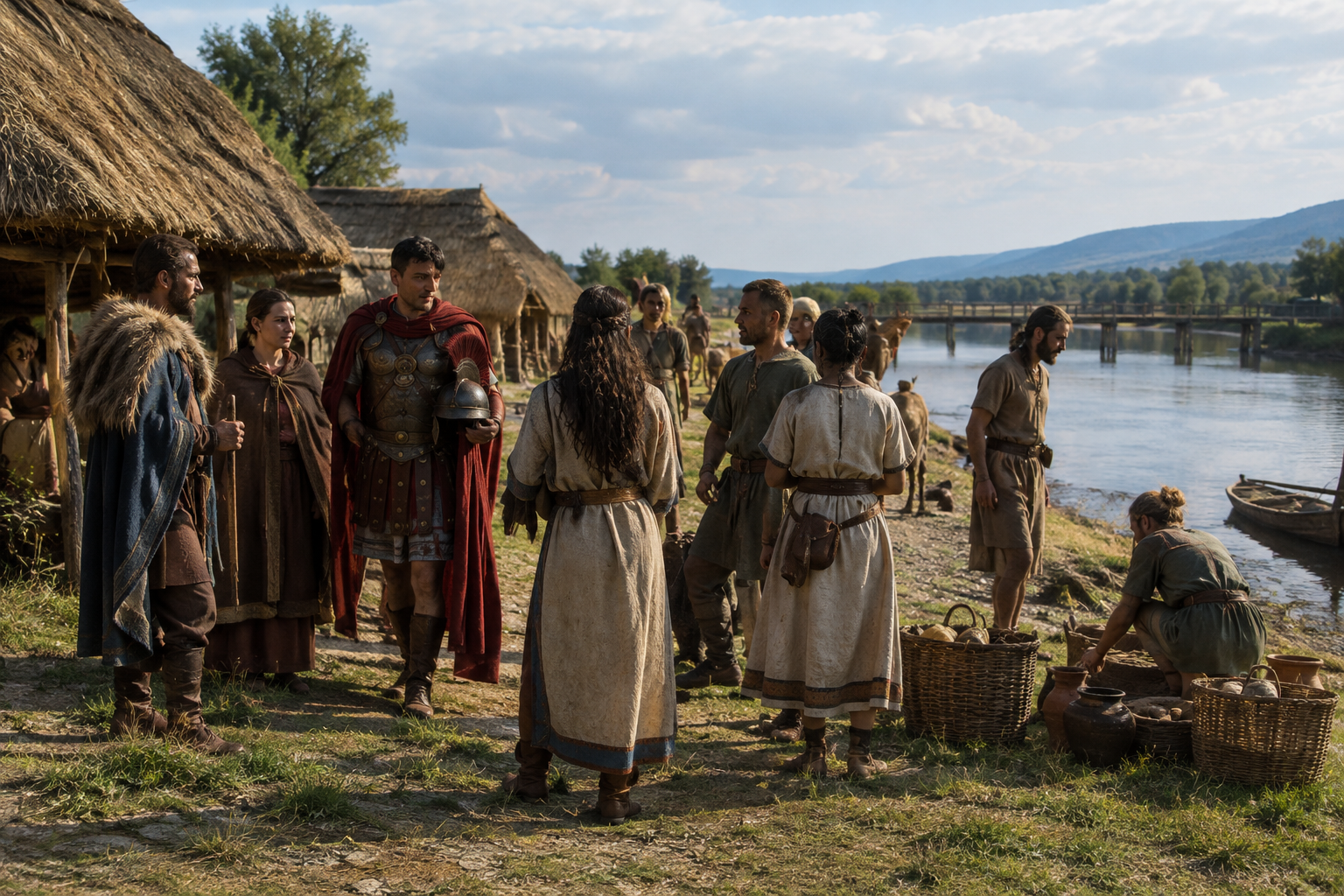
BOG024, from Imperial Roman Era Anatolia Galatia Bogazkale, dated to 225 AD, provides a Roman Anatolian point on the map. Then there is GYS017 from Late Antique Pannonia Arrabona Szechenyi Square Hungary, dated to 425 AD, followed by RKF227 from Avar Period Hungary Rakoczifalva Szolnok, dated to 625 AD. These samples suggest that paternal lines within haplogroup J were present in the Carpathian Basin across periods of major political change.
The South Tyrol cluster is particularly revealing: 2419 and 2424 from Dark Ages Italy South Tyrol Malles Burgusio Santo Stefano, both dated to 450 AD, and 2423a, 2423b, 2423c, 2423d, and 2423 from the same broader site, dated to 650 AD. An Alpine pass is never just a local place. It is a corridor. These individuals stand in a landscape where Roman administration, mountain mobility, military passage, and local continuity all overlapped.
Beyond the Alps, Alh10 from Dark Ages Bavaria Altheim, dated to 475 AD, and G37 from Early Medieval Merovingian Germany Lauchheim Mittelhofen, dated to 700 AD, show haplogroup J within early medieval communities often discussed in relation to Germanic polities. Again, caution matters: a Y-lineage does not equal an ethnicity. What it shows instead is that the societies of Merovingian and post-Roman Europe were more mixed, layered, and mobile than older nationalist histories liked to imagine.
Explore the German Frontier After Rome
Some of the later samples underline just how far the historical reach of haplogroup J could extend. I21111 from Medieval Yemen Soqotra Momi Zaflah, dated to 900 AD, places this paternal lineage in the world of the Arabian Sea, where South Arabia, island communities, merchants, and religious links intersected. On the Swahili coast, I23551 and I23660 from Medieval Coastal Kenya Mtwapa, both dated to 1600 AD, fit the same broad maritime picture. Here too, Y-DNA is not proof of one identity; it is evidence of male-line ancestry present within societies shaped by Indian Ocean exchange.
There are also the Caucasus and adjacent regions: I16553 from Iron Age Northern Armenia Bragdzor, dated to 750 BC, and zrj003 from Iron Age Azerbaijan Shamakhi, dated to 275 AD. These sites matter because the South Caucasus is one of the great hinge zones of Eurasian history, linking steppe, plateau, and Near Eastern worlds. Haplogroup J's presence there is entirely in keeping with its wider western Asian profile.
In this case, the supplied field for associated noble families and castles is effectively blank, and that is worth saying plainly. It means we should resist the temptation to bolt a grand medieval pedigree onto the haplogroup just because J has such a long and impressive ancient record. That restraint is part of doing genetic history properly.
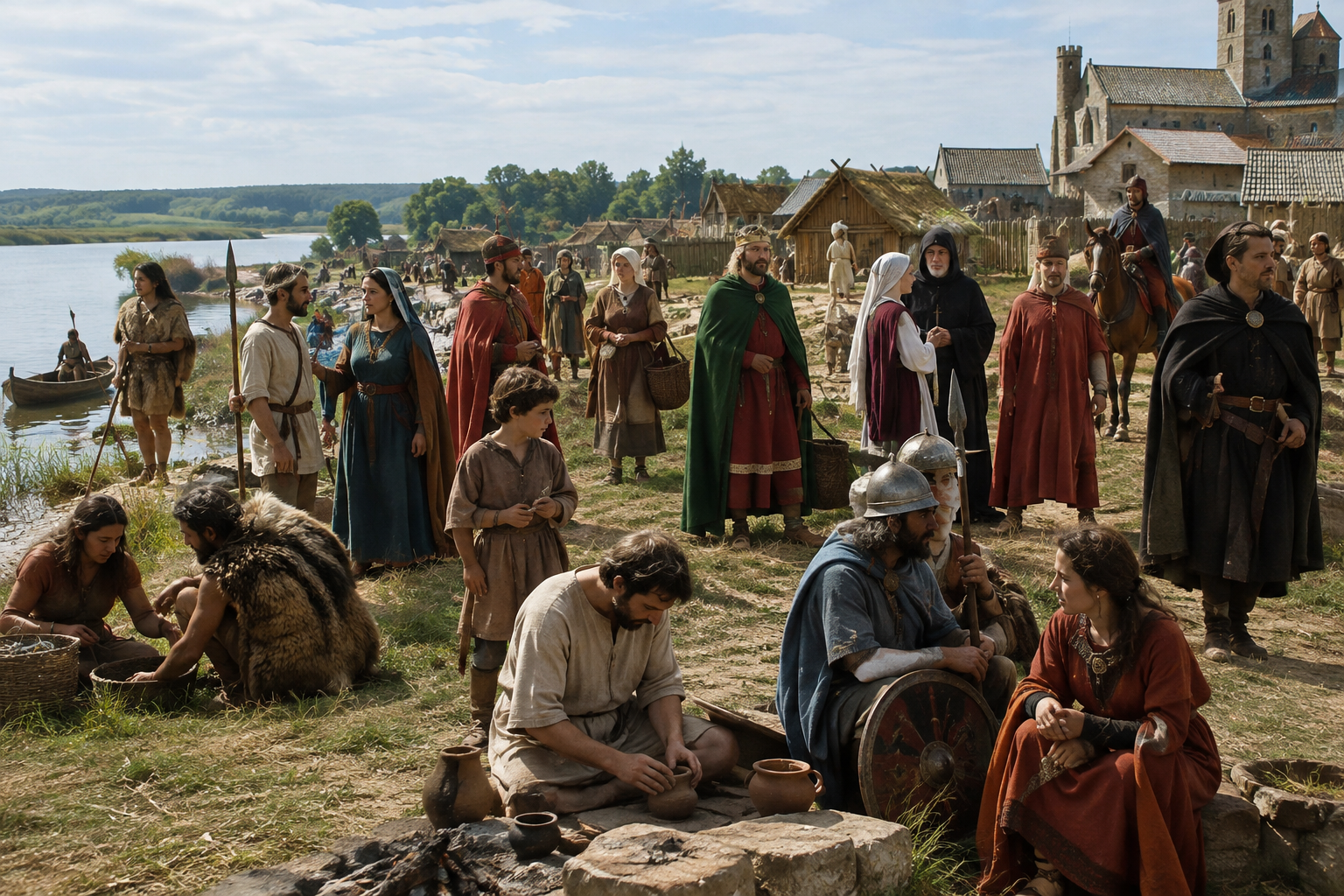
Still, the absence of named dynasties is instructive in its own way. Haplogroup J is exactly the sort of lineage that reminds us that medieval castles, noble houses, and ruling families emerged on top of much older demographic foundations. Long before heraldry, charters, and stone keeps, paternal lines now grouped under J were already present in Neolithic Iran, Bronze Age Levantine towns, Mycenaean Greece, Roman Anatolia, and Alpine communities of the early Middle Ages.
So if a later noble family in some region were ever associated with a branch of J, that would not mean it inherited the whole story of haplogroup J. It would mean only that one narrow paternal twig sat on a very old and very branching tree.
Discover How Ancient DNA Rewrites History
What makes haplogroup J so compelling is not a single origin myth or a neat ethnic label. It is the opposite. This is a paternal lineage that appears in some of the most important connected zones of the ancient world: the Zagros, the Levant, the Aegean, Anatolia, the Caucasus, Roman borderlands, the Alps, Arabia, and the Indian Ocean coast of Africa. Ancient DNA turns that broad map into real men from real places: I2328, sha004, I4525, I27075, BOG024, G37, I21111, and many others.
For people who carry haplogroup J today, that does not prove descent from any one ancient sample, and it certainly does not prove descent from any medieval dynasty. But it does place your direct paternal line inside one of the great historical networks of western Eurasia and beyond. That is no small thing. It means your Y-line may belong to a lineage that witnessed the rise of early farming, the growth of Bronze Age cities, the traffic of Phoenician merchants, the reach of Rome, and the reshaping of Europe and the Indian Ocean world in the medieval period.
If you want to see how your own DNA may connect with ancient individuals, archaeological cultures, and historical populations, MyTrueAncestry can help you explore those comparisons. The matches do not by themselves prove direct genealogical descent or noble-family membership, but they can offer a fascinating new angle on where your deeper paternal story fits into the human past.



Comments