Haplogroup I2e1

– 5 min read


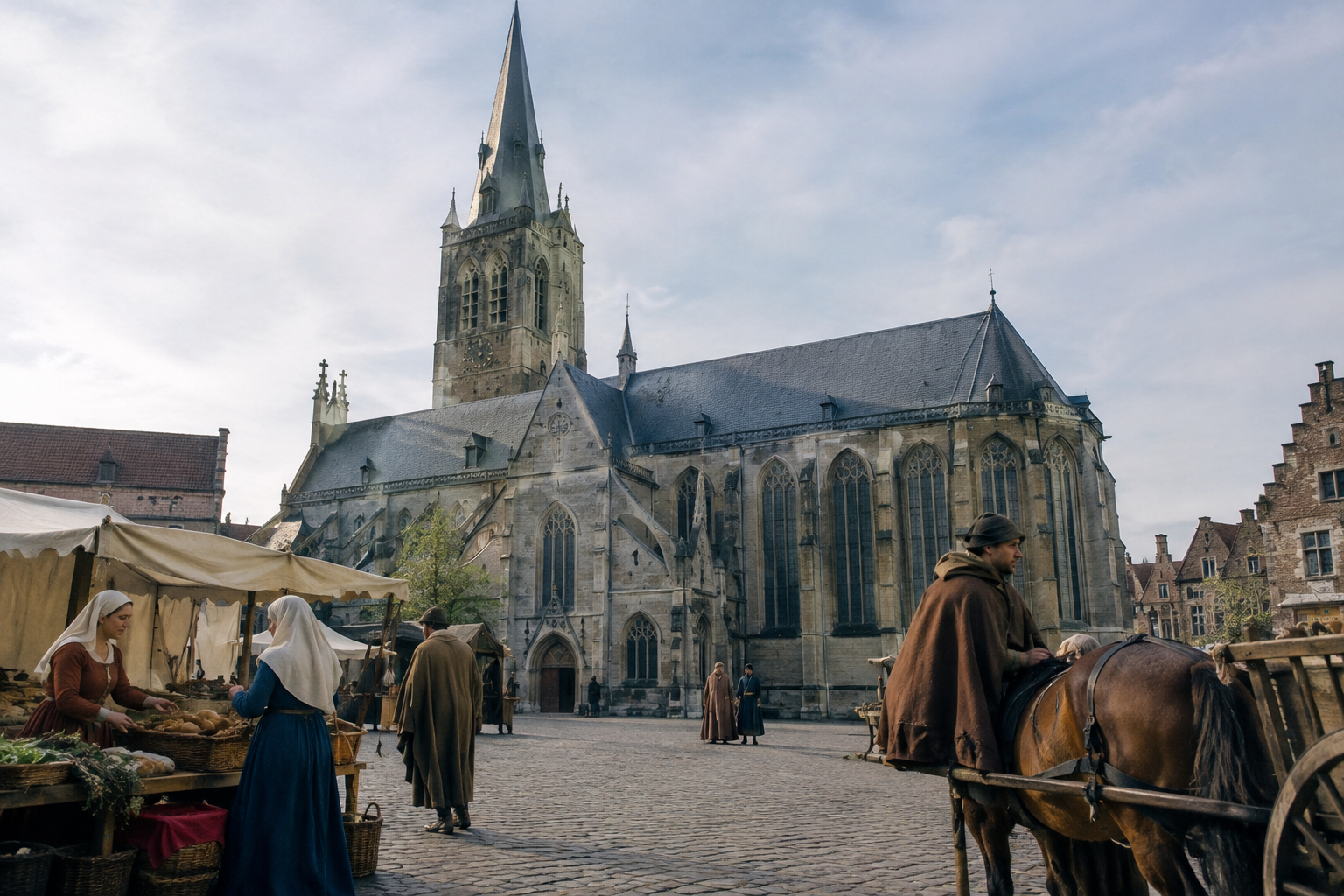
In medieval Sint-Truiden, in present-day Belgium, one man buried at the Onze-Lieve-Vrouwekerk has become an unexpectedly useful guide to the history of Y-DNA haplogroup I2e1. The individual is known as ST0056, dated to around AD 1300. At first glance that may sound almost too late for ancient DNA to feel "ancient" in the dramatic sense. But medieval town cemeteries are often where the story gets especially interesting, because they let us see paternal lineages not in legendary founders or warrior elites, but among ordinary people living inside a real urban community.
That matters for I2e1. Y-DNA traces one direct paternal line only, not a person's whole ancestry, but even a single medieval male line can tell us something important about continuity, settlement, and the shaping of local populations. In the case of ST0056, the value lies less in spectacle than in context: a man from a thriving ecclesiastical town in the Low Countries, carrying a branch of haplogroup I that belongs to one of Europe's deepest paternal frameworks.
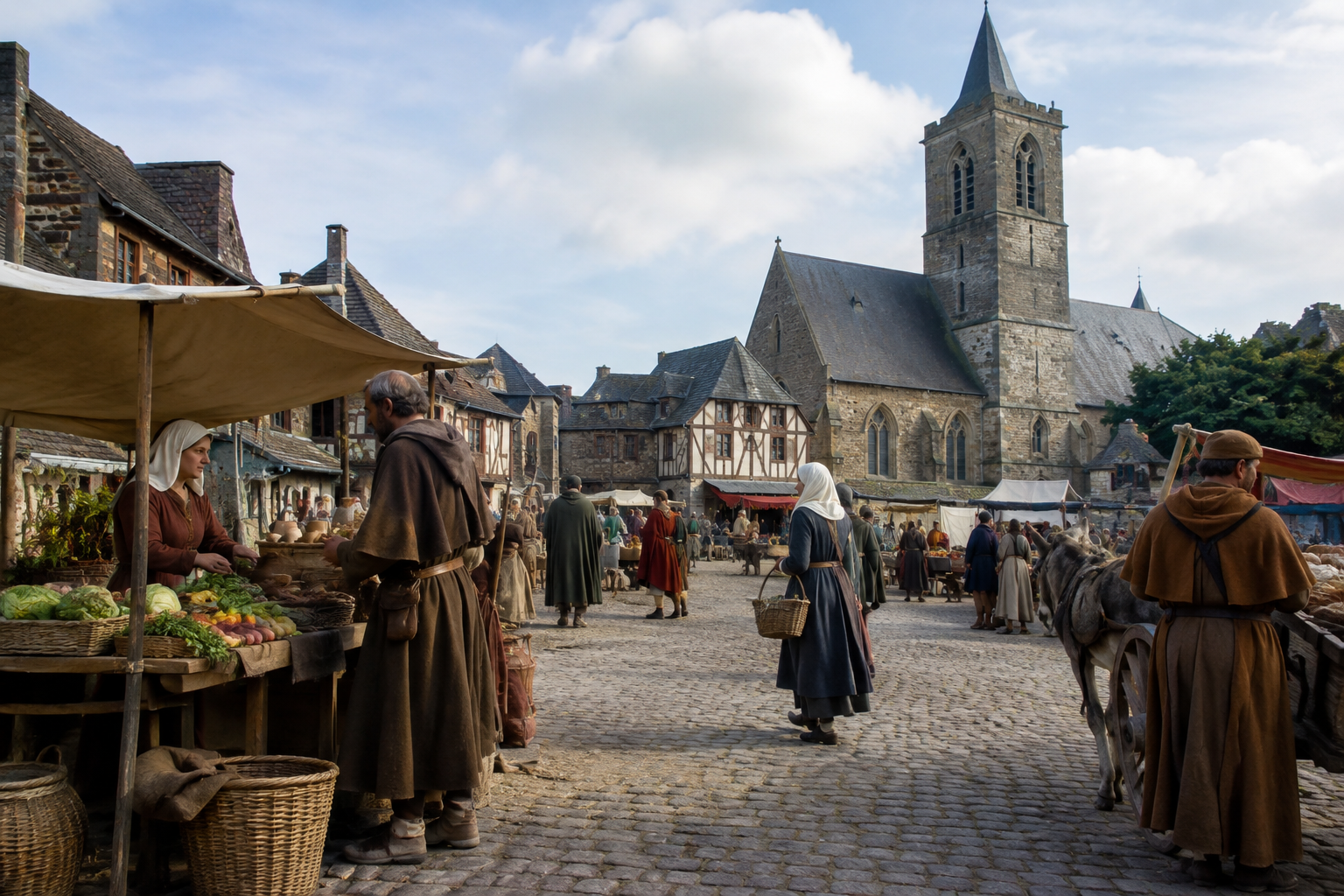
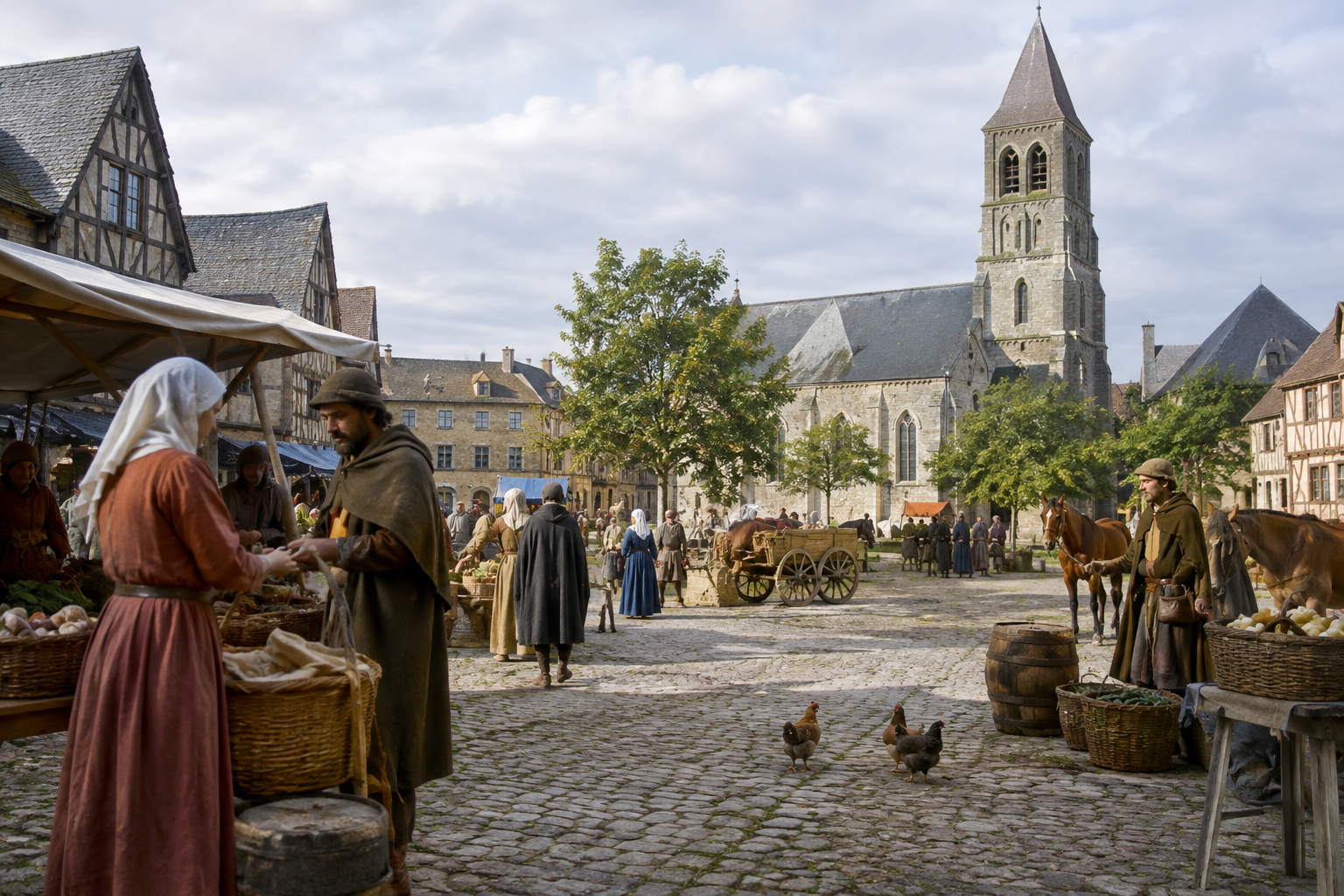
Sint-Truiden was not a remote village on the edge of history. It was a religious and urban centre in the historic region of Loon, shaped by churches, burial grounds, trade, and the dense social world of the medieval Low Countries. A burial from the Onze-Lieve-Vrouwekerk therefore belongs to a population already formed by centuries of movement, marriage, and local continuity.
That is one reason ST0056 is more revealing than he first appears. By AD 1300, this was a world long after the Roman Empire, long after the early medieval transformations of the region, and deep into the period when towns were attracting people from surrounding countryside and beyond. If a lineage like I2e1 appears here, it is part of a settled social landscape rather than a one-off migration event.
A recent ancient DNA study of medieval Sint-Truiden examined exactly these wider questions of urbanisation and population structure, making the site one of the more useful windows into how a town community could be both mixed and locally grounded at the same time. The research is linked here: https://genomebiology.biomedcentral.com/articles/10.1186/s13059-025-03580-z.
The haplogroup name here is specific: I2e1. That is not the same thing as saying simply "I2" or even "haplogroup I". Those broader labels cover a great deal of European paternal history across different times and regions. It would be careless to pour all of that larger story straight into this narrower branch.
Still, the broad background matters. Haplogroup I is one of the old European Y-chromosome frameworks, with deep roots in the continent's prehistoric male lines. Over many thousands of years, its descendant branches appeared in very different settings: Mesolithic foragers, later farming societies, Bronze Age communities, and medieval populations. A man assigned to I2e1 in a Belgian churchyard is therefore not a fossil survival from one ancient tribe or culture. He is a medieval townsman whose paternal line ultimately belongs to that longer European inheritance.
And that, in a way, is the point. Genetic lineages do not map neatly onto language, class, or ethnicity. By the High Middle Ages, a lineage like I2e1 could sit inside a French-speaking, Dutch-speaking, or mixed frontier world without carrying a tidy ethnic label of its own. In a place like Sint-Truiden, the paternal line is part of the story, but never the whole cast of characters.
To understand why ST0056 is useful, it helps to remember where he was buried. The medieval Low Countries were one of Europe's classic contact zones: Roman provinces in antiquity, frontier territories in the post-Roman centuries, and later a patchwork of lordships, bishoprics, abbeys, and market towns. Populations here were shaped not by one simple replacement, but by repeated layers of continuity and movement.
That wider regional pattern fits well with what ancient DNA has increasingly shown elsewhere in northwestern Europe. Medieval populations often contain lineages that are older than the political identities attached to them. A Y-chromosome branch may persist across Roman, post-Roman, and medieval periods even while languages shift, towns grow, and institutions change around it.
For that reason, ST0056 is best read as evidence of presence, not of a dramatic founding episode. His I2e1 line shows that this branch was part of the paternal landscape of medieval Belgium. It does not by itself prove when the line first arrived locally, whether it had been in the region since prehistory, or whether it had entered during one of the many demographic currents that crossed the Rhine-Meuse world.
Lower Rhine-Meuse Deep Ancestry
There is a temptation in archaeogenetics to chase only the glamorous dead: kings, warlords, famous dynasties. But a burial such as ST0056 reminds us why churchyards matter. Medieval cemeteries attached to active religious institutions can reveal the biological texture of everyday populations far better than a rare elite tomb can.
In practical terms, that means lineages like I2e1 are not just curiosities on a phylogenetic tree. They were carried by real men living ordinary lives in a busy medieval society. The significance lies in the social setting: not an isolated hillfort, not a legendary migration, but a documented urban burial community in the heart of Latin Christendom.
That perspective also helps when thinking about language and identity. The Low Countries sat close to the long historical frontier between Germanic and Romance speech zones, and shifts in language did not require lineages to vanish and reappear wholesale. Genetic evidence from northwestern Europe has increasingly complicated older, cleaner stories about peoples moving like blocks across a map. If that subject interests you, this related piece explores how genomics has been used in debates about language spread: Tracing the spread of Germanic languages using ancient genomics.
With only one named ancient individual in this article's evidence base, caution is essential. We should not pretend that ST0056 defines I2e1 everywhere, or that medieval Belgium was somehow its exclusive homeland. But he does place the branch firmly within the historical population of northwestern Europe.
That is valuable because the region around Belgium, the Netherlands, and the lower Rhine has seen long-term demographic layering from prehistory onward. Bell Beaker expansions, Roman-era mobility, post-Roman settlement change, and medieval urban growth all left their mark. A paternal branch turning up in a thirteenth- or fourteenth-century church context may have arrived in the region at any number of earlier moments, or may reflect local continuity through several of them.
In that sense, I2e1 belongs to one of the oldest recurring themes in European archaeology: the survival of older local male lines within populations that are culturally and linguistically transformed again and again. That is a much more interesting picture than the old search for pure peoples. History is messier, and rather more human.
If your paternal line falls under I2e1, ST0056 offers a modest but solid kind of connection. It shows that this branch was present in a medieval urban population in Belgium by around AD 1300, embedded in the lived world of churches, towns, and regional society. That does not make every modern I2e1 lineage "Belgian," still less does it tie anyone to a named dynasty. What it does provide is a historically grounded glimpse of the branch inside the documentary Middle Ages.
For family historians, that is often exactly where DNA becomes most useful: not as a fairy tale of instant identity, but as a clue about how one direct male line participated in the long making of Europe. In the case of I2e1, the clearest picture here is of endurance. A deep European paternal branch was still quietly present in a medieval burial ground at Sint-Truiden, carried not by a legend, but by a man called ST0056.
Comments