Haplogroup I2a2

– 6 min read


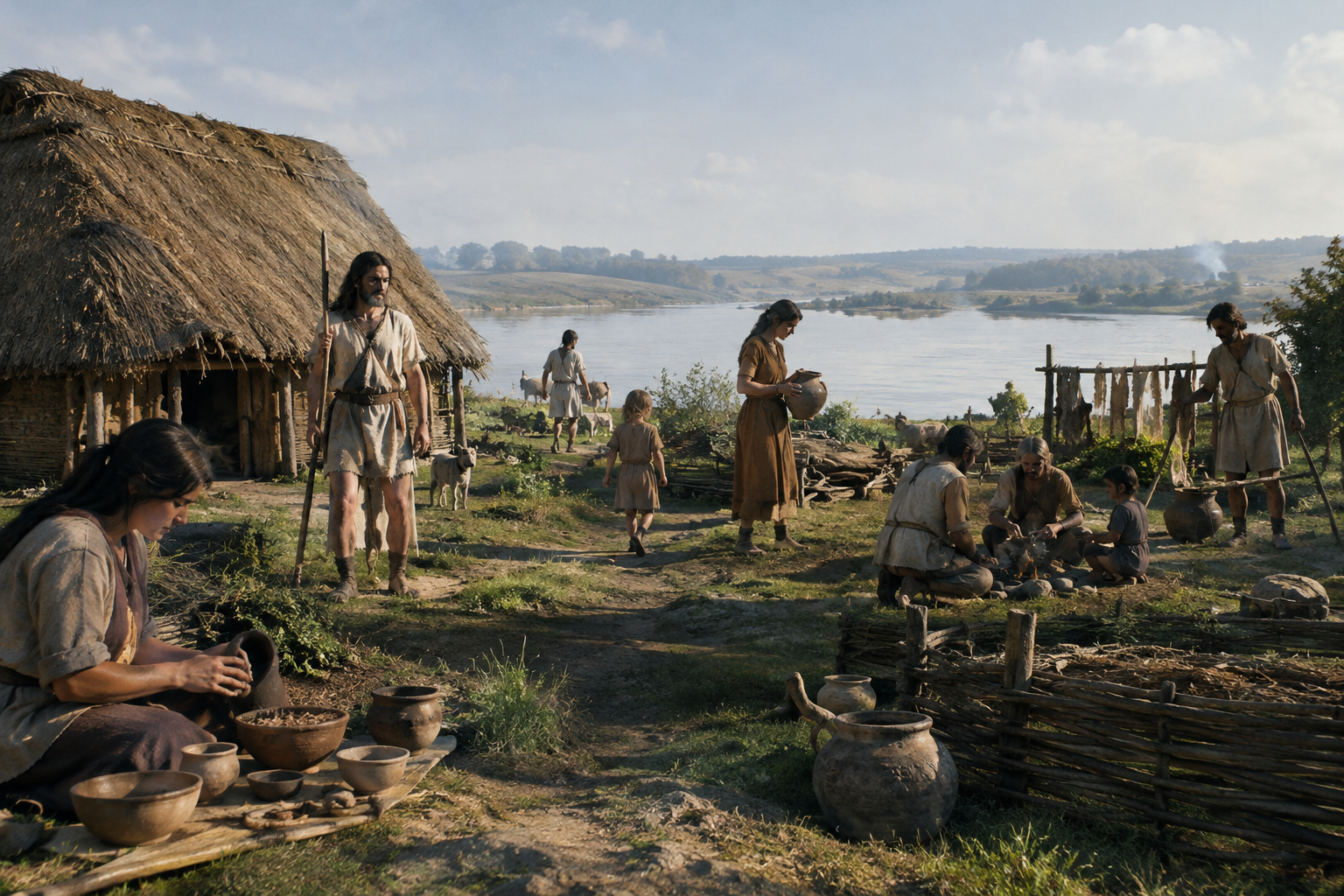
Haplogroup I2a2 is one of those Y-chromosome lineages that reminds us how stubbornly the male line can persist, even while everything else changes around it: languages, kingdoms, burial customs, and the names people gave themselves. In plain terms, a Y-DNA haplogroup tracks one direct paternal line - father to son to son over many generations. It is a powerful historical tool, but it is only one line among thousands in any person's family tree, not a summary of complete ancestry.
What makes I2a2 especially interesting is its appearance across a striking span of time and place. In the ancient DNA record supplied here, it turns up in Neolithic southeastern Europe, in later Bronze Age Central Europe, in prehistoric Britain and Orkney, and even in medieval Russia. That does not mean all these men belonged to one close-knit "people" in any modern sense. It means that one paternal branch, or branches within it, kept reappearing in very different societies. That is precisely where archaeology and genetics become so useful together: the DNA gives us continuity, while the archaeology shows us change.
I2a2 belongs within the broader haplogroup I family, one of the major old European Y-chromosome groupings. In broad outline, lineages within haplogroup I are often associated with deep European prehistory, though any specific sub-branch such as I2a2 must be treated carefully and not simply handed the full biography of the entire parent haplogroup. What the evidence does suggest is that I2a2 was present in Europe long before the rise of medieval dynasties and long before the written record began to classify peoples as Celts, Slavs, Germans, or anything else.
The supplied ancient samples place I2a2 in early farming worlds as well as later metal-age societies. That matters. It suggests that this paternal lineage, or closely related branches within it, was not tied to one short-lived episode, but was part of the human landscape as farming spread, local communities formed, and later Bronze Age networks reshaped much of Europe.
For readers interested in the larger archaeological context of those early farming expansions, MyTrueAncestry has a useful companion piece on the Neolithic expansion in Europe.
Some of the most revealing evidence for I2a2 comes from the early Neolithic and Middle Neolithic east and southeast of the continent. Sample I2529 from ancient Bulgaria, Yabalkovo, dated to 5640 BC, and sample I5870 from Neolithic Ukraine, Vilnianka in Zaporizhia, dated to 5413 BC, show this paternal line already present in regions that were crucial corridors of movement and exchange. These are not abstract dots on a phylogenetic tree. They were men living in communities shaped by the first centuries of farming life, settlement building, and the changing relationship between older forager landscapes and incoming agricultural systems.
Another early example, I2384 from Middle Neolithic Hungary, Hajdunanas Eszlari Ut, dated to 5164 BC, places I2a2 firmly in the Carpathian Basin. That region would remain, for millennia, a crossroads of Europe. The significance is not that one sample "proves" a homeland, but that it shows I2a2 present in a key zone where populations met, mixed, and reorganized repeatedly.
Then the story broadens dramatically. Sample CGG105358 from Neolithic Denmark, Sludegaard Frorup, dated to 3415 BC, and I2977 from the Neolithic Orkney Islands, Tomb of the Eagles, dated to 3200 BC, show I2a2 in northern and island settings far from the Balkans and the Carpathian Basin. Add I0518 from Banbury Lane, Northamptonshire, England, dated to 3230 BC, and we are looking at a lineage found not only in continental Europe but in the megalithic and early farming worlds of Britain as well.
Orkney is especially evocative. The Tomb of the Eagles is one of those places where archaeology almost forces you to slow down: chambered tomb, sea winds, communal memory, and now a male lineage that can be tracked in the lab. But even here caution matters. Sharing I2a2 with a Neolithic man from Orkney does not make anyone his direct descendant. What it does offer is a glimpse into the paternal diversity present in those island communities.
Readers fascinated by those northern tomb worlds may also enjoy this related article on Neolithic tomb kinship in northern Scotland.
Discover Neolithic Tomb Kinship
By the Bronze Age, the map becomes even more crowded. I0826 from Bronze Age Spain, North-East Iberia, Barcelona Paris Street, dated to 2296 BC, shows I2a2 in Iberia. Bul6 from Bronze Age Beli Breyag, Bulgaria, dated to 2500 BC, keeps the southeastern thread alive. And then Central Europe comes into sharp focus.
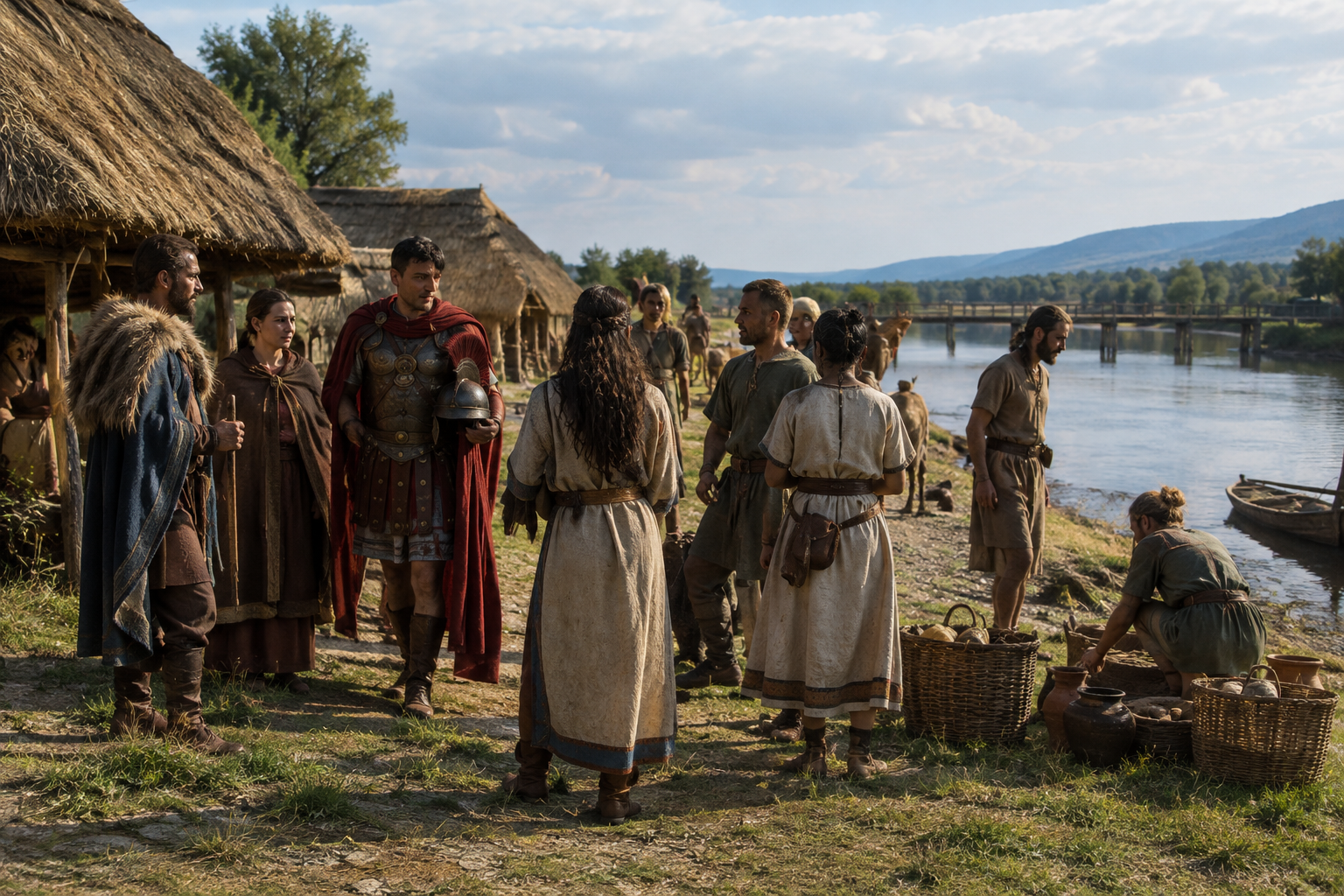
One sample stands out immediately: I0114 from Bronze Age Unetice Esperstedt, Germany, dated to 2100 BC. The Unetice horizon has long been central to discussions of early Bronze Age Central Europe, with its metalwork, burial customs, and regional elites. I2a2 here is not a relic trapped in a prehistoric corner. It is present in one of the formative Bronze Age settings north of the Alps.
The Czech material is even more striking for its density: BNL002, BNL007, BNL006, and BNL003 from Bronze Age Brandys nad Labem, all dated to 1600 BC; CHL002 from Bronze Age Chieby Czech, dated to 1900 BC; ROU005 and ROU007 from Bronze Age Roudnice nad Labem Czech, dated to 1600 BC; PDA002 and PDA005 from Early Bronze Age Prague Miskovice, dated to 1600 BC; PMI004 from Bronze Age Miskovice Czech, dated to 1680 BC; and VLI042 from Bronze Age Vlineves Bohemia CWC, dated to 1600 BC. Taken together, these do not merely show a scattered presence. They suggest that lineages within I2a2 were part of the paternal landscape of Bronze Age Bohemia and neighboring regions over an extended period.
This is where genetics becomes especially useful for historians. Cultures shift names in the archaeological record; burial styles rise and fall; long-distance trade changes social life. Yet paternal lines may persist through those changes, sometimes locally, sometimes after migration, often through a mixture of both.
For a wider view of these developments, see MyTrueAncestry's article on life and mobility in Late Bronze Age Central Europe.
Explore Bronze Age Central Europe
The later evidence in the supplied set is sparse but tantalizing. Sample poz462 from Bronze Age Poland, Biskupin Gasawa, dated to 1750 BC, points northward into another important zone of European development. Much later, SHE007 from medieval Russia, Shekshovo, dated to 1000 AD, shows that I2a2 lineages were still present in the medieval east European world. That does not draw a neat uninterrupted family tree from one site to another. But it does show that the broader paternal branch endured across huge chronological divides.
This is exactly why one should resist the temptation to equate haplogroups with ethnic labels. The men represented by I2529, I2977, I0114, and SHE007 did not belong to one tidy historical "tribe." They lived in different worlds. What unites them is a paternal marker; what differentiates them is almost everything else archaeology can tell us about daily life, belief, technology, and society.
If you want to follow that eastern dimension further, the article on ancient DNA and migrations in the Northern Black Sea region is an especially relevant companion.
Read About Black Sea Migrations
In this case, the supplied field for associated noble families and castles is empty. Oddly enough, that is a useful reminder of how historical genetics ought to be handled. It is very tempting to leap from a broad Y-DNA haplogroup to a named medieval dynasty with banners, fortresses, and documented pedigrees. But without specific family evidence, that leap would be fiction dressed up as science.
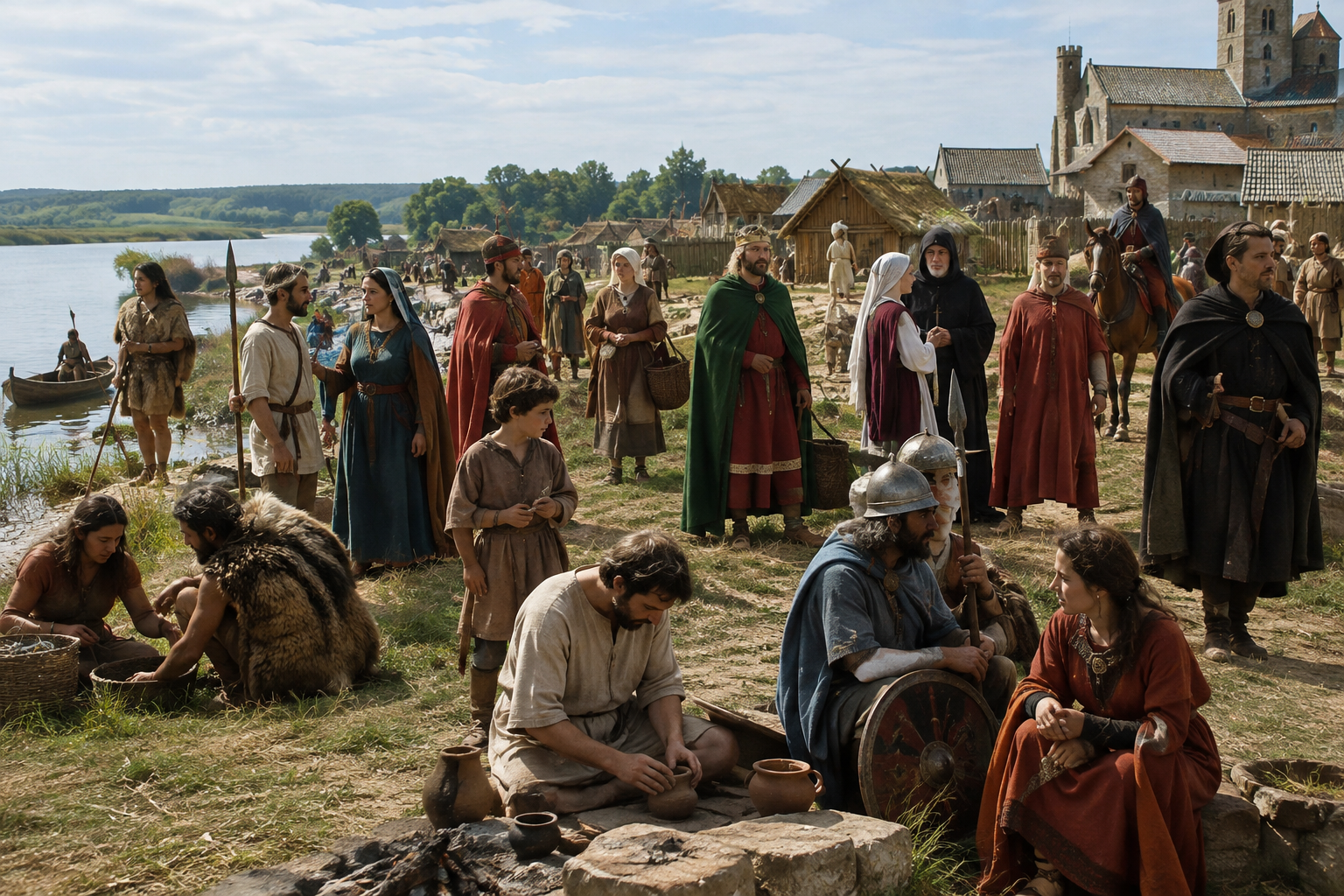
And yet the absence of named castles does not make the story less historical. Quite the opposite. The ancient samples already map a series of real landscapes that later became lands of strongholds, lordships, and frontier polities: the plains of Hungary, the valleys of Bohemia, the coasts of Denmark, the islands of Orkney, the routes through Poland, and the river worlds of Russia. Medieval castles in such places did not spring from nowhere. They were built in regions with long, layered human histories, and lineages such as I2a2 were part of that deep background.
So the responsible conclusion is not "this haplogroup belonged to such-and-such noble house." It is that ancient paternal lines can provide context for the regions where later noble society emerged. Written genealogy and ancient DNA work on different scales. Occasionally they intersect closely; often they illuminate the same landscape from different angles.
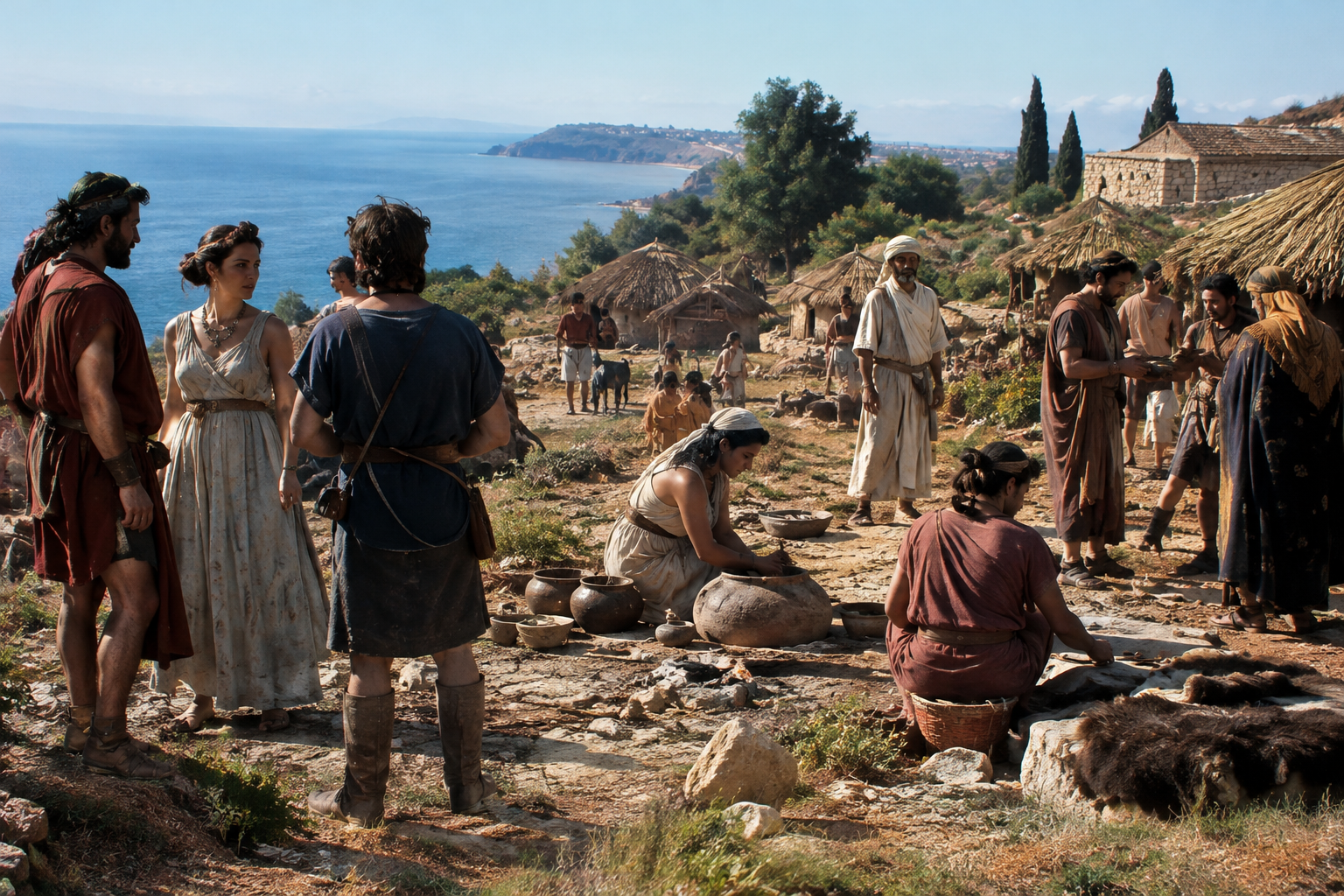
I2a2 is historically interesting because it refuses to stay in one box. In the supplied data it appears in early Balkan and Carpathian farming contexts, in Neolithic Denmark and Britain, in the tomb world of Orkney, across Bronze Age Central Europe, in Iberia, and later in medieval Russia. That spread does not offer a single simple origin tale. Instead, it points to persistence, movement, and regional survival across many different archaeological settings.
For anyone who carries I2a2 today, the lesson is not that your paternal line makes you the heir of one ancient culture or one medieval people. The better lesson is subtler and more interesting: your direct male line may belong to a branch that has been part of European history for a very long time, appearing in communities that looked and lived very differently from one another.
That is the excitement of MyTrueAncestry. Ancient DNA can place your results beside real excavated individuals like I2384, I2529, I2977, I0114, or SHE007, and help you think more clearly about the deep past behind a modern surname or family tradition. It cannot by itself prove direct descent from a particular ancient man or noble family, but it can open a remarkably vivid window onto the worlds your ancestors once inhabited.
Upload your DNA to MyTrueAncestry and explore whether your results show connections to ancient populations, archaeological cultures, and individuals linked to the long history of paternal lineages like I2a2.
Comments