Haplogroup I2a1b1a2b2

– 5 min read


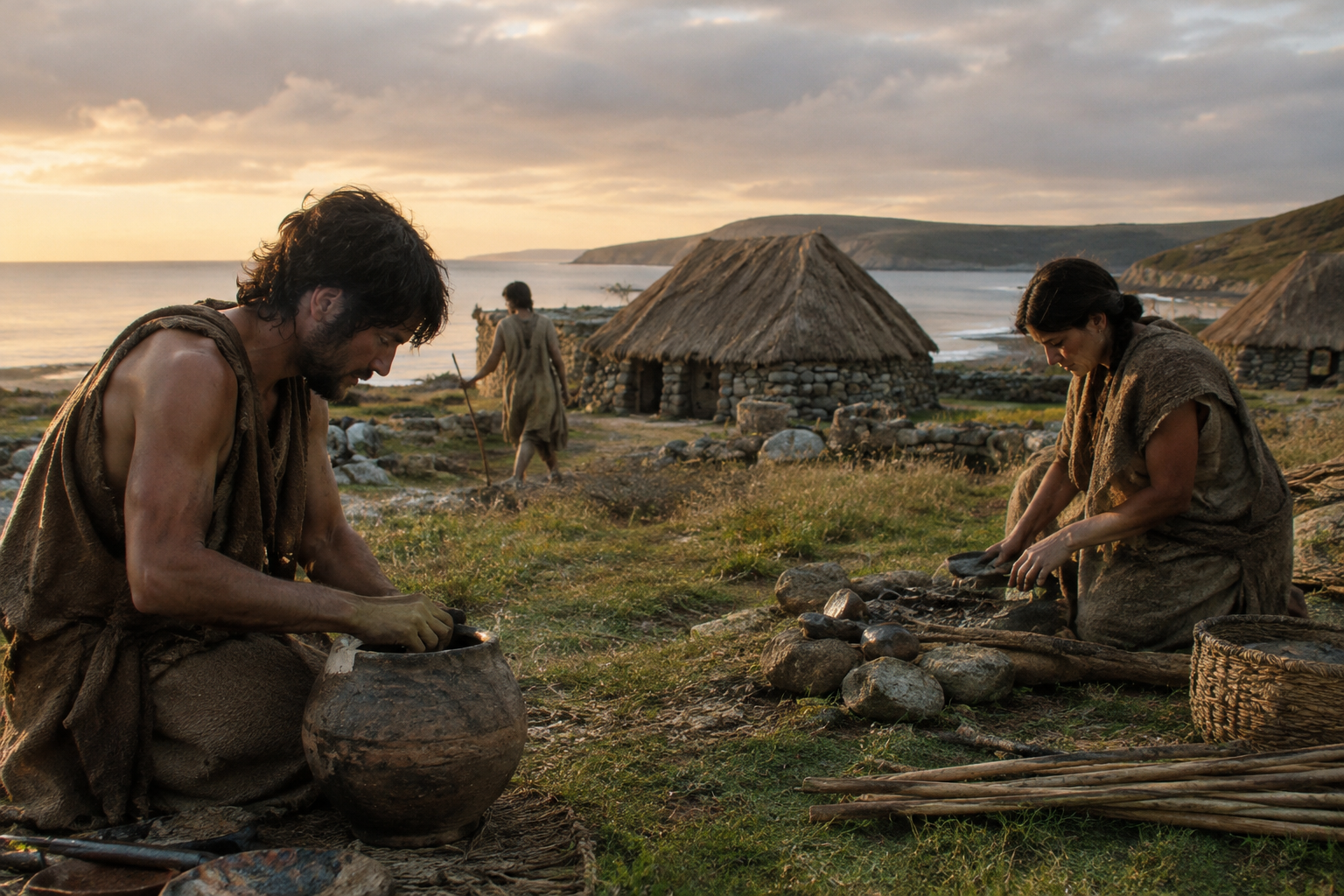
One of the more arresting clues for Y-DNA haplogroup I2a1b1a2b2 comes from a man buried in Copper Age Italy: sample GLR002 from Gattolino, dated to around 2704 BC. He does not arrive with a king's name or a saga attached. Instead, he appears in the quieter, and often more revealing, company of prehistoric community archaeology: one excavated individual from a farming world that was already old in Italy, but still changing.
That matters because I2 lineages are among the deep-rooted paternal branches of Europe, yet each narrower subclade has its own history. For I2a1b1a2b2, the evidence supplied here does not point to a single dramatic migration tale so much as a long persistence across very different prehistoric settings. We see this branch associated with both Neolithic Orkney and Copper Age Italy, which is a striking pattern in itself: the same paternal line turning up in two distant regions at two different moments in early European history.
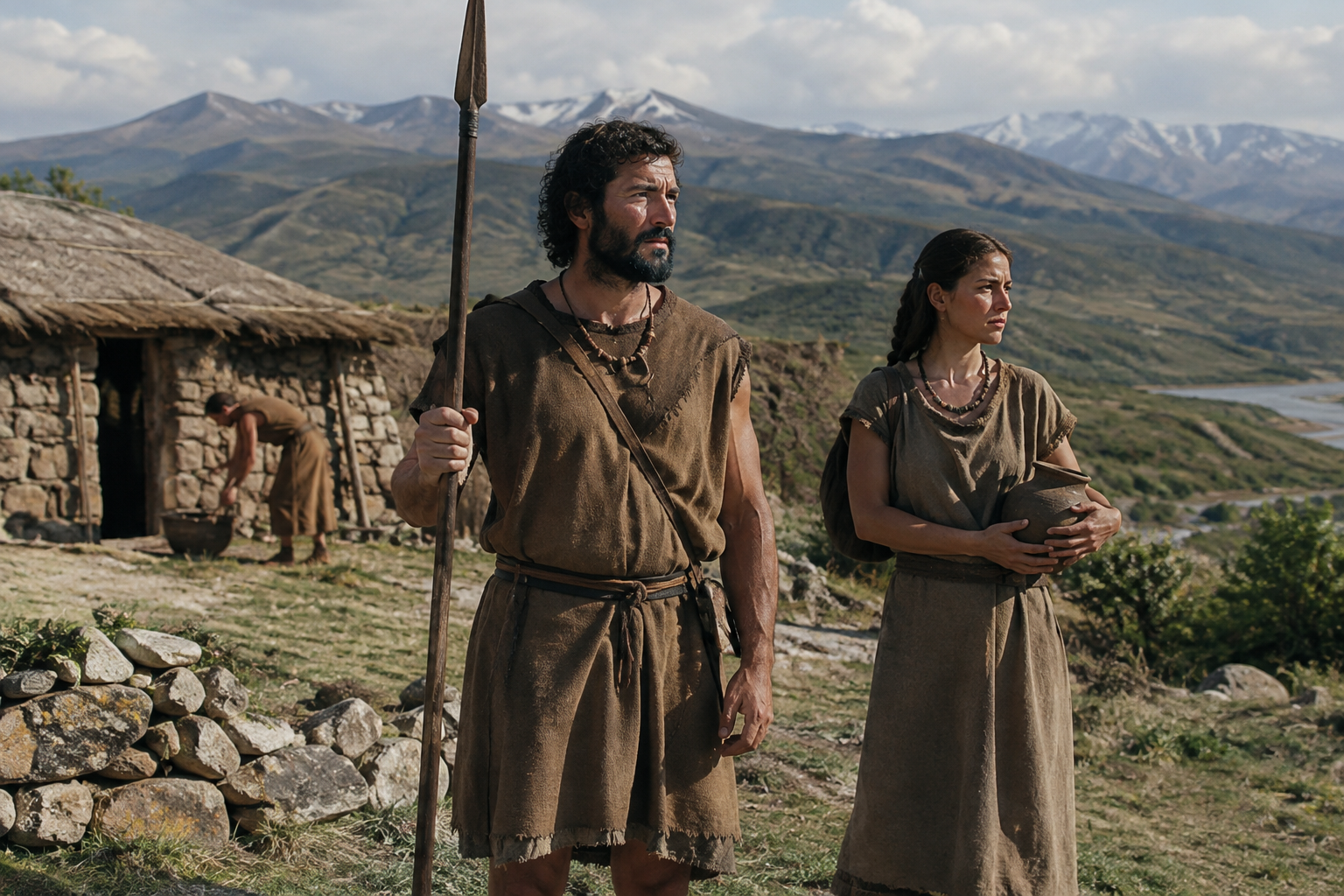
Sample GLR002, from Gattolino in Italy and dated to around 2704 BC, places this paternal branch in the later prehistoric world of the peninsula. By that date, farming had long been established, but communities were not static. Copper Age Italy was a landscape of local continuity, regional contacts, and increasingly varied ways of burying the dead and organizing society.
With only the sample label, location, and date securely in hand, the most responsible reading is also the most useful one: this is evidence that a lineage associated here with I2a1b1a2b2 was present among prehistoric Italian males during a period when Europe's earlier farmer populations were interacting with newer demographic currents. It does not mean all Copper Age Italians carried this line, nor that one Y-chromosome tells us everything about the man's ancestry. Y-DNA follows a direct paternal line only, but it can still preserve a remarkably old thread through changing archaeological worlds.
For readers interested in how ancient genomes illuminate the peninsula more broadly, Italy repeatedly shows this mixture of persistence and change rather than a simple replacement story.
The second ancient clue is older still: sample I2650 from the Orkney Islands, dated to around 3200 BC. Orkney in this period was no marginal outpost. It was one of the most archaeologically vivid parts of Neolithic Europe, known for substantial stone architecture, chambered tombs, and unusually rich evidence for settled life.
To find a lineage associated with I2a1b1a2b2 in that setting is important because Neolithic Britain and Ireland were not genetically uniform, and Orkney has become central to debates about kinship, descent, and local continuity. A major ancient DNA study of prehistoric Britain published in Nature helped establish just how informative these island burials can be for understanding population history. Even when one sample cannot stand for an entire community, it can show that this paternal branch had reached, or persisted in, the far north of the British Isles by the late Neolithic.
That opens a more interesting question than the old habit of asking who "belonged" where. Was this branch part of an older European male landscape that survived in pockets? Was it carried and maintained within local kin groups over many generations? The honest answer is that the present evidence is too thin to settle that. But Orkney is exactly the kind of place where such questions become historically meaningful, because tombs and settlements there often preserve the social framework behind the genetics.
The wider haplogroup I2 is one of the old European Y-chromosome families, with roots that reach deep into prehistoric Europe. But that broad statement should not be carelessly poured into every smaller branch beneath it. I2a1b1a2b2 is not the same thing as all I2, and the supplied evidence does not justify assigning this exact subclade a neat origin story, founder event, or single migration route.
What we can say is narrower and better. The branch is represented here in two very different prehistoric contexts: a Neolithic island society in Orkney and a Copper Age farming landscape in Italy. That combination suggests durability. Instead of appearing only in one tightly bounded region, this paternal line surfaces in communities separated by both geography and time.
Research on prehistoric population turnover often shows that paternal lines can shift dramatically even when other parts of ancestry remain more mixed and complex. That is one reason ancient Y-DNA is so useful: it may reveal continuity along one male line even when languages, burial customs, and genome-wide ancestry are all changing around it.
It is tempting to imagine Europe before written history as divided into tidy genetic blocks. Archaeology stubbornly refuses that simplification. Orkney around 3200 BC belonged to a world of monumental building and island networks; Gattolino around 2704 BC belonged to a later horizon in Mediterranean prehistory, when metal use and regional identities were becoming more pronounced. These were not the same societies wearing different costumes. They were genuinely different historical settings.
And yet a related paternal line appears in both. That is the point worth dwelling on. The story of I2a1b1a2b2, at least with the evidence presently before us, is not one of imperial dynasties or named conquerors. It is a story of survival through ordinary prehistoric men whose descendants may have lived through enormous social transformations without leaving written genealogies behind.
An ancient DNA study connected with later prehistoric and Neolithic developments in Europe, published in Current Biology, reflects the larger scholarly effort to untangle exactly these long-term population histories. The important thing for a reader is not to force one paper or one sample to say too much, but to notice the broader pattern: lineages like this one gain meaning when archaeology and genetics are read together.
Neolithic Transition in Europe
These two samples are valuable precisely because they are so unlike one another. I2650 anchors the branch in one of the best-known Neolithic landscapes of Atlantic Europe. GLR002 places it in prehistoric Italy during the Copper Age, a period when old Neolithic foundations were being reworked into something new.
That pairing warns against oversimplified claims. It would be wrong to call I2a1b1a2b2 an "Orcadian" lineage, just as it would be wrong to brand it exclusively "Italian." Ancient DNA rarely behaves so obediently. What it often shows instead is a long series of local histories, in which some paternal lines vanish, others spread, and a few appear again in places that remind us how interconnected prehistoric Europe could be.
There is also a methodological lesson here. When you match a Y-DNA line on MyTrueAncestry, you are not discovering a tribal badge or a guaranteed surname-age genealogy. You are glimpsing one narrow paternal thread that may surface in burials, islands, villages, and farming communities separated by millennia.
For haplogroup I2a1b1a2b2, the most distinctive insight is not prestige but persistence. The branch appears here in late Neolithic Orkney and in Copper Age Italy, suggesting a paternal line that was present in very different parts of prehistoric Europe as communities built tombs, farmed land, and adapted to new social worlds. If this is your haplogroup, the responsible takeaway is not that you descend from a famous house, but that your direct paternal line may preserve one of those quieter European continuities that archaeology is only now beginning to map.
Comments