Haplogroup I2a1b1a2b1a2a2b

– 5 min read


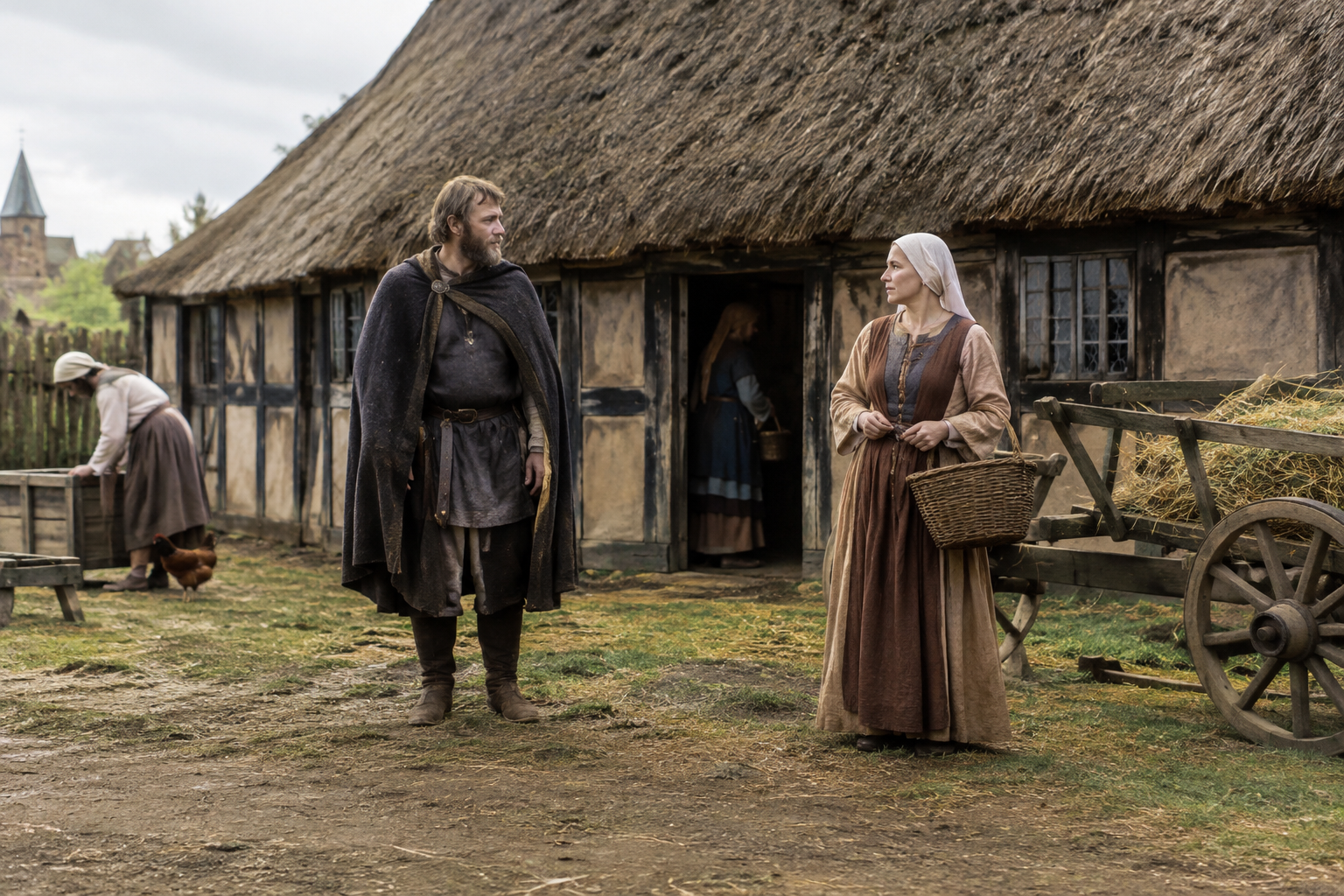
In about AD 1270, a man identified as KH150937 was buried at Sankt Jorgensgarden in Odense, Denmark. That may sound, at first glance, like a modest medieval data point. But it is precisely this sort of burial that makes ancient DNA so useful: not a king in a cathedral, not a saga hero, but an ordinary person from a real urban landscape whose remains can still tell us something about paternal ancestry, disease, and movement in the post-Viking world.
KH150937 is associated here with the Y-DNA haplogroup I2a1b1a2b1a2a2b, a very narrow paternal branch within the wider I2 family of European Y-chromosome lineages. Y-DNA follows one direct male line only - father to son to son - so it does not sum up a person's whole ancestry. Even so, when a branch like this appears in a securely dated medieval burial, it gives us a sharply focused glimpse into how older European paternal lines persisted within Christian, urban, and medically complex societies of the later Middle Ages.
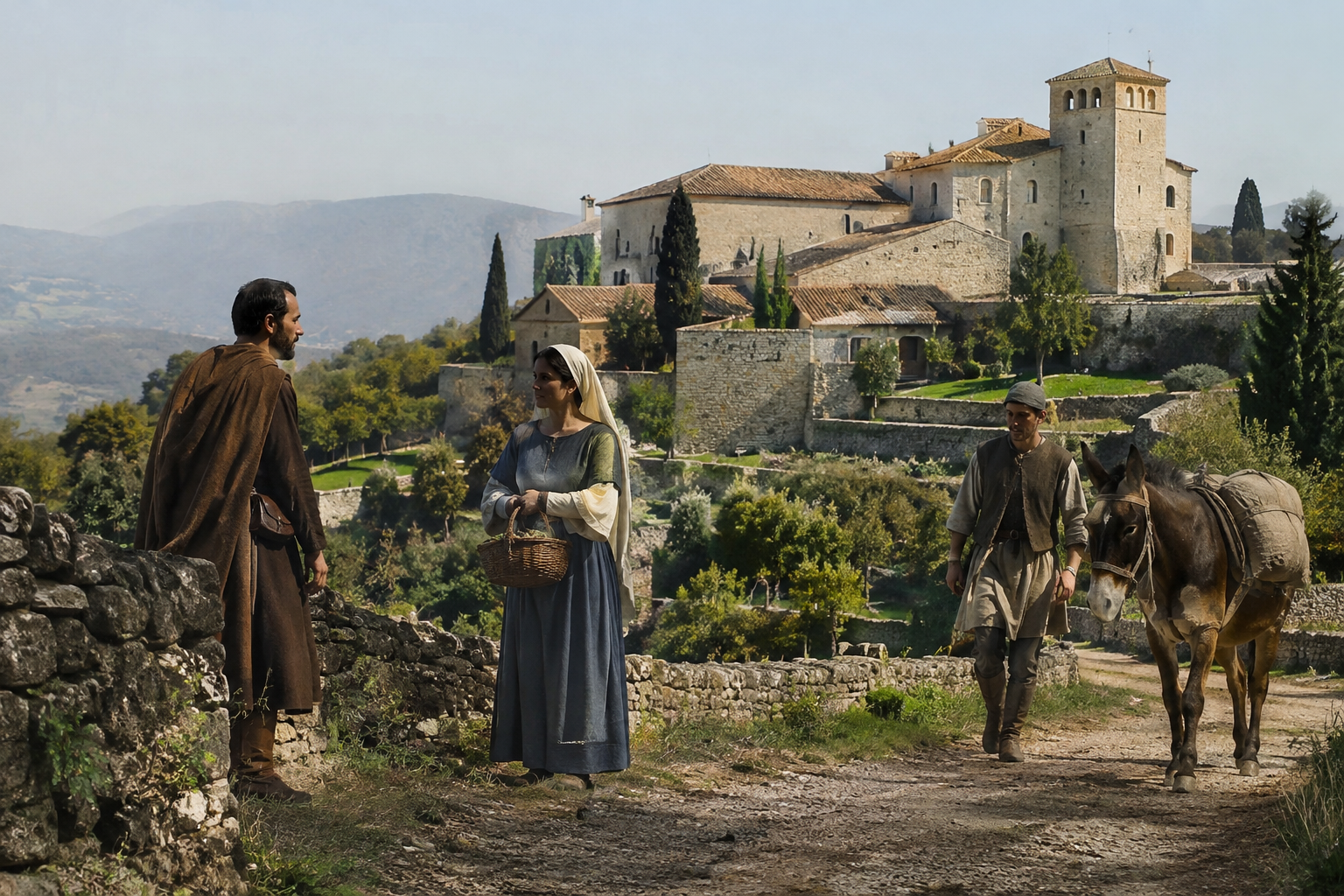
Sankt Jorgensgarden is historically significant because sites dedicated to St George in medieval Scandinavia are often connected with hospitals or institutions caring for people with leprosy. Odense itself was one of the major towns of medieval Denmark, a place shaped by trade, Christianity, craft production, and regional traffic across the Danish islands and the wider Baltic world. A burial from this setting therefore belongs not to an isolated village past, but to a busy and interconnected medieval society.
That matters for how we read KH150937. A Y-chromosome branch such as I2a1b1a2b1a2a2b did not survive in a vacuum. By the late 13th century, Denmark had already passed through the Viking Age, the consolidation of royal power, and centuries of contact with Germany, the British Isles, the Baltic, and the North Atlantic. A man buried in Odense at this date stands at the meeting point of older Scandinavian population history and the more cosmopolitan world of medieval towns.
An ancient DNA study examining medieval leprosy contexts in Europe has helped draw attention to exactly these kinds of burials, where human genomes and pathogen histories can be studied side by side. In this case, the broader research setting is important because it reminds us that KH150937 was not just a bearer of a Y-lineage, but a person living in a society where chronic infectious disease shaped institutions, burial grounds, and social care: research on medieval European leprosy and ancient DNA.
Early Christian DNA in Scandinavia
The wider I2 haplogroup is one of the long-established paternal families of Europe, with deep roots on the continent long before the medieval period. But the article haplogroup here, I2a1b1a2b1a2a2b, is much narrower. That distinction is crucial. It is reasonable to say KH150937 belongs within an old European paternal tradition; it is not reasonable to load this exact sub-branch with every migration story ever told about I2 as a whole.
In practical terms, a late medieval carrier of this lineage in Denmark shows continuity rather than origin. It tells us that one strand of older European paternal ancestry was still present in a Christian burial ground centuries after the Viking Age. It does not, by itself, identify language, status, ethnicity, or a named tribe. Nor does it prove that all nearby men, or all Danes, shared the same paternal history.
This is where ancient DNA is at its most interesting: it narrows the frame. Instead of talking vaguely about "Scandinavians," we can point to one man, in one town, around one period, and say that this paternal branch was part of that lived medieval population.
There is sometimes a temptation to imagine the end of the Viking Age as a sharp break, as though the conversion to Christianity and the growth of towns created an entirely new population. Archaeology rarely supports such neat endings. Urban Denmark after AD 1000 was transformed in religion, administration, and architecture, but that did not mean older family lines vanished. Quite the opposite: many persisted through the transition and simply became part of a different social order.
Odense is a good place to see that. It was both ecclesiastical and commercial, and over time it drew in people from surrounding rural districts as well as more distant regions. A lineage like I2a1b1a2b1a2a2b could therefore represent local continuity, regional movement into town, or some mixture of the two. Without additional isotopic or kinship evidence for KH150937, we should not over-specify the route. But the burial does fit a larger historical truth: medieval Scandinavian towns were built from many kinds of people, not from a single newly arrived population.
Denmark's Deep Population History
That wider Danish backdrop stretches back far beyond the Middle Ages. Over millennia, Denmark saw Mesolithic foragers, Neolithic farmers, and later Bronze and Iron Age communities, each contributing to the population mix from which medieval Danes emerged. A medieval Y-lineage is therefore the end point of a very long chain, even if the exact branching history of this specific subclade cannot be reconstructed from one burial alone.
One of the most valuable things about sites like Sankt Jorgensgarden is that they bring genetics into contact with social history. Medieval leprosy hospitals and associated cemeteries were not abstract institutions; they were places where the sick were housed, treated, segregated to varying degrees, and remembered in death. Ancient DNA from such burials has begun to show that these were not closed, biologically uniform populations. They were made up of real communities with varied backgrounds.
KH150937's association with I2a1b1a2b1a2a2b fits that picture well. There is nothing exotic about the lineage in a European context, and that is precisely the point. Medieval disease history was not only a story of outsiders or dramatic migrants. It was also a story of local and regional people - townsmen, laborers, dependents, worshippers, patients - whose ancestries could be entirely ordinary for their region.
This is one reason bioarchaeology has become so powerful. It restores texture to groups once flattened into labels like "the leprous" or "the medieval sick." A man such as KH150937 had a paternal ancestry, a burial place, and a place in urban Danish history, not just a diagnosis or an institutional category.
Leprosy and Migration in Medieval Europe
Any discussion of medieval Denmark has to reckon with mobility. Odense belonged to a kingdom tied into North Sea and Baltic exchange, and post-Viking Scandinavia remained highly connected. Merchants, clergy, craftspeople, and the poor all moved through these networks. So did diseases. That is the historical stage on which KH150937 lived.
But connection is not the same thing as proof of migration for one individual. A Y-chromosome lineage cannot tell us whether this man spoke Danish as his first language, whether his paternal grandfather came from elsewhere in Scandinavia, or whether his family had been in Funen for generations. What it can tell us is more modest and, in some ways, more useful: a fine-grained paternal branch of the wider European I2 family was present in a documented medieval Danish setting shaped by Christian institutions and regional exchange.
This kind of evidence also sits comfortably beside broader genomic work on language spread and early medieval population history in northern Europe, where continuity and mobility often appear together rather than as opposites.
Germanic Languages and Ancient Genomics
For someone exploring the haplogroup I2a1b1a2b1a2a2b, KH150937 offers a grounded historical anchor: this paternal branch appears in a real medieval burial from Odense around AD 1270, in a setting tied to urban Denmark and the social history of disease. The strongest lesson is not romance or prestige, but continuity. This is a lineage that could belong within the fabric of later medieval northern Europe, carried by men whose lives were part of ordinary history rather than dynastic legend.
If your own paternal line falls on this branch, the most responsible reading is that it may connect you to one of those enduring European male lines still present in medieval Scandinavia. That is plenty interesting enough. Ancient DNA does not need to turn every ancestor into a chieftain when it can place even one man, firmly and humanly, in the streets and burial grounds of medieval Odense.
Comments