Haplogroup I2a1b1a2b1a2a1a1a1a1a3

– 5 min read


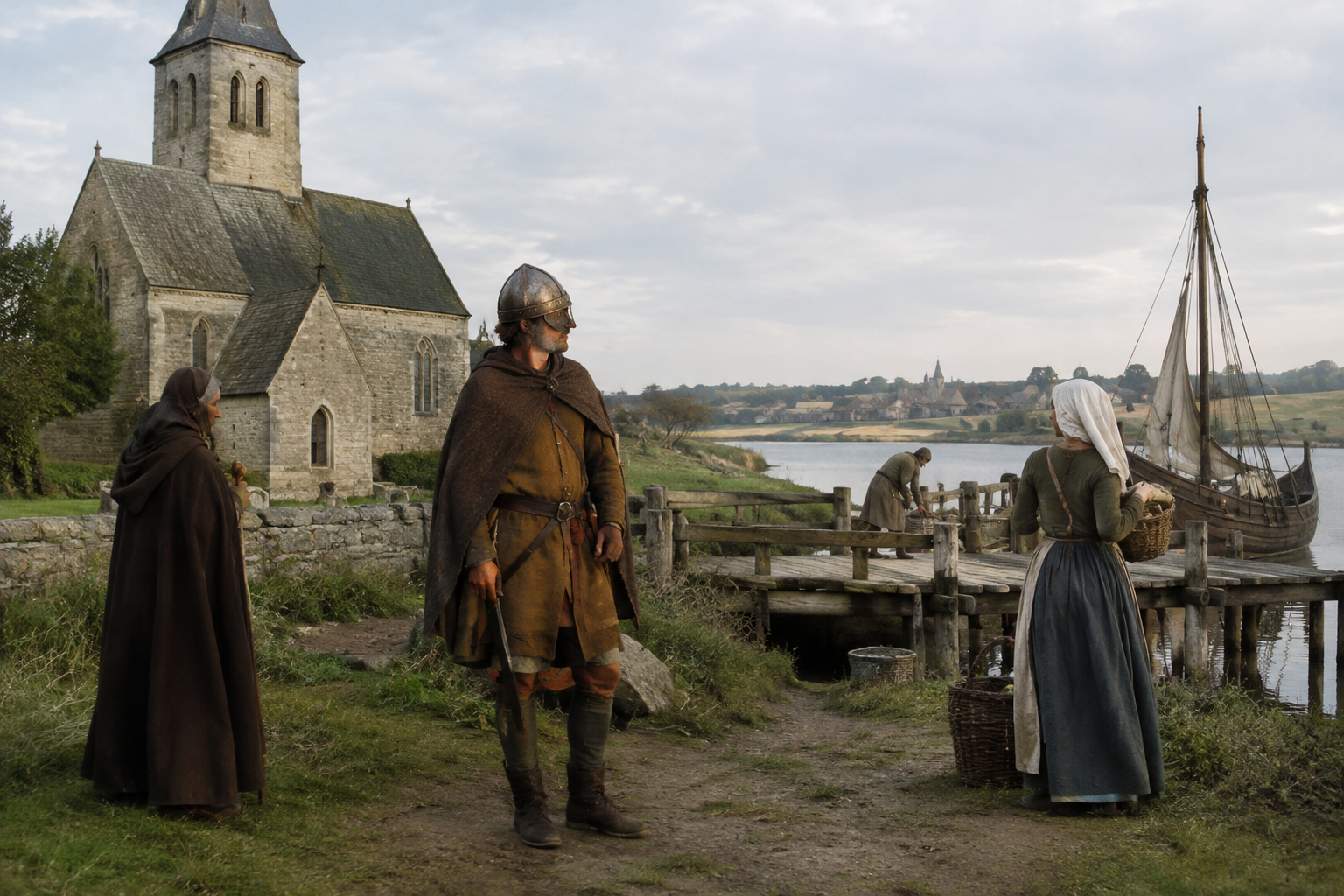
In medieval Holbaek on Zealand, one man now known only by the laboratory code CGG101842 carries a surprisingly long Y-chromosome label into the present: I2a1b1a2b1a2a1a1a1a1a3. He lived around AD 1400, in late medieval Denmark, at a time when towns, churches, trade routes, and parish graveyards had thoroughly reshaped older Scandinavian landscapes. That is already interesting enough archaeologically. But for anyone tracing a paternal line, the deeper interest is that this very specific branch turns up not in saga-land or heroic prehistory, but in the ordinary, documented world of medieval northwestern Europe.
The second ancient lead is earlier and farther south: ST0292, dated around AD 900, from Sint-Truiden in medieval Belgium, associated with the Onze-Lieve-Vrouwekerk context and classified as an outsider in the site record. Put those two men side by side and the picture is not one of a single dynasty or a dramatic migration tale, but something more historically plausible and, in its way, more revealing: a paternal lineage present in different medieval communities around the North Sea world.
The haplogroup in this article, I2a1b1a2b1a2a1a1a1a1a3, is a very narrow twig on a much larger Y-DNA tree. Y-DNA tracks one direct paternal line only: father to father to father. It does not summarize a person's whole ancestry, language, legal identity, or culture. A medieval townsman in Denmark and a man buried at Sint-Truiden could share a paternal branch while living in quite different social worlds.
That distinction matters because the wider haplogroup I, and especially some branches of I2, has deep roots in European prehistory. But it would be careless to pour all of that immense timespan directly into this exact terminal subclade. What the available evidence securely shows here is narrower and more useful: this branch, or a reported association with it, appears in medieval contexts in Denmark and Belgium.
For broader background on how ancient DNA has transformed this kind of historical work, MyTrueAncestry readers may also like this overview.
Ancient DNA and archaeogenetics
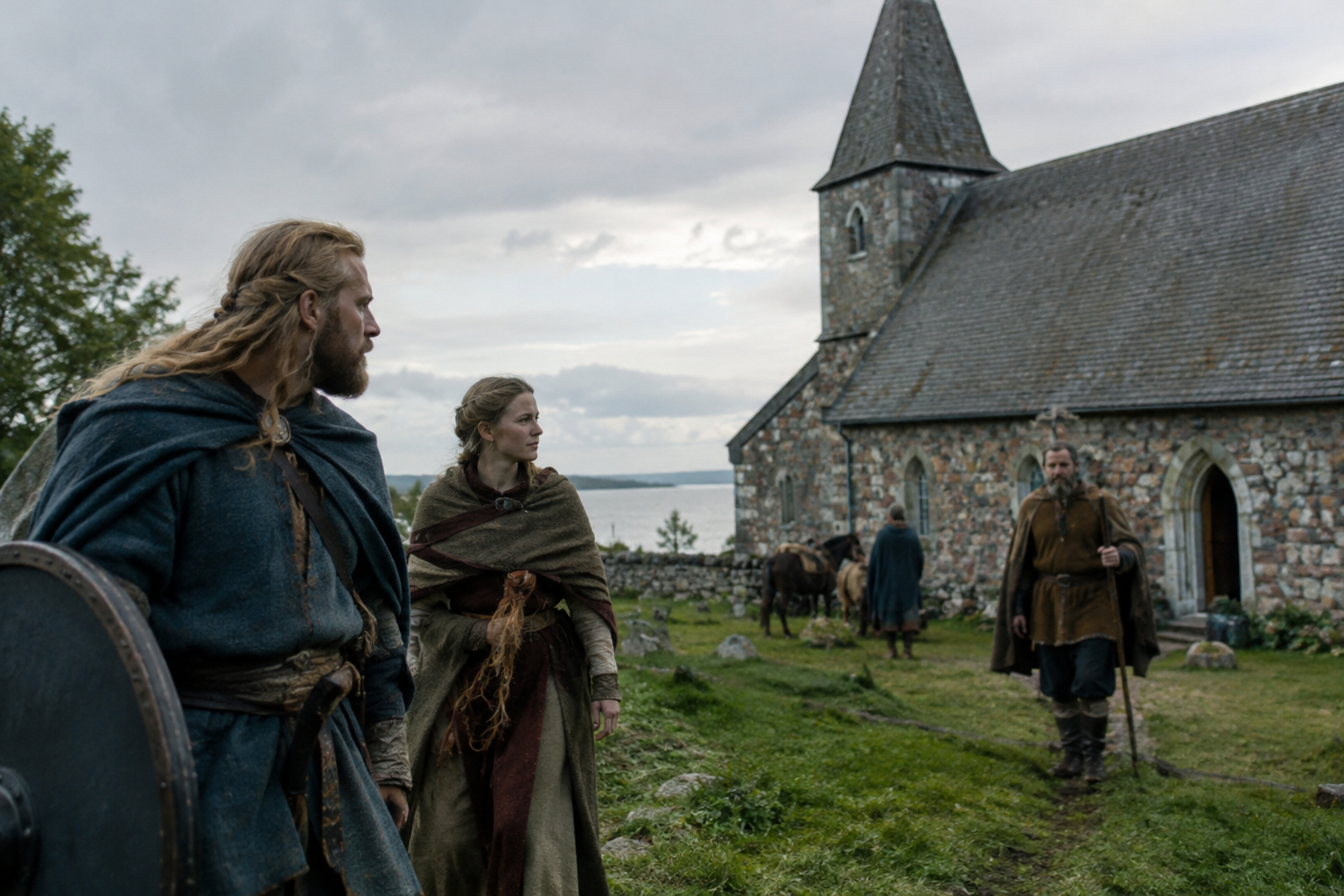
CGG101842 comes from Ahlgade, Holbaek on the island of Zealand, dated to about AD 1400. By then Denmark was long Christian, politically entangled across the Baltic and North Sea, and full of the practical rhythms of late medieval life: market exchange, parish organization, local mobility, and the demographic shocks and recoveries of the later Middle Ages. A Y-lineage found in such a setting is not a relic sealed in some pristine prehistoric chamber. It is part of a living, worked, peopled society.
That is one reason this kind of sample matters. Ancient DNA often gets dragged toward the spectacular, but medieval burials can be more informative for family historians because they sit closer to the documentary world. A man from Holbaek carrying this paternal line tells us that the branch persisted in Scandinavia into the late Middle Ages, not merely as an abstract phylogenetic possibility but as part of an actual community.
Research on ancient genomes from Denmark has helped place medieval and earlier Scandinavian populations into a much longer regional sequence, even though one must be careful not to overstate what any single burial proves. A major genetic study of the region, published in Nature, underlined just how dynamic population history in and around Denmark has been across prehistory and later periods. The lesson here is not that one Y-branch defines Denmark, but that medieval Danish paternal lines belonged to a landscape shaped by many layers of continuity and change.
For readers interested in the deeper prehistoric background to Danish population history, this related piece gives the longer view.
Denmark before the Middle Ages
The Belgian sample ST0292 is, if anything, the more evocative of the two because the record identifies him as an outsider at Sint-Truiden Onze-Lieve-Vrouwekerk, around AD 900. That label is archaeologically suggestive, though it needs handling with care. It does not automatically tell us his birthplace, ethnicity, or life story. What it does tell us is that the burial context stood out within the site's own classification.
Sint-Truiden in the early medieval period was no backwater. It belonged to the dense and busy world of the Low Countries, where abbeys, market centers, agricultural estates, and regional power overlapped. A paternal lineage like I2a1b1a2b1a2a1a1a1a1a3 appearing here reminds us that early medieval towns were not sealed local gene pools. They were places where movement, marriage, service, and opportunity brought different lineages together.
An ancient DNA study focused on medieval Sint-Truiden, available through Genome Biology, points toward exactly that larger historical problem: how urbanization and community formation shaped the genetic profile of a medieval town. In that setting, ST0292 is valuable not because he can be made to stand for an entire people, but because he shows one paternal thread woven into a place already marked by social complexity.
There is a directly relevant MyTrueAncestry article on the same town and its genetic history.
Medieval Sint-Truiden genetics
What joins Holbaek and Sint-Truiden is not a neat tale of one tribe marching from A to B. It is something historians of medieval Europe know well: the North Sea and adjacent regions formed a deeply connected zone. Goods, clerics, craftspeople, sailors, merchants, brides, laborers, and soldiers moved through it constantly. Y-lineages moved with them, often invisibly, leaving no heraldic badge and no saga of their own.
That is why these two samples are more useful together than apart. One sits in late medieval Denmark; the other in an early medieval town in the Low Countries. Both belong to societies shaped by Christianity, settlement density, and regional mobility. The pattern does not prove close kinship between the men, and it certainly does not identify a single family. But it does place this paternal branch in a believable medieval corridor of interaction stretching across northern Europe.
This also helps correct a common misunderstanding in popular genetics. A very specific haplogroup can feel as though it ought to point to one famous origin point, one people, one castle, one migration. Often it does not. Sometimes the stronger historical story is that a lineage was ordinary enough to persist through many generations of everyday life, in market towns and churchyards rather than only in princely tombs.
For someone who belongs to I2a1b1a2b1a2a1a1a1a1a3 today, the medieval evidence is modest but solidly suggestive. It places this paternal line, or a reported association with it, in two real communities of northwestern Europe separated by both distance and time. That is often more valuable than grander but shakier claims.
It suggests that this branch was part of the long-settled male population of the wider North Sea world by the early and late Middle Ages. It also hints that the men carrying it could turn up in different social positions: not only in one local pedigree, but in the mixed and mobile settings created by towns, churches, and regional exchange.
Readers following medieval Scandinavian population history may also enjoy this related article on early Christian burials in the region.
Early Christian DNA in Scandinavia
The most distinctive thing about I2a1b1a2b1a2a1a1a1a1a3 here is not deep prehistory in the abstract, but its appearance in two concrete medieval contexts: ST0292 at Sint-Truiden around AD 900 and CGG101842 at Holbaek around AD 1400. Taken together, they anchor this paternal branch in the lived history of northwestern Europe, among towns, churches, and moving populations. For modern descendants, that is a sensible starting point: not a claim to one legendary ancestor, but a documented place in the complicated human traffic of the medieval North.
Comments