Haplogroup I2a1b1a2b1a

– 5 min read


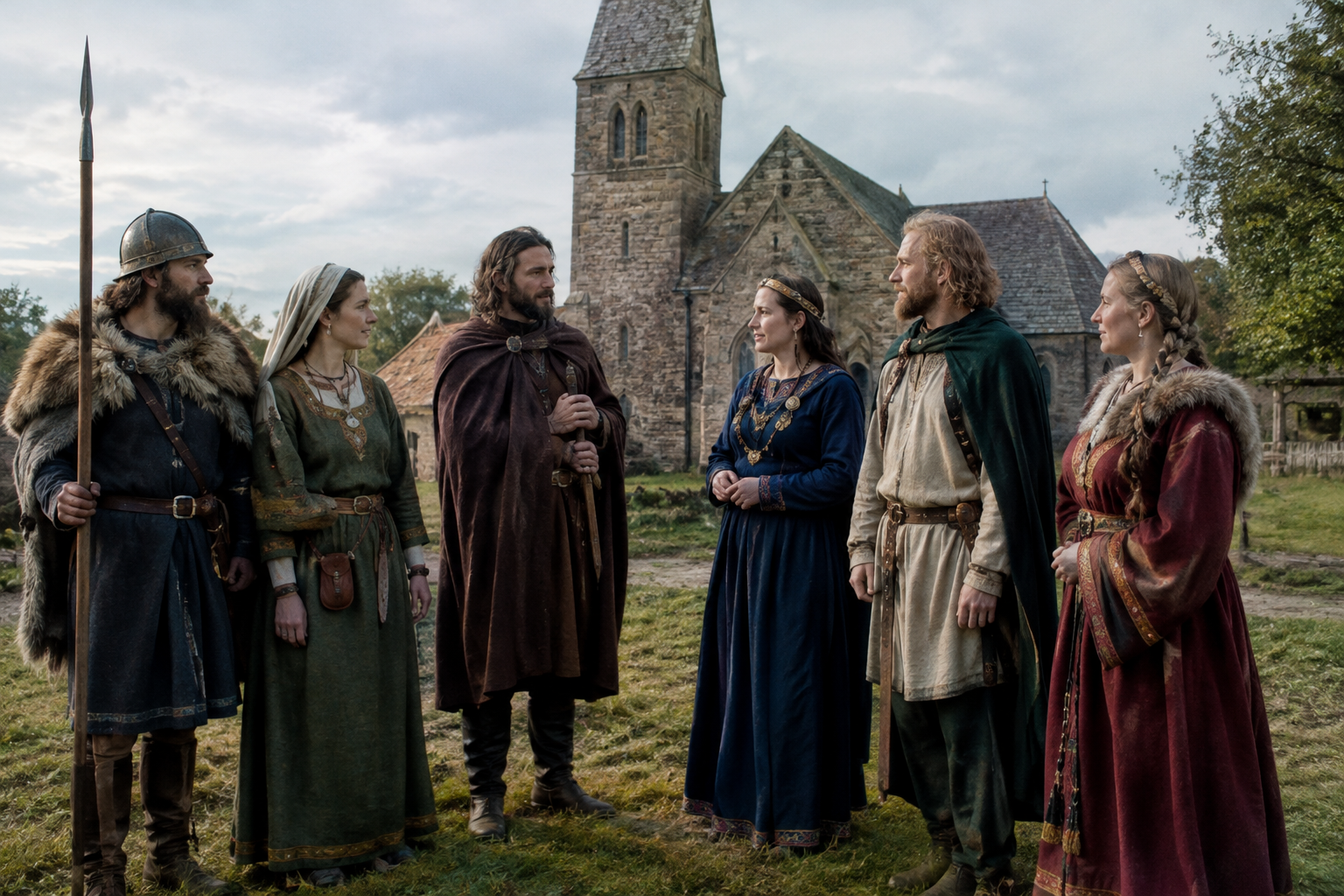
At Sint-Truiden in medieval Belgium, one man labeled ST0552 was buried around AD 900 in the Onze-Lieve-Vrouwekerk, the Church of Our Lady. On its own, that sounds modest enough: one grave in one church in one town. But for the Y-DNA haplogroup I2a1b1a2b1a, ST0552 matters because he does not stand alone. When this paternal line turns up again in Denmark, in Anglo-Saxon England, in Merovingian Germany, and in a Gothic-period burial in Hungary, it begins to sketch a very particular map of early medieval northern Europe.
That map is not a story of one "people" marching neatly across the continent. Y-DNA follows only a direct paternal line, not a person's whole ancestry or identity. Still, the recurring appearance of I2a1b1a2b1a, or lineages reported in association with this branch, in settlements and cemeteries tied to the North Sea world and its continental neighbors makes this haplogroup especially interesting for anyone tracing deep paternal roots in early medieval Europe.
The most recent sample in this small cluster, ST0552 from Sint-Truiden, belongs to a world very different from the wandering warrior stereotypes often attached to the so-called Migration Period. By about AD 900, Sint-Truiden was part of a Christian, increasingly urbanizing society in the region that would later sit within the medieval Low Countries. A church burial places the individual in a settled landscape of parishes, estates, and towns rather than in the older language of tribal migrations.
That is worth pausing over. Haplogroups can sometimes tempt us into telling long heroic stories, but here the evidence points to continuity as much as movement. A paternal line associated with earlier northern European and frontier-zone populations is also present in a church context in medieval Belgium, suggesting that by this date such lineages were woven into ordinary local communities. A recent ancient DNA study on Sint-Truiden explores just this kind of medieval population setting in the town's burials here.
Two of the most telling appearances of this haplogroup are in England: BUK037 from Buckland near Dover, dated around AD 400, and SED017 from Sedgeford in Norfolk, dated around AD 760. They sit at different moments within Anglo-Saxon England. Buckland belongs to the early phase, close to the period when migrants from across the North Sea were becoming a major presence in southeastern Britain. Sedgeford belongs to a much later England, by which time Anglo-Saxon kingdoms were established and local populations had already been mixing for generations.
This is exactly the kind of contrast that makes ancient DNA useful. The same paternal branch appearing in both an early Anglo-Saxon-period context and a later Anglo-Saxon one does not prove unbroken descent between those two men, nor does it reduce England's formation to a single lineage. What it does show is that this paternal line was part of the male population present in England across centuries of political consolidation, conversion, and cultural change.
Research on the formation of the early English gene pool has made clear that early medieval England was shaped by substantial migration, but also by integration and regional variety rather than by simple replacement. That broader framework is important for understanding why a lineage like I2a1b1a2b1a can appear in more than one English site and more than one century without telling one single, tidy family tale.
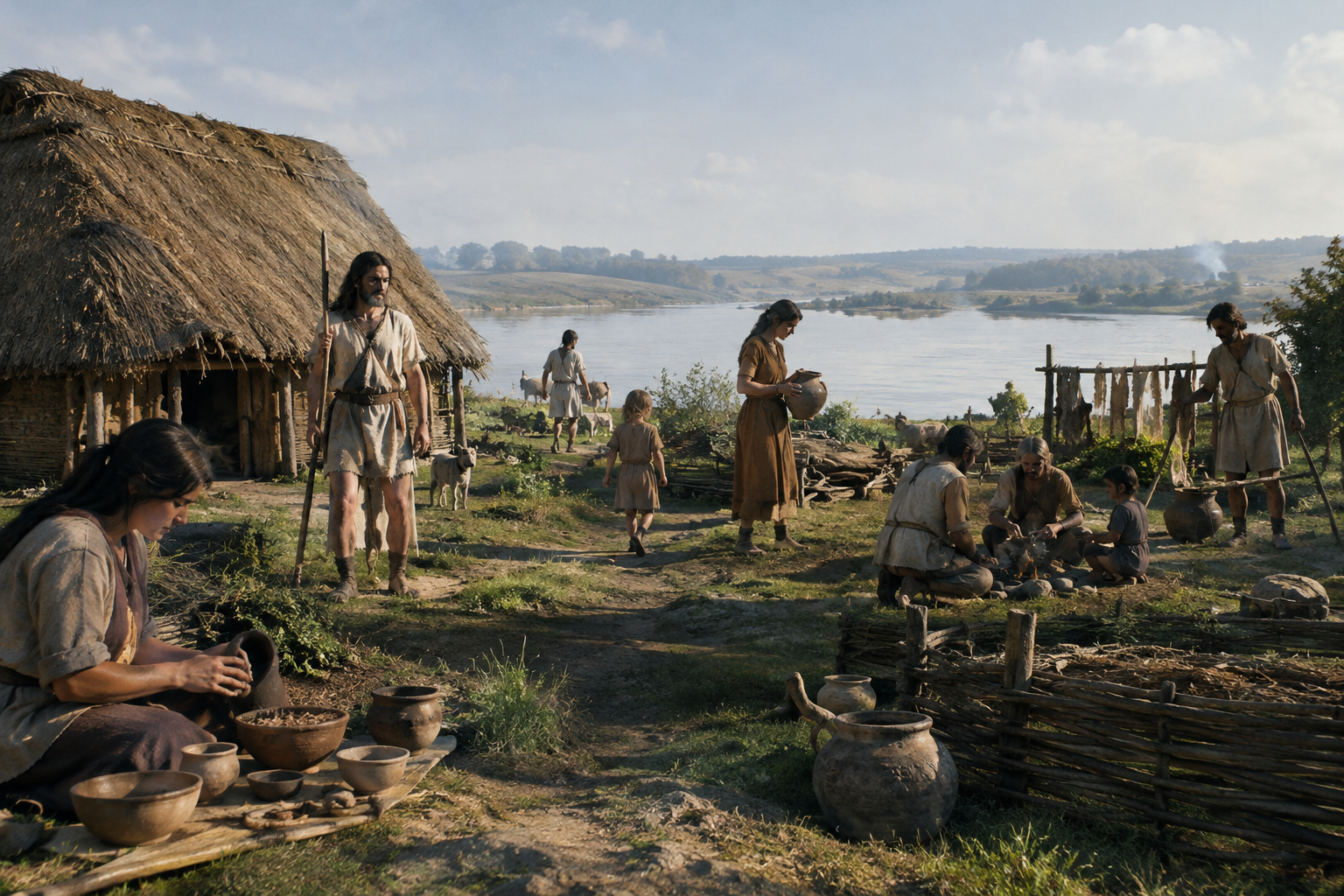
If England is one half of the picture, Denmark is the other. The sample CGG107415, from Sjælland near Køge and dated to about AD 375, is associated with the Danii, a name that later sources connect with Danish groups. One has to be careful here: archaeology, text, and genetics are not interchangeable, and a burial in Denmark is not a shortcut to ethnic certainty. Yet the location and date are still highly suggestive.
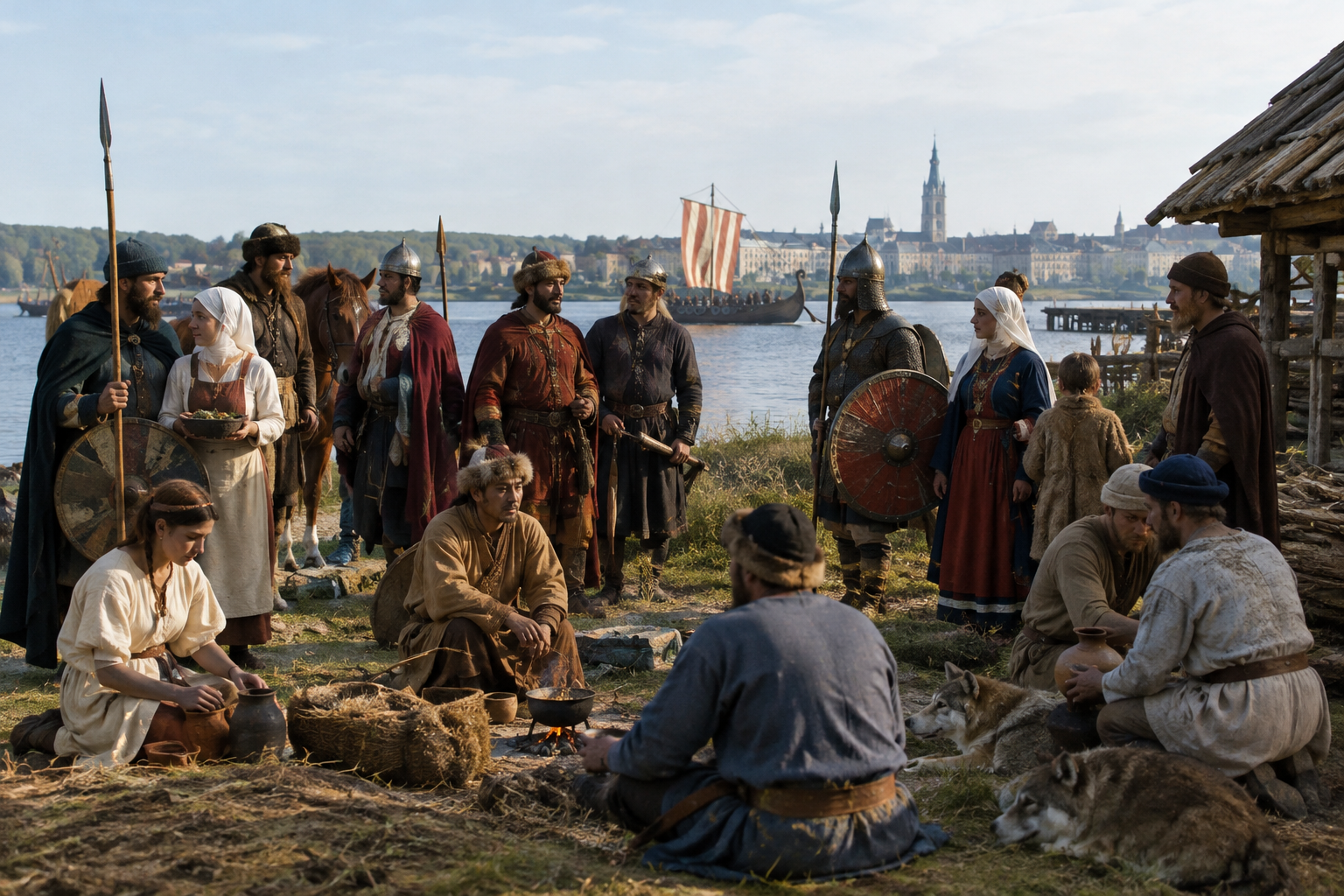
This Danish sample sits just before the great transformations of the fifth century, when contacts across the North Sea and the southern Baltic intensified. In historical terms, it belongs to the world out of which later Anglo-Saxon, Danish, and other northern European polities emerged. For I2a1b1a2b1a, the presence of a sample in late Roman-era Denmark helps anchor the branch in the wider Scandinavian-Baltic zone that fed into those early medieval networks.
That matters because the English evidence is easy to overread on its own. Once a related paternal line also turns up in Denmark, the English cases look less isolated and more like part of a connected maritime world. These were not empty seas on a map; they were busy corridors of exchange, raiding, migration, marriage, and settlement.
Another key appearance is IND006, a Merovingian grave from Alt-Inden in North Rhine-Westphalia, dated around AD 600. This is not Scandinavia and not England, but the old frontier zone of the Roman world, where late antique and early medieval communities were formed through a good deal of mixing. Here labels such as Frankish, Roman, and "barbarian" can be historically useful, but only if handled with care. They describe political and cultural worlds, not neat biological boxes.
The Merovingian setting is crucial because it shows the branch in a region where post-Roman identities were being remade on the ground. A paternal line associated elsewhere with Danish and Anglo-Saxon contexts also appears in the lower Rhineland, which should not surprise us. This was a crossroads zone, tied by river routes and military roads to Gaul, the North Sea coast, and inland Germany. Recent work on populations along the German frontier has underlined just how entangled these communities were here.
So the picture is not of a lineage belonging to one sealed ethnic package. Instead, I2a1b1a2b1a appears in exactly the sort of places where early medieval Europe was being assembled through contact and mobility: church towns, frontier cemeteries, coastal kingdoms, and post-Roman successor societies.
The most geographically distant sample in this set is A181019 from Kecskemét-Mindszenti in the Transtisza region of Hungary, dated around AD 450 and described as Gothic. This is where one must be particularly disciplined. "Gothic" here is an archaeological-historical label for the burial context, not proof that every bearer of the lineage was ethnically Gothic in some timeless sense.
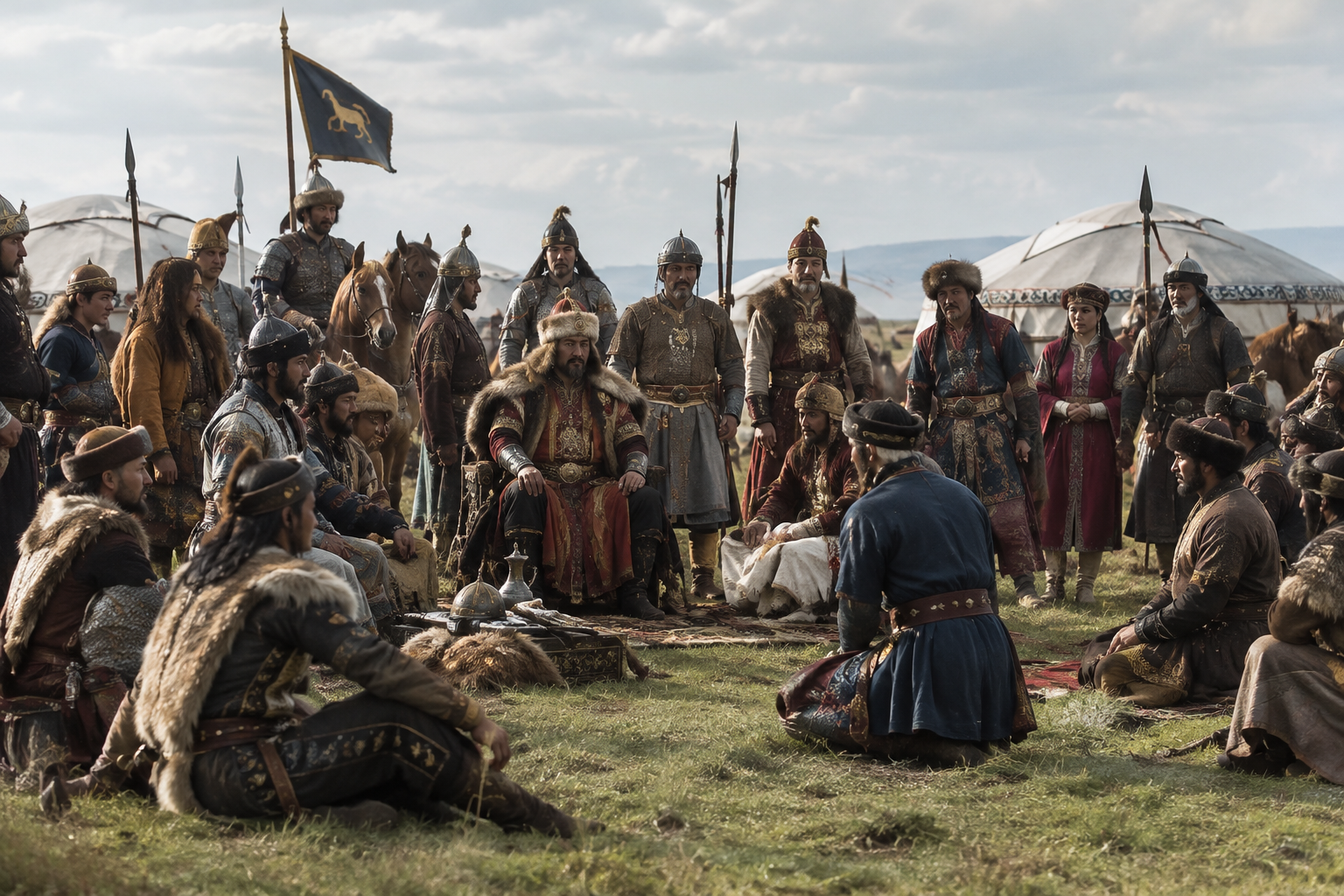
Even so, the Hungarian case is fascinating because it places the branch in the Carpathian Basin during the unsettled decades when Hunnic power, Gothic groups, and the debris of Roman authority overlapped. That does not make I2a1b1a2b1a a "Gothic haplogroup." What it does show is that this paternal line was present within one of the mobile and politically complex societies of the fifth-century Middle Danube.
Set beside Denmark, England, and the Rhineland, the Hungarian sample widens the horizon. The same branch, or an associated reported lineage, is appearing not just around the North Sea but also in the broader Migration Period zone that linked the Baltic, the Danube, and the old imperial frontier.
For I2a1b1a2b1a, the strongest pattern is not grandeur but reach. The ancient men associated with this branch appear in late Roman and early medieval contexts stretching from Denmark to England, the Rhineland, Hungary, and then onward into medieval Belgium. That is a striking distribution for a lineage visible in real burials rather than in abstract maps.
If this is your paternal haplogroup, the ancient evidence currently fits best with male-line ancestry embedded in the northern and central European worlds that emerged around the fall of Rome and the making of early medieval societies. Not one tribe, not one kingdom, and certainly not one guaranteed family story - but a lineage that turns up repeatedly where North Sea connections, frontier mixing, and post-Roman communities were taking shape.
Comments