Haplogroup I2a1b1a1b1

– 5 min read


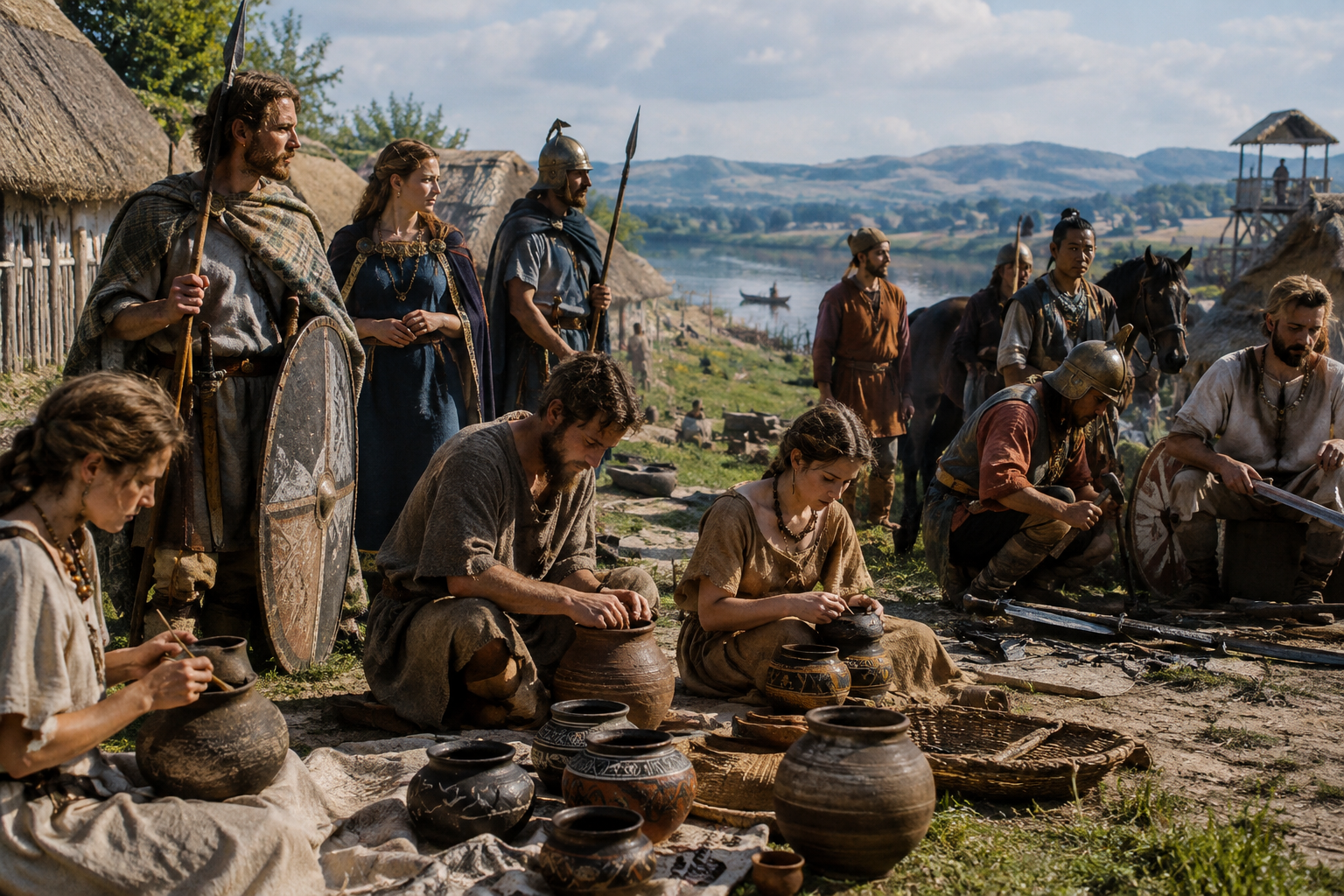
At Verona's Seminario Vescovile, two men associated with the Gallic Cenomani and dated to around 300 BC, samples 3206 and 3206s, place haplogroup I2a1b1a1b1 in a very specific historical setting: northern Italy in the centuries when Celtic-speaking groups had become part of the Po Valley world. That is already interesting. This is not a lineage appearing in only one corner of later Europe, but one that turns up in burials linked to Bronze Age communities in Hungary, Late Bronze Age Central Europe, Iron Age Bohemia, and even far to the east in the Himalayan sphere.
That spread needs handling carefully. Y-DNA follows one direct paternal line only, not a person's whole ancestry or identity. Even so, when the same branch appears in several well-dated archaeological settings, it can show us where particular male lines were present, enduring, and sometimes surprisingly mobile.
The Verona samples are the clearest opening because they sit at the junction of archaeology, history, and genetics. The Cenomani are known from northern Italy as one of the Celtic groups established in the region before Roman domination. Finding I2a1b1a1b1 in samples 3206 and 3206s does not mean this was "the Cenomani haplogroup," still less that all Celtic-speaking men carried it. But it does show that this paternal line belonged to men living inside that Iron Age community in the Veneto area.
That matters because the Po Valley was not a sealed ethnic box. It was a contact zone of local Italic populations, incoming transalpine influences, and long-settled regional communities. A paternal branch like I2a1b1a1b1 appearing here makes best sense not as a magical tribal badge, but as part of the deeply mixed male landscape of later prehistoric Europe.
A useful wider context comes from MyTrueAncestry's discussion of Celtic language spread and ancient DNA, which helps frame why northern Italian Celtic finds often connect back to Central European population histories.
If Verona shows this lineage in Iron Age Italy, the densest concentration in your ancient matches lies earlier, in Bronze Age Hungary. Samples S17 from the Somogyvar-Vinkovci horizon around 2290 BC, and S1, S4, S6, S11, and S45 from the Kisapostag Encrusted Pottery world around 1980 BC, all point to repeated appearance in the Balaton region. Added to them are S15, S16, and S19 from Bronze Age Transdanubia around 1800 BC.
That cluster is the heart of the story. It suggests that lineages associated here with I2a1b1a1b1 were not passing curiosities in the Carpathian Basin, but part of the male population over many generations during the Early and Middle Bronze Age. Archaeologically, this was a period of changing burial customs, fortified settlements, regional ceramic traditions, and increasingly dense social networks across the Danube world. Genetically, the Bronze Age Carpathian Basin was also a place where earlier European ancestry and steppe-derived ancestry had already been mixing for centuries.
An ancient DNA study of populations in and around Bronze Age Hungary, published in Nature Communications, helped establish just how structured and locally varied these communities could be. For a haplogroup article, the key point is modest but important: repeated male-line survival in one region can matter more than a single glamorous outlier. The Balaton and Transdanubian samples make I2a1b1a1b1 look established in this part of Europe long before the historical Celts of Italy appear in the record.
From Hungary, the trail moves north and west into the later Bronze Age. Sample WEZ74 from the Tollense Valley battlefield in Mecklenburg-Vorpommern, dated around 1250 BC, places the lineage in one of Europe's most famous prehistoric conflict zones. Tollense is valuable because it is not simply another cemetery. It is evidence for organized violence on a large scale, with fighters drawn from more than one background. A paternal line found there belonged to a man caught up in a world of movement, alliance, and conflict well beyond the scale of a single village.
Then there are poz690 from Gustorzyn in Pomerania around 1500 BC, poz717 and poz719 from Pielgrzymowice Grave 669 in Silesia around 1375 BC, and I16099 from the Knoviz culture at Konobrze in Bohemia around 1250 BC. None of these on their own can stand for all of northern or Central Europe. Taken together, though, they show I2a1b1a1b1 in Late Bronze Age settings stretching from the southern Baltic zone into Bohemia. That is a serious geographical arc.
For readers interested in how this wider region changed through the later Bronze Age, one useful companion piece is the MyTrueAncestry article on local continuity amid cultural change in Central Europe. It fits the pattern here rather well: material cultures could shift dramatically while some paternal lines persisted.
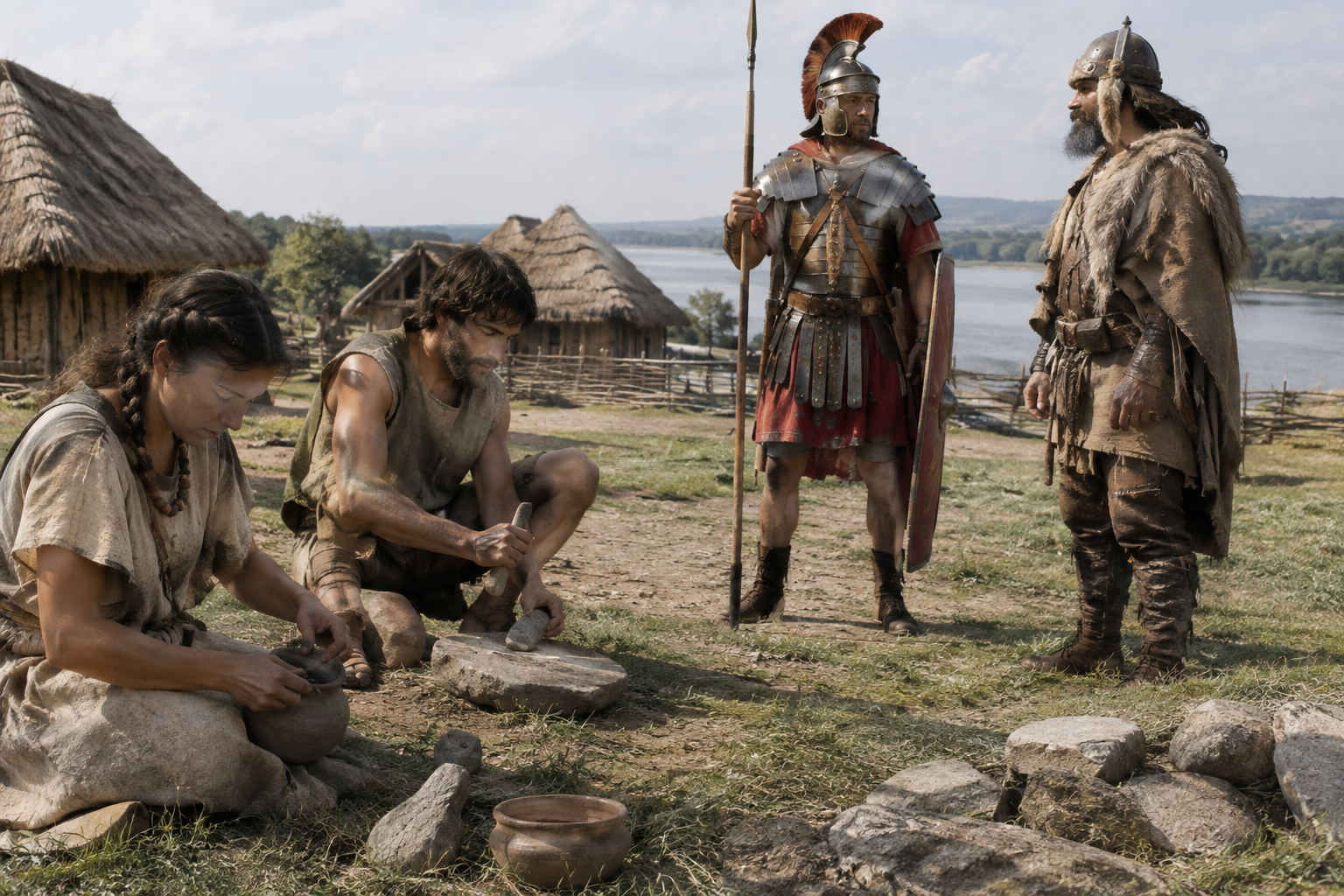
Late Bronze Age Central Europe
Bohemia is especially telling because the lineage appears there in more than one period. Sample I16099 belongs to the Bronze Age Knoviz context around 1250 BC, while sample I16549 comes from Celtic Hallstatt-era Stradonice around 675 BC. That is not proof of unbroken father-to-son continuity over six centuries; archaeology is rarely so obliging. But it does suggest that this paternal branch remained within the broad human landscape of Bohemia from the later Bronze Age into the early Iron Age.
This is precisely the sort of finding that keeps archaeologists honest. We are often tempted to narrate Europe's prehistory as a series of neatly replacing peoples: first this culture, then that one. Ancient DNA has complicated that picture. In many regions, incoming influences were real, yet some local family lines clearly endured through major cultural change. I2a1b1a1b1 fits that kind of pattern rather well.
Another related discussion worth reading is MyTrueAncestry's article on Celtic language dispersal and the Urnfield expansion. It speaks to the same broad question raised by the Verona and Stradonice finds: how do language, archaeological culture, and paternal ancestry overlap without becoming the same thing?
The most unexpected entries in this set are S8 from Iron Age Samdzong around AD 550 and S10 from Samdzong Licchavi around AD 500 in Nepal. These are so far from the Central European core of the article that they need restraint. One should not leap from a haplogroup match to a tale of heroic migration across half of Eurasia. But their presence does show that a paternal line associated here with I2a1b1a1b1 had, by late antiquity, reached the Himalayan world.
How could that happen? The safe answer is that Eurasia had long been connected by overlapping corridors of movement: steppe mobility, mountain routes, trade, military service, and local population mixture. A paper on ancient Himalayan populations and mobility, published in Current Biology, has helped show how genetically varied some of these communities were. In that setting, the Samdzong samples are best read as evidence of contact and complexity, not as a simple extension of a single European story.
If the Himalayan angle catches your eye, MyTrueAncestry also has a related piece on mixed Tibetan and South Asian ancestry in Ladakh, which offers a broader sense of how dynamic these mountain regions could be.
The strongest supported picture for I2a1b1a1b1 is not a single tribe, kingdom, or dynasty. It is a durable paternal branch visible above all in Bronze Age Hungary and wider Central Europe, later appearing in Iron Age Bohemia and northern Italy, and turning up in a very different late antique context in Nepal. For someone researching this haplogroup today, that combination points less to one named people than to a long history rooted in Europe's prehistoric and protohistoric middle zone, where communities persisted, mixed, and occasionally moved very far indeed.
Comments