Haplogroup I2a1a1b1a1

– 6 min read


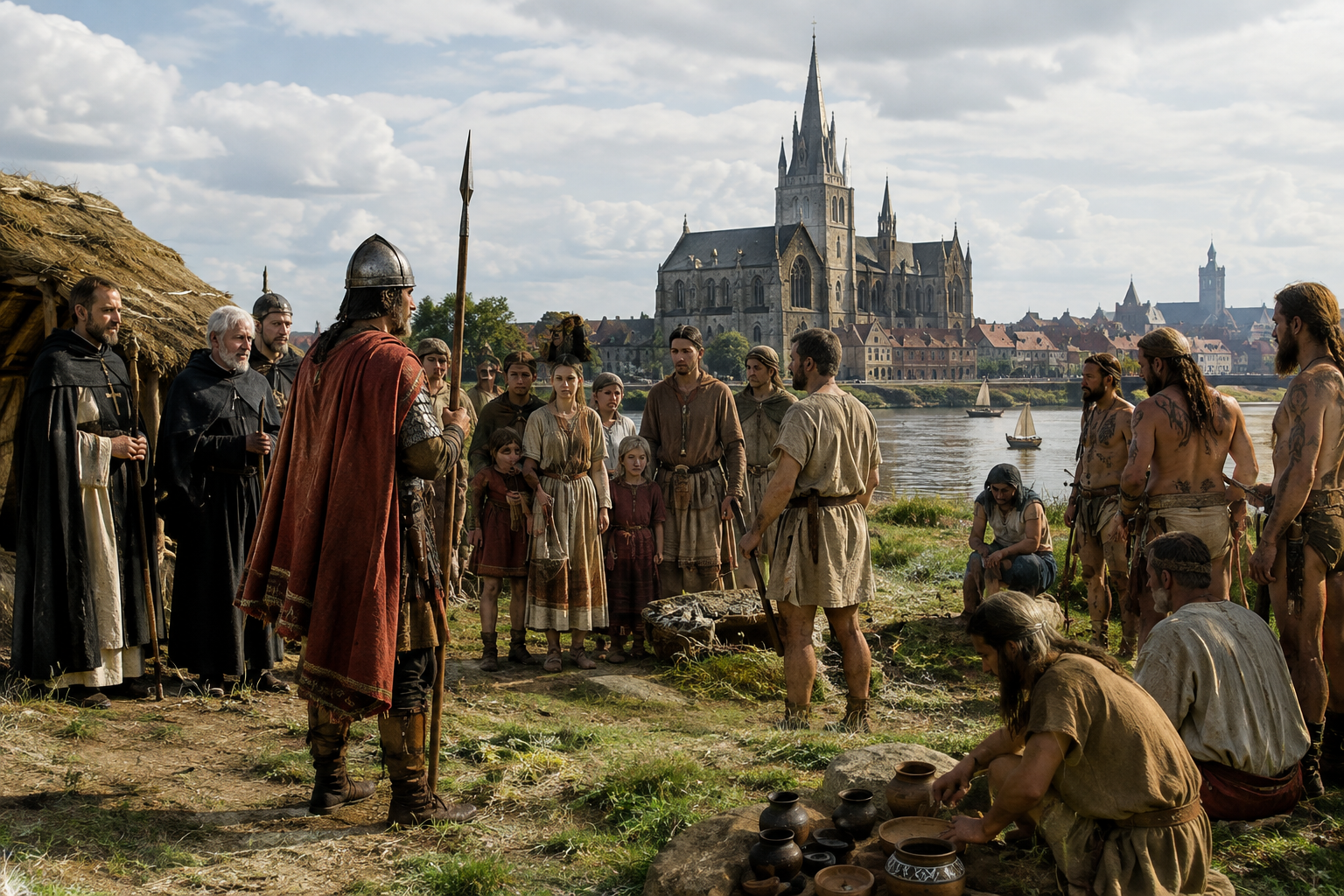
Some Y-chromosome lineages turn up once or twice in the ancient DNA record and then seem to vanish into the mist. Others keep reappearing in awkwardly interesting places, forcing us to think less in terms of neat ethnic labels and more in terms of long male-line continuity, movement, and survival. Haplogroup I2a1a1b1a1 belongs to that second category.
At first glance, this is a very narrow branch name, the sort of label that looks more at home in a lab report than in a historical story. But that is precisely the point. Y-DNA lets us follow one direct paternal line through time, and sometimes that line appears in burials separated by more than two millennia, from Bronze Age Poland to medieval Belgium, with a Sicilian detour and a Carolingian presence in the north. It does not tell us a person's whole ancestry, culture, or identity. It does, however, give us one remarkably durable thread.
Haplogroup I is one of the old European Y-chromosome families, with deep roots in the continent's prehistoric past. The branch discussed here, I2a1a1b1a1, is a much narrower twig on that larger tree. That matters. We should not lazily pour the entire history of haplogroup I, or even all of I2, into this one specific subclade. What we can say more carefully is that this paternal line belongs to a wider family of lineages long associated with Europe, and the supplied ancient samples place this particular branch in parts of central and western Europe across a very long timespan.
The pattern in the evidence here is striking. The earliest supplied examples cluster in Bronze Age Poland and nearby regions. Later, the lineage appears in Sicily in the context of an ancient mercenary, in the northern Netherlands in the Carolingian era, and in late medieval Belgium at St. Rombouts. That does not prove a single unbroken local dynasty, still less a simple ethnic tale. But it does suggest that this was a line capable of both continuity and mobility.
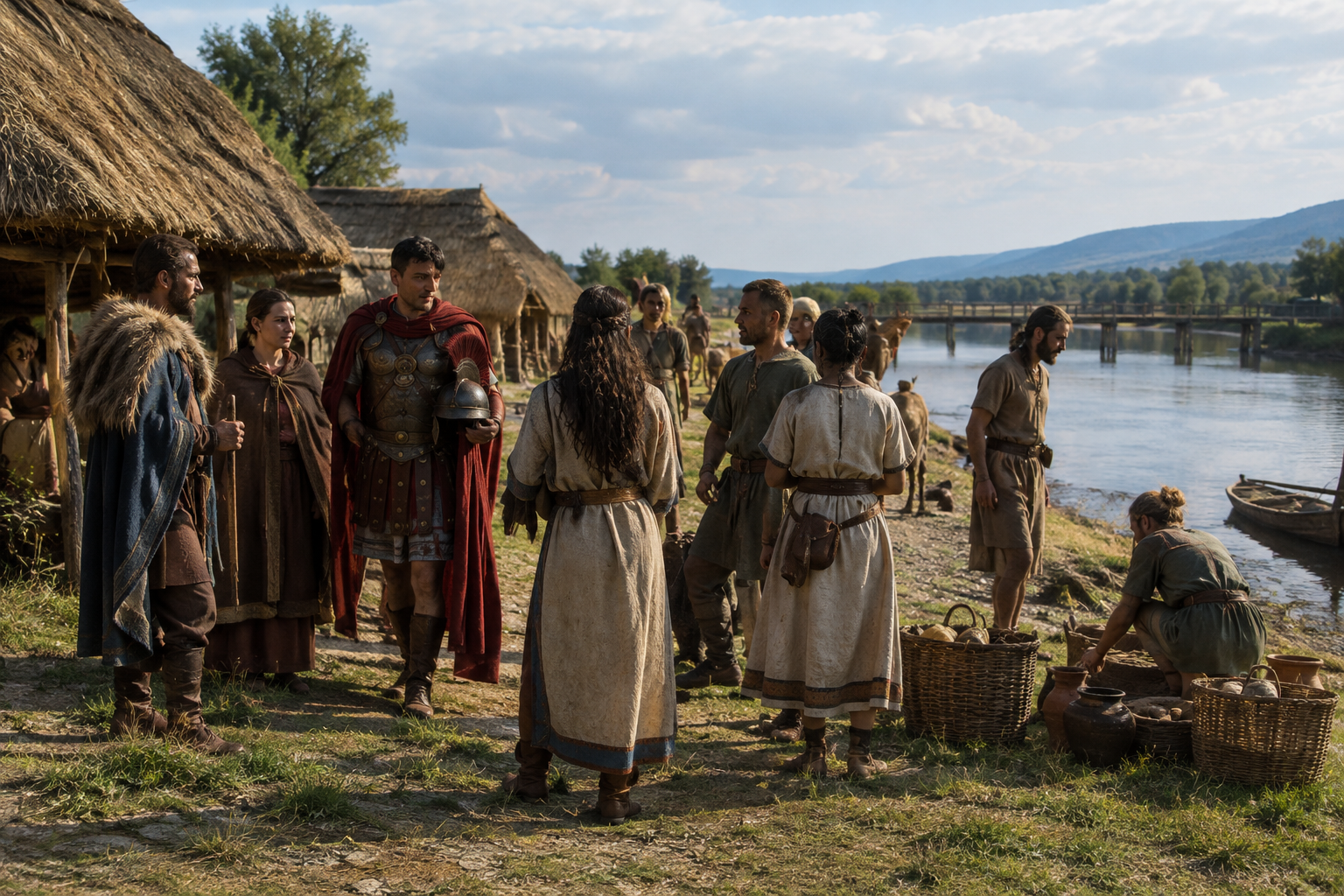
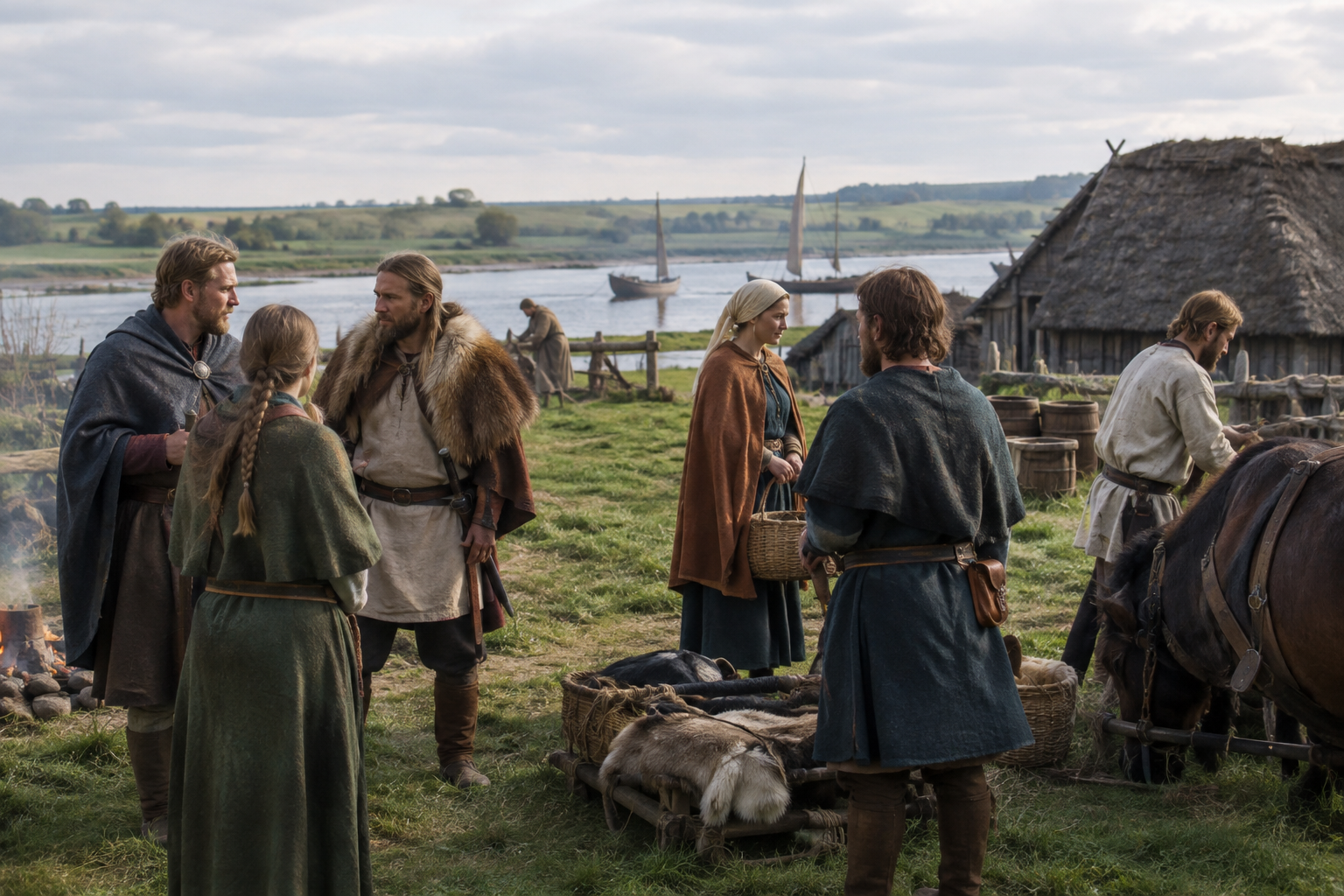
If one wanted a geographical starting point for this article, one would be drawn at once to southern and central Poland. The supplied dataset includes an unusually dense cluster of Bronze Age males connected with this haplogroup in and around Zerniki Gorne, alongside related finds from Koszyce, Strzyzow, Bocheniec, Pielgrzymowice, and Gustorzyn. That concentration is historically valuable because it places the paternal line not as a medieval newcomer only, but in Bronze Age communities of the region.
Among the most informative are the Zerniki Gorne individuals: poz667 dated to 1448 BC, poz675 dated to 1400 BC, poz649 and poz651 both dated to 1461 BC, poz662 at 1432 BC, poz665 at 1416 BC, poz655 at 1350 BC, poz658 at 1330 BC, and later examples such as poz684 at 1250 BC. Taken together, they imply that this was not a solitary outsider's lineage but one present repeatedly in Late Bronze Age communities.
Nearby finds strengthen that impression. poz758 from Bronze Age Subcarpathian Poland, Strzyzow, dated to 1900 BC, pushes the record earlier. poz507 from South Central Bocheniec at 1750 BC and poz543 from Southern Poland, Koszyce, at 1264 BC broaden the map. The Gustorzyn samples in Pomerania - poz693, poz694, and poz700, all dated to 1500 BC - suggest the lineage was not confined to one village or valley.
Now, one should be cautious with labels such as "Germanic tribe" in Bronze Age contexts. Some of the sample descriptions use that language, but language, ethnicity, and Y-DNA are not interchangeable, and the Bronze Age long predates many historically attested ethnic names in their later form. What the ancient DNA really gives us here is a pattern of paternal presence in Bronze Age north-central Europe.
Discover Bronze Age Central Europe
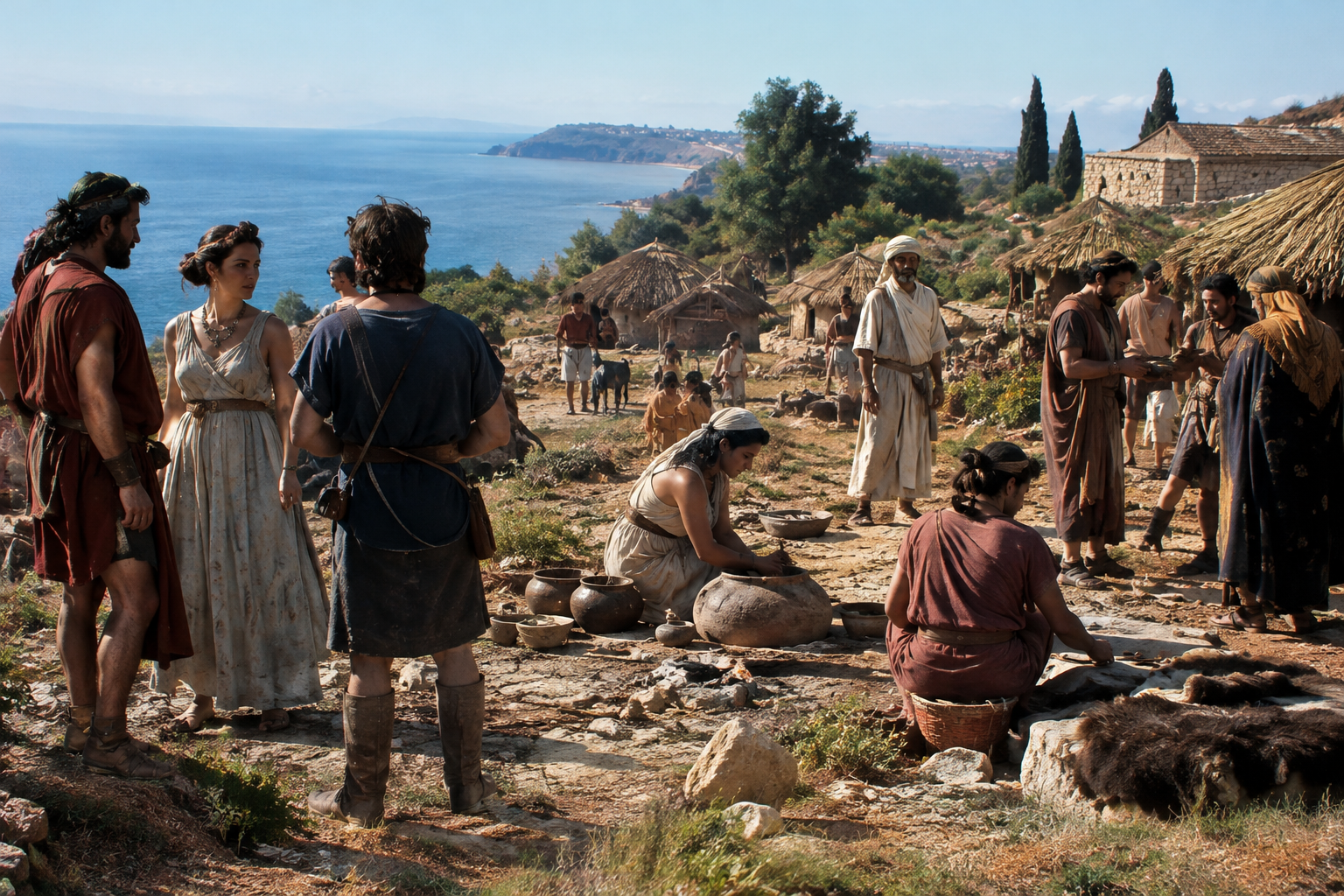
The most arresting outlier in the list may be I10949, an Ancient Mercenary First Sicilian War Himera Sicily individual dated to 480 BC. Himera was no sleepy provincial backwater. It sat inside the violent, interconnected world of Greek colonies, Carthaginian expansion, and hired soldiers moving across the Mediterranean. A man carrying this paternal line in that setting is a reminder that ancient warfare shuffled people far beyond their home landscapes.
That does not mean all carriers of I2a1a1b1a1 were mercenaries, nor that the line was somehow "Sicilian" in origin. It means only that by the fifth century BC, this paternal branch could appear in one of the great contact zones of the ancient Mediterranean. If you want a broader sense of how Sicily repeatedly became such a meeting ground, the MyTrueAncestry community has explored that well elsewhere.
Read Medieval Sicily's DNA History
Far to the north, GRO002 from Carolingian Era Groningen Netherlands, dated to 885 AD, places the lineage in the world of early medieval Frisia, Frankish power, coastal trade, and frontier politics. Again, one sample cannot stand for an entire people. But it does show that by the Carolingian period this paternal line was present in the Low Countries, a region linked by rivers, commerce, warfare, and ecclesiastical networks to much of western Europe.
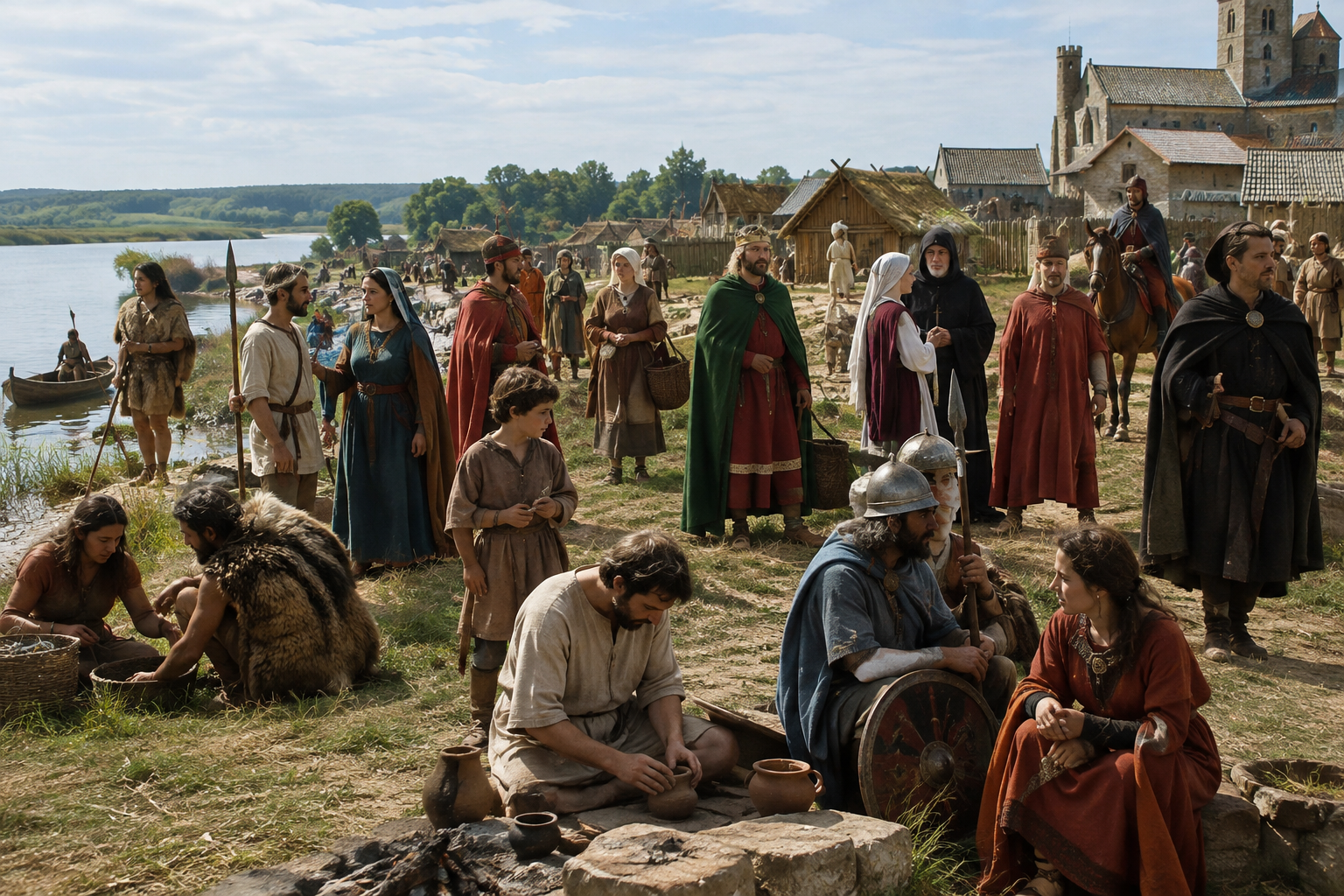
Then come the late medieval Belgian individuals from St. Rombouts: STR248, STR248C, and STR248D, each listed at 1192 AD. Whether these represent relatives or simply multiple men in the same burial setting, they matter because they show the lineage in an urban and ecclesiastical context in the medieval Low Countries. The old Bronze Age thread had not disappeared. It had become part of the population history of one of Europe's most commercially active regions.
The supplied field for associated noble families and castles is empty here, which is itself a useful reminder of method. Not every haplogroup article can responsibly be tied to a named dynasty, a baronial seat, or a picturesque ruin on a hilltop. Sometimes the evidence leads us instead to churches, cemeteries, battlefields, and settlement zones rather than to heraldry.
That does not make the story poorer. In a way, it makes it more historically honest. Paternal lineages like I2a1a1b1a1 did not belong only to kings, counts, or castle-builders. They belonged to ordinary Bronze Age men buried in Polish cemeteries, to a man caught up in the military networks of ancient Sicily, and to people living in the medieval towns and church worlds of the Low Countries.
And yet the geographical overlap with later historical polities is still worth noticing. The route from Bronze Age Poland through the North European plain into the Low Countries is not a fairy tale of direct descent; it is a large historical corridor. Over centuries it carried traders, soldiers, settlers, craftsmen, monks, and dynasties alike. Ancient DNA helps us see that written genealogies are only the upper crust of the story.
Explore Medieval Polish Dynastic DNA
So what can we responsibly say about haplogroup I2a1a1b1a1? First, the supplied evidence places it clearly in Bronze Age Poland and nearby regions. Second, it appears later in widely separated settings - Sicily, Groningen, and St. Rombouts in Belgium - showing either movement of male lines, persistence across broad networks, or both. Third, this is exactly the sort of haplogroup pattern that warns against simple ethnic storytelling. The same paternal branch can pass through very different cultural worlds.
That is one of the pleasures of archaeogenetics. Medieval chronicles may tell you who ruled. A church cartulary may tell you who donated land. A castle may preserve the memory of a family name. But Y-DNA can sometimes reveal something older and less tidy: long-running paternal continuity underneath political change. Not noble proof, not identity labels, but demographic history.
For readers interested in how these kinds of paternal patterns appear in later urban populations of the Low Countries and neighboring regions, another useful comparison is work on medieval settlement and population formation in the broader northwest European world.
Explore Medieval Low Countries DNA
If your Y-DNA belongs to I2a1a1b1a1, the most sensible historical takeaway is not that you "are Bronze Age Polish" or descended from a Sicilian mercenary. It is that your direct paternal line belongs to a branch with documented ancient appearances in central Europe and later western European settings. That is already quite a story.
Y-DNA traces just one line among thousands of ancestors in your family tree. But when ancient samples such as poz758, poz667, poz693, I10949, GRO002, and STR248 appear across such a span, they give that one line unusual historical depth. They show how a paternal signature can endure through changing archaeological cultures, shifting frontiers, and entirely different historical worlds.
If you want to see whether your own DNA shows links to ancient individuals like these, MyTrueAncestry can help you explore those connections. Ancient DNA matches do not prove direct descent from a specific excavated person, and they certainly do not make anyone a member of a medieval noble family. But they can open a genuinely fascinating window onto the populations, places, and time periods that shaped your ancestry.
Comments