Haplogroup I1a7

– 5 min read


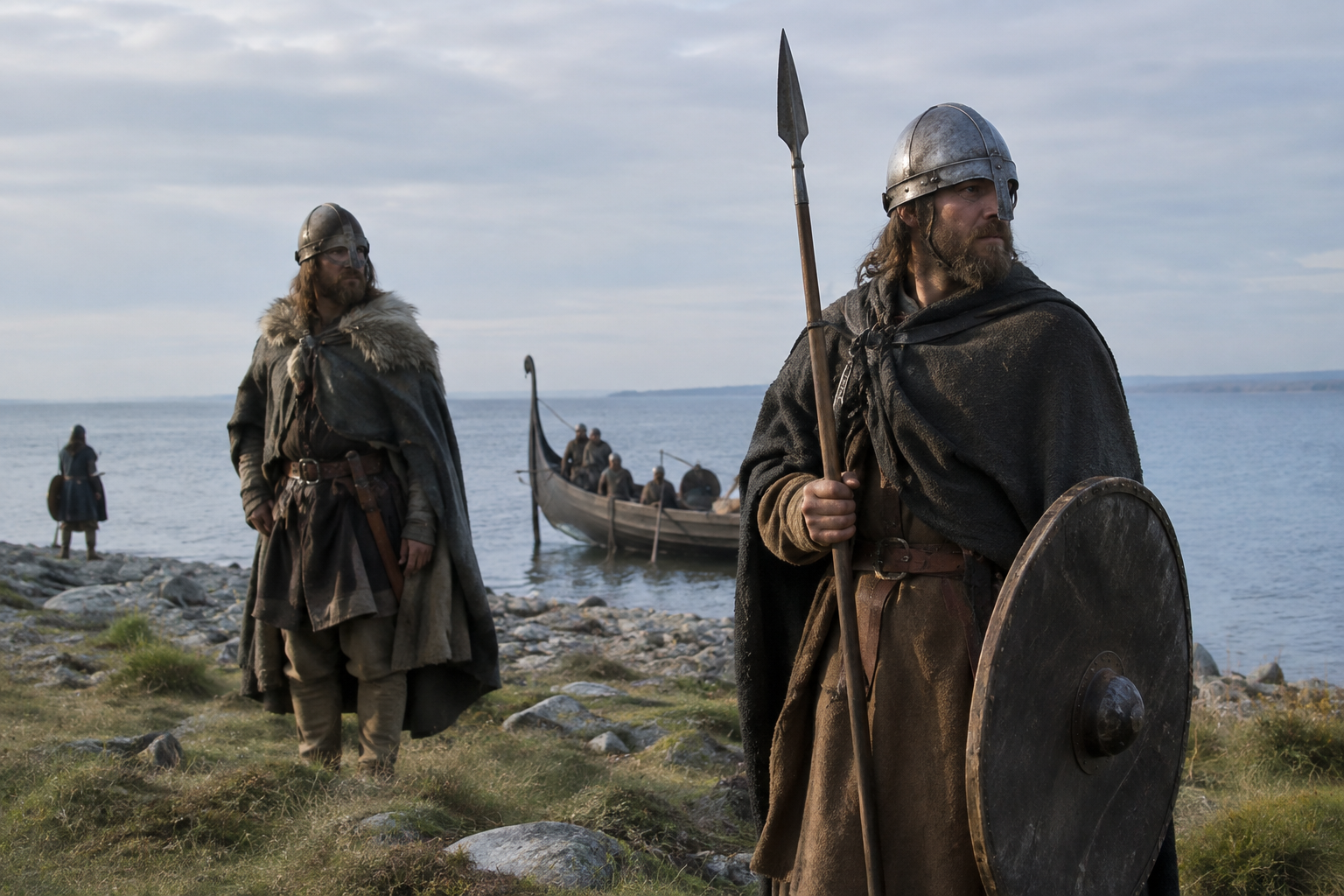
On the island of Langeland in Denmark, one Viking Age man turns up in the genetic record under the plain laboratory code VK367, dated to around AD 900 at Bogovej. There is nothing theatrical about that identifier, but the setting is already telling: southern Denmark, at the heart of the late Viking world, where seaways mattered as much as roads and where small islands could be deeply connected rather than remote. For people exploring the Y-DNA haplogroup I1a7, this is a useful sort of evidence: not legend, not later pedigree, but an excavated individual anchored in place and time.
The second key clue comes from farther east across the Baltic, at Salme I on Saaremaa in present-day Estonia, where sample VK506 is dated to about AD 725 and belongs to the Vendel-to-early Viking Age horizon. Put those two men side by side and I1a7 begins to look less like an abstract code and more like part of a real northern world: one linked by ships, warfare, trade, and movement around the Baltic rim. Y-DNA traces a direct paternal line only, not a person's whole ancestry, but even that single line can be remarkably revealing when it appears in archaeological contexts this coherent.
I1a7 is a sub-branch within the broader haplogroup I1, a lineage long associated with northern Europe and especially with Scandinavia in both modern and ancient DNA discussions. But it is important not to lazily pour the whole history of I1 into this narrower branch. What these samples actually show is more specific and more modest: a paternal line reported in two early medieval individuals from the Scandinavian-Baltic sphere.
That matters because ancient DNA works best when it is local and concrete. Rather than making grand claims about "the Vikings" as a single people, these two finds place I1a7 among men living in or moving through regions central to the emergence of Viking Age networks. Research on ancient Scandinavian and Baltic genomes, including work circulated at this ancient DNA study of the Viking world, has helped show just how mobile and mixed those societies could be while still preserving recognisable paternal lineages.
Germanic Languages and Genomics
VK367 comes from Bogovej, Langeland, dated around AD 900. Langeland sits in the Danish archipelago between Funen, Lolland, and the wider Baltic approaches, exactly the sort of place where local communities were drawn into broader Scandinavian exchange. By this date Denmark was not some loose fringe of the Viking Age; it was one of its engines.
That does not mean every man on Langeland was a raider, a merchant, or a magnate. Archaeology is rarely so obliging. But a paternal lineage like I1a7 appearing here places it securely within the demographic background of Viking Age Denmark itself, not merely in later descendant populations. For family historians, that is often the crucial step: moving from modern distribution maps to an actual ancient person.
It also gives the branch a chronological foothold in a period of political consolidation. Around the ninth and tenth centuries, Danish regions were being drawn more tightly into kingdoms, royal projects, and Christianisation, even while older local identities remained strong. A lineage found in this context belongs to that complicated world of continuity and change, not to a neat ethnic label.
The earlier sample, VK506, comes from Salme I on Saaremaa and is dated to around AD 725. Salme is one of those sites that has become central to discussions of the eastern Baltic at the threshold of the Viking Age. Even without embroidering the details, the significance is plain enough: this was a setting tied to seaborne contact between Scandinavia and the Baltic long before the classic high Viking Age of the ninth and tenth centuries.
So I1a7 appears not only in Denmark proper but in a zone of movement across the Baltic. That does not prove that VK506 migrated from Denmark, nor that VK367 descended from him, nor that the branch "spread" in a single tidy wave. It does, however, place the lineage within the maritime world that joined eastern Sweden, the Danish islands, Gotland, Estonia, and beyond.
Historically, that is rather interesting. The Baltic in the eighth century was not a blank edge waiting for Viking expansion; it was already a busy arena of contact, conflict, and exchange. An I1a7-bearing man at Salme fits that earlier phase of northern interaction very well, and it suggests that this paternal branch was already part of the network before the Viking Age reached its most famous form.
Baltic Connections in Early Medieval North
Two samples are not a dynasty, a tribe, or a map of all I1a7 men. Still, they do form a pattern worth noticing. Both are early medieval. Both come from the northern maritime zone. Both sit within the broad cultural orbit of Scandinavian influence, though in different ways: one from core Denmark, the other from a Baltic island site bound up with Scandinavian contact.
This is the sort of pattern that often matters more than a longer but fuzzier list. If a lineage appears in archaeologically meaningful places that are connected by known historical routes, then the branch begins to acquire historical shape. For I1a7, that shape currently looks very northern and very Baltic-facing.
It also sits comfortably with what wider ancient genomics has been showing about early medieval northern Europe: mobility was common, identities were layered, and local communities could include people with different ancestry profiles while preserving particular paternal lines. If you want the broader setting for that, the MyTrueAncestry discussion of Viking Age genetics and ancient DNA is a useful companion.
The dates themselves do some of the heavy lifting here. AD 725 at Salme I and AD 900 at Bogovej place I1a7 across a period when northern Europe was being reshaped by maritime expansion, shifting power, and increasingly dense contacts around the North and Baltic Seas. That is a historically vivid interval to catch any paternal lineage in.
One should be careful, though, not to overstate resolution. The evidence here supports discussing I1a7 in connection with these two individuals and their Scandinavian-Baltic settings. It does not support inventing a homeland for the exact sub-branch, nor assigning it to a specific people named in medieval texts, nor claiming a single migration route for every later bearer of the lineage.
What it does support is a grounded observation: this branch is attested in men living in the wider world that produced and sustained Viking Age mobility. That is already more informative than a bare phylogenetic label.
North Sea Migrations to Britain
For someone researching a present-day I1a7 paternal line, these ancient finds point toward an early medieval northern European context with a particularly strong Scandinavian-Baltic flavour. The most distinctive insight is not a grand royal claim or a mythical founder, but something better: this lineage is tied, by actual ancient individuals, to the connected seaways of Denmark and the eastern Baltic during the centuries when the Viking world was taking shape.
That is enough to make I1a7 historically vivid. It places your direct paternal line, at least in its currently documented ancient form, among real men from the island networks and maritime corridors of the north.


Comments