Haplogroup I1a2b3a2a1a1

– 5 min read


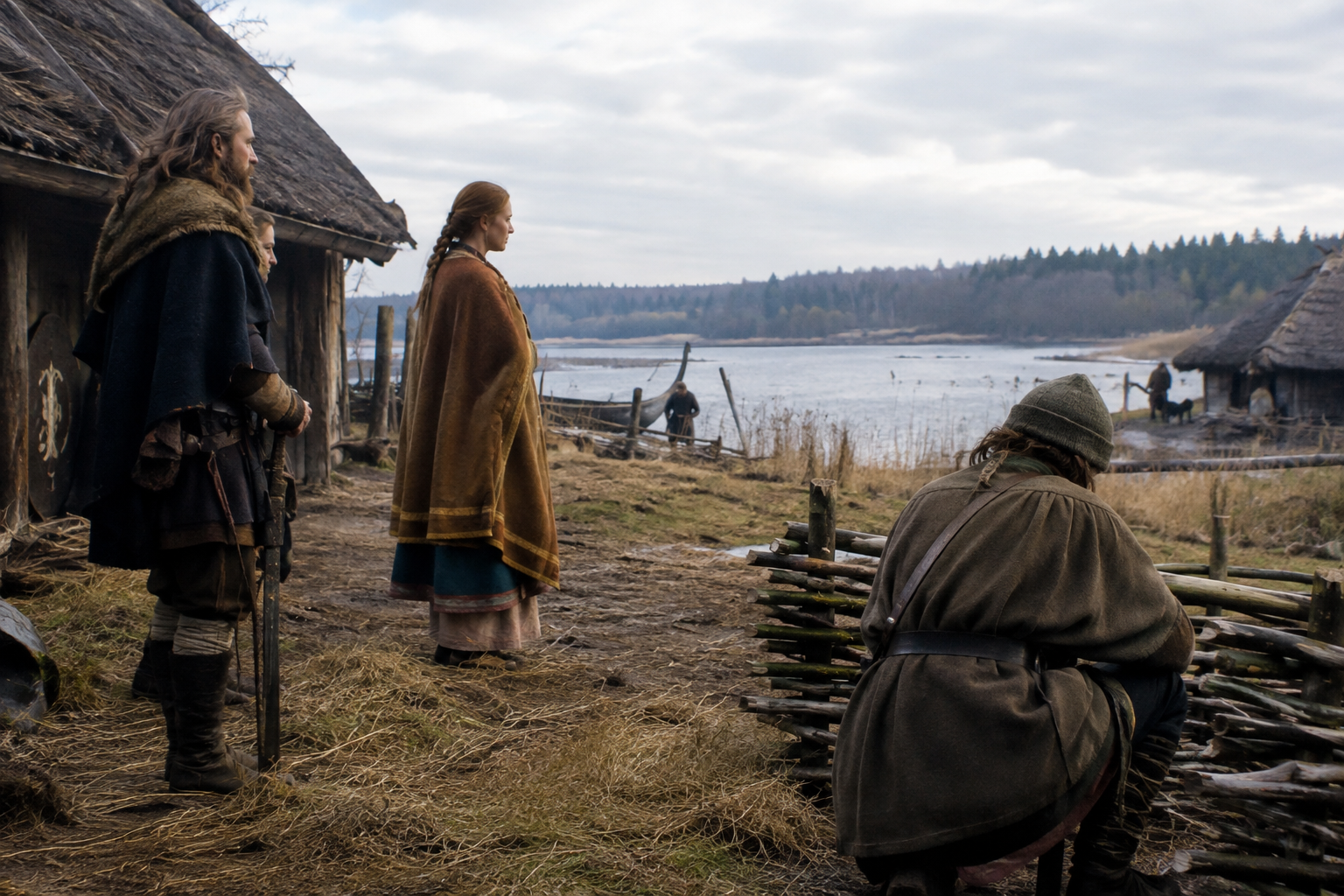
At first glance, VL21 is a very small clue: one ancient man from Latvia, dated to around AD 900, classified to the Baltic Late Iron Age. But archaeology often works like this. One burial, one genome, one line of descent can suddenly pin a very large historical question to a particular place and time. In this case, the question is what a branch of Y-DNA like I1a2b3a2a1a1 was doing on the eastern shore of the Baltic at the end of the first millennium.
That is interesting because the wider haplogroup I1 is strongly associated with northern Europe, especially Scandinavia, while Latvia in the Late Iron Age sat in a busy contact zone of local Baltic communities, traders, raiders, and travelers moving across the sea. Y-DNA traces one direct paternal line only, not a person's whole ancestry, but when a branch related to I1 appears in this setting, it belongs in a larger story about Baltic mobility, Viking Age exchange, and the mixed human world around the eastern Baltic.
The core evidence here is refreshingly concrete. VL21 comes from Latvia and is dated to about AD 900, right in the Late Iron Age, a period when the eastern Baltic was deeply entangled in the sea-routes of northern Europe. This was not an isolated backwater. It was a region tied into trade, warfare, and political change stretching from Scandinavia to the river routes leading inland toward eastern Europe.
That date matters. Around AD 900, the Baltic was one of the great connective zones of Europe. Goods, people, and ideas moved through it constantly. A paternal lineage assigned within the I1 family appearing in Latvia at this time is therefore not some exotic impossibility. It fits a world in which local populations and incoming lineages could meet, settle, and become part of the same archaeological landscape.
A broader interdisciplinary research initiative on Latvia's Viking Age and Late Iron Age setting can be found here: https://www.lvi.lu.lv/en/research/projects/translate-to-english-vikingu-laikmets-latvija-starpdisciplinara-izpete/. Even when a single sample does not come with a full public grave narrative, that regional work helps place individuals like VL21 in the very lively world of eastern Baltic archaeology.
The exact label in this article is I1a2b3a2a1a1, which is a very narrow twig on a much older paternal tree. The wider parent haplogroup, I1, has its best-known concentrations in Scandinavia and northern Europe, but that does not mean every man carrying a downstream branch was a "Viking" in the simple popular sense. By AD 900, lineages had already been moving, mixing, and settling for centuries.
So the safest reading is this: VL21 shows that one direct paternal line connected to the wider I1 world was present in Late Iron Age Latvia. That may reflect migration, long-standing regional admixture, marriage networks, trade-linked settlement, or some combination of all three. A Y-chromosome alone cannot distinguish neatly between those possibilities, but it can show that eastern Baltic communities included paternal ancestry linked to the wider northern European sphere.
That is precisely why ancient DNA is so useful. Written sources for the eastern Baltic are patchy and usually external; they tend to describe peoples in blunt labels. Genetics does something different. It shows us that beneath those labels were real communities formed by repeated contact, not sealed ethnic boxes.
Modern readers can be tempted to imagine AD 900 Europe as a map of separate peoples in separate colors. The archaeology of the Baltic says otherwise. Coasts and river mouths were places of encounter. Ports, landing points, burial grounds, and inland exchange routes brought together locals and newcomers in ways that do not always leave dramatic historical texts but do leave material traces.
For Latvia, this matters enormously. The eastern Baltic stood between Scandinavia, the Finnic world, Baltic-speaking societies, and the networks running toward the Dnieper and Volga corridors. A paternal lineage such as I1a2b3a2a1a1 appearing there is historically plausible because this was one of the great mixing grounds of the North, not merely the edge of somebody else's world.
That point also helps correct an old habit in history-writing. For too long, regions like Latvia were treated as passive recipients of outside influence, as though history arrived by ship from elsewhere. The better archaeological view is more active: eastern Baltic societies participated in shaping the networks themselves. Ancient men like VL21 belonged to that local historical reality, whatever their more distant paternal origins had been.
If the narrow branch name looks forbidding, the historical pattern is easier to grasp. The wider I1 family is one of the paternal lineages most often discussed in connection with Scandinavia and adjacent northern European regions. In the centuries around AD 900, Scandinavian activity around the Baltic was intense, but it took many forms: not just raiding, but trading, intermarriage, mercenary service, seasonal movement, and settlement.
That does not allow us to pin VL21 to a particular language, identity, or voyage. Still, it gives the find its shape. A branch under I1 found in Latvia in this period fits what we know from archaeology and historical geography: the Baltic Sea was a corridor. People did not merely pass through; some stayed, founded families, and became part of local populations.
This is where narrow haplogroup labels become useful rather than merely technical. They remind us that human movement was not abstract. It happened through fathers and sons, households and kin groups, and local communities that absorbed lineages from elsewhere while remaining very much rooted in place.
With only one ancient individual named here, restraint is part of the job. VL21 does not prove that this exact subclade was common across all of Latvia. It does not prove a specific ethnic identity, and it certainly does not turn every I1-related paternal line into evidence of a single migration episode. What it does provide is a securely placed ancient occurrence: a man in Late Iron Age Latvia, around AD 900, whose paternal ancestry belonged to the same broad northern European lineage family.
That is already valuable. Ancient DNA is often most powerful when it anchors big historical arguments in small, stubborn facts. VL21 tells us that the paternal landscape of the eastern Baltic included lineages tied to wider northern networks. In a region famous for contact and movement, that is exactly the sort of evidence we should expect - and exactly the sort of evidence that helps move us beyond guesswork.
For anyone researching I1a2b3a2a1a1 today, the most responsible takeaway is not a romantic saga but a real historical setting: your direct paternal line belongs to a wider northern European story that had reached the eastern Baltic by the Late Iron Age. In other words, this branch was part of the human traffic of the Baltic world, where local history and long-distance connection were never very far apart.
The distinctive value of this haplogroup, in the evidence we have here, is its appearance in a real person from Late Iron Age Latvia. That places I1a2b3a2a1a1 in a historically meaningful zone of exchange between Scandinavia and the eastern Baltic. It does not hand us a ready-made family saga, but it does offer something better: a grounded glimpse of one paternal line moving within the crowded, connected northern world of around AD 900.


Comments