Haplogroup I1a2b3a1b1a1

– 5 min read


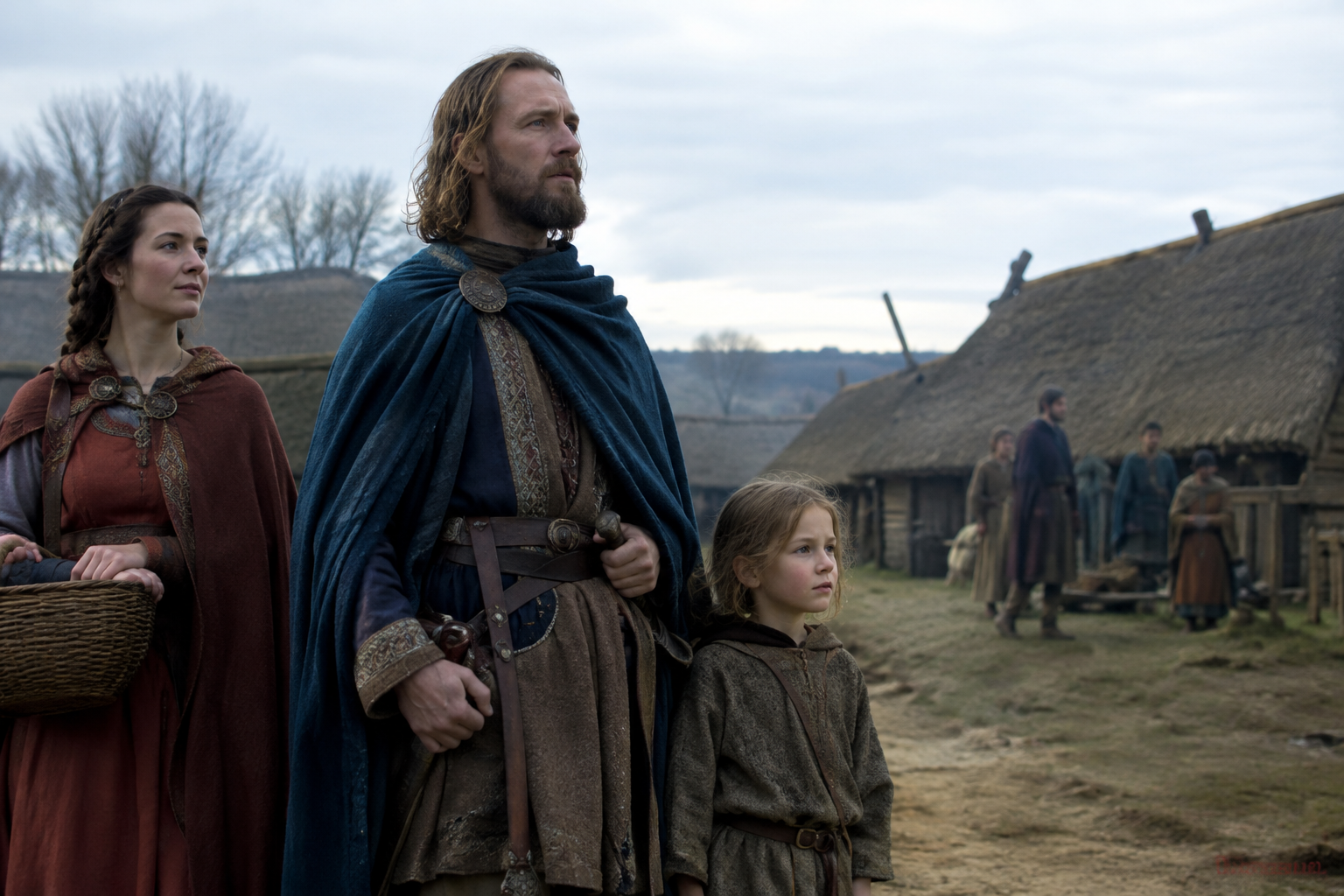
At Buttelborn in Germany, one man buried in the Merovingian period around AD 600 has become a small but telling witness to the early medieval world. He is identified as Btb397, a Frankish-period individual whose Y-DNA has been associated here with I1a2b3a1b1a1. That may look like a forbidding string of letters and numbers, but behind it sits a very human question: what can a single paternal line tell us about the men living in the post-Roman societies of western Europe?
The answer is not everything, and it is worth saying so plainly. Y-DNA follows one direct male line only, not a person's whole ancestry, language, or identity. But in the case of Btb397, that line matters because it appears in a place and period central to the formation of early medieval Europe: the Frankish world that grew out of the Roman frontier, Germanic migrations, and the political experiments of the Merovingian age.
Buttelborn lies in Hesse, in a region that sat close to the old Roman frontier zone and later within the orbit of the Frankish kingdoms. By AD 600, this was not a neat world of "Romans" on one side and "barbarians" on the other. It was a landscape of villages, cemeteries, lordship, church foundations, military obligations, and generations of intermarriage. A man like Btb397 belonged to that complicated society, not to a cardboard category in a schoolbook.
This is exactly why his Y-line is interesting. Haplogroup I1, the broader paternal family to which I1a2b3a1b1a1 belongs, is often discussed in connection with northern Europe and later Germanic-speaking populations. But the narrower branch should not simply be treated as a shorthand for all Germanic history. What the Buttelborn find gives us is something more careful and more useful: evidence that one paternal line within that wider I1 world was present among Merovingian-period Franks in southwestern Germany.
An ancient DNA study of this broader historical setting has helped show just how mixed and locally varied these post-Roman communities could be, with frontier regions producing people whose ancestry and identities do not fit tidy ethnic boxes. That wider context matters when thinking about Btb397 and similar finds in the old Frankish zone in research on early medieval populations.
A long subclade name like I1a2b3a1b1a1 is best understood as a very specific twig on a much larger paternal tree. The bigger trunk here is haplogroup I1, a lineage with deep roots in northern Europe and a strong later presence in areas shaped by Scandinavian and Germanic history. The narrower branch in this article is far more specific, and the evidence offered here is correspondingly narrower too.
That distinction is important because readers are often tempted to leap from one medieval sample to grand claims about ancient tribes or modern nations. Btb397 does not prove that every carrier of this haplogroup was Frankish, nor that the branch "belongs" to the Franks alone. What it does show is that this paternal line had found a place within a Merovingian-period community in Germany by around AD 600.
That timing is historically rich. The Merovingian centuries were when older provincial Roman populations, newcomers and descendants of migrants, and regional elites were being folded into new kingdoms. A Y-chromosome branch turning up in that context is not a label of purity; it is a clue to how male lines persisted, spread, and were absorbed into changing societies.
There is a tendency to think that only royal tombs or giant cemeteries count. Archaeology is usually much less obliging than that. Quite often, one securely identified burial matters because it fixes a lineage to a place, a date, and a cultural setting. Btb397 does exactly this. Even without an elaborate story attached to his grave, he anchors I1a2b3a1b1a1 in the lived world of Merovingian Germany.
And that lived world was formative. The Franks were not merely one more "tribe" passing across the map. Their kingdoms became a durable political framework in western and central Europe, and their territories sat at the crossroads of Latin Christian institutions, older regional populations, and lineages associated with northern European male ancestry. In that sense, a Frankish-era sample from Buttelborn is a particularly apt witness for this branch.
It also reminds us how much early medieval identity was local. Men in Frankish territory might serve a king, bury their dead according to local custom, worship in newly Christianized landscapes, and descend from paternal lines with deeper northern histories. The cemetery does not hand us a slogan. It gives us a community.
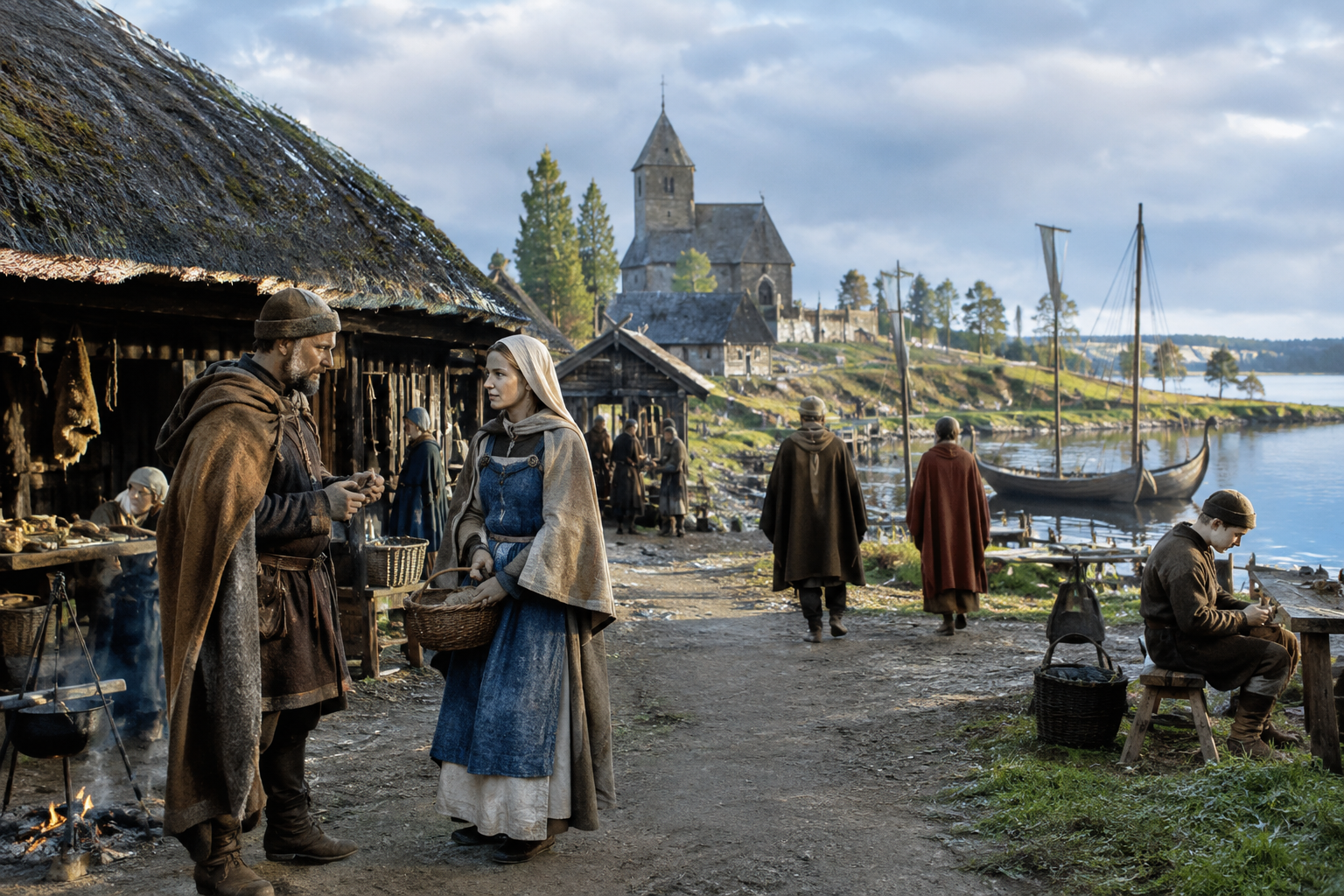
Buttelborn's significance grows when set against the old Rhine frontier zone. For centuries this was one of the great contact regions of Europe: Roman soldiers, provincial civilians, traders, farmers, and groups identified in historical texts as Franks, Alamanni, and others all moved through it. By the sixth and seventh centuries, the frontier had not vanished so much as changed its meaning. The empire was gone in the west, but the corridor of movement remained.
That makes a lineage like I1a2b3a1b1a1 especially interesting in archaeological terms. It may represent continuity of local male lines, the descendants of migrants from farther north, or some blend of both over generations. Usually the honest answer is not one simple origin story but a process of accumulation. Early medieval cemeteries across former frontier regions repeatedly show that post-Roman communities were built from exactly this sort of layered inheritance.
For readers researching their own paternal line, that is actually better than a myth of instant migration. A haplogroup found in Merovingian Germany points to historical participation in the making of early medieval northwestern Europe, where movement and settlement were gradual, social, and often regionally specific.
Because I1 is a wider northern European lineage, people understandably ask whether a branch such as I1a2b3a1b1a1 should be imagined as Scandinavian, continental Germanic, or specifically Frankish. The sensible answer is that the Buttelborn sample documents the branch in a Frankish-period context, but it does not on its own settle the deeper prehistory of the subclade.
That said, the early medieval evidence fits neatly with a wider picture in which paternal lines associated with northern Europe appear across the zones where Germanic-speaking groups expanded, merged with local populations, and later formed new kingdoms. The Frankish case is particularly instructive because it sits between worlds: it is neither simply "Roman" nor simply "migrant," but a fusion of both.
Readers who enjoy that wider perspective may also want to look at work on early medieval regional change around the North and Baltic seas, where ancient genomics has become increasingly good at showing how mobility and continuity lived side by side.
On the present evidence, I1a2b3a1b1a1 is best approached through one grounded historical image: a man in Merovingian-period Buttelborn, living in the centuries when the Frankish world was taking shape from the ruins and continuities of Rome. That does not make every modern carrier "Frankish" in any simple sense. But it does place this paternal branch within one of the most important social transformations in European history.
If this is your Y-DNA line, the value lies in that kind of firm foothold. Not a fantasy pedigree, but a real early medieval context: southwestern Germany, around AD 600, in a society where northern paternal ancestry, local continuity, and post-Roman state formation were all meeting in the same cemetery soil.
Comments