Haplogroup I1a2a1a1d2a1c

– 4 min read


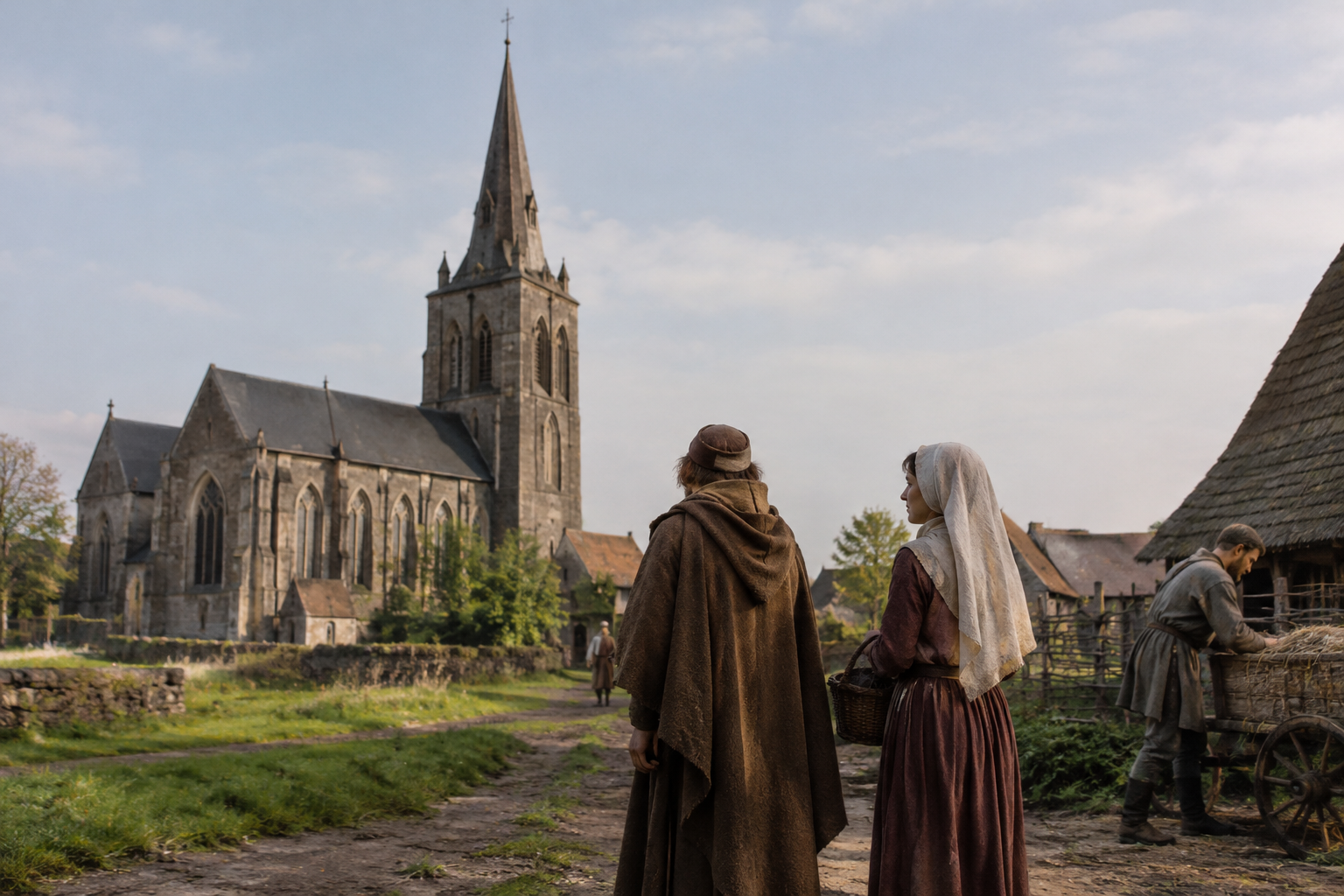
At Sint-Truiden in medieval Belgium, one man stood out. The sample known as ST1626, dated to around AD 900 and described as an outsider from the burial ground at Onze-Lieve-Vrouwekerk, gives us a rare fixed point for the Y-DNA lineage I1a2a1a1d2a1c. That long string of letters and numbers may look forbidding, but its importance is simple enough: it marks one very specific paternal line carried by a man buried in a thriving early medieval town whose population was already more mixed and mobile than older histories once liked to imagine.
That matters because Y-DNA follows a direct male line only - father to son across generations - and so it does not define a person's whole ancestry, language, or identity. But in the right archaeological setting, it can still be wonderfully revealing. In the case of I1a2a1a1d2a1c, the evidence here is not a grand royal pedigree or a famous warlord. It is something more useful to historians: an ordinary medieval individual found in a place where urban growth, pilgrimage, trade, and movement were bringing different people together.
Sint-Truiden was no backwater in the early Middle Ages. Situated in what is now Belgium, it grew around an important abbey and church complex, part of that densely connected world stretching across the Meuse and Scheldt regions where merchants, clerics, craftspeople, and travellers moved between local communities and wider political networks. A burial from Onze-Lieve-Vrouwekerk, therefore, is automatically part of a lively historical landscape rather than an isolated village story.
ST1626 is especially interesting because the individual is identified as an outsider in the archaeological-genetic context of the cemetery. Even without inventing a dramatic biography, that label tells us something substantial. He was buried in Sint-Truiden, but his broader profile differed enough from many others at the site for researchers to notice. That makes his Y-lineage, I1a2a1a1d2a1c, worth treating not as an abstract code, but as part of a real pattern of medieval mobility.
A recent ancient DNA study of medieval Sint-Truiden examined how urbanization could produce both local continuity and new arrivals in the same community, and it is the best scientific frame for understanding ST1626 in context: research on medieval Sint-Truiden and population mixing. The key historical point is not that one haplogroup "belongs" to one people, but that a paternal line associated today with northern European history appears here in a man buried in a developing ecclesiastical town of Lower Lotharingia.
The branch name matters because it is extremely narrow. The wider parent haplogroup I1 is well known in European archaeogenetics and is often discussed in connection with northern Europe, especially later prehistoric and early medieval populations around Scandinavia and the North Sea world. But I1a2a1a1d2a1c is not the whole of I1. It is one much more specific twig on that paternal tree, and we should resist the temptation to assign to it every migration story ever told about I1 in general.
What we can say, cautiously, is that a lineage under the I1 umbrella fits very comfortably within the kinds of male lines that circulated through Germanic-speaking regions in the early medieval centuries. That does not make ST1626 automatically a "Germanic tribesman" in any neat storybook sense. It means only that his direct paternal ancestry belonged to a branch with strong relevance to the northern European world from which many early medieval population movements emerged.
This is where archaeogenetics is at its best when it is kept modest. Rather than pretending a single haplogroup can name a tribe, it helps us notice how paternal lines moved through particular places. In Sint-Truiden, that movement is anchored to a burial, a churchyard, and a town in formation.
Germanic Languages and Genomics
By around AD 900, the region containing Sint-Truiden sat inside a political world shaped by the Carolingian past and its aftermath. Monasteries and churches were not merely religious sites; they were landholders, employers, centres of literacy, and nodal points in long-distance connections. If a man with the paternal lineage I1a2a1a1d2a1c ended up buried there, the explanation need not be exotic. He may have come through military service, ecclesiastical networks, marriage patterns, craft migration, trade, or family movement over several generations.
In that sense, the label "outsider" is historically useful because it pushes against the lazy idea that early medieval communities were static and biologically closed. They were not. Towns in the Low Countries were being made by movement. Some newcomers came from nearby valleys, some from across political frontiers, and some perhaps from farther afield within the North Sea and Rhine-Meuse orbit.
This wider borderland story is echoed in other MyTrueAncestry discussions of early medieval mixing, especially where Roman and post-Roman frontiers blurred older identities and created new ones.
It is easy to underrate a single sample because it lacks the glamour of a dynasty or a mass grave. But one well-placed individual can be historically precious. ST1626 gives I1a2a1a1d2a1c a secure medieval archaeological presence in Belgium, at a known site and an intelligible moment in European history. That is far more informative than vague modern distribution maps on their own.
The burial also sharpens a larger point about the medieval Low Countries. This was a region where local populations were not simply replaced, nor were they sealed off from newcomers. Instead, continuity and admixture happened side by side. Some male lines stayed rooted in place for centuries; others arrived and were absorbed into urban communities. ST1626 appears to belong to that second, mobile side of the story.
For those interested in how similar processes played out elsewhere in early medieval Europe, the evidence from other cemeteries shows the same broad lesson again and again: identity in burial grounds was often more varied than later nationalist histories would suggest.
Diverse Origins in Medieval Madrid
If your paternal line falls under I1a2a1a1d2a1c, the clearest ancient clue here is not a mythical founder or a noble house. It is a documented man, ST1626, buried around AD 900 at Sint-Truiden, in a community where local people and newcomers met inside a growing medieval town. That makes this haplogroup historically legible in one of Europe's great contact zones between the North Sea, the Rhineland, and inland Frankish territories.
So the value of this lineage is not that it hands you a ready-made ethnic label. It is that it places your direct paternal ancestry within the very human business of medieval movement: men arriving, settling, marrying, worshipping, working, and being buried far from whichever earlier place their paternal line had once been rooted.

Comments