Haplogroup I1a2a1a1c1b1

– 5 min read


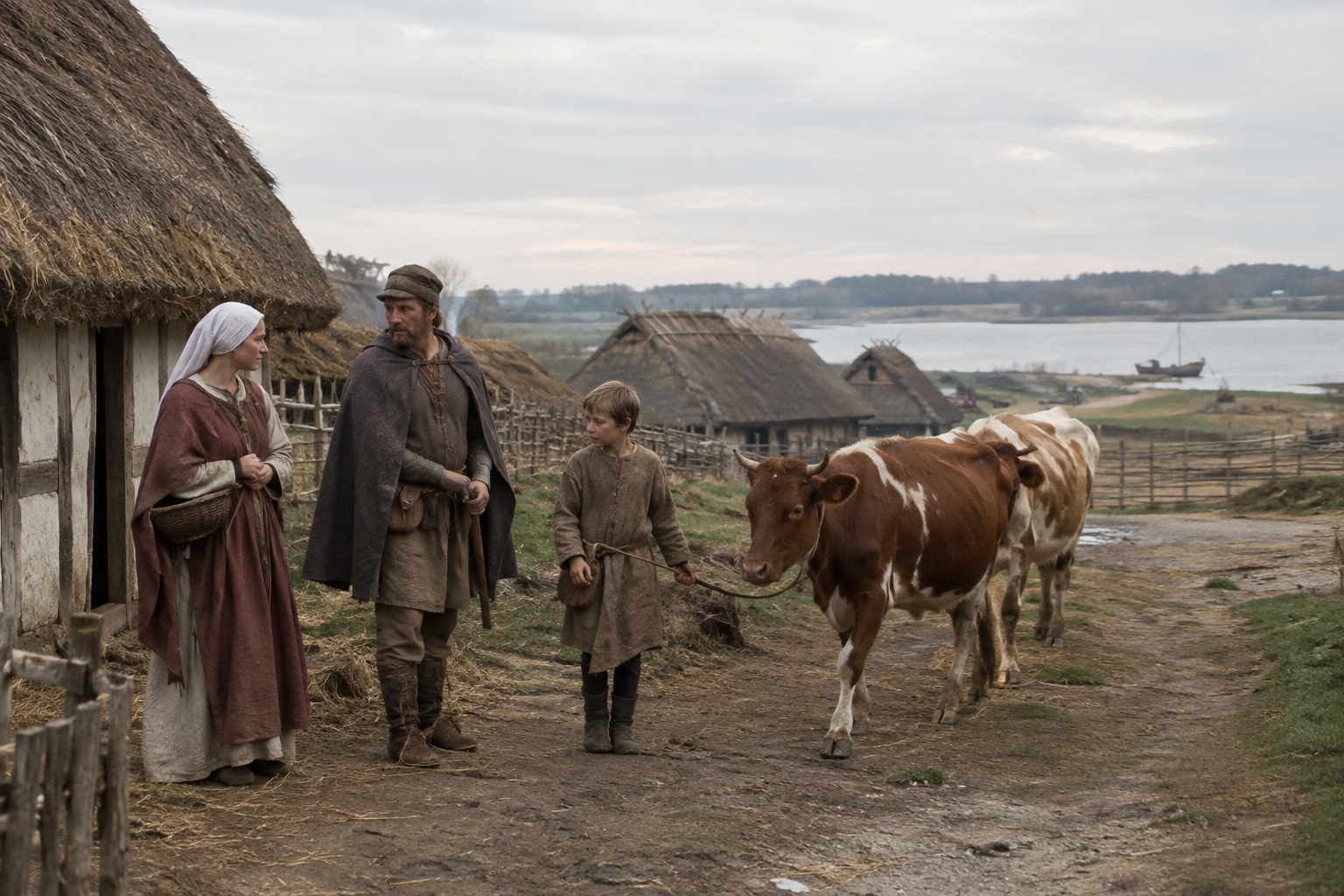
In the medieval parish landscape of eastern Jutland, one ancient male sample stands out for anyone tracing the Y-DNA branch I1a2a1a1c1b1: CGG100926, from Tjærby in Randers Municipality, dated to around 1325 AD. It is a modest entry on paper, but historically it is quite a vivid point of contact. This was Denmark in the later Middle Ages: a Christian kingdom of villages, market towns, landed estates, and widening links across the Baltic and North Sea worlds.
That matters because I1 is one of the paternal lineages most strongly associated with Scandinavia in both modern and ancient genetic discussions, while I1a2a1a1c1b1 is a much narrower twig within that wider tree. A Y-chromosome branch tracks one direct paternal line only, not a person's whole ancestry, but even a single securely placed medieval individual can help anchor a lineage in real historical ground. In this case, the ground is medieval Denmark rather than a saga landscape or a later genealogical fantasy.
The difficulty with many haplogroup articles is that they are tempted to say more than the evidence allows. Here the better approach is also the more interesting one. CGG100926 gives us a concrete male from medieval Denmark whose paternal line is associated with the branch in question. Even without an elaborate grave description, that is useful evidence, because it places this lineage in a settled, documented Scandinavian society centuries after the Viking Age.
Tjærby lies in Randers Municipality, in a region shaped by fertile agricultural land and access to waterways feeding into the Kattegat. By the early 1300s, this was not the world of first settlement, but of long continuity and reshaping: old local populations, Christian institutions, and generations of movement around the Danish islands and Jutland. A paternal line found here may represent deep local continuity, more recent regional mobility, or both at once.
A research preprint examining this wider ancient population context is linked here: a genetic study of medieval Danish material. Since the sample details available here are limited, it is safest to keep the claim narrow: the branch is present in a medieval Danish individual from Tjærby, and that alone gives the haplogroup a firm archaeological foothold in Scandinavia.
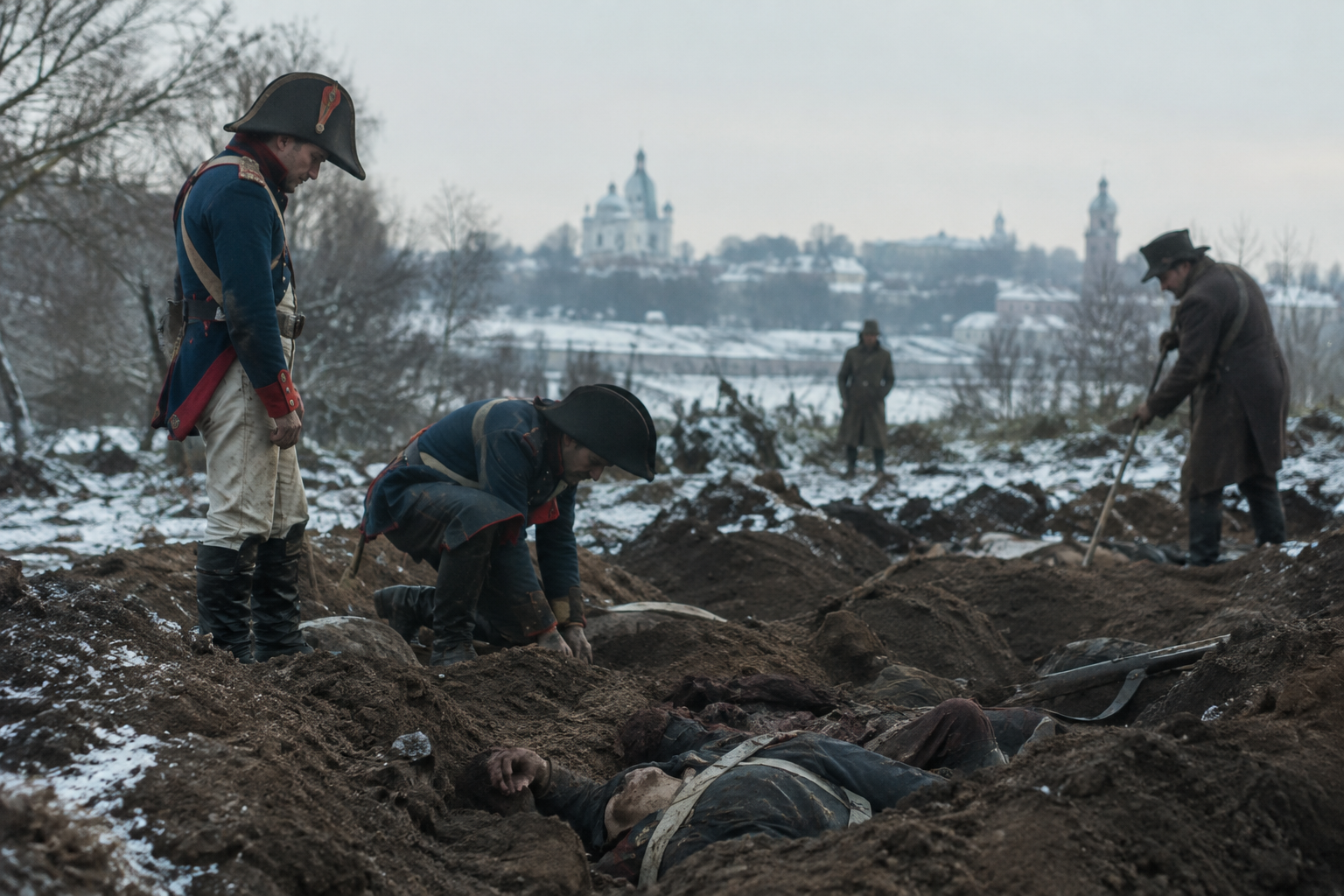
Denmark before the Middle Ages
Because the exact branch is so specific, most of the historical setting comes from the wider haplogroup background rather than from this terminal subclade alone. Haplogroup I1 is well known as a northern European, especially Scandinavian, Y-DNA lineage. It appears prominently in discussions of later prehistoric and early medieval populations around southern Scandinavia and the western Baltic.
But this is where a bit of discipline is needed. It would be too much to assign every feature of I1 history automatically to I1a2a1a1c1b1. Narrow branches often reflect later founder effects, regional expansions, or family-level survival that happened long after the broader parent lineage had already spread. So the medieval Tjærby sample is important precisely because it fixes this branch in a real time and place instead of leaving it suspended in generalities.
What it does suggest, cautiously, is that this paternal line belongs within the historic Scandinavian world where I1 flourished. In the fourteenth century that meant a Denmark tied not just to its own countryside, but to Norway, Sweden, the southern Baltic coast, and the commercial routes of the Hanseatic sphere.
It is easy to speak of "medieval Denmark" as if it were a sealed national box. It was nothing of the sort. Jutland faced both inland and seaward networks, and Randers sat within a region of movement involving farmers, clergy, craftsmen, traders, and seaborne contacts. A lineage found in this setting may have been local for centuries, but it also lived in a world where people moved surprisingly often.
That broader mobility is one reason Scandinavian Y-lineages can turn up in places far beyond Denmark itself. The story need not always be one of dramatic Viking migration. Sometimes it is quieter and later: trade, military service, marriage, estate management, ecclesiastical travel, or ordinary relocation between neighboring regions. A medieval Danish sample helps remind us that the spread and persistence of lineages was often carried by routine life rather than epic events.
Germanic languages and genomics
For people with this haplogroup today, that is a useful historical correction. A Scandinavian-associated paternal branch does not automatically point to one famous migration moment. It may reflect a much longer northern European continuum, with different episodes of expansion layered on top of older settlement.
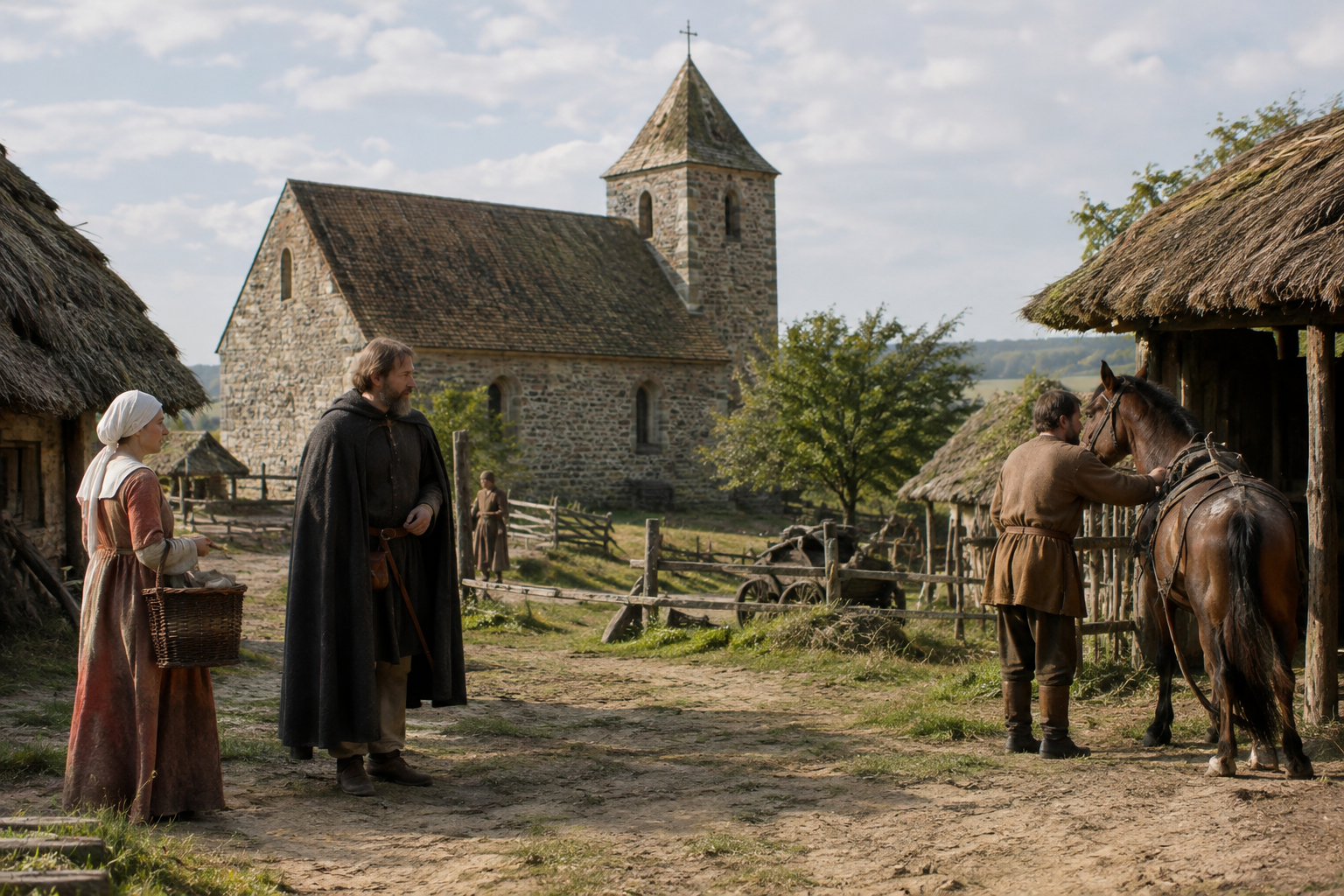
One of the most striking things about CGG100926 is its date. Around 1325 AD is well after the classic Viking Age. By then Denmark was thoroughly Christian, with parish organization, written administration, and a political order that had already passed through centuries of change since the early medieval period. Yet the paternal line endured.
That makes this sample a useful counterweight to the tendency to freeze Scandinavian genetics in the Viking centuries alone. Lineages did not vanish when longships ceased to dominate historical imagination. They persisted through conversion, monarchy, plague-era upheaval, agricultural routine, and all the unglamorous continuities of medieval life.
That same point appears in other northern studies too: ancient DNA is often most revealing when it tracks continuity across cultural change rather than hunting for a single moment of origin. Medieval and post-Viking burials in Scandinavia increasingly show how family lines continued within Christian communities that looked very different from the pagan societies that came before them.
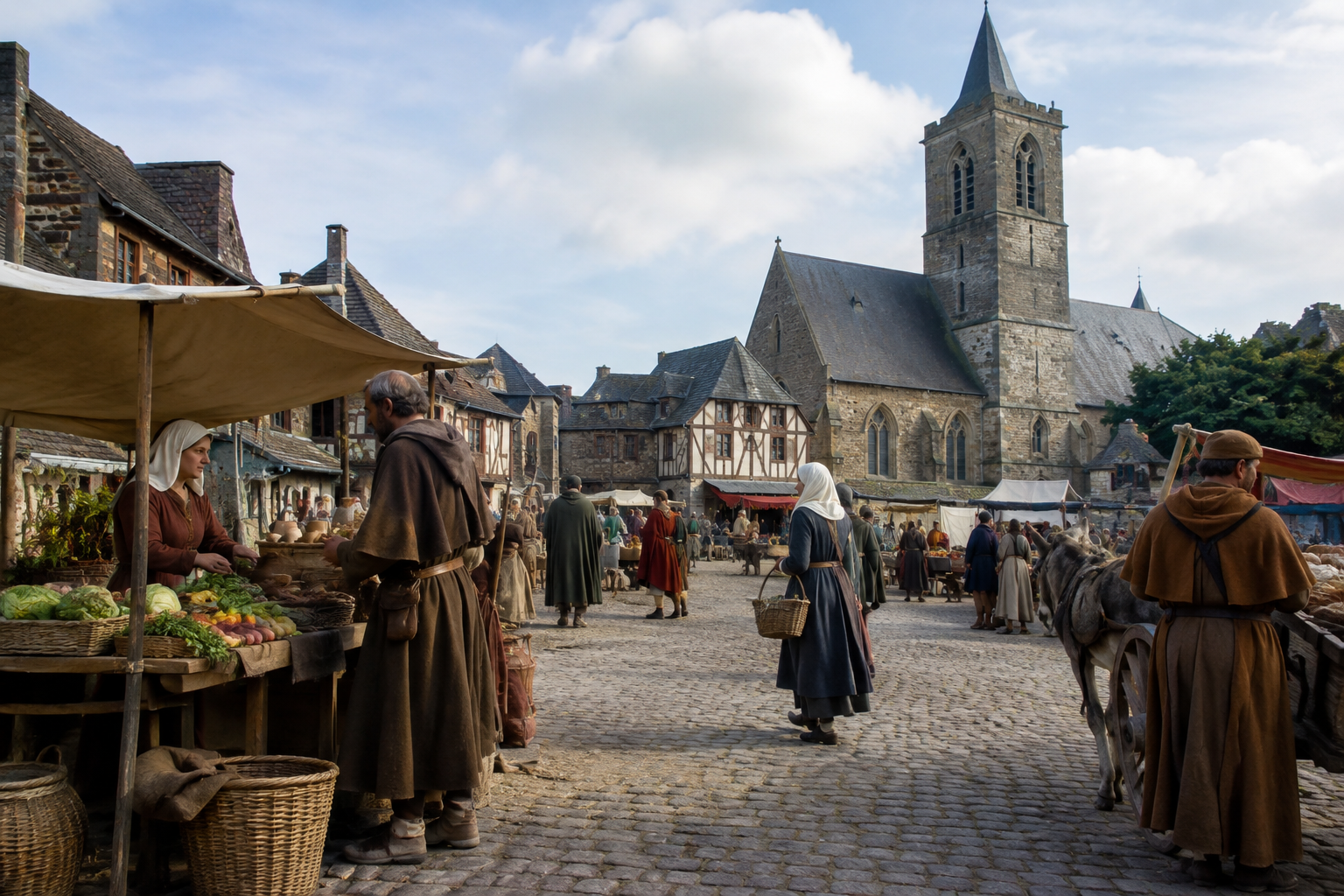
Post-Viking Christian Scandinavia
For genealogists, very specific Y-DNA labels can feel both thrilling and frustrating. Thrilling, because they narrow the paternal line dramatically; frustrating, because ancient matches at that resolution are still rare. In this case, the strength of the evidence lies not in a large cluster of ancient men, but in the fact that one securely medieval Danish individual is associated with the branch.
That gives I1a2a1a1c1b1 a historically plausible Scandinavian setting, and more specifically a documented foothold in eastern Jutland. It does not prove descent from a named medieval family, a Viking warband, or a single founder from saga tradition. But it does place the line inside the lived population of medieval Denmark, which is exactly the kind of grounded context ancient DNA does best.
For some readers, that may be more satisfying than a grander claim. A real man from Tjærby, buried in a fourteenth-century Danish world, tells us something solid: this paternal branch was part of the human fabric of medieval Scandinavia, not just an abstract label on a phylogenetic chart.
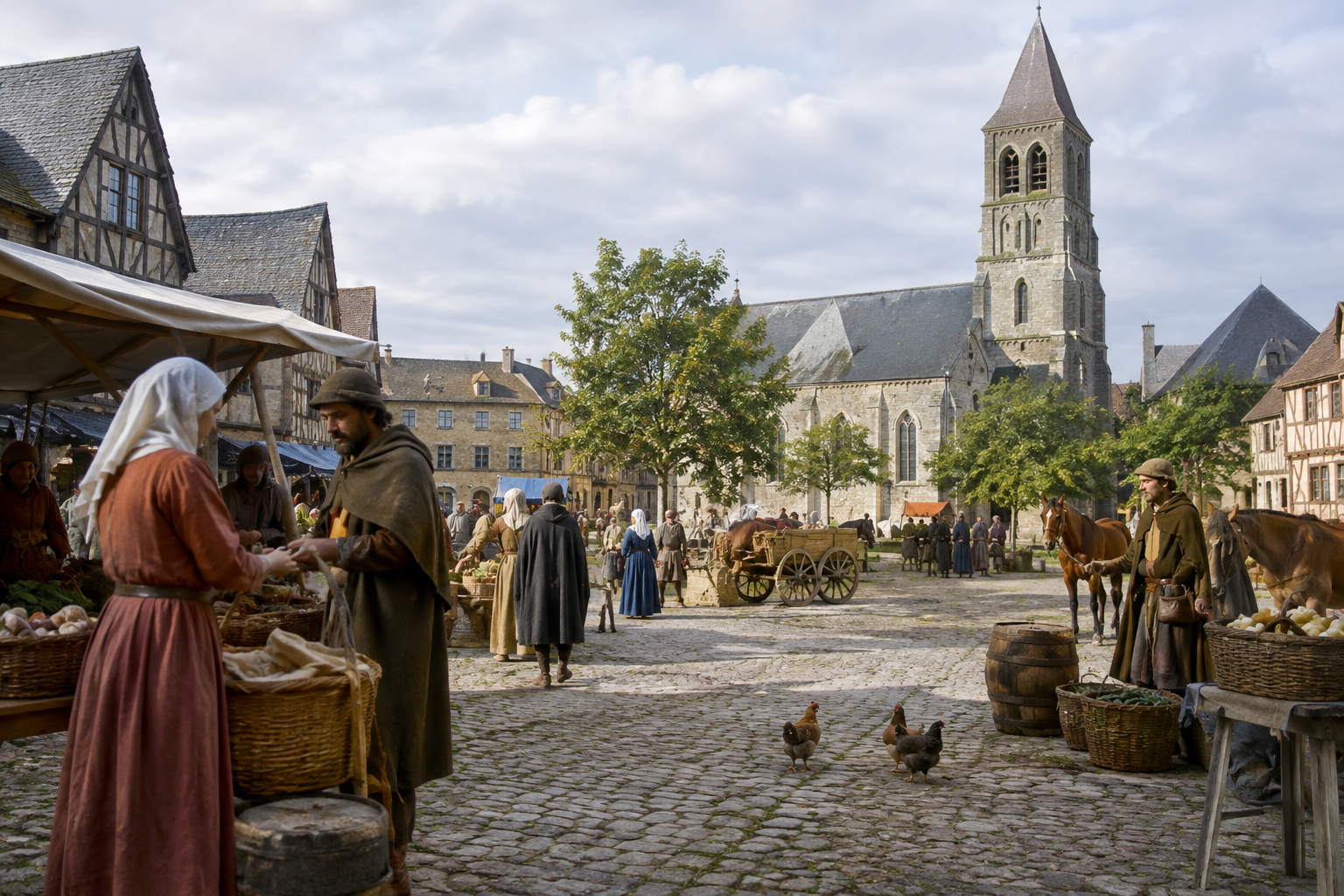
Baltic connections in the north
The best way to read I1a2a1a1c1b1, on present evidence, is as a narrow paternal branch with a genuine medieval Scandinavian anchor. CGG100926 from Tjærby does not tell the whole story of the lineage, but he gives it something invaluable: a real archaeological setting in medieval Denmark. For anyone exploring this Y-line today, that is a modest but dependable clue pointing toward the long-lived male histories of the Danish and wider Scandinavian world.
Comments