Haplogroup I1a1b1a1c2

– 5 min read


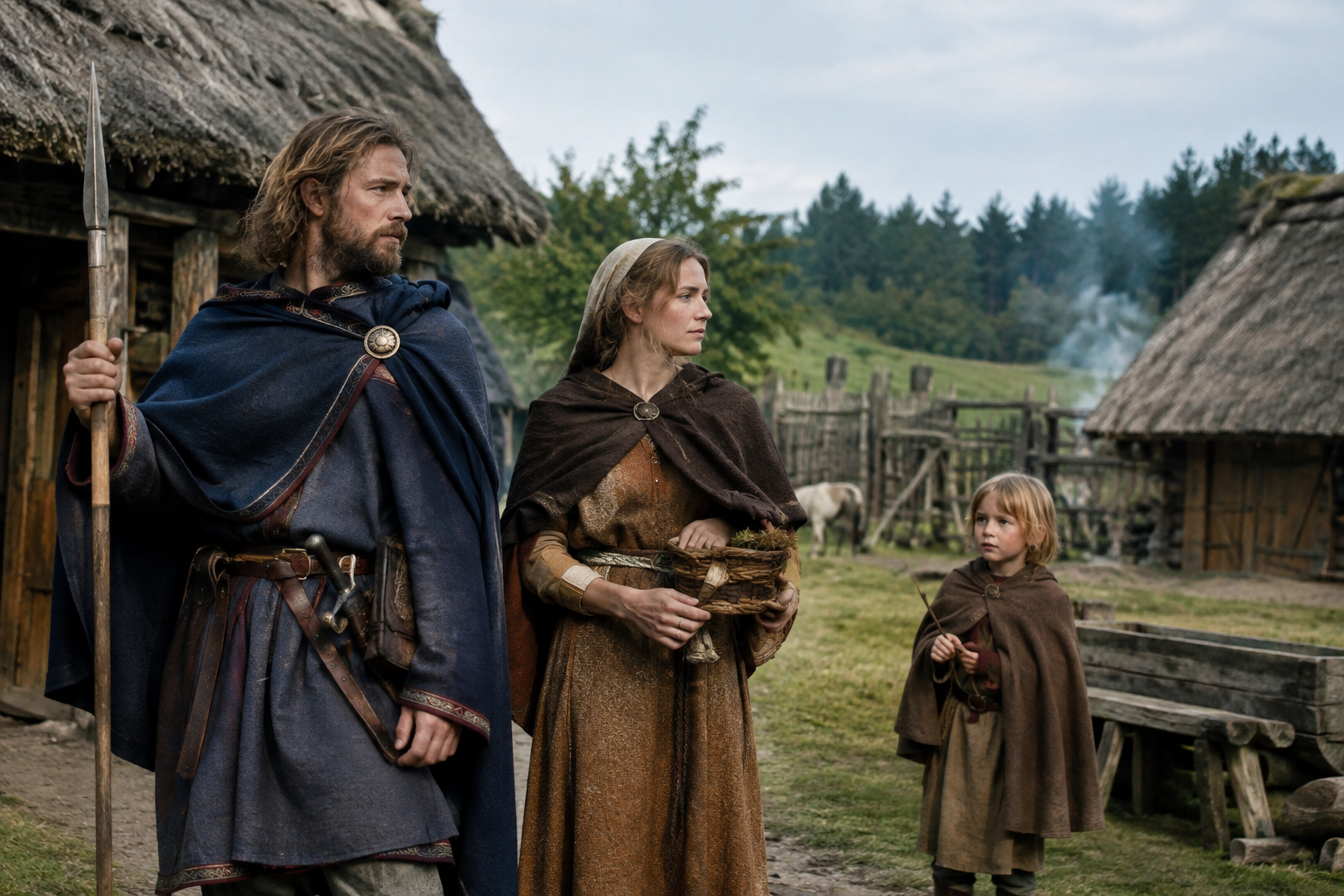
In around AD 600, a man buried at Altheim in Bavaria entered the ancient-DNA record under the identifier Alh_356. He belongs to the Merovingian period, that awkward, fascinating age when the western Roman world had long since fractured, but Roman habits, Christian institutions, and newer regional powers were all still jostling for place. For anyone interested in the Y-DNA haplogroup I1a1b1a1c2, this is the firm archaeological starting point here: not a saga hero, not a later pedigree, but one early medieval individual from southern Germany.
That matters because haplogroups can easily be made to do too much work in popular history. Y-DNA traces one direct paternal line only. It does not sum up a whole person, still less an entire people. But when a lineage turns up in a securely dated burial such as Alh_356, it gives us something solid: a paternal branch present in a real community, at a real place, in the centuries when post-Roman Europe was being remade.
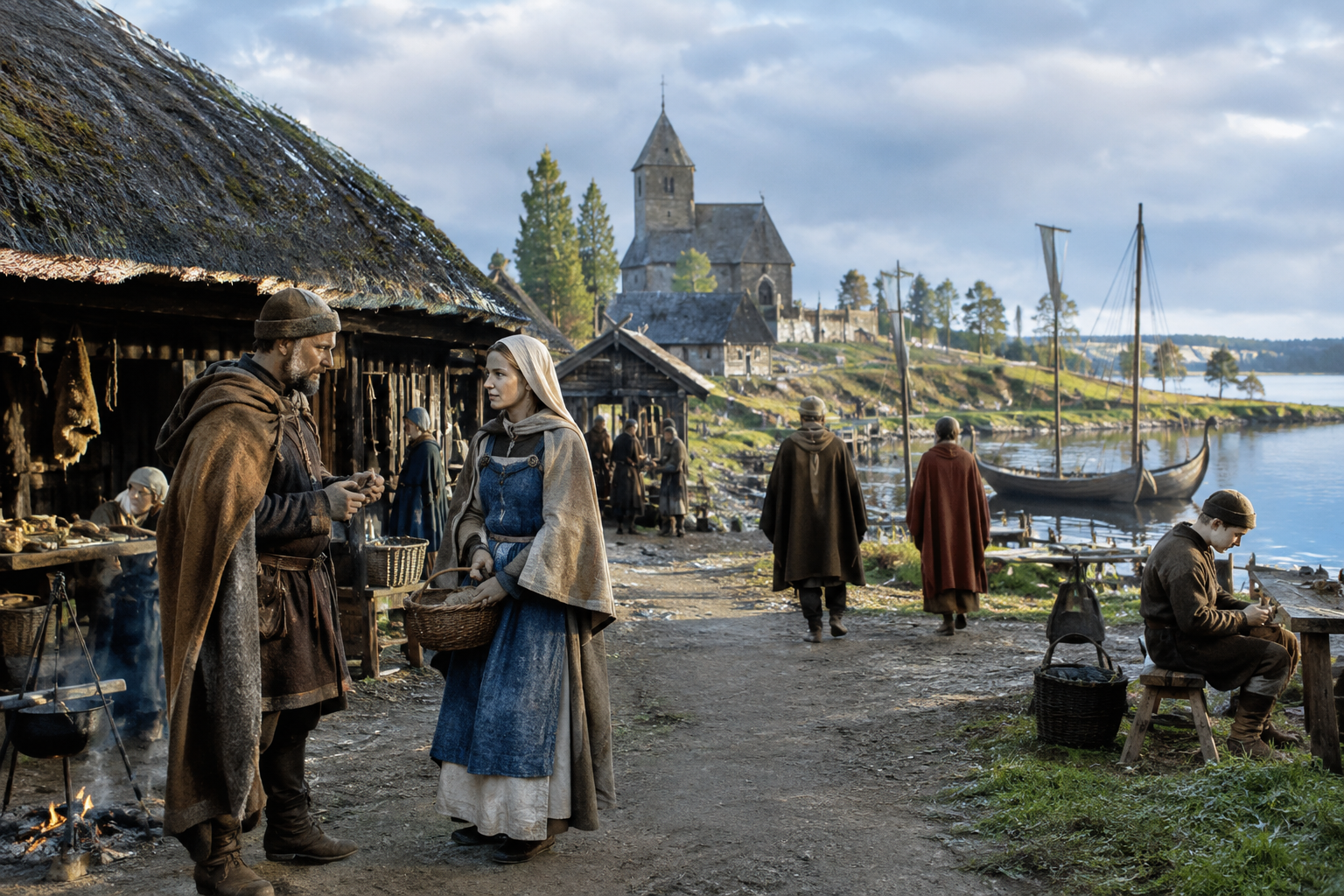
Altheim sits in a region that, by the sixth and seventh centuries, belonged to the Bavarian world under Merovingian influence. This was not a sealed ethnic box. Bavaria at the time was shaped by local continuity, shifting political loyalties, Christianization, and contacts running west toward Frankish lands and east into the Danube world. A burial from this setting is valuable precisely because it belongs to that mixed and changing frontier between old imperial landscapes and newer early medieval identities.
The sample record for Alh_356 places this individual in Merovingian Period Bavaria, Altheim, Germany, around AD 600. That is enough to say something careful and useful. The branch I1a1b1a1c2 - or at least a classification associated with that lineage in this context - was present in an early medieval Bavarian population. That does not by itself prove where this man's paternal ancestors had lived centuries earlier, nor does it make him a spokesman for all Bavarians. But it does anchor the haplogroup in the archaeology of southern Germany during the Migration-period aftermath.
A broader ancient-DNA study of Germanic-language expansion and population history is relevant here because it helps frame why such a Bavarian burial matters at all: these early medieval communities were not simply the biological continuation of one ancient tribe, but part of a wider north-central European story of movement, mixture, and regional consolidation. The most direct research lead supplied for this material is this Nature study, which situates ancient genomes within that larger historical transformation.
Germanic languages and ancient genomics
The first thing to say is that I1a1b1a1c2 is a very specific branch, not the same thing as the much broader haplogroup I1. In public discussions, I1 is often associated with northern Europe, especially Scandinavia and neighboring regions. That wider pattern may offer context, but it cannot simply be pasted wholesale onto every narrow descendant branch. A subclade can have its own later history, shaped by bottlenecks, local expansions, and medieval movements that are far more recent than the deeper origins of the parent lineage.
So the responsible reading of the evidence is modest but interesting. This article's branch appears in an early medieval Bavarian setting, and that is a historically meaningful setting because Bavaria was tied into the wider world of Germanic-speaking populations without being reducible to any single migration tale. The haplogroup points to one paternal thread running through that society; the archaeology reminds us that societies are made from many such threads at once.
Now, AD 600 is not just any date. It falls after the formal end of Roman rule in the West, after the great imperial tax system had collapsed in most of these regions, and after centuries of military recruitment, mobility, and resettlement had altered the map. But it is also before the neatly national stories later chroniclers liked to tell. In other words, Alh_356 lived in the murky middle bit - the bit historians rather like, because it is where identities were being negotiated on the ground.
Merovingian-era cemeteries in regions like Bavaria have become especially important in ancient DNA because they let us test older historical assumptions. Were these communities biologically uniform? Usually not. Were they simply recent immigrants from one northern homeland? Again, the answer is usually more complicated. What the genetics of post-Roman and early medieval Europe keep showing is a pattern of blended local and incoming ancestry, sometimes with striking diversity even within a single burial ground.
That broader lesson makes a single Y-lineage appearance more, not less, interesting. A haplogroup like I1a1b1a1c2 in Altheim does not hand us an ethnic label. Instead, it places one paternal line inside a society that was politically Bavarian, connected to the Merovingian sphere, and part of the long reorganization of Europe after Rome.
Roman-Barbarian blending, 400-700 CE
It is tempting, when we see a lineage often linked in broad terms with northern Europe, to imagine a one-way march southward. History was rarely so tidy. Southern Germany in late antiquity and the early Middle Ages had already been shaped by centuries of Roman frontier life, military service, trade, intermarriage, and population movement. By the time of the Merovingians, communities there were products of long entanglement, not fresh arrivals onto an empty map.
That is why an Altheim burial is historically richer than a bare dot on a frequency chart. It belongs to a region where Roman provinces, frontier garrisons, local elites, Christian clergy, and post-Roman rulers all left their mark. A paternal lineage present there by around AD 600 may reflect movements tied to earlier centuries, but it may equally reflect lineages that had already been established in parts of central Europe for generations. The archaeology keeps us from leaping too quickly from a branch name to a migration slogan.
Research on neighboring early medieval populations repeatedly reinforces this point: cultural labels, political affiliations, and genetic profiles overlap only imperfectly. The people buried in post-Roman cemeteries were often more varied than older textbooks allowed. If you want a parallel example of how early medieval burial grounds can reveal mixed origins rather than simple tribal identities, the community study from seventh-century Madrid makes a useful comparison.
7th-century Madrid: diverse origins
With only one named ancient individual in hand, the honest task is not to inflate the evidence but to read it well. Alh_356 shows that a paternal line associated with I1a1b1a1c2 was present in Merovingian-period Bavaria. That is already a useful clue for members of this haplogroup, because it places the branch within the lived social landscape of early medieval central Europe.
It also suggests the kind of historical company this branch may have kept. Not a single dynasty, not necessarily a single tribe, but populations living in the zone where the old Roman order had given way to new regional polities. These were farming communities, burial communities, and kin communities, but also places touched by military mobility, marriage networks, and the spread of Christian institutions. A Y-line can persist through all that while the surrounding ancestry, language, and identity shift dramatically over time.
That, in miniature, is one of the great lessons of archaeogenetics. Ancient DNA does not flatten history into labels; it restores some of the mess. For a branch like I1a1b1a1c2, the available evidence points not to fantasy pedigree-building but to a grounded early medieval presence in Bavaria, within the broader north-central European world that helped shape post-Roman Europe.
If you belong to I1a1b1a1c2, the most defensible insight from the present evidence is this: your direct paternal line is now archaeologically attested in Merovingian-period Bavaria through Alh_356, around AD 600. That does not tell the whole story of your ancestry, but it does place one line of descent inside the busy, mixed, post-Roman societies of early medieval Germany. It is a small piece of evidence, but a vivid one: one man, one burial ground, one paternal branch, caught at a moment when Europe was being remade.
Comments